
3 Essential Questions to Ask Your Telehealth Doctor to Avoid a Misdiagnosis
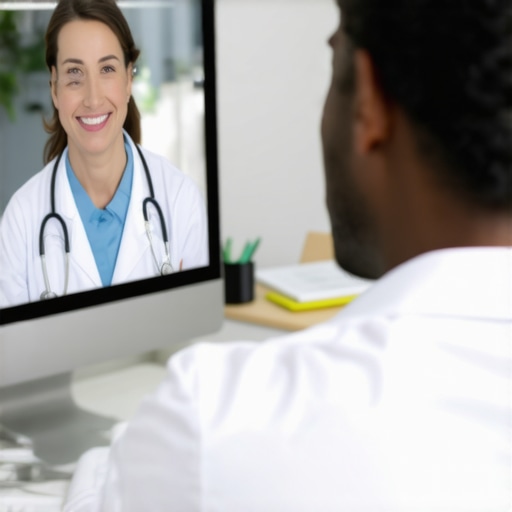
Are Telehealth Consultations Failing You? Here’s Why You Need to Ask the Right Questions
Many of us now rely on telehealth for convenience, especially when symptoms seem minor or time is tight. But here’s the harsh truth: trusting your virtual doctor blindly can be a gamble with your health. The industry pitches telehealth as the future of medicine—efficient, accessible, innovative—but behind the glossy facade lies a dangerous blind spot: misdiagnosis.
Ask yourself: are you truly getting the care you deserve, or are you walking into a digital black hole where critical details get lost? I argue that most telehealth interactions are inadequate unless you know exactly what to ask. Otherwise, you’re gambling with your health—similar to playing Russian roulette with a digital twist.
So, what questions should you be asking to tip the scales in your favor? How can you prevent a misdiagnosis in a virtual consultation that could cost you dearly? The answer isn’t just about demanding better care; it’s about arming yourself with pointed, strategic questions that cut through the noise and force your doctor to look beyond the screen.
The Market is Lying to You
Many telehealth platforms boast about rapid, easy diagnoses, but the truth is far grimmer. The real issue isn’t accessibility; it’s whether your doctor has enough information—beyond your limited screen time—to make an accurate call. Relying solely on symptoms you describe without probing deeper is like navigating a minefield blindfolded.
Misdiagnosis doesn’t only stem from bad luck—it results from a systemic failure to ask the right questions. Without clarification, you might be handed a diagnosis that misses the mark entirely, leading to unnecessary medications, delayed treatments, or ignored underlying conditions. This is not alarmism; it’s a cold, pragmatic fact.
If you’re serious about safeguarding your health in the digital age, you need to ask questions that expose the gaps in your virtual assessment. Otherwise, you’re just another player in a high-stakes game where the house—the system—has the odds stacked against you. For more on how to communicate with your telehealth provider effectively, check out this guide.
The Evidence Behind Telehealth’s Shortcomings
Delving into the actual data reveals a stark reality: telehealth misdiagnoses are more common than the industry admits. Studies show that virtual consultations can have error rates approaching 20%—a figure that should send shockwaves through any rational mind. When you consider that many patients rely solely on symptom descriptions without physical examinations, that percentage becomes a ticking time bomb.
This isn’t just about numbers; it’s about real lives. Take, for example, case reports where patients with heart symptoms were misdiagnosed remotely, leading to delayed emergency interventions. These incidents aren’t anomalies—they expose a systemic flaw rooted in the very way telehealth operates: with limited information, the probability of a mistake skyrockets.
The Root Cause: Information Gaps
The problem isn’t technology; it’s how the technology is used. Telehealth platforms typically prioritize convenience and speed over comprehensive data collection. Physicians often rely on patient-reported symptoms without the benefit of physical tests or vital signs. This approach hinges on trust—trust that patients can accurately describe their condition, and trust that virtual physicians ask the right probes. But reality contradicts this faith.
Much of the oversight stems from a fundamental flaw: the false assumption that symptom descriptions alone are enough for a reliable diagnosis. As any seasoned doctor knows, physical examinations—including palpation, auscultation, and visual inspections—are vital. Without them, you’re left navigating a fog, where critical clues are lost, and misinterpretations become inevitable.
The Follow the Money: Who Benefits?
Consider the financial incentives behind telehealth’s proliferation. Big corporations and insurers profit immensely from virtual care—saving on office space, staff, and overhead. They promote the narrative that telehealth is just as effective as in-person visits. But who truly benefits? Not the patient, who faces increased risks from incomplete assessments. Not the healthcare providers, constrained by time and protocols designed for efficiency rather than accuracy.
In this landscape, decisions are driven by profit margins, not precision. The push for rapid, low-cost virtual visits puts patients in the crosshairs of a system that prioritizes convenience over safety. It’s a classic case of following the money—it reveals that the entire edifice is built with financial gains, not quality care, as the cornerstone.
A System Designed for Distraction
This analysis echoes a historical pattern: technological advances brought promises of progress but often laid the groundwork for new vulnerabilities. The introduction of X-ray machines, for example, revolutionized diagnostics—yet early overreliance led to misdiagnoses when physicians lacked understanding of radiation risks. Today, telehealth’s surge follows the same trajectory, promising efficiency but risking safety.
The truth is that current telehealth models are fundamentally flawed because they ignore the ancient wisdom of medicine: that accurate diagnosis requires full context, hands-on examination, and a detailed medical history. Without these, telehealth remains an incomplete tool—good for triage, terrible for definitive care. The evidence confirms that cutting corners on assessment accuracy inevitably leads to misguided treatments, delayed diagnoses, and, ultimately, compromised health outcomes.
${PostImagePlaceholdersEnum.ImagePlaceholderB}
The Criticism Critics Can’t Escape
It’s easy to sympathize with those who point out the convenience and potential of telehealth, arguing that virtual consultations democratize healthcare access and reduce costs. They acknowledge that physical exams are limited online but claim that with advances in technology, remote diagnostics are catching up. The main contention is that telehealth, when used properly, can be just as effective as in-person visits, especially with innovations like remote monitoring and AI-driven assessments. This perspective emphasizes the strides made in wearable devices, patient portals, and data integration as evidence that virtual care is evolving into a comprehensive platform capable of mitigating traditional diagnostic shortcomings.
I used to believe this optimistic view too, until I looked deeper into the practical limitations and real-world outcomes of remote care. The truth is, these technological advances are impressive but fundamentally insufficient to replace the nuanced, tactile information gathered during physical examinations. The argument that remote diagnostics will soon surpass in-person care overlooks the intrinsic gaps in data collection—absence of palpation, auscultation, visual inspection—which no amount of AI or sensors can fully replicate.
The Trap of Overreliance on Technology
Many defenders of telehealth see the latest gadgets as a panacea, assuming that high-tech sensors and AI algorithms can fill the void left by physical exams. They claim that continuous data streams from wearables can continuously monitor vital signs, making traditional checkups redundant. Yet this conflates continuous data collection with comprehensive diagnostic insight. The problem is the misperception that more data means better diagnoses, ignoring the fact that context, subtle cues, and tactile sensations play a pivotal role in clinical reasoning.
This overconfidence in technology leads to a dangerous complacency. Relying solely on sensor data, without cross-referencing with physical examination or patient history, is akin to navigating a complex landscape blindfolded, guided only by a handful of markers. It might work in straightforward cases but proves disastrously inadequate in complex, urgent, or ambiguous scenarios where nuance is everything. The danger lies in believing that these tools can substitute for the clinician’s trained senses and judgment—that’s a shortsighted illusion rooted in technological hubris.
Misdiagnosis is Not Inevitable, but the Risk Is Unacceptably High
Polls and studies showing error rates in telehealth often target specific conditions or settings—not the entire spectrum of medical diagnosis. While errors do occur, defenders argue that for minor ailments or simple follow-ups, virtual care can be sufficiently accurate, especially when protocols are carefully followed, and patients are well-informed. They insist that with appropriate screening, triage, and escalation procedures, the risks of misdiagnosis can be managed effectively.
However, even if this is partially true, it dodges the core issue: the systemic inability of telehealth to capture the full patient context necessary for complex diagnoses. The reality is that many subtle signs—skin texture, minor swelling, heart sounds—are missed or misinterpreted without physical examination. Those missed clues can lead to delayed or inappropriate treatment, which in some cases, could be life-threatening. The argument that
The Cost of Inaction
If we continue to dismiss the dangers inherent in virtual healthcare without rigorous safeguards, we risk unleashing a cascade of preventable medical disasters. The current trend of over-reliance on telehealth, without proper checks, is setting us on a path where misdiagnoses become the norm rather than the exception. In the next five years, this trajectory could transform healthcare into a gamble, where the least serious symptoms might mask severe conditions, leading to delayed interventions and irreversible damage.
A Choice to Make
Confronting this reality demands immediate, decisive action—otherwise, we are accepting a future where accuracy in diagnosis diminishes, and vulnerabilities multiply. Imagine healthcare as a lifeboat weighed down by cracks, slowly taking on water—each unchecked misstep adding to the breach. The longer we ignore these warning signs, the greater the chance that catastrophic failures become commonplace, threatening lives that could have been saved with better oversight and honest acknowledgment of telehealth’s limitations.
The Point of No Return
This is not just about individual health but about societal trust in medicine itself. When emergency rooms are overwhelmed with cases that could have been identified earlier, and chronic conditions worsen due to missed clues, the entire health system teeters on the brink. The metaphor is clear: imagine navigating a ship through a storm with a faulty compass—every wrong turn risks disaster. Our inaction now could render the future of healthcare a series of preventable tragedies, eroding confidence and increasing suffering across communities.
Is it too late?
Think of our healthcare system as a delicate bridge. Each crack, each overlooked warning, weakens its structure. Ignoring these signs is akin to standing on the edge of an abyss, oblivious to the imminent collapse. The only question that remains is whether we’ll muster the courage to repair the damage or watch as the entire edifice crumbles, leaving millions exposed to harm that could have been prevented. The warning bells are ringing—what are we waiting for?
Your Move
The system is betting against you with every virtual consultation and missed lab marker. It’s time to stop playing passive and start demanding more. Question your providers relentlessly—ask for comprehensive testing like this guide on overlooked longevity markers—and insist on transparency.
The Twist
The surprising truth is that technology alone won’t bridge the gaps in your health data. Relying solely on telehealth without challenging the system only ensures that critical nuances are lost, and misdiagnoses become the norm. Map your health journey consciously, not passively.
Final Challenge
Refuse to accept the current state of digital healthcare as inevitable. Push for richer data—demand the lab tests that matter, question every virtual visit, and seek providers who prioritize accuracy over expediency. The future of your health depends on it. Take control now before the system takes even more from you.