
3 Reasons Your Wearable Data Is Actually Sabotaging Your Chronic Care Plan
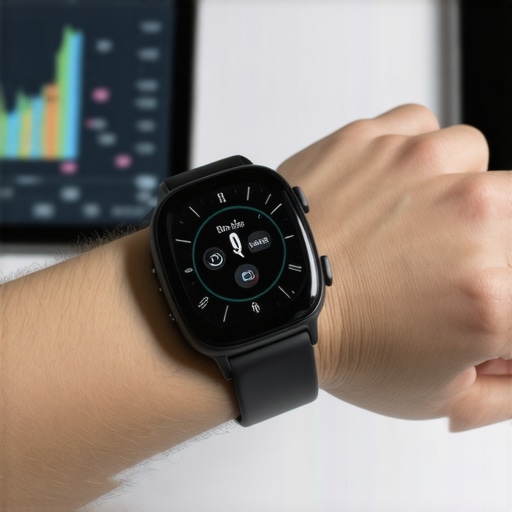
Why Your Wearable Devices Are Doing More Harm Than Good
You might think that tracking every heartbeat, step, and sleep cycle with your smartwatch is the ultimate tool for managing your health. Think again. The rush to quantify ourselves has become a double-edged sword, especially for those dealing with chronic illnesses. The more data we gather, the more we risk sabotaging our own health strategies.
I argue that wearable technology, instead of being a helpful ally, often undermines our efforts because of three critical issues. First, it creates a false sense of security that your numbers tell the full story. Second, it distracts from meaningful clinical evaluation, leading you down a rabbit hole of trivial metrics. Third, it encourages anxiety and compulsive monitoring that can worsen your condition rather than improve it.
In a world obsessed with numbers, it’s easier to trust a smartwatch than a seasoned physician. But health isn’t a game of points and progress bars; it’s nuanced, personal, and often messy. Relying blindly on wearables can mask underlying issues, leading to misdiagnosis or delayed treatment. As I argued in this article, normal lab results don’t always mean you’re healthy.
The Market Is Lying About Wearables
The tech industry pushes the narrative that more data equals better health. But that’s a marketing myth. These devices are designed to capture your attention, often feeding you misleading insights that make you second-guess your doctor’s advice. For chronic care patients, this can mean unnecessary worry or even ignoring critical symptoms.
Think of this like a game of chess where every move is based on incomplete information. The wearable is your opponent’s pawn: it can distract you from the real game—your doctor’s nuanced evaluation. Instead of empowering, it subtly sabotages the delicate balance of chronic management.
Moreover, the data from wearables is often misinterpreted. A high resting heart rate might trigger unnecessary panic, or a slightly irregular sleep pattern might be dismissed as normal when it indicates something more serious. Without proper context, numbers become noise.
Why This Failure Fails Your Care Plan
Chronic illness management requires a comprehensive view—lab tests, medical history, clinical judgment. Relying solely on wearable data narrows your perspective dangerously. It’s like trying to fix an engine by only looking at the oil level; you’re ignoring the real problem.
For example, many patients with thyroid issues obsess over their sleep and heart rate data, but ignore the critical markers that lab tests reveal—like reverse T3 levels. As I pointed out in this article, nuanced testing matters more than your smartwatch’s assumptions.
Ultimately, wearable data can be a helpful addition, but it must never replace targeted lab tests or clinical oversight. Otherwise, you risk chasing shadows while your real health issues go unnoticed.
The Evidence: Data Overload and Misinterpretation
Recent studies reveal that the average user checks their wearable device over 150 times a week, often chasing metrics that are either misunderstood or misleading. For instance, a slight increase in resting heart rate might be alarming, but without clinical context, it can just as easily be dismissed or misdiagnosed. This constant monitoring fosters a mentality where numbers seem to dictate health, blinding patients to the nuanced reality of their conditions.
A Broken System: Market Incentives vs. True Health
The core issue isn’t the technology itself but the *profit-driven narratives* that surround it. Companies push marketing claims emphasizing data as the key to health—yet they profit from our dependence on their devices. The more data we gather, the more we buy, and the more our trust in these metrics grows—regardless of clinical validity. This creates a *discrepancy* where financial incentives outweigh genuine healthcare needs.
Where the Math Fails: The Limitations of Quantification
Claiming that wearables empower patients is naive; in reality, they often distort the complex reality of chronic illnesses. Take thyroid disorders—patients fixate on sleep patterns or heart rate, but overlook critical lab markers like reverse T3 levels. The disparity between what can be measured easily versus what truly indicates health creates a dangerous *illusion of control*. These devices measure surface-level signals that, without proper interpretation, are meaningless or worse—misleading.
The Cost of Convenience: Anxiety and Neglect
The relentless focus on real-time data floods the mind with worries, often out of proportion with actual health risks. That 20% increase in resting heart rate? It becomes a source of unnecessary panic, leading to unnecessary doctor visits or medication adjustments. Conversely, the tendency to dismiss slight irregularities as benign overlooks serious issues. This obsession with numbers erodes trust in clinical judgment—replacing it with a cycle of anxiety, unnecessary interventions, and neglect of signs that truly matter.
Powerful Players and Patterns
The corporations profiting from wearable tech wield *enormous influence* over medical discourse, often framing data as the ultimate arbiter. They fund studies that highlight minor correlations, emphasizing the ‘accuracy’ of their devices to sway consumer perception. Meanwhile, healthcare providers grapple with integrating these devices into their workflows, often finding that the data complicates rather than clarifies patient care. The result? A systemic bias where *more data* is mistaken for *better care*, even when it hampers clinical decision-making.
The Real Cost: Compromised Care and Patient Autonomy
In the end, the insistence on quantification erodes the foundation of nuanced medical judgment. Patients become data points, and clinicians are pushed to fit personalized care into simplified algorithms. This shift isn’t accidental; it’s a calculated outcome driven by market forces that prioritize engagement metrics over the subtle art of diagnosis. The consequence: a chronic care landscape increasingly dominated by *surface metrics* rather than *truthful insights*—and a growing distance from effective, personalized treatment.
The Trap of Oversimplification in Wearable Technology
It’s easy to see why many believe that wearable devices revolutionize health management. The allure of real-time data and instant feedback makes these gadgets appear indispensable, especially for chronic care patients navigating complex medical terrains. Critics acknowledge that these tools can provide helpful insights when used judiciously, serving as supplementary aids rather than sole monitors. However, this optimistic view often hinges on an overly simplistic understanding of what these devices can deliver.
I used to believe that data alone could unlock better health outcomes. Until I recognized that this perspective ignores the nuanced reality of human physiology and the limitations inherent in surface-level metrics. The real danger is assuming that more data automatically equates to better understanding—an illusion that can mislead patients into making poor decisions.
The Wrong Question
Many proponents ask: “Aren’t wearables empowering patients through information?” This framing assumes that knowledge directly translates into better health choices. But this is the critical oversight. The real issue isn’t about access to data but about interpretation, context, and the capacity for informed judgment. Data is only as valuable as the understanding behind it, which wearables often lack.
Take a patient monitoring heart rate variability. An elevated reading might prompt concern, but without clinical context—such as recent activity, sleep quality, medications, or underlying conditions—it’s meaningless or even misleading. The obsession with quantification distracts from the complex, interpretive process vital to effective healthcare.
Why This Focus Is Shortsighted
This obsession with metrics fosters a misleading belief that numbers can substitute for clinical expertise. It’s a mistake to think that tracking certain signals provides a complete picture. Human health is a tapestry woven from genetics, environment, lifestyle, and psychosocial factors—many of which cannot be distilled into a few quantifiable variables.
When I initially embraced wearable tech, I overlooked how easily surface data could be cherry-picked to support biased narratives. The reliance on data points divorced from clinical judgment diminishes the art of medicine, reducing it to a game of numbers that can mask serious issues. For example, someone with a normal heart rate and good sleep scores might still be suffering from dehydration, nutritional deficiencies, or hormonal imbalances invisible to these devices.
Are Wearables Really Replacing Necessary Tests?
This misconception is perhaps the most insidious. Many believe that wearables can replace traditional diagnostics. This is not just naive but potentially dangerous. Lab tests reveal hidden pathologies, metabolic imbalances, and inflammatory states that no surface metric can detect. They are the foundational tools that inform proper diagnosis and treatment.
For instance, a patient might see stable sleep patterns and assume their thyroid function is normal, yet remain profoundly hypothyroid. This blindspot costs lives because it ignores the depth of diagnostic detail that only laboratory analysis provides. The allure of convenience should never eclipse the necessity of comprehensive evaluation.
Beware the Illusion of Control
What truly distorts our perception of health is the idea that data gives us control. This misconception feeds into the cultural obsession with mastery over biology—a dangerous hubris. Real health is dynamic, unpredictable, and often beyond the grasp of mere numbers. I fundamentally believe that reducing healthcare to data points fosters a false sense of mastery that can erode trust in clinical expertise.
Instead, we need to recognize that real empowerment comes from education, context, and the humility to accept uncertainty. Wearables can assist, but they are no substitute for seasoned judgment rooted in medical knowledge and patient history.
Conclusion
While wearables hold promise as adjunct tools, their limitations must not be overlooked. The promise of data-driven health is seductive, but the reality is that surface metrics can be misleading or even deceptive. The critical question is not whether we should embrace new technology but how we integrate it into a comprehensive, nuanced approach to health that respects the complexity of human physiology and the irreplaceable value of clinical insight.
The Cost of Inaction
If we continue dismissing the limitations of wearable devices and the importance of comprehensive clinical evaluation, we are setting ourselves up for a devastating health crisis. The stakes could not be higher. With each passing year, reliance on surface-level metrics grows, and the true complexity of chronic illnesses remains unaddressed. This complacency fuels a dangerous cycle where superficial data masks underlying issues, leading to misdiagnosis, delayed treatments, and worsening patient outcomes. As we ignore the deeper narrative, we risk transforming healthcare into a game of chance rather than a science of precision.
Imagine a world where society’s health deteriorates not because of new diseases but because of our collective failure to recognize or address what truly matters. Chronic conditions, once manageable through nuanced medical judgment, become untraceable puzzles lost in a sea of misleading numbers. The consequences are staggering—more hospitalizations, higher mortality rates, and a cascade of preventable suffering. The urgency is clear: immediate action is necessary to halt this slide toward medical superficiality.
The Future in Five Years Will Be Grim
If this trend persists unchecked, the landscape of healthcare will resemble a distorted mirror of genuine human physiology. Patients will be swamped by an overload of data that serves only to distract, not inform. Doctors will be overwhelmed by irrelevant metrics, and costly misdiagnoses will proliferate. Healthcare costs will skyrocket, not because of innovations, but due to the consequences of chasing surface signals while neglecting core health determinants. Society’s trust in medical expertise will erode as a cycle of false reassurance and catastrophic overlooked issues deepens.
In this future, the world becomes a place where health is reduced to numbers on a screen, devoid of context and nuance. Preventive medicine will give way to reactive care, as illnesses reach critical stages before detection. Mental health deterioration will accelerate, fueled by anxiety and frustration over unreliable data. Essentially, we risk transforming the art of medicine into an unreliable game—one that profits corporations more than it safeguards our well-being. To avoid this dystopian trajectory, decisive action must be taken now, before the window of opportunity closes.
What are we waiting for
Time is not on our side. Ignoring the vital need for balanced, comprehensive health assessments—beyond the surface data—won’t just delay progress; it guarantees failure. We need to recognize that technology is only as good as the wisdom guiding it. Otherwise, we are merely adding fuel to the fire of misinformation and superficial care, risking a future where health is dictated by digits, not humanity. The question remains: are we brave enough to confront these realities and prioritize genuine, personalized care over fleeting metrics? The choice is ours, and the time for action is now.
Final Verdict
Surface metrics from wearables and superficial tests are steering us wrong—it’s time to prioritize nuanced clinical judgment over meaningless numbers.
The Twist
What if the very data we chase distracts us from the authentic signals our bodies send—those that only a seasoned doctor can interpret?
Powerful Challenge
The future of health depends on our willingness to look beyond the screens and trust the art of medicine. Are you ready to demand real insight over the illusion of control? Don’t let superficial metrics define your well-being; insist on deeper, personalized care. Your health is too precious to gamble on surface-level data. Make the shift now, because surface metrics are masking the real issues, and only through genuine understanding can we truly heal. Find out how to navigate this complex landscape by exploring why lab results tell a different story and embrace a healthcare approach rooted in clinical acumen, not just numbers.