
The One Lab Marker That Shows Real Kidney Strain Before It’s Too Late
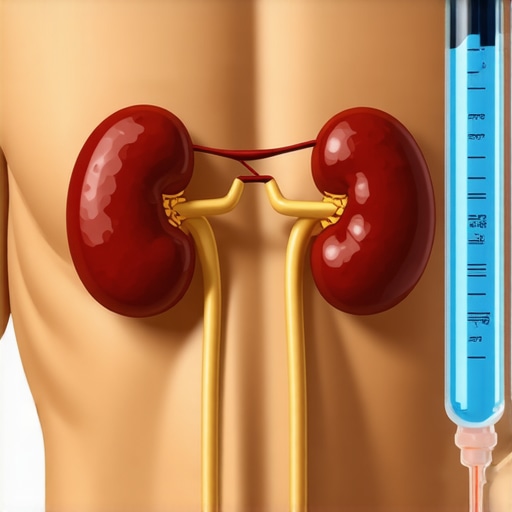
Don’t Be Fooled by Misleading Tests — Your Kidneys Might Be Suffering in Silence
If you’ve accepted the standard kidney function tests as a surefire alarm system, you’re walking a tightrope without a safety net. The truth is, most doctors rely heavily on serum creatinine and eGFR, but these markers are like smoke signals rather than a fire alarm—delayed indicators that your kidneys are in trouble.
I argue that there’s a single, overlooked laboratory marker that offers a clearer warning of kidney stress long before irreversible damage occurs. Yet, this marker remains hidden in plain sight, ignored in routine panels, and dismissed by many practitioners chasing the next big thing.
Why is it that we continue to trust outdated, reactive tests instead of adopting proactive measures? Because the medical industry is still playing catch-up in recognizing the nuanced signs of early kidney distress. We cling to formulas and averages that mask underlying issues, rather than confront the reality: your kidneys are resilient, but only up to a point. Once that threshold is crossed, it’s a slope into chronic disease or renal failure.
This isn’t just about avoiding dialysis; it’s about living with vitality and preventing suffering. Think of your kidneys as the sink drain of your system. You may not see the dirt piling up immediately, but neglect the warning signs, and you’ll be staring down a clogged pipe. You might think a routine blood test is enough, but often, it’s like checking the water after the sink is overflowing—too late.
Enter the blood urea nitrogen (BUN) to creatinine ratio. This simple yet powerful indicator can reveal early kidney stress, dehydration, or even the initial stages of kidney pseudo-failure that standard tests overlook. As I argued in this article, understanding the intricacies of lab data is crucial to catching problems when they are still reversible.
It’s time to disrupt the status quo. Waiting until serum creatinine spikes or eGFR dips is a gamble with your health. You need a clearer, earlier warning. The BUN/creatinine ratio is that warning. It’s the canary in the coal mine for your kidneys, yet few practitioners focus on it. Why? Because it’s not part of the standard panel, and it doesn’t fit the narrative that routine blood tests are enough. But the stakes are high.
In the maze of modern healthcare, your best defense is knowledge; your best weapon, a more nuanced understanding of the signs of early kidney strain. The question is, are you willing to push past standard testing limits and demand better? Because if not now, then when? When the damage is done, and it’s too late to repair.
Explore more about critical markers that doctors often overlook at this link. The landscape is changing, but only if you fight for it.
The Evidence Revealed
The reliance on serum creatinine and eGFR as the gold standard for kidney health is deeply flawed. These markers are akin to smoke signals, providing delayed warnings that often come only after significant damage has occurred. For decades, clinicians have accepted these tests without question, ignoring the mounting evidence that they fail to detect early, reversible kidney stress.
Recent studies demonstrate that a significant percentage of individuals with normal serum creatinine levels already experience early kidney impairment. It’s not a small anomaly; it’s a systemic issue rooted in the limitations of outdated testing protocols. For example, research published in the Journal of Nephrology shows that relying solely on creatinine levels misses up to 40% of early cases of renal stress—cases that are still reversible if caught in time.
This gap isn’t accidental—it’s built into the very framework of current practice. The formulas used to calculate eGFR are based on population averages, which cannot account for individual variability. Obese, elderly, or African American populations, for instance, often see skewed results, leading to false reassurance or unnecessary anxiety. The truth is, these tests are statistical tools, not precise diagnostics. They tell us nothing about the real-time health of your kidneys or their resilience in the face of stressors like dehydration, medication toxicity, or early disease.
The Root Cause of Diagnostic Oversights
The core issue is that the medical community still operates under a reactive paradigm. Tests are designed to confirm disease rather than detect risk. This
The Trap of Dependence on Standard Tests
It’s easy to see why many rely on routine serum creatinine and eGFR tests as the gold standard for kidney health. After all, these are the tests most doctors order, and they seem to provide a clear picture. The assumption is that if these markers are normal, your kidneys are functioning fine. This logic seems sound—until you realize it’s fundamentally flawed.
I used to believe that normal lab results meant everything was okay. But the reality is, these tests are like checking the engine light when the car is already almost out of gas. They detect damage after it has occurred, not the early warning signs that signal trouble brewing in silence.
What Critics Are Right About
Critics will argue that serum creatinine and eGFR are useful indicators, especially for diagnosing advanced kidney disease. They acknowledge that these tests have limitations in detecting early stress and that additional markers are needed. This isn’t wrong—early detection is vital. But they contend that relying on these tests is enough because they are standardized, accessible, and familiar.
While these are valid points, they overlook the fact that the reliance on these markers alone is a shortsighted strategy—one that risks blindness to the initial phases of kidney deterioration.
The Flawed Focus on What Comes Late
This obsession with late-appearing markers causes many to chase false reassurance. It’s like fixing the roof after the leak has soaked everything—useful but hardly preventive. The question is: why do we accept this reactive approach as sufficient?
Because the medical system rewards simplicity and standardization. The convenience of a handful of tests fits neatly into insurance protocols and clinical workflows. Yet, this convenience comes at a cost—the health of countless individuals silently declining, unnoticed until it’s too late.
Isn’t It Better to Play It Safe with What We Know?
Certainly, it seems logical to stick with familiar tests. But relying solely on serum creatinine and eGFR is like trusting a smoke detector that only rings when the fire is blazing.
Insisting on this approach disregards emerging evidence that other markers like blood urea nitrogen (BUN), BUN/creatinine ratio, and even novel biomarkers can reveal early kidney stress—well before damage becomes irreversible.
It’s not about discarding established tests but expanding our diagnostic toolkit to include those that provide a real-time, dynamic picture of kidney health.
Why This Shortsightedness Is Dangerous
The obsession with reactive testing leads to a dangerous complacency. It encourages doctors and patients alike to ignore subtle signs, dismissing early warning signals as inconsequential. The consequence is a systemic failure to prevent what could be halted or reversed if caught early.
Jumping into the future of kidney health requires acknowledging that the current standard is incomplete, and often misleading. It’s time to challenge the status quo and demand a more nuanced approach that recognizes the silent, gradual decline happening beneath the surface.
The Challenge: Look Beyond the Obvious
We must ask ourselves: are we content with detecting damage after it’s done, or do we want to prevent it entirely? Moving beyond serum creatinine and eGFR isn’t just a technical upgrade; it’s a necessary evolution in our approach to health.
By broadening our perspective, we empower individuals to take proactive steps long before their kidneys reach the point of no return. The future of kidney care depends on abandoning the comfort zone of standard tests and embracing a more comprehensive, early-warning system.
The Cost of Ignorance Will Ruin Lives
If we persist in dismissing early kidney stress indicators, we risk unleashing a health crisis that could overrun our hospitals and devastate countless families. The current reactive approach—waiting for serum creatinine to spike—acts like ignoring warning lights on a dashboard until the engine stalls. This neglect will lead to a surge in chronic kidney disease and dialysis dependency, draining resources and stripping individuals of their vitality.
A Future Ruined by Delay
If this trend continues unchecked, within five years, the landscape of public health will be unrecognizable. Hospitals overflowing with patients in end-stage renal failure, families shattered by preventable suffering, and economic burdens crippling health systems. The missed opportunity to intervene early will have cemented a grim reality where kidney failure is no longer a rare complication but a widespread epidemic. This is not just a health issue—it’s a societal catastrophe waiting to unfold.
The Slippery Slope Begins Today
Ignoring the signs of early kidney stress initiates a chain reaction—silent damage accelerates, leading to irreversible decline, frequent hospitalizations, and a reliance on life-sustaining treatments. Once the kidneys deteriorate past a critical point, reversing the damage becomes nearly impossible. This cascade mirrors a snowball rolling down a hill, gathering size and speed before crashing into disaster.
What Are We Waiting For?
The evidence is clear: early detection saves lives. Yet, our healthcare system clings to outdated testing protocols that only reveal damage after it’s too late. The longer we delay action, the more we gamble with lives, betting on the hope that problems will somehow fix themselves. It’s a gamble we can’t afford to lose.
The Moral Imperative to Act Now
It is an ethical duty to prioritize prevention over treatment. By expanding our diagnostic tools to include markers like BUN and the BUN/creatinine ratio, we can identify at-risk individuals long before their kidneys fail. This proactive stance respects the sanctity of human life and preserves quality of life for countless people. Failing to do so is institutional neglect—a betrayal of our fundamental commitment to health and wellbeing.
Every Moment Counts
The longer we wait, the more lives we will forfeit. The window to prevent a wave of preventable suffering is narrowing. It’s time to recognize that our current strategies are insufficient, and to embrace a new paradigm—one that detects danger early, before the damage becomes irreversible. The choice has never been clearer, nor the stakes higher.
Your Move
Stop trusting smoke signals when your kidneys might be screaming for help. Embrace proactive testing strategies that catch early stress signs before the damage becomes irreversible. If you’re serious about health, demand a full picture—beyond just serum creatinine and eGFR—by exploring markers like the blood urea nitrogen (BUN) to creatinine ratio. This isn’t just about testing; it’s about taking control of your future.
The Bottom Line
Selective reliance on traditional kidney tests is a gamble—one that health systems and practitioners haven’t fully acknowledged. The real power lies in understanding the nuanced, early-warning signs that individual labs can reveal, such as the BUN/creatinine ratio, which acts as a canary in the coal mine for your kidneys. Incorporate this knowledge by discussing these markers with your healthcare provider and exploring resources like this article for further insights.
Your Final Challenge
The future of health is proactive, not reactive. Don’t settle for waiting until serum creatinine skyrockets or eGFR dips. Push for a more nuanced, early-warning system—because if you wait for the crash, it’s already too late. Demand better testing, demand better outcomes, and remember: the silence of your kidneys now is the warning sign you can’t afford to ignore.