
Why 3D CBCT Scans Catch Oral Health Risks Regular X-Rays Miss
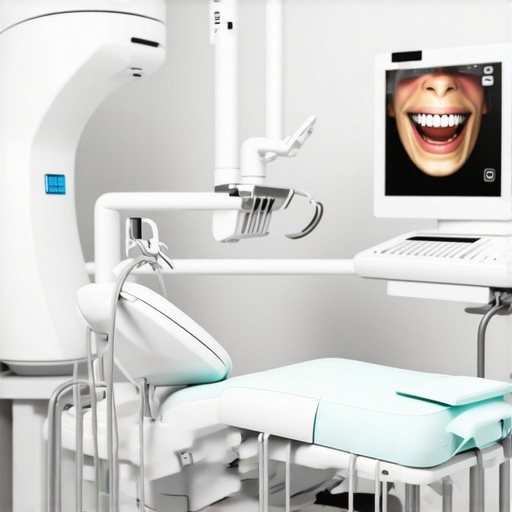
Why 3D CBCT Scans Catch Oral Health Risks Regular X-Rays Miss
In the evolving landscape of primary care dentistry, the tools used for diagnosis are just as critical as the treatments themselves. For decades, the standard protocol for assessing oral health involved traditional 2D X-rays – the bitewings and panoramic films most patients are familiar with. While these tools have served the industry well, they possess a fundamental limitation: they attempt to represent a complex, three-dimensional human head in a flat, two-dimensional image. This “flattening” of anatomy often leads to overlapping structures and hidden pathologies. Enter CBCT (Cone Beam Computed Tomography), a revolutionary technology that provides a 360-degree, high-definition view of the mouth, jaw, and surrounding structures. By capturing data in three dimensions, a dentist in culpeper va can identify risks that remain invisible on standard films, ensuring that patients receive the most accurate diagnoses possible.
The Technical Leap: How CBCT Differs from Traditional 2D X-Rays
To understand the superiority of CBCT, one must first understand how traditional imaging works. A standard panoramic or bitewing X-ray is essentially a “shadow” of your teeth. When the radiation passes through your jaw, it creates a flat image where the front and back of a tooth are compressed into a single plane. This is much like looking at a photograph of a dense forest; you can see the trees in the foreground, but you have no idea what is happening behind them or how deep the woods truly go. In contrast, using a CBCT scan is like walking through that forest. It allows culpeper va dentists to rotate the image, “slice” through different layers of tissue, and view the anatomy from any angle.
Technically, CBCT differs from medical CT scans as well. While a traditional medical CT uses a fan-shaped beam that circles the patient multiple times, CBCT uses a cone-shaped X-ray beam that completes a full scan in a single rotation. This efficiency is a hallmark of best dentistry practices because it captures teeth, soft tissues, nerve pathways, and bone structure simultaneously. Furthermore, while there is a common misconception about radiation levels, digital dental technology has made massive strides. Digital X-rays already utilize 80% to 90% less radiation than old-fashioned film, and while CBCT does involve more exposure than a single bitewing, it provides exponentially more data, often preventing the need for multiple exploratory procedures or failed treatments.
For any all smiles dentist, the goal is to move from reactive care to proactive precision. By utilizing 3D imaging, a dentist culpeper can see the density of the bone, the exact shape of the tooth roots, and the precise location of the maxillary sinuses – details that are frequently blurred or obscured in 2D formats. This level of detail is why many consider it the gold standard for modern dentistry services.
4 Hidden Risks 2D X-Rays Often Miss
When you visit an oral care dentist, you expect a clean bill of health. However, 2D X-rays can provide a false sense of security. Here are four specific risks that 3D CBCT scans are uniquely equipped to identify:
1. Nerve Pathway Mapping
One of the most significant risks in oral surgery, particularly during wisdom tooth extractions, is damage to the inferior alveolar nerve. On a 2D X-ray, the tooth root may appear to be touching the nerve, but it is impossible to tell if the nerve is actually in front of, behind, or intertwined with the root. A dentist culpeper va utilizing CBCT can map the exact 3D path of the nerve. This precision is vital to avoid permanent numbness or “paresthesia” in the lip and chin, a complication that traditional imaging simply cannot reliably prevent.
2. Sinus Proximity and Pathology
The upper teeth are located directly beneath the maxillary sinuses. In many cases, tooth roots actually extend into the sinus cavity. 2D X-rays often fail to show the thin membrane separating the two. If a culpeper dentist is planning an extraction or an implant without a 3D scan, they may inadvertently cause a sinus perforation or fail to notice a pre-existing sinus infection caused by dental issues. CBCT allows for a clear view of the relationship between the teeth and the airway, which is a cornerstone of comprehensive culpepper family dentistry.
3. Hidden Vertical Fractures
Perhaps the most frustrating issue for patients is “mystery” pain – pain that occurs when chewing but doesn’t show up on a standard X-ray. Often, this is caused by a vertical root fracture. Because 2D X-rays only show the tooth from the side, a fracture that runs front-to-back is invisible. These fractures are a leading cause of tooth loss, yet they are easily spotted on a CBCT scan. This diagnostic clarity is why advanced clinics are often the first choice for those seeking a dental care clinic near me when standard exams fail to provide answers.
4. Early Bone Loss and Periodontal Disease
While dental preventive care services are designed to stop gum disease, once bone loss begins, it must be tracked accurately. 2D X-rays only show bone levels on the “sides” of the teeth. They cannot show bone loss occurring on the facial or lingual (tongue-side) surfaces. CBCT provides a volumetric assessment of bone density, allowing dentists in culpeper va to intervene much earlier in the progression of periodontal disease, potentially saving teeth that would otherwise be lost.
Precision in Complex Procedures: Implants and Root Canals
In the realm of restorative dentistry, CBCT has moved from being a “luxury” to a necessity. For dental implants, the technology is indispensable. An implant requires a specific amount of bone height, width, and density to be successful. Relying on 2D images is a gamble; it’s similar to “Why Annual Physicals Fail to Catch Silent Heart Disease” – the surface-level data looks fine, but the underlying structure tells a different story. With 3D imaging, a dentist in culpeper va can virtually “place” the implant on a computer screen before the surgery even begins, ensuring it avoids nerves and stays within the strongest bone available.
Root canals also benefit immensely from this technology. The internal anatomy of a tooth is incredibly complex, often containing “accessory canals” that are smaller than a human hair. If a dentist misses one of these canals during treatment, the tooth will remain infected. At allsmilesdentalculpeper.com, the use of CBCT allows for the visualization of every microscopic canal, significantly increasing the success rate of endodontic therapy. This is a prime example of why patients should look for “How to Spot a High-Quality Clinic in a Strip Mall” – the presence of advanced diagnostic tech like CBCT is a major green flag.
Furthermore, in emergency situations, having access to 3D imaging can be the difference between a successful save and an unnecessary extraction. If you are seeking 24hr dental care for a traumatic injury, a CBCT scan can reveal jaw fractures or tooth luxations that a standard X-ray would overlook, allowing for immediate and accurate stabilization.
Safety First: Understanding Radiation and CBCT
A common question asked at any all smiles dentistry office is: “Is it safe?” It is important to put radiation into perspective. According to the Cleveland Clinic, digital dental X-rays use significantly less radiation than traditional film. While a CBCT scan does emit more radiation than a standard bitewing, the dose is still remarkably low compared to a medical CT scan of the head or chest. For example, a dental CBCT scan typically involves about the same amount of background radiation you would naturally receive during a cross-country flight.
The dental community follows the “ALARA” principle, which stands for “As Low As Reasonably Achievable.” This means that a best dentistry practice will not use CBCT for every routine cleaning. Instead, it is reserved for specific diagnostic needs – such as planning surgery, investigating unexplained pain, or evaluating orthodontic progress. By being selective, dentists culpeper va ensure that the benefits of the high-definition data far outweigh the minimal risks of exposure. This thoughtful approach to technology is a key part of “Why You Should Request Your Medical Records After Every Visit”; knowing what imaging was used and why helps you maintain a clear history of your cumulative exposure.
Additionally, for younger patients, specialized pediatric settings at allsmilesdentalculpeper.com ensure that the settings are adjusted for smaller frames, further reducing exposure while still providing the necessary clarity for growing jaws. Whether for a child or an adult, the goal is always maximum safety paired with maximum diagnostic accuracy.
What to Expect During Your CBCT Scan
If your all smiles dentist recommends a 3D scan, there is no need for anxiety. The process is entirely non-invasive and much faster than many expect. Unlike medical CT scanners where you must lie down inside a “tunnel,” a dental CBCT machine is open. You will typically sit in a chair or stand while a motorized arm rotates 360 degrees around your head.
The entire process usually takes between 10 and 40 seconds. During this time, you simply need to remain still. You won’t have to bite down on uncomfortable plastic tabs like you do with bitewings, making it an excellent option for patients with a strong gag reflex or those who require allsmilesdentalculpeper.com services for anxiety. Proper positioning is the most important factor; your dental assistant will help you align your chin and forehead to ensure the resulting image is crisp and clear. Once the scan is complete, the data is instantly sent to a computer where the dentist culpeper can reconstruct the 3D model and review it with you immediately.
This transparency is a hallmark of modern care. Being able to see your own jaw in 3D helps you understand your oral health in a way that looking at a blurry 2D film never could. It bridges the gap between clinical diagnosis and patient understanding, much like “The Hidden Relationship Between Chronic Stress and Lab Accuracy” helps patients understand the nuances of their bloodwork.
Conclusion: Investing in Diagnostic Clarity
While prophy dentistry and regular cleanings are the foundation of a healthy smile, they are only one part of the equation. True oral health requires a deep understanding of the structures beneath the surface. Traditional 2D X-rays are a valuable tool, but they are no longer the final word in dental diagnostics. The ability of CBCT to uncover hidden fractures, map nerve pathways, and assess bone density in three dimensions has transformed the way we approach everything from routine care to complex surgeries.
Choosing a culpeper dentist or dentist in culpeper va who invests in this technology is an investment in your own long-term health. It reduces the risk of surgical complications, prevents the failure of expensive treatments like implants and root canals, and provides peace of mind that no “silent” risks are lurking out of sight. If you are looking for comprehensive care, don’t settle for a flat perspective. Seek out the 3D clarity that only a modern oral care dentist can provide.
Whether you are visiting for primary care dentistry or a specialized procedure, ensure your provider is using the best tools available. Advanced technology, combined with a commitment to patient safety and education, is what defines the future of dental medicine in Culpeper and beyond.