
The Error of Skipping a Pediatric Flu Shot Because of a Sniffle
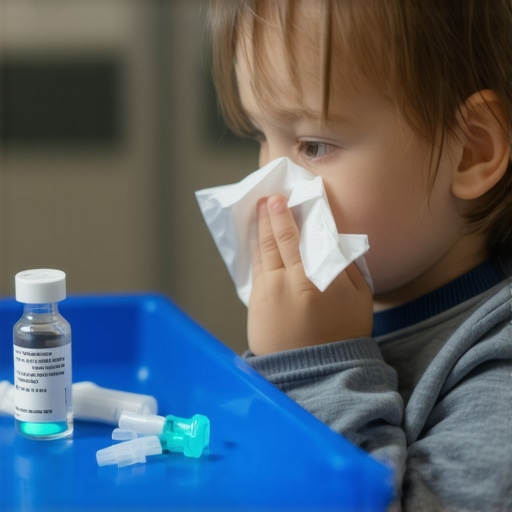
Your Sniffle Is Not a Valid Reason to Leave Your Child Unprotected
We have become a culture of delayers, perpetually waiting for the “perfect” moment that never arrives. When it comes to our children’s health, this hesitation isn’t just a minor oversight—it’s a calculated risk with potentially devastating consequences. Every year, I hear the same refrain from well-meaning parents: “I’ll get the flu shot as soon as their nose stops running.” It sounds responsible, doesn’t it? It sounds like you’re protecting their already taxed immune system. But I’m here to tell you that you are fundamentally wrong.
I argue that skipping a pediatric flu shot because of a simple sniffle is like refusing to put on a life jacket because you’re already a little damp from the spray. You’re ignoring the massive, approaching wave because you’re worried about a few drops of water. The reality is that a mild cold is a nuisance; the flu is a predator. By waiting for a “clear” day that might not come until February, you are leaving your child’s door unlocked while a known thief is roaming the neighborhood.
Waiting for Perfection is a Dangerous Game
Why are we still doing this? Why do we prioritize a slight congestion over a virus that sends thousands of children to the ER every winter? You might think you’re being a “cautious” parent by waiting, but true caution means prioritizing the greater threat. If your child has a mild cold without a high fever, their immune system is more than capable of handling a flu vaccine. In fact, many medical professionals will tell you that the “wait and see” approach often leads to no vaccination at all, as one sniffle leads into another throughout the season.
When you delay, you aren’t just stalling; you’re creating a gap in their armor. I’ve seen parents regret this decision when a minor cold turns into a secondary infection or, worse, when the actual flu hits a household before the vaccine has had its two weeks to become effective. If you’re constantly questioning every symptom, you should learn why most parents panic unnecessarily over a toddlers fever and realize that a runny nose is rarely a reason to halt preventative care.
The Fragile Child Myth is Hurting Our Kids
You might think your child’s immune system is “overloaded.” It isn’t. It’s a sophisticated machine designed to multi-task. It can fight a rhinovirus and recognize a flu protein at the same time. To suggest otherwise is to ignore decades of immunological reality. When we skip these appointments, we aren’t just risking our own kids; we are weakening the shield for the entire community. If you are truly concerned about their breathing or a sudden spike in temperature, know how to spot a real emergency in your toddlers breathing, but don’t use a standard winter cold as a shield for your own anxiety.
The wait-and-see approach is a luxury we cannot afford. Our clinics are full of parents who waited for the “right time” only to find themselves in an urgent care emergency when the flu finally struck. I see it every season: the regret in a parent’s eyes when they realize they chose a week of nasal congestion over a season of safety. It’s time to stop treating medical appointments like hair appointments that can be moved at the first sign of a bad day. Stop looking for reasons to say “not today.” The flu doesn’t wait for your child to be at 100% health before it attacks. In fact, it prefers when they’re already down. If you’re unsure about the severity of a current illness, you can always use a virtual triage before the ER to get a professional opinion, but don’t let a minor case of the “sniffles” be the reason your child faces a winter without protection. We need to stop treating life-saving medicine as an optional luxury that requires a perfectly clear calendar and a perfectly clear nose. Do it. Now. Not next week. The virus doesn’t care about your schedule.
The Biological Fallacy of The Weakened System
The core of the problem isn’t the runny nose; it is the fundamental misunderstanding of what an immune system actually is. We treat our children’s immunity like a bucket that can only hold so much liquid. We worry that if it’s already half-full with a common cold, the flu shot will cause it to overflow. This is a fiction. In reality, the immune system is an infinite manufacturing plant, capable of churning out millions of different antibodies simultaneously. To suggest that a minor rhinovirus ‘distracts’ the body from processing a vaccine is to deny the very evolution that kept our ancestors alive in much harsher environments.
When you look at the mechanism of a vaccine, it doesn’t demand ‘rest’ from the body. It demands recognition. The body is perfectly capable of recognizing a minor intruder while preparing for a major invasion. By delaying the shot, you aren’t giving your child a break; you are leaving them vulnerable during the exact window when they need protection most. They are exposed. They are left without a shield because we’ve prioritized a clear sinus over a functional immune response.
The Math of Viral Exposure
Let’s look at the numbers, because the numbers don’t have feelings and they don’t care about your schedule. Year after year, data from the CDC consistently shows a chilling pattern: roughly 80% of children who die from the flu are those who were not fully vaccinated. That 80% is not just a data point; it is a categorical indictment of the ‘wait and see’ philosophy. It is a systemic failure of risk assessment. We are so terrified of a localized, 24-hour low-grade fever from a shot that we ignore the statistical reality of a week-long, life-threatening viral attack.
The math of the delay is equally brutal. It takes two full weeks for the flu vaccine to reach its peak efficacy. If you wait for the sniffles to end in late November, and the flu hits your daycare in early December, your child is effectively unvaccinated. You didn’t protect them by waiting; you effectively signed a permission slip for the virus to take hold. It was a choice made in the name of comfort that resulted in a total lack of security.
A Broken Perception of Risk
${PostImagePlaceholdersEnum.ImagePlaceholderB}The problem isn’t a lack of information. The problem is a broken internal compass for risk. We live in an age where we can access telehealth for a quick consultation or visit an urgent care for lab tests within the hour, yet we use this convenience to justify procrastination. We’ve convinced ourselves that because medical intervention is always available, the timing of preventative care is negotiable. It is not.
We have become obsessed with the ‘perfect’ state of health. We want our children to be 100% vibrant before we introduce a vaccine, forgetting that vaccines were designed specifically for a world that is messy and imperfect. The virus is not polite. It does not wait for a clear calendar. It does not check if your toddler had a good night’s sleep or if their cough has subsided. When we treat the flu shot as a secondary priority—something to be squeezed in only when the stars align—we are teaching ourselves that prevention is an optional luxury. It is a dangerous lie. We are choosing the comfort of a quiet afternoon over the long-term survival of our most vulnerable population. The sniffle is a distraction; the flu is the threat. Stop confusing the two.
I understand the logic behind the hesitation. It’s the most common trap in modern parenting: the belief that we must protect our children from even the slightest discomfort in the pursuit of long-term health. The argument goes like this: if a child is already fighting a cold, their body is ‘busy.’ Adding a vaccine to the mix is seen as an unnecessary burden, a second front in a war the child is already fighting. This perspective isn’t born of ignorance; it’s born of a protective instinct that feels entirely rational. You don’t want to confuse the clinical picture. If the child develops a fever tonight, is it the rhinovirus or the vaccine? By waiting, you’re looking for a clean slate. I used to believe this too, until I spent enough time in pediatric wards to see that the ‘clean slate’ is a mirage that costs lives. The reality is that waiting for a child to be 100% healthy during a viral season is like waiting for a quiet day in the middle of a hurricane to board up your windows.
The Myth of the Overwhelmed Child
The idea that a vaccine can ‘overload’ an active immune system is perhaps the most persistent piece of medical misinformation in our culture. We treat immunity like a battery with a finite charge, but it’s actually more like an elite intelligence agency. It can track thousands of threats simultaneously without losing focus. When you introduce a flu shot to a child with a sniffle, you aren’t ‘distracting’ their body. You are providing it with a critical update. To suggest a toddler’s system can’t handle a dead virus fragment because they have a runny nose is to vastly underestimate the biological marvel that is the human body. ${PostImagePlaceholdersEnum.ImagePlaceholderC}
This ‘wait and see’ mentality creates a logistical nightmare that almost always favors the virus. Think about the timeline. A ‘mild cold’ in a toddler usually lasts seven to ten days. In a typical household, one child’s cold is immediately followed by the sibling’s cold, which is then followed by a secondary ear infection or a lingering cough. Before you know it, three weeks have passed. That’s twenty-one days of total vulnerability. If the flu enters your social circle during that window, your child has zero defense. You’ve traded the minor risk of a temporary fever for the very real risk of a week-long battle with a virus that causes severe dehydration and respiratory distress.
The argument about ‘confusing the symptoms’ is equally hollow when scrutinized. Yes, a vaccine might cause a mild fever. But we have tools for that. We have thermometers, we have pediatricians on call, and we have the clinical knowledge to distinguish between a localized reaction and a worsening primary illness. Choosing to remain unprotected because you want to avoid a night of checking temperatures is a classic error in risk assessment. You are choosing a certain, manageable inconvenience over a statistically significant, life-threatening danger. It is the definition of being penny-wise and pound-foolish.
We must also address the ‘piling on’ theory—the fear that a vaccine will somehow make the current cold worse. There is zero clinical evidence to support this. The immune response to an inactivated flu vaccine is localized and specific. It does not drain the ‘energy’ needed to fight a common cold. In fact, by delaying the shot, you are often pushing the vaccination date into the peak of the flu season, when the healthcare system is most strained and the likelihood of exposure is at its highest. You aren’t being cautious; you are being a procrastinator with a medical justification. The ‘perfect’ time for a flu shot isn’t when the child is healthy; the perfect time was yesterday. If they are well enough to go to daycare or play in the yard, they are well enough to get their shot. Period.
The fallout of this pervasive hesitation extends far beyond a single household’s feverish night. We are witnessing the slow-motion erosion of our collective defense. When “I’ll wait until next week” becomes the default setting for an entire demographic, the statistical firewall that protects the most vulnerable—the infants too young for shots, the elderly, and the immunocompromised—begins to crumble. We are trading our shared security for a hollow sense of personal timing. This is the slippery slope of modern parenting: once we begin to treat life-saving interventions as something to be negotiated based on a child’s mood or a minor sniffle, we lose the urgency required to fight a pathogen-level threat. We are moving from a society that values prevention to one that prioritizes a false sense of physiological comfort.
If this trend of medical procrastination continues, the world five years from now looks increasingly grim. We will see the return of viral surges that should have been relegated to history books, all because we were too busy waiting for a “perfect” health window that doesn’t exist in nature. Our clinics and urgent care facilities will be clogged with cases that were entirely preventable, straining a system that is already on the brink. We will have raised a generation where parents fear the preventative more than the pathogen. It is a fundamental reversal of logic that turns our medicine into a hobby rather than a necessity. The cost of this inaction is measured in missed school days, lost wages, and, in the worst cases, empty chairs at dinner tables. It’s like refusing to use a fire extinguisher on a growing flame because you don’t want to get dust on the carpet. You are so preoccupied with a minor, temporary mess that you are willing to let the entire structure burn to the ground.
Is it too late to change?
It is not too late, but the window of opportunity is closing. Every season we repeat this cycle of delay, we embolden the virus and weaken our communal resolve. We must move past the idea that medicine is a “nice to have” when conditions are optimal. Real protection happens in the mud, in the rain, and yes, even during a minor cold. We must stop viewing lab tests and vaccines as optional hurdles and start seeing them as the essential infrastructure of a healthy life.
The Point of No Return
We are approaching a societal tipping point where the “wait and see” philosophy becomes the cultural norm. ${PostImagePlaceholdersEnum.ImagePlaceholderD} When we reach that stage, public health becomes a series of individual suggestions rather than a community-wide effort. The virus thrives in that environment of indecision. It doesn’t need us to be anti-science; it just needs us to be slow. If we don’t reclaim the urgency of preventative care, we are essentially surrendering our children’s health to the whims of the calendar. The warning is clear: the next major outbreak won’t be caused by a lack of discovery, but by a lack of delivery. We have the tools—from telehealth consultations to rapid screenings—we just refuse to pick them up until we feel “ready.” By then, the virus has already moved in. This is the end of the line for excuses. The health of our children depends on a hard truth: a sniffle is temporary, but the consequences of delay are permanent. We are currently staring at the embers of a functional health system, and the choice to act is slipping through our fingers. Choose protection over perfection, or prepare to manage the disaster that follows.
The Decision That Can’t Wait
We are currently operating under a collective delusion that health is a static state—a finish line we must reach before we are permitted to defend ourselves. This is not how human biology works. If you are still hesitating because of a minor cough or a slightly stuffy nose, you are fundamentally misunderstanding the nature of prevention. You should realize that the logic behind why you should never wait for a sick visit for these 3 symptoms applies to the flu shot just as much as it does to an acute injury. We have the technology, from rapid lab tests to telehealth consults, to know exactly where our children stand. There is no excuse for the ‘wait and see’ approach in an age where urgent care is accessible and medical advice is instant.
The Final Verdict
Choosing to skip or delay a pediatric flu shot because of a minor cold is the ultimate parenting paradox: we are so afraid of a small, manageable reaction that we inadvertently invite a massive, unmanageable catastrophe.
The Twist
The irony of modern parenting is that we spend our lives obsessively sanitizing every surface our children touch, yet we hesitate to provide them with the internal biological protection they need to fight the one thing a wet wipe can’t stop. We are protecting the environment instead of the child. We worry about ‘overloading’ their system with a vaccine but ignore that chronic care management often begins with preventing the first domino from falling during childhood. If you are worried about the logistical headache of a clinic visit, understanding maximizing urgent care efficiency with advanced lab test technologies can help you see that the process is faster and more precise than ever before.
Stop waiting for the perfect day that never comes. The flu is already here, and it doesn’t care about your schedule or your child’s congestion. Your child’s immune system is ready for the challenge. The real question is: are you?