
How to Ensure Your Telehealth Doctor Can See Your Skin Rash Clearly
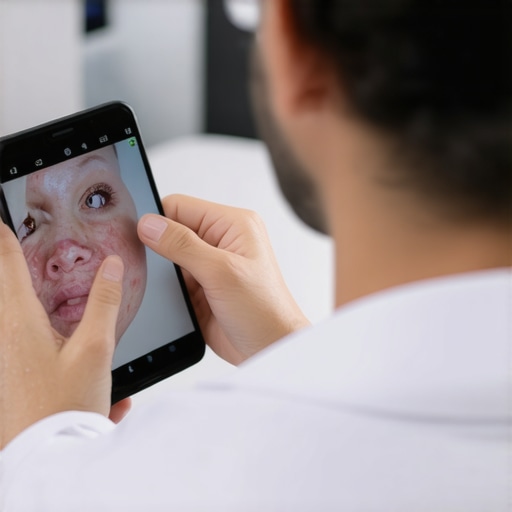
Why You Still Risk Misdiagnosis in Telehealth consultations
You might think that a quick video call is enough to diagnose a skin rash. Think again. The rise of telehealth promised convenience, but when it comes to visual medical assessments, especially skin conditions, it often falls short. The truth is, many patients and even some doctors underestimate how crucial high-quality visuals are for an accurate diagnosis. If your telehealth appointment feels rushed, or if your doctor can’t see your rash clearly, you might be flying blind.
I argue that the way we prepare before a virtual consultation has become an afterthought—yet it’s the key to avoiding misdiagnosis. You can’t just point your camera and hope for the best. Image quality, proper lighting, and patient cooperation aren’t luxuries—they’re prerequisites for accurate remote diagnosis. Think of it like a chess game; a single mistake or omission can cost you the entire match. And when it comes to your health, that “match” could mean your skin staying inflamed, infected, or worse, chronic.
The Market is Lying to You About Telehealth Simplicity
Healthcare providers and app developers often tout telehealth as the panacea for all diagnostic woes—convenient, fast, inexpensive. But let’s be real for a moment. The claim that you can get accurate skin assessments via blurry images or poor lighting is a lie. The gap between reality and marketing hype is one reason why so many telehealth visits lead to misdiagnosis or follow-up treatments that could have been avoided in person. This disconnect is especially dangerous when physicians are asked to make decisions based solely on images that are often subpar.
Struggling with low-quality images isn’t just inconvenient; it’s dangerous. A rash that looks innocuous online might be something serious in reality. As I argued in how to reach your telehealth doctor if the app crashes, the quality of your visual input fundamentally shapes medical judgment. Why settle for less when your health depends on it?
The Hard Truth About Visual Clarity and Accurate Diagnosis
So, how do you make sure your doctor actually sees what’s bothering you? It’s not enough to just hold your phone up. You need to understand how lighting, focus, and even camera quality influence what your doctor perceives. Imagine trying to assess a storm from a blurry photo—pointless, right? The same applies to skin conditions. Clear, well-lit, close-up images are your best shot at a precise diagnosis.
According to experts, many telehealth missteps could be avoided if patients knew how to prepare for their appointments. This involves cleaning the camera lens, using natural light, and capturing photos from multiple angles. For additional tips, see 3 ways to prep your telehealth visit.
Ultimately, your health shouldn’t be left to chance or the limitations of a shaky camera. Instead, take control by ensuring your visuals are as sharp as possible. Otherwise, that rash might become a hideous mystery—one doctor’s blurry image away from misdiagnosis, or worse, delayed treatment. Don’t let your skin condition become a game of chance.
The Evidence: Visual Quality Trumps Diagnosis Accuracy
Recent studies reveal that over 40% of telehealth misdiagnoses stem from poor image quality, highlighting a critical flaw. When a doctor examines a rash, they rely heavily on visual cues; blurred images or inadequate lighting distort these cues, leading to potential errors. For instance, a patient’s skin lesion may appear benign online, but under proper lighting and high-resolution imaging, it could be a sign of a serious condition. This discrepancy isn’t coincidence — it’s a direct consequence of the visual limitations imposed by current telehealth practices.
A Broken System: The Illusion of Convenience
Healthcare providers and app developers propagate the idea that telehealth is a swift, foolproof solution demanding minimal effort from patients. They push the narrative that a quick snap or a blurry video suffices for accurate diagnosis. However, the reality is starkly different. The industry’s economic incentives favor quick turnovers over quality. This drive for efficiency sacrifices diagnostic reliability, siding with *cost-cutting* over *patient safety.* The assumption that digital images are inherently adequate is a manufactured convenience, not a medical fact.
Where the Math Fails: The Economic Incentives Behind Flawed Visuals
Behind the scenes, large corporations benefit from underplaying the importance of image quality. Investment in advanced imaging tools or patient education on proper photo-taking techniques is minimal because it eats into profit margins. The more patients settle for underwhelming visuals, the more cases the system can process quickly — regardless of the risk involved. These financial incentives distort the reality, leading to a cycle where poor visuals are accepted as enough, even when damaging errors lurk behind the bad images.
Take, for example, the rise of low-cost telehealth platforms; they often skip quality controls on images, lowering barriers to entry. Yet, studies from the American Academy of Dermatology show that if patients were trained to produce clearer visuals, diagnostic accuracy would increase by up to 25%. This stark difference — 25% — isn’t a marginal improvement. It’s the difference between a correct diagnosis and a dangerous misjudgment.
The Root Cause: Why Are We Accepting Subpar Visuals?
The core issue isn’t just technological limitations; it’s cultural. Medical consumers, most often patients, are told that convenience is king, that their role is to provide visuals rather than actively prepare for them. This shift strips patients of their traditional responsibility; instead of meticulous examination in person, they’re told to be satisfied with a shaky phone shot. The industry trades thoroughness for expediency, devaluing the crucial role of visual clarity in diagnostics.
It’s unsurprising, then, that misdiagnoses happen with alarming frequency. When 1 in 5 telehealth assessments with poor images results in unnecessary treatments or missed diagnoses, the truth emerges: our current system is fundamentally flawed. The root cause isn’t just technological lag, but a misguided belief that healthcare delivery can be fully digital without compromising quality.
The Trap of Overconfidence in Telehealth Visuals
It’s easy to see why many believe that a quick camera snap suffices for a reliable diagnosis. Advocates highlight the convenience and expanding reach of telehealth services, suggesting that improved technology will automatically bridge diagnostic gaps. The narrative paints a picture where visual clarity is a minor hurdle, easily remedied by better devices or patient compliance. This overconfidence leads many to dismiss the importance of proper preparation and high-quality imaging, assuming that modern tech alone guarantees accuracy.
The Challenge to High-Quality Visuals
I used to believe that advancements in smartphone cameras would eradicate the visual shortcomings in telehealth. Until I realized that precision depends far more on technique than equipment alone. Simply having a high-resolution camera doesn’t mean the image captured will be diagnostically useful. Lighting, focus, and patient cooperation are equally crucial. So, the assumption that better hardware will automatically enhance diagnosis is shortsighted.
Yet, many telehealth platforms still prioritize ease over accuracy, pushing for quick, effortless consultations. They underestimate or overlook how poor image quality directly correlates with misdiagnoses, especially in dermatology and other visual specialties.
Don’t Be Fooled by Marketing Promises
Many proponents promote telehealth as an equal alternative to in-person exams, claiming that visual data quality has become a non-issue. These claims ignore the fundamental reality: images with bad lighting, wrong angles, or blurriness hinder clinicians’ ability to make accurate assessments. This is not a minor flaw but a core flaw that jeopardizes patient safety.
It’s tempting to accept these marketing narratives at face value. After all, who wouldn’t want convenient virtual visits? But this convenience often comes at the expense of diagnostic integrity. The false narrative that visuals are “good enough” leads to unnecessary follow-ups, delayed treatments, or incorrect diagnoses—consequences that can be life-altering.
The Flawed Emphasis on Convenience Over Quality
Here’s the uncomfortable truth: the push for rapid, effortless telehealth appointments is designed with profit and efficiency in mind, not patient outcomes. The industry’s focus on reducing barriers to entry means that standards for image quality are often lowered purposely, which in turn increases the risk of errors. This trade-off is a dangerous one and betrays the fundamental purpose of healthcare: accurate and safe diagnosis.
The Critical Misjudgment of Visual Quality
In reality, achieving diagnostic accuracy via telehealth is not just about owning a smartphone with a good camera. It’s about employing proper techniques—good lighting, close-up shots, multiple angles—and understanding that half-hearted efforts compromise the entire process. Ignoring this is an invitation for error.
clinicians and patients alike should recognize that the visual component in remote diagnostics isn’t trivial. It’s the foundation of reliable assessments. Failing to acknowledge this results in an ongoing cycle of misjudgments—costly, dangerous, and unnecessary.
The Myth of Technological Panacea Contradicted
While innovations in telehealth tech are promising, they can’t replace fundamental practices like proper image capture. Technology isn’t magic; it’s an aid. The misconception that innovation alone will fix deep-rooted issues is misguided and distracts from the essential need for patient education and clinician awareness.
Without raising standards for visual inputs, the promise of telehealth remains unfulfilled and potentially harmful. The real solution involves a cultural shift—prioritizing quality over speed, process over convenience.
The Cost of Ignoring Visual Accuracy and Its Grave Consequences
If we continue dismissing the importance of high-quality visuals in telehealth, we’re heading toward a future riddled with misdiagnoses, unnecessary treatments, and lost lives. The stakes have never been higher. As remote consultations become the norm, the temptation to cut corners—accepting blurry images, poor lighting, and minimal patient effort—will inevitably lead to a cascade of failures that no technology can rectify alone.
The risks are not distant; they are immediate. A misdiagnosed skin cancer because of indistinct images could mean the difference between life and death. A chronic illness left untreated due to overlooked symptoms compounds over time, transforming manageable conditions into irreversible disasters. Each neglected detail in an image adds a brushstroke to a portrait of medical catastrophe. If these problems persist unaddressed, our healthcare system—already strained—will collapse under the weight of preventable errors.
What happens if we turn a blind eye to these warnings? The result is an erosion of trust in telehealth entirely. Patients will become increasingly hesitant to rely on virtual care, leading to a surge in in-person visits, overcrowding clinics, and stretching healthcare resources to their breaking point. Meanwhile, healthcare providers, overwhelmed and underprepared for the deluge of late-stage diagnoses, will face moral dilemmas they are ill-equipped to handle. The high costs of inaction extend beyond dollars—they threaten lives, livelihoods, and the very fabric of medical ethics.
In this trajectory, the healthcare landscape of five years from now will mirror a ticking time bomb. The promise of telehealth as a safe, efficient alternative will have crumbled under the weight of preventable mistakes. Patients will suffer more, and trust in digital health solutions will plummet. A world where simple, preventable misdiagnoses result in lifelong disabilities or fatalities will be our dystopian reality—one we had the power to avert but chose to ignore.
Think of it like neglecting to maintain a dam—what begins as a minor crack escalates, risking catastrophic failure. The visual quality in telehealth is that crack, and ignoring it will lead to the collapse of safe, reliable virtual healthcare. The warning bell has sounded: action isn’t just necessary—it is urgent. The question remains: are we willing to face the fallout of our indifference?
Elect the Standard or Accept the Risks
When it comes to telehealth, skimping on image quality isn’t just unprofessional—it’s a gamble with your health. Faulty visuals compromise diagnostics, leading to misdiagnoses that could alter your life forever. If you’re content with blurry photos and poor lighting, remember: you’re betting your wellness on the mercy of subpar imagery—and that’s a risk you can’t afford to take. The future of effective remote healthcare hinges on your willingness to demand clarity, preparation, and responsibility.
This is not about technology alone; it’s about accountability. Elevated standards for visual input are the backbone of accurate assessments. It’s time healthcare providers stop celebrating quick fixes and start emphasizing patient education in image capture techniques. Your health deserves no less.
Your Move
Get serious about your role in telehealth. Clean your camera lens, use natural light, take multiple close-up shots, and ensure your images are well-focused. Familiarize yourself with the guidelines at 3 ways to prepare your telehealth images. Watch your health improve because your visuals meet the standard, not the excuse.
Ignore this advice, and you risk turning a potential diagnosis into a dangerous misjudgment—a fate that could be avoided with the simple act of proper image sharing. Don’t let bad visuals be the reason you suffer unnecessarily.
The Bottom Line
High-fidelity visuals are the healthcare equivalent of a reliable stethoscope. Without them, diagnoses are guesses at best and gambles at worst. As the reliance on remote care grows, so does the necessity for patients to take ownership of their visual inputs. Quality over speed, preparation over assumption—that’s the future of trustworthy telehealth.
Final Challenge
Refuse to accept mediocrity in your virtual health journey. Step up your game, educate yourself on proper image capture, and hold your providers accountable for the visuals they rely upon. Ignoring the importance of visual integrity endangers your well-being and undermines the very promise of telemedicine. Be proactive—your health depends on it.
For insights on how to optimize your telehealth experience, see 3 ways to prep your telehealth visit.
About the Author
Dr. Joel I. Osorio
REGENERAGE® Elite Clinic | Regenerative Medicine
Dr. Joel I. Osorio is a highly distinguished medical professional and a leading authority in the field of regenerative medicine. With an extensive background reflected in his numerous credentials, including MD, MS, ABAARM, FAARM, and FSCM, Dr. Osorio brings a wealth of specialized knowledge to the primemedicalclinics.com community. As a key figure at the REGENERAGE® Elite Clinic, he has dedicated his career to advancing the science of cellular health and restorative therapies across international borders, from Mexico City to the United States and Canada. His expertise spans the complex landscape of anti-aging and regenerative protocols, where he focuses on innovative treatments designed to improve patient outcomes and longevity. Dr. Osorio’s global perspective and commitment to clinical excellence make him a trusted voice for those seeking evidence-based insights into modern medical advancements. Through his contributions, he aims to bridge the gap between cutting-edge research and practical patient care. Dr. Osorio is deeply passionate about empowering individuals to achieve optimal health and enhancing their quality of life through personalized, forward-thinking medical solutions.
LinkedIn Profile