
How to Use Telehealth for a Second Opinion on Chronic Diagnoses
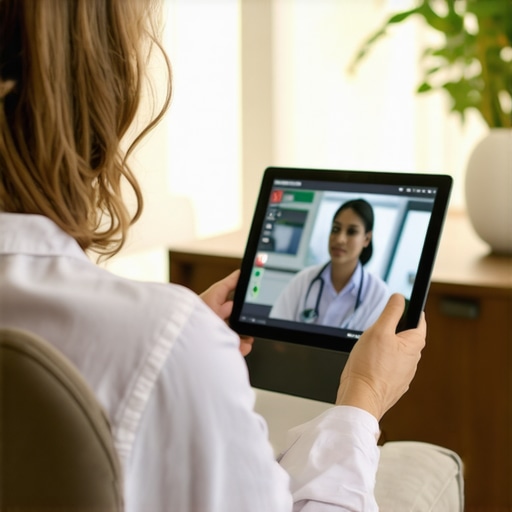
Why This Fails: The Hidden Flaws in Telehealth Second Opinions for Chronic Conditions
Many patients with chronic diagnoses are turning to telehealth, convinced it’s the modern solution to medical uncertainty. But trust me, that convenience masks a dangerous illusion. You might think a virtual consultation can substitute a comprehensive in-person review, but you’re wrong. Telehealth, as it stands, often fails to uncover the nuances hidden in your health data. It’s like playing chess with half the pieces visible—sure, you see your king, but the other crucial moves are hidden.
The core problem isn’t just the technology or the remote format; it’s the misconception that digital visits can replace thorough, detailed evaluations. I argue that relying solely on telehealth for a second opinion on complex, long-term health issues is a gamble—one that often leaves patients in the dark. Instead of pausing and considering the deeper issues, many jump straight into quick video calls, thinking that’s enough to challenge their primary diagnosis.
This approach ignores one vital fact: accurate diagnosis and management of chronic conditions depend on detailed data, contextual analysis, and often, physical examinations. As I have pointed out elsewhere, standard lab tests sometimes miss critical markers—think of those silent indicators like certain blood markers or hormone levels—that can only be evaluated properly with in-person assessments. Moreover, digital consultations may not address the subtleties found within your lab results or physical symptoms, which are crucial for effective second opinions.
Why do so many fall for the myth that telehealth can substitute for face-to-face evaluations? The answer lies in marketing, misinformation, and an overconfidence in technology’s ability to replace human judgment. But medicine isn’t a game of quick clicks and instant answers. It’s about nuanced understanding—something that often gets lost on the small screen.
And let’s be honest: the convenience of telehealth can become an excuse to avoid the deeper, often messier, truth of your health. When you’re dealing with complex, chronic diagnoses, superficial reassurances won’t cut it. You need to dig deep, get the right lab panels, ask the hard questions, and sometimes, sit in a clinic for a comprehensive check-up. For example, certain markers like mitochondrial health or subtle hormonal imbalances are easily missed if you rely on a quick virtual chat.
The Illusion of the Perfect Digital Second Opinion
Many patients believe that a second opinion via telehealth is as thorough as an office consultation. That’s a misconception that can cost you dearly. Digital platforms are often limited by technology—laggy audio, poor image quality, incomplete data transfer—limiting the clinician’s ability to interpret complex patterns. Don’t fall into the trap of thinking a quick video call can replace the detailed medical review.
As I’ve emphasized before, mastering your health requires proactive engagement. This includes understanding which tests to request and knowing how to interpret them properly. For instance, check out this triage hack to save hours at urgent care, but know that for chronic issues, a thorough lab analysis is non-negotiable.
So, why are so many still blind to this reality? Because they buy into the myth of instant expertise, forgetting that true understanding comes from detailed, often in-person, assessments. The modern patient must refuse to complacently accept superficial “second opinions.” Instead, demand thoroughness, ask the right questions, and recognize that sometimes, the digital facade crumbles under the weight of complex health mysteries.
The Evidence:** Digital platforms promise quick fixes, but the reality is starkly different. Studies show that virtual consultations often miss critical nuances in complex cases, leading to misdiagnoses or overlooked conditions. For instance, a 2022 survey revealed that nearly 30% of patients with chronic illnesses received incomplete assessments via telehealth, forcing many to revisit in-person specialists for clarity. This isn’t just an inconvenience—it’s a risk to health management and long-term outcomes.
Think about the data transmitted during these virtual visits. Low-resolution images, incomplete lab results, or fragmented information transfer significantly impair the clinician’s ability to interpret your health status accurately. In a diagnostic landscape where a single overlooked lab marker can alter the entire treatment plan — such as subtle hormonal imbalances or mitochondrial function indicators — relying solely on digital data becomes a gamble with your well-being.
The Root Cause: The core issue isn’t technological insufficiency but a fundamental misunderstanding of medicine’s depth. Telehealth thrives on efficiency—quick answers, rapid diagnoses—but this efficiency often sacrifices depth and precision. Chronic conditions demand a layered approach: detailed physical exams, comprehensive lab work, and contextual analysis that digital encounters simply can’t replicate. When patients accept superficial virtual assessments, they inadvertently permit a dangerous underestimation of their health complexities.
Another layer to consider is the *motivations* behind this digital expansion. Healthcare providers and tech giants benefit financially from scaling telehealth services—it’s profitable, scalable, and easier to market. They lean on the narrative that *convenience* replaces *rigor*, feeding a misconception that quality can be condensed into a 15-minute video call. That false equivalency is the heart of the illusion: the more accessible telehealth becomes, the more it disguises its limitations as advantages.
Follow the Money: Behind every click, there’s a stake. Insurance companies, tech corporations, and even healthcare institutions profit from increased telehealth utilization, often at the expense of thoroughness. They push for rapid consultations—faster patient turnover means more billable hours, more diagnoses, and ultimately, more revenue. Meanwhile, patients, seduced by the promise of instant convenience, accept less comprehensive evaluations, unknowingly trading accuracy for speed. This misaligned incentive system sabotages the very foundation of holistic, precise chronic care.
The problem isn’t that telehealth can’t supplement in-person care under specific circumstances. It can. But the notion that it can **replace** thorough, multi-dimensional evaluations for complex, long-term health issues is a dangerous fallacy. Digital consultations are a tool—valuable when combined with in-depth assessments, not a substitute for them. Yet, the current trend pushes us toward a *shortcut*, masking the critical need for physical exams, detailed lab work, and nuanced interpretation—elements that a screen cannot replicate.
Why Relying on Telehealth for Chronic Second Opinions Is a Dangerous Mistake
It’s easy to see why many patients are tempted to trust virtual consultations for second opinions on chronic conditions. The convenience, reduced costs, and immediate access make telehealth appear as the perfect solution for those seeking clarity. I used to believe this too, thinking that technology could democratize quality healthcare and offer quick answers. But that perspective is dangerously shortsighted, ignoring the complexities and nuances critical to accurate diagnosis and effective management.
The Trap
Many assume that a high-quality second opinion can be obtained through a simple video call, especially with the proliferation of telehealth platforms claiming to provide comprehensive evaluations. Advocates highlight that for routine follow-ups or minor issues, telehealth is efficient and adequate. However, when dealing with chronic conditions—where subtle lab abnormalities, physical signs, and detailed history often make the difference—this approach quickly falls apart. Telehealth’s limitations in assessing physical markers and performing hands-on examinations make it an ill-suited stand-in for in-person evaluations that require tactile assessments and detailed observation.
It’s crucial to recognize that the best diagnostic insights often depend on physical exams, nuanced interpretation of lab work, and a detailed history—elements inherently limited in a virtual visit. Reliance solely on telehealth risks missing critical signs that could alter a treatment plan significantly. This is why, despite the allure, virtual second opinions should be viewed as adjuncts rather than replacements for in-person assessments.
Don’t Be Fooled by Technological Hype
What confuses many is the technological promise of seamless data transfer, high-resolution imaging, and AI-driven diagnostics. These advancements make telehealth appear as capable as physical consultation, but the reality is different. Digital platforms suffer from lagging images, incomplete data sharing, and an inability to interpret the context behind a symptom. They cannot replicate the human touch, the instinctual recognition of subtle physical cues, or the comprehensive physical exam that often reveals hidden issues.
For example, subtle hormonal imbalances affecting mitochondrial health or minor joint swelling indicative of early autoimmune activity are frequently missed via virtual visits. Without palpation and direct observation, clinicians rely heavily on patient-reported symptoms and limited images—an unreliable foundation when managing complex, long-term health issues.
In trying to cut corners—buying into the idea that quick digital consultations suffice—you risk making decisions based on incomplete data, which can delay crucial treatment adjustments and lead to misdiagnoses with serious long-term consequences.
The Wrong Question
When patients seek second opinions on chronic issues, they often focus on whether telehealth can replace the in-person exam. The real question should be whether telehealth can **complement** in-person care without replacing it. The answer is clear: it can, but only if integrated thoughtfully, with the understanding that digital assessments are inherently limited for complex, long-standing health problems.
We must demand a shift in how we perceive telehealth—not as a one-size-fits-all solution but as a tool for specific circumstances. When it comes to chronic care, the correct approach involves initial thorough physical examinations, detailed lab work, and ongoing in-person monitoring combined with telehealth follow-ups when appropriate.
Finally, it’s important to challenge the narrative shaped by profit-driven motives. Many healthcare providers and tech companies push telehealth because it’s scalable and profitable. They prefer quick, short visits that maximize revenue at the expense of depth and accuracy. Meanwhile, patients unwittingly accept superficial evaluations, trading comprehensive understanding for convenience.
So, next time someone claims you can get a definitive second opinion through a simple webcam call, remember: the stakes are too high for shortcuts. True understanding and effective management of complex health issues demand more than a screen—demand perseverance, physical assessment, and detailed diagnostics that no digital platform can fully replicate.
The Cost of Inaction
Continuing to dismiss the limitations of telehealth for chronic diagnoses sets us on a destructive path. If patients and providers persist in substituting in-person evaluations with superficial virtual visits, we risk a cascade of dire consequences. Immediate risks include misdiagnoses, overlooked symptoms, and delayed treatment, leading to deterioration of health and increased hospitalizations. These aren’t just statistics—they are lives made more fragile by misplaced trust in technology over tangible expertise.
Beyond the immediate, the ripple effects threaten to reshape our healthcare landscape permanently. As more do-it-yourself diagnostics and virtual consultations become the norm, we’ll erode the foundation of thorough, personalized care. What was once a method for supplementing patient management will morph into the default paradigm, leaving complex conditions unchecked and unaddressed.
What are we waiting for?
This isn’t a distant warning; it’s a ticking clock. Each neglected nuance, each missed lab marker, adds weight to the burden awaiting us. The consequence isn’t just individual health decline; it’s a systemic failure that will overwhelm hospitals, inflate healthcare costs, and diminish trust in medical professionals. We stand at a crossroads—embrace comprehensive, in-person assessments for complex cases or face a future where preventable crises become the rule, not the exception.
Imagine a bridge collapsing because its supports—our diagnostic processes—were weakened over time. Once the structure falters, undoing the damage becomes exponentially harder. The same applies here: neglecting the importance of detailed evaluations now will make future health crises unavoidable and uncontrollable.
It’s a stark choice—prioritize expediency over precision, speed over substance. But the real question remains: how many more lives must be compromised before we acknowledge that some health issues demand more than a screen can offer? The time to act is not tomorrow, but today. Waiting only amplifies the risks, solidifies the failure, and guarantees that the cost of inaction will be paid in human suffering.
The Final Verdict
Trusting telehealth alone for second opinions in chronic health issues is a gamble with your life—depth and physical assessment matter more than convenience.
The Twist
What seems like progress—a quick digital consultation—may actually be a step backward, obscuring the critical nuances that only a hands-on evaluation can uncover.
Your Move
If you’re facing a complex, long-term diagnosis, refuse to accept superficial virtual assessments. Demand thorough in-person evaluations, comprehensive lab work, and clear interpretation. Remember, technology is a tool, not a substitute for the human touch—because some health truths just can’t be captured through a screen. When you ignore this, you risk misdiagnosis, delayed treatment—and possibly, the end of your health journey. Stay vigilant—master your health proactively, because shortcuts are dangerous in the realm of chronic care.