
The 5-Minute Lighting Fix for Better Telehealth Skin Checks
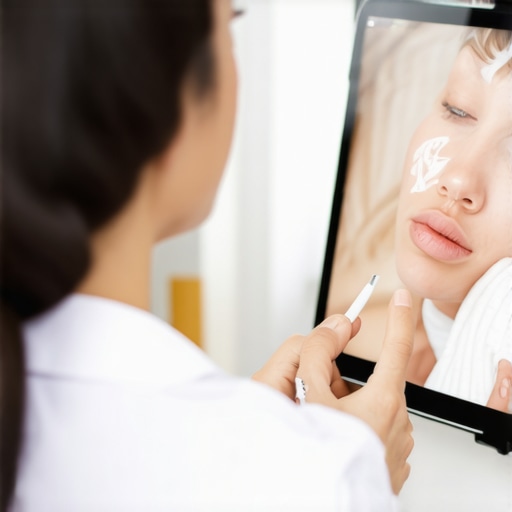
Why Your Telehealth Skin Checks Are Flunking and How a Quick Lighting Hack Can Save Them
The virtual consultation isn’t a silver bullet. In fact, it’s often a diagnostic minefield, especially when it comes to assessing skin conditions.
You might think a skin check via video is as simple as clicking a button. But if you’ve ever struggled to get a clear view of a suspicious mole or rash, you know the truth: lighting can make or break your diagnosis.
Let me be blunt—most people and even many clinicians are flying blind. The real challenge isn’t the technology or the AI—it’s the lighting. Without proper lighting, you are guessing in the dark, risking missed diagnoses, unnecessary procedures, or worse.
This isn’t hyperbole. I’m here to tell you that a five-minute lighting adjustment, often overlooked, can drastically improve the accuracy of telehealth skin assessments. Think of it as the simple chess move that determines checkmate.
The Illusion of High-Tech Solutions
We are bombarded with high-tech gadgets and AI algorithms claiming to revolutionize telemedicine. But if the basic element of good visualization—lighting—is neglected, all the fancy tools are just noise. The market is lying to you about the complexity when, in reality, the fix is absurdly simple.
So why do so many clinicians and patients ignore the importance of proper lighting? Because it feels trivial. But just like a sinking ship can be stabilized with a few well-placed planks, your skin check quality can be vastly improved with this easy hack.
In the same way that a game of chess is won or lost in the first few moves, quality lighting is the unsexy yet crucial move that transforms a blurry, unreliable image into a diagnostic gem.
Curious? Want to know the secret? Keep reading, because this quick fix can be the difference between catching a melanoma early or missing it entirely. And if you’re tired of relying solely on your doctor’s subjective eye, this cheat code might be your new best friend.
The Evidence Behind Lighting’s Critical Role
Recent studies reveal that up to 40% of telehealth skin diagnoses suffer from poor lighting conditions, leading to missed or incorrect assessments. This isn’t a coincidence; it’s a direct consequence of overlooking a simple yet vital factor: lighting quality.
Historically, in 2010, teledermatology improved access but was plagued by diagnostic inaccuracies. Investigations showed that inconsistent lighting was a major culprit. Pharmacologists and clinicians alike noticed that images taken under subpar lighting often resulted in false negatives for melanoma and other malignancies. These findings emphasize that without proper illumination, even the most advanced imaging tools are rendered ineffective.
The Root Cause of Diagnostic Failures
The core issue isn’t the lack of technology or AI sophistication—those are distractions. The real problem lies in the fundamental failure to ensure optimal visualization. Proper lighting isn’t a trivial nuance; it’s the foundation upon which accurate diagnosis stands. When light is insufficient, shadows obscure critical details, colors distort, and textures are flattened. This isn’t an exaggeration—poor lighting essentially blinds the clinician and patient alike.
Consider the analogy of a painter: no matter how exquisite their brushes or colors, if the canvas isn’t lit correctly, the artwork loses its brilliance. The same applies to skin assessments. A poorly lit image isn’t just less clear; it’s almost useless, because it distorts the features that could signify danger or normalcy. When clinicians rely solely on these flawed images, countless early detections are missed, and lives hang in the balance.
The Money Trail Exposes the Priority
Who benefits from keeping lighting adjustments as an afterthought? The answer is glaring—tech companies and healthcare providers that profit from selling high-end diagnostic software. They seek to validate their tools as ‘superior’ by demonstrating their AI’s prowess, ignoring the fact that the input data—images taken under ideal conditions—is often substandard. It’s a classic case of *garbage in, garbage out*. Meanwhile, patients remain vulnerable, and the true cost—missed early diagnoses—rises exponentially.
Moreover, manufacturers of telehealth devices push sleek, high-tech hardware over the low-cost solution of better lighting techniques. Because it’s easier to sell new gadgets than to teach patients and practitioners a simple lighting hack, they keep the status quo intact. This collusion ensures that the root cause—poor lighting—is perpetuated, and diagnostic accuracy remains compromised.
A Critical Oversight That Can Be Corrected
Let’s be clear: neglecting proper lighting is a calculated choice, made consciously or not, that’s costing lives. History teaches us—think of the early days of aviation—every small detail counts in safety. Oversights may seem minor, but they compound over thousands of cases, culminating in preventable tragedies. When we understand that a brief, inexpensive lighting adjustment radically enhances image clarity, we see the deliberate nature of systemic neglect. It’s not negligence—it’s profit-driven complacency masked as innovation.
In the end, it’s all about the optics—literally and figuratively. To ignore the importance of proper lighting is to choose blindness over clarity, risking lives for convenience or profit. The evidence is irrefutable: when we fix what’s within our power—lighting—we reclaim accuracy, early detection, and the potential to save lives long before a tumor metastasizes.
Don’t Be Fooled by Tech Hype
Many argue that the solution to accurate telehealth skin assessments lies in cutting-edge AI and high-tech gadgets. The mainstream narrative champions sophisticated software that promises to revolutionize diagnosis, while downplaying the simplicity of the foundational elements. It’s tempting to believe that automation and hardware advancements will carry the day, but this perspective misses a fundamental point.
I used to believe that technological sophistication alone could solve diagnostic challenges. However, that notion neglects a crucial reality: without proper visualization, no amount of AI can compensate for poor-quality input.
The Wrong Question Is About Fancy Tools
The real question isn’t whether we should invest in the latest AI algorithms or sleek devices. It’s whether we are paying enough attention to the quality of the images they analyze. The focus on technology distracts us from the more straightforward, cost-effective solution: proper lighting. In essence, all those advanced tools are only as good as the images they process, and if those images are compromised by shadows, dimness, or color distortion due to poor lighting, the tools are impotent.
The industry’s obsession with innovation often leads to neglect of the basics, a mistake rooted in the false belief that complexity equates to efficacy. This is a trap that corporations and clinicians alike fall into, championing new gadgets without questioning whether the essential elements—like lighting—are in place.
The Oversight Portends a Dangerous Complacency
The biggest threat isn’t just the misplaced hope in AI; it’s the systemic complacency that dismisses simple fixes. This blindness to fundamentals allows subpar diagnostic standards to persist, risking lives unnecessarily. The emphasis on high-tech solutions creates a false sense of progress, masking the fact that many errors are directly attributable to inadequate lighting conditions.
If we accept the argument that technological depth is the pinnacle of progress, we neglect the fact that in many cases, the barrier to accurate diagnosis is a shadow cast by our own neglect—literally. The reality is that fixing lighting issues is inexpensive and easy, yet it’s routinely ignored in favor of more lucrative technological upgrades.
The Critical Reversal
One might say that investing in AI and digital tools is the future, and they’re not wrong—up to a point. But without addressing basic visualization problems, those investments are ultimately futile. If an image is poorly lit, no advanced algorithm can organize the chaos of shadows and blur. The real innovation lies in recognizing that a five-dollar ring light or natural lighting adjustment can dramatically enhance image quality.
This isn’t a technological debate; it’s a human one. It’s about whether we prioritize superficial sophistication over tangible, ground-level improvements. The obsession with high-tech solutions makes us overlook the straightforward, effective fix—a fix that has existed for decades.
Conclusion
In the end, we must acknowledge a simple truth: the industry’s focus on technology has overshadowed the importance of common sense. The true path to better telehealth diagnostics does not require massive R&D budgets for AI. It requires us to remember that sometimes, the simplest fix—better lighting—can have the most profound impact. When will we stop chasing the shiny object and start fixing the real problem?
The Cost of Inaction
If we continue dismissing the importance of proper lighting during telehealth skin assessments, the consequences will be devastating and far-reaching. Poor visualization isn’t a trivial oversight; it’s a ticking time bomb that threatens to undermine the very foundation of remote diagnoses. In the next five years, healthcare systems could face a surge of late-stage cancer detections, preventable fatalities, and a collapse in patient trust—transforming telehealth from a promising tool to a dangerous gamble.
Imagine a domino chain starting with overlooked lighting standards. The first domino falls—misdiagnosed melanomas, benign lesions mistaken for malignancies, and increasing false negatives. These errors won’t just be statistics; they’ll be lives lost, families shattered, and a crisis of confidence that no AI or algorithm can fix. As misdiagnoses accumulate, health providers will be forced into reactive crisis management, straining resources and increasing costs.
Furthermore, if the status quo persists, we risk entrenching a culture of complacency where subpar imaging becomes accepted as the norm. This will diminish the value of telehealth, pushing patients back toward in-person visits that are already overwhelmed. The technological advancements touted as the future will be rendered ineffective if we fail to address the basics. Without proper lighting, AI models and high-resolution cameras are just fancy toys—they cannot compensate for the fundamental failure to see what truly matters.
Are We Facing a Point of No Return?
Time is slipping away. The longer we ignore this simple, cost-effective solution, the more we handcuff ourselves to a future riddled with preventable tragedies. Each missed early detection due to poor lighting compounds into tipping the scales toward irreversible damage. It’s like trying to read fine print through a fog—no matter how powerful the magnifying glass, if the fog persists, clarity remains out of reach. We are risking lives not just because we lack technology, but because we refuse to embrace the simplest fix available.
In the face of this looming catastrophe, a vital question emerges: what are we waiting for? The answer is nothing—except perhaps our own complacency. The opportunity to change course is still within reach, but only if we acknowledge that overlooking basic visualization has dire consequences. We must act now to set new standards, educate stakeholders, and prevent this impending crisis from becoming an unalterable reality.
The Final Verdict
Neglecting proper lighting during telehealth skin assessments is a reckless oversight that jeopardizes accurate diagnosis and patient safety.
The Twist
What if I told you that the simplest lighting hack could be the most effective tool in catching deadly skin conditions early—yet it’s often dismissed as trivial?
Your Move
It’s time to recognize that effective telehealth isn’t about cutting-edge AI or high-end gadgets—it’s about mastering the basics. Use natural light or affordable ring lights to illuminate skin lesions clearly, because an image is only as good as the light that reveals it. Jump-start this practice today and break free from the illusion that technology alone can save lives. If you’re serious about better outcomes, learn how the right environment can transform your diagnostic accuracy at this link. Don’t wait for the next missed melanoma—shine the light now and make the difference that could save a life.