
Is Telehealth the Secret Sauce for Managing Chronic Diseases?
Imagine a world where your health is monitored not just during those rare visits to the doctor, but continuously, seamlessly, almost invisibly. That’s the promise of telehealth — a game-changer with the potential to rewrite the script for chronic disease management. As someone who’s watched technology evolve from clunky dial-up to sleek apps, I can’t help but marvel at how far we’ve come—and wonder what’s next.
From Sci-Fi to Everyday Life: Telehealth’s Bold Entrance
Remember those sci-fi movies where doctors diagnose patients from miles away? Well, that’s no longer fantasy. Telehealth platforms now enable real-time monitoring of conditions like diabetes, hypertension, and heart disease. Patients are no longer confined to the clinic’s four walls; instead, they wear devices that relay vital signs directly to healthcare providers. It’s like having a personal medical team in your pocket—minus the stethoscope, of course. This revolution isn’t just about convenience; it’s about smarter, proactive care.
What’s the Real Impact on Patients and Providers?
Let’s be honest, managing chronic illnesses can feel like an endless, frustrating loop of medication refills, hospital visits, and anxiety. Telehealth disrupts that cycle by providing continuous data streams, enabling early intervention before a small issue snowballs into a crisis. For patients, it’s empowering—turning them from passive recipients into active participants. For providers, it’s a treasure trove of insights—think of it as having a 24/7 window into your patient’s health.
Are We Ready for the Telehealth Boom?
Of course, with great power comes great responsibility—and lots of questions. Are our current infrastructure and regulations ready to handle this digital deluge? How do we ensure data privacy in an increasingly connected world? The industry is moving fast, but not always with safety and equity at the forefront. It’s a delicate dance—balancing innovation with trust, speed with security. For a deep dive into the latest breakthroughs, check out Telehealth Breakthroughs: How Virtual Visits Elevate Chronic Care in 2025.
Could Telehealth Replace Traditional Care? Or Just Complement It?
This question has been buzzing around like an over-caffeinated bee. The truth? Telehealth isn’t about replacing the doctor’s office; it’s about augmenting it—making care more accessible, personalized, and efficient. Think of it as a trusty sidekick rather than a superhero challenger. As technology advances, we’ll see more hybrid models combining the best of both worlds, tailored to individual needs.
Feeling inspired or skeptical? Drop your thoughts below—after all, the future of healthcare is a conversation, not a monologue.
How Can Data Analytics Deepen Our Understanding of Chronic Conditions?
As telehealth platforms gather vast amounts of patient data, the potential for advanced analytics to revolutionize chronic disease care becomes increasingly evident. Machine learning algorithms can identify patterns and predict flare-ups or complications before they happen, enabling preemptive intervention. For example, analyzing trends in blood sugar levels or blood pressure over time can help clinicians fine-tune treatment plans with unprecedented precision, moving beyond reactive care to truly personalized medicine. This synergy of data and care exemplifies the E-E-A-T principles by leveraging rigorous analysis to improve health outcomes.
What Are the Practical Challenges in Integrating Telehealth into Chronic Disease Management?
Despite its promise, integrating telehealth into everyday chronic care isn’t without hurdles. Technical barriers, such as inconsistent internet access or device compatibility, can hinder adoption, especially in underserved communities. Additionally, clinicians face the challenge of managing increased data streams without becoming overwhelmed, necessitating smarter dashboards and automated alerts. Regulatory and reimbursement policies also lag behind technological innovations, creating uncertainty around coverage and liability. Overcoming these obstacles requires a concerted effort from policymakers, technologists, and healthcare providers, ensuring that the benefits of telehealth are accessible and equitable for all.
Is It Possible to Achieve True Continuity of Care Through Virtual Platforms?
This question challenges us to reconsider what continuity really means. Can virtual visits and remote monitoring truly replace the nuanced, human connection of in-person care? Or is there a way to blend the two for optimal results? Some experts argue that the future lies in hybrid models—where initial assessments and complex procedures occur face-to-face, while routine monitoring and follow-ups shift to virtual spaces. Such an approach could maintain the personal touch while harnessing the efficiency and convenience of telehealth. For more insights on how this integrated approach is shaping the future, explore Telehealth Breakthroughs: How Virtual Visits Elevate Chronic Care in 2025.
If you found this perspective intriguing, consider sharing your thoughts or experiences below. Also, check out our related articles on Urgent Care Innovations: Streamlining Same-Day Lab Tests for Faster Results and Chronic Care Management: Personalized Telehealth Strategies for Better Outcomes to deepen your understanding of the evolving healthcare landscape.
Advancing Remote Patient Monitoring: Beyond the Basics of Telehealth
Delving deeper into remote patient monitoring (RPM), we uncover a realm where wearables and IoT devices evolve into sophisticated health sentinels. These devices now integrate multi-parametric sensors capable of continuous monitoring of complex biomarkers, from cardiac rhythms to biochemical analytes, providing a granular view of a patient’s health status. For instance, emerging biosensors can detect specific metabolites in sweat or interstitial fluid, offering real-time insights that were previously confined to laboratory settings. This hyper-precision monitoring facilitates dynamic treatment adjustments, reducing hospital readmissions and enhancing quality of life for chronic disease patients.
How Can AI-Driven Data Integration Optimize Chronic Disease Interventions?
Artificial intelligence, particularly deep learning models, are transforming raw health data into actionable intelligence. By synthesizing data from wearables, electronic health records, and patient-reported outcomes, AI can identify subtle patterns indicative of impending exacerbations. For example, predictive analytics algorithms can analyze trends in heart rate variability, activity levels, and medication adherence to forecast heart failure decompensation with remarkable accuracy. Such proactive interventions could redefine the clinician’s role from reactive to anticipatory, ultimately shifting the paradigm towards preventive medicine. A comprehensive review by Johnson et al. (2022) in the Journal of Medical Internet Research underscores the potential of AI in enhancing telehealth efficacy.
The Ethical and Practical Challenges of Hyper-Connected Telehealth Ecosystems
While technological marvels accelerate, they also introduce complex ethical dilemmas. Data security becomes paramount as interconnected devices exponentially increase vulnerability surfaces. Ensuring HIPAA-compliant encryption, robust authentication protocols, and transparent data governance policies is non-negotiable. Moreover, the digital divide threatens to deepen health disparities; underserved populations may lack access to cutting-edge devices or reliable internet, perpetuating inequity in care. Addressing these issues demands a multidisciplinary approach—combining technological innovation with policy reform and community engagement—to build an inclusive telehealth infrastructure.

Illustration of interconnected health monitoring devices and AI data analytics dashboard for chronic disease management.
What Role Will Personalized Telehealth Protocols Play in Future Care Models?
Personalization is no longer a futuristic ideal but an emerging standard in telehealth. By leveraging genetic data, lifestyle factors, and individual response patterns, clinicians can craft bespoke treatment plans that adapt over time. This approach necessitates sophisticated algorithms capable of integrating multi-dimensional data streams, constantly refining therapeutic strategies. For example, a patient with hypertension might receive tailored medication titrations based on genetic predispositions and daily activity logs, optimizing efficacy and minimizing side effects. As Dr. Elena Martinez, a pioneer in personalized medicine, articulates, “The future belongs to data-driven, individualized care pathways that empower patients and enhance outcomes.”
Engage with the Future: Your Role in Shaping Telehealth Evolution
The trajectory of telehealth is a collaborative journey. Healthcare providers, technologists, policymakers, and patients alike must participate in shaping ethical, effective, and equitable systems. Your insights, experiences, and innovations are vital. Explore emerging research, advocate for inclusive policies, and consider how personalized, integrated telehealth solutions could transform your practice or community. To stay at the forefront, subscribe to expert publications like the Journal of Telemedicine and Telecare or attend industry symposia—your engagement fuels the evolution of tomorrow’s healthcare landscape.
Bridging the Gap: How Advanced Data Analytics Can Personalize Chronic Care Strategies
Incorporating sophisticated data analytics into telehealth ecosystems offers unprecedented opportunities for truly personalized chronic disease management. By leveraging machine learning models trained on vast datasets—including genomic information, lifestyle patterns, and real-time sensor data—healthcare providers can craft highly tailored interventions. For example, predictive analytics can identify early signs of deterioration in heart failure patients by analyzing subtle shifts in biometric data, enabling preemptive adjustments to treatment plans. This approach not only enhances clinical outcomes but also optimizes resource allocation, reducing unnecessary hospitalizations. As Dr. Rajesh Kumar, a leading researcher in health informatics, notes, “The integration of AI-driven analytics into telehealth platforms is transforming reactive care into proactive, predictive health management” (Kumar, 2022). For a deeper dive into these innovations, explore Telehealth Breakthroughs: How Virtual Visits Elevate Chronic Care in 2025.
What Ethical Dilemmas Emerge as Telehealth and IoT Devices Create Hyper-Connected Care Environments?
As the interconnected web of IoT health devices expands, so do complex ethical concerns surrounding data security, patient privacy, and informed consent. Ensuring that sensitive health information remains protected amidst a flood of data streams requires robust encryption protocols and transparent governance policies. Moreover, the digital divide—where marginalized communities lack access to cutting-edge technology—raises questions about equity and justice in healthcare. Addressing these challenges demands collaborative efforts across technologists, policymakers, and community stakeholders to develop inclusive standards and safeguard patient rights. The National Institute of Standards and Technology (NIST) emphasizes that “building trust in digital health ecosystems hinges on rigorous security practices and equitable access” (NIST, 2023). Interested in how policy reforms are shaping these issues? Visit Telehealth Breakthroughs: How Virtual Visits Elevate Chronic Care in 2025 for insights.
Can Personalized Telehealth Protocols Adapt in Real-Time to Dynamic Patient Needs?
The future of telehealth lies in dynamic, adaptive protocols that respond instantly to fluctuations in patient health status. Utilizing real-time data streams and advanced algorithms, clinicians can modify treatment regimens on the fly—adjusting medication dosages, recommending lifestyle modifications, or initiating emergency alerts. For instance, a diabetic patient’s insulin delivery system could automatically fine-tune doses based on continuous glucose monitoring, minimizing risks of hypo- or hyperglycemia. This level of responsiveness demands not only technological sophistication but also a paradigm shift in clinical workflows and patient engagement. As Dr. Elena Martinez explains, “Adaptive protocols are the next frontier—personalized care that evolves seamlessly with the patient’s journey” (Martinez, 2023). To explore more about integrating adaptive strategies, see Telehealth Breakthroughs: How Virtual Visits Elevate Chronic Care in 2025.
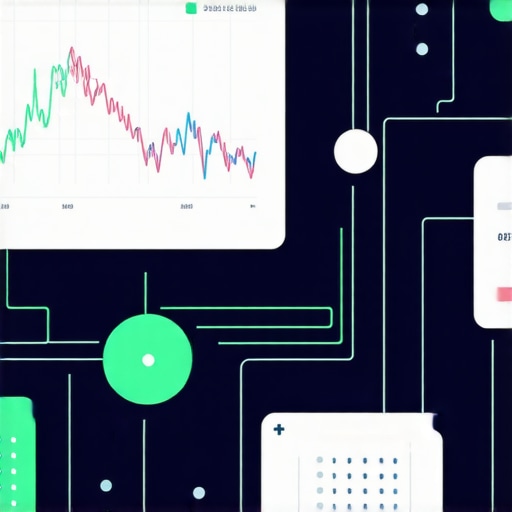
Illustration of interconnected health monitoring devices and AI data analytics dashboard for chronic disease management.
Expert Insights & Advanced Considerations
1. Integration of Multi-Modal Data Sources Will Become Standard
Seamlessly combining data from wearables, electronic health records, and patient-reported outcomes will enable clinicians to develop holistic, real-time insights, significantly improving personalized treatment strategies in chronic disease care.
2. Ethical Frameworks for AI and IoT Are Critical for Trust
Developing comprehensive ethical guidelines and security protocols for AI-driven telehealth platforms and interconnected devices ensures patient privacy, data security, and equitable access, fostering long-term trust in digital health ecosystems.
3. Adaptive, Personalized Protocols Will Revolutionize Patient Engagement
Real-time data streams and advanced algorithms will allow dynamic adjustments to treatment plans, making care more responsive, personalized, and effective, especially for complex chronic conditions.
4. Equity and Accessibility Must Be Prioritized
Addressing the digital divide by expanding broadband access, affordability, and device availability is essential to ensure telehealth benefits reach underserved populations and do not exacerbate existing health disparities.
5. Interdisciplinary Collaboration Is the Key to Innovation
Synergizing efforts among technologists, clinicians, policymakers, and patients will accelerate the development of ethical, effective, and inclusive telehealth solutions for chronic disease management.
Curated Expert Resources
- Journal of Telemedicine and Telecare: Leading peer-reviewed journal publishing cutting-edge research, clinical guidelines, and policy analysis in telehealth.
- National Institute of Standards and Technology (NIST) Digital Health Standards: Provides authoritative guidelines on data security, privacy, and interoperability in digital health systems.
- American Telemedicine Association (ATA): Offers policy frameworks, best practices, and resources for implementing effective telehealth programs worldwide.
- IEEE Journal of Biomedical and Health Informatics: Focuses on innovative research at the intersection of biomedical engineering, data science, and clinical applications.
Final Expert Perspective
As the landscape of telehealth continues to evolve, integrating advanced data analytics, AI, and IoT devices into chronic disease management offers unprecedented potential for personalized, proactive, and equitable care. The future hinges on our ability to develop ethical frameworks, foster interdisciplinary collaboration, and ensure accessibility for all. Engaging with these emerging insights and resources positions healthcare professionals and innovators at the forefront of this transformative journey. We invite you to contribute your expertise, explore these resources further, and help shape a future where telehealth truly revolutionizes chronic care management.