
The Hidden Reason Your Home Blood Pressure Monitor Gives Wrong Readings
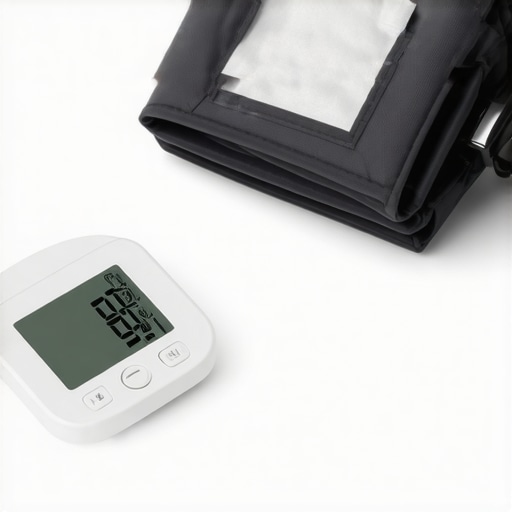
The Quiet Deception of Home Blood Pressure Cuffs
If you rely on your home blood pressure monitor to keep tabs on your health, think again. These devices have become the modern equivalent of the vintage scales in your bathroom—popular, convenient, but often utterly unreliable. You might think you’re getting an accurate snapshot of your health, but in reality, you’re staring at a mirage. The real problem isn’t your technique; it’s the hidden flaws embedded deep within these machines that could give you dangerously false readings.
Why This Fails and What You’re Missing
The truth is, your blood pressure cuff is only as good as its calibration, and most are never checked or maintained properly. Manufacturers often focus on selling new units, not on ensuring long-term accuracy. Calibration drifts over time, especially when devices are subjected to temperature fluctuations, improper storage, or just simple wear and tear. It’s like trusting a compass that hasn’t been properly checked since the Cold War—completely unreliable.
Furthermore, cuff size and fit matter more than most realize. A cuff that’s too small or too loose can skyrocket your readings, giving you a false sense of hypertension or, worse, masking an actual crisis. Yet, consumers are rarely instructed on proper cuff placement or size selection—an oversight that can turn your home monitor into a predictive nightmare.
But why are we okay with this subpar standard? Because the industry benefits from your complacency. Medical devices are rarely regulated stringently once they hit the market. What’s worse, the very act of measuring blood pressure is riddled with errors. Factors like arm position, movement, recent caffeine or nicotine intake, and even talking can skew results. Still, most users measure and dismiss these errors as inevitable.
How the Tech Industry Is Dead Wrong About Accuracy
Major tech giants and device manufacturers often market their blood pressure monitors as “clinically validated,” but what they mean is often superficial. Validation studies are often conducted under ideal laboratory conditions, not in real-world scenarios. You are left with a device that might be accurate in a lab but is wholly inaccurate at home. The false sense of security that comes with an ‘accurate’ reading can be deadly.
Compare this to a game of chess—if your pieces are misaligned or the board is tilted, all your moves are rendered meaningless. Your health is no different. Without proper calibration and understanding of these devices’ limitations, your blood pressure readings are just random guesses. As I argued in this article, trusting faulty data leads to faulty decisions, and faulty decisions can be fatal.
The Market is Lying to You
It’s time we confront the inconvenient truth: the market is selling you devices that look high-tech but are nothing more than glorified gadgets. These monitors are evolving into a health myth—a shiny object that distracts you from the real issues: calibration, proper technique, and understanding your body’s signals.
If you want genuine insight into your health, stop relying solely on your home monitor. Consider professional calibration, learn proper measurement techniques, and collaborate with healthcare professionals who understand the device flaws. Otherwise, you’re just guessing, playing a game of digital Russian roulette—only this time, the bullet could be your heart.
The Hidden Shortcomings of Your Home Blood Pressure Monitor
In an era where self-monitoring is championed as a beacon of health empowerment, few pause to question the reliability of these devices. Home blood pressure cuffs promise convenience and control, but behind their reassuring display lurks a web of inaccuracies that can mislead users into dangerous misconceptions. This isn’t just about faulty readings; it’s about a systemic failure rooted in industry practices and overlooked flaws.
The Roots of Inaccuracy: Calibration and Human Error
The core issue isn’t merely user technique; it’s a broken calibration system. Devices are seldom maintained or tested post-purchase, allowing drift over time. Think of it like a compass neglected after the Cold War—it no longer points true. External factors—temperature swings, mishandling, wear—compound this problem, leading to inconsistent results that can suggest hypertension where there is none or hide real danger. Alarmingly, most users remain unaware of the importance of cuff size and placement, risking inflated or deflated readings based solely on improper positioning. Industry standards do little to enforce calibration checks, turning these monitors into unreliable health cues rather than trusted tools.
Industry Claims Versus Reality
Manufacturers tout their devices as “clinically validated,” but this validation often occurs under pristine laboratory conditions. These settings rarely mirror home environments—chaotic, variable, unpredictable. A device passing tests in a lab might falter miserably on your kitchen table. That inflated confidence can direct patients into faulty decisions—either ignoring true hypertensive threats or overreacting to false alarms. This discrepancy between lab validation and real-world performance reveals a gaping hole in the entire assertion of device accuracy.
Market Incentives: Profit Over Precision
Who benefits from this manufactured sense of security? The industry, naturally. Their profits hinge on sales—more devices, newer models, flashy features—often at the expense of actual accuracy. Once the device leaves the factory, little accountability exists; calibration becomes a forgotten chore. Meanwhile, patients are left to interpret readings that are intrinsically unreliable. This profit-driven approach mirrors a pattern we’ve seen historically: technological products sold as essential, yet fundamentally flawed in design and oversight.
Big corporations market these monitors aggressively, emphasizing benefits while sidestepping flaws. When their claims of validation are superficial, the consumer is duped into a false sense of security. The real cost isn’t just misdiagnosis; it’s the erosion of trust in medical devices and, ultimately, in personal health management itself.
Why This Matters: The Dangerous Illusion of Accuracy
The impact of this systemic flaw is profound. A 20% error margin isn’t trivial—it’s catastrophic, turning a potential health crisis into a manageable concern or vice versa. With most users unaware of calibration needs or proper measurement techniques, these inaccuracies become a hidden time bomb. It’s a cycle of misinformation that masks what’s truly happening inside our bodies, feeding a false narrative that convenience equates to reliability. This isn’t conspiracy—it’s a clear outcome of industry neglect and underestimated human error, culminating in a public health risk that’s not just avoidable but recklessly ignored.
Understanding the root causes, the systemic incentives, and the real-world implications underscores that this isn’t a minor flaw but a fundamental breach of trust—one that demands transparency and accountability from industry giants and healthcare providers alike. Until then, your home blood pressure monitor remains a silent accomplice in a flawed system, potentially steering you toward danger rather than safety.
The Trap of Trusting Your Home BP Device
It’s understandable why many believe that their personal blood pressure monitor offers a clear window into their health. After all, these devices are marketed as accurate, convenient tools that empower patients. The best argument from critics is that, when properly used and maintained, these monitors can provide valuable insights for managing hypertension and other cardiovascular issues. They emphasize the importance of patient engagement and regular tracking, which can indeed be beneficial.
But that completely ignores the systemic issues that undermine this trust
While acknowledging these benefits, it’s crucial to confront the stark reality: the widespread inaccuracies, calibration drift, and technical limitations embedded in most consumer-grade blood pressure monitors. Relying solely on these devices can lead to misguided decisions, unnecessary anxiety, or dangerous complacency.
The Illusion of Reliability
I used to believe in the reliability of my home monitor until I realized that, without professional calibration and strict adherence to measurement protocols, the readings are often just guesses. These devices are often tested under ideal conditions, far removed from the chaos of real-world use. External factors like arm position, recent activity, or environmental temperature can dramatically skew measurements. This discrepancy fosters a false sense of certainty and can lead to over or under-treatment.
It’s tempting to think that technology has advanced to the point where personal devices are just as accurate as those used in clinics, but that’s a dangerous misconception. The standard validation processes are superficial at best and don’t account for the variables that occur in everyday use. If we continue to depend on flawed metrics, we’re building health decisions on unstable ground.
The Real Problem Lies in Industry and Oversight
The opposition might argue that improvements are being made, and that patient education can bridge the gap. But this ignores the fundamental issue: the market incentivizes quick sales over long-term accuracy. Manufacturers often prioritize flashy features and marketing hype, while calibration protocols and quality assurance are secondary considerations. The lack of rigorous regulation means that many devices remain unvalidated outside the laboratory.
Regulation and oversight are woefully inadequate. Validation studies are often short-term, conducted under perfect conditions, and do not reflect the messiness of real-world use. As a result, consumers receive a product that promises accuracy but frequently delivers the opposite. This systemic flaw is the elephant in the room that no one wants to address.
Are We Sacrificing Safety for Convenience?
Addressing this question uncovers a critical dilemma. The convenience of home monitoring shouldn’t come at the expense of accuracy. When flawed readings inform medical decisions, the consequences can be severe—misdiagnosis, unnecessary medication, or overlooked emergencies. The seeming simplicity of these devices masks a complex web of technical shortcomings that industry players prefer to ignore.
My own experience changed as I became aware of these issues. I believed in the utility of home monitoring until I discovered that, without professional calibration and awareness of device limitations, my readings might be utterly unreliable. That realization pushed me to consult healthcare professionals and seek validated, calibrated equipment—an approach that, frankly, many consumers overlook due to complacency or lack of awareness.
Ultimately, the question isn’t just about individual device accuracy, but about systemic accountability. If we persist in accepting these flawed tools, we risk turning our health into a game of digital Russian roulette. To protect ourselves, we must demand transparency, regulation, and a reevaluation of how much trust we place in consumer-grade health devices.
The Cost of Inaction
If we continue to dismiss the limitations of at-home blood pressure devices, we risk a silent betrayal of our own health. These inaccuracies are not minor glitches; they are potential time bombs ticking within our everyday routines. Wrong readings can lead to underdiagnosis, leaving dangerous hypertension undetected, or overdiagnosis, prompting unnecessary and possibly harmful treatments. As these errors compound over years, the risk of stroke, heart attack, and organ failure increases exponentially—threatening lives and straining healthcare systems simultaneously.
The Future Looks Bleak
Should this trend persist unchallenged, in five years, we may find ourselves submerged in a crisis of trust and health deterioration. Our medical data, once perceived as reliable, becomes a tangled web of false positives and negatives—akin to navigating a labyrinth with distorted maps. Patients will be forced to rely on invasive, costly testing and countless hospital visits to verify what their devices have failed to accurately detect. The disconnect between perceived safety and real danger will widen, fueling a cycle of misdiagnosis and delayed treatment that could have been prevented with proper calibration and oversight.
The Slippery Slope Is Real
Ignoring these flaws triggers a chain reaction of failures. False reassurance from inaccurate readings leads to complacency, reducing the urgency to seek professional evaluation. This, in turn, accelerates the progression of preventable complications. As incidents mount, trust in medical technology diminishes, and skepticism grows—yet the industry continues to promote these flawed devices as infallible solutions. The resulting erosion of confidence threatens to undermine the very foundation of self-monitoring and personalized healthcare that has been seen as revolutionary in recent years.
What Are We Waiting For?
Picture a fortress built on shifting sands—no matter how sophisticated the exterior, instability beneath ensures collapse. This is our health system if we ignore these warnings. The time for complacency has long passed. We must demand rigorous regulation, transparent validation, and robust calibration standards. Only then can we safeguard the accuracy that our health depends on. Remaining passive now is tantamount to building a house on a foundation of quicksand—destined to sink, with tragic consequences for millions.
An Analogy to Emphasize Persisting Risks
Continuing to rely on flawed blood pressure monitors is like walking a tightrope blindfolded—one misstep, and the fall could be catastrophic. Every inaccurate reading adds weight to the burden, pushing us closer to a disastrous collapse. If we do not act decisively today, the future we are shaping for ourselves and generations to come will be riddled with preventable tragedies and heartbreaks. The stakes could not be higher. We are at a crossroad—choices made now will determine whether we stumble into chaos or stride toward safety.
Your Move
The widespread trust in home blood pressure cuffs is a dangerous illusion. These devices, marketed as essential tools for health empowerment, often feed us faulty data rooted in poor calibration, improper use, and industry neglect. Relying solely on such inaccurate readings can lead to misdiagnosis, unnecessary anxiety, or worse—missed emergencies that threaten your life. It’s time to challenge this complacency and demand better standards for our health.
The Bottom Line
Your home blood pressure device should be a reliable partner in your health journey, but too often, it’s an untrustworthy gadget in disguise. From calibration drift to flawed validation studies, these monitors are evolving into health myths that distract us from real risk factors. Proper calibration, understanding device limitations, and consulting healthcare professionals should be non-negotiable steps—yet they aren’t. Ignoring these issues is gambling with your well-being.
The Final Challenge
The future of personal health relies on transparency and rigorous oversight, not superficial validation and chic marketing. If you truly want control over your health, recognize the limitations of your device and seek professional calibration. Educate yourself on proper measurement techniques and stay vigilant against the false sense of security these gadgets can create. Otherwise, you’re playing a game of digital Russian roulette—one misread away from catastrophe. The choice is yours: trust the hype or demand accountability.
Comments are closed.