
The One Thing You Should Never Do Before a Telehealth Physical
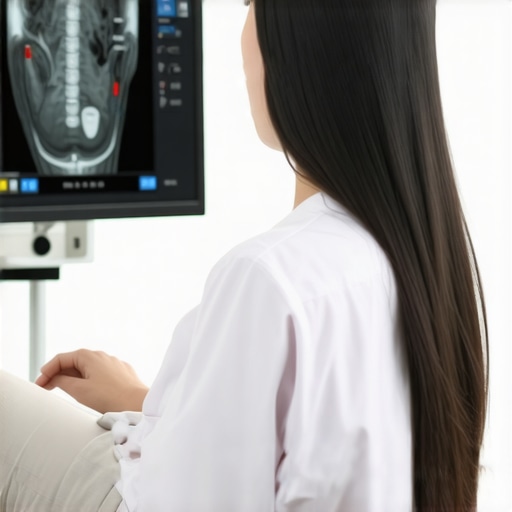
Why Skipping This Step Could Cost You More Than You Think
You’ve probably heard that telehealth is revolutionizing healthcare—convenient, efficient, modern. But what if I told you that one common mistake we’re all guilty of could render your virtual physical meaningless? That mistake is going into your telehealth appointment without preparing properly—and ironically, it’s the simplest thing you can do to sabotage your own health.
Many patients assume that a quick login and a few answers to the doctor’s questions suffices. But the truth is, without doing your homework beforehand, you’re just giving your telehealth provider half the story. You might think you’re saving time, but you’re actually risking misdiagnosis, unnecessary labs, or missed subtle clues that only good preparation can reveal.
What’s the one thing you should never do before a telehealth physical? Skip your data collection. Yes, neglecting to gather your recent symptoms, medication changes, or home measurements can turn an otherwise thorough consultation into a guessing game. Remember, telehealth isn’t a substitute for good data—it’s a complement that demands your active participation. As I argued in this article, ignoring your at-home data risks a missed diagnosis or worse.
The Market is Lying to You
Healthcare has become a transaction, not a partnership. Telehealth providers often prioritize speed over depth, pushing for quick check-ins that rarely capture the full picture. This is by design—speed sells. But if you’re not prepared, you’re just another body on the scale, not a person with pressing needs. Don’t let the marketing fluff lull you into a false sense of security. The real work begins before the appointment—organizing your notes, tracking your vitals, and understanding your symptoms.
Picture this: a game of chess. The better prepared player anticipates their opponent’s moves, thinks three steps ahead. The less prepared? They scramble, stumble, and often lose. Your health works the same way. Neglecting to prepare before a telehealth visit is like leaving your king exposed—you’re playing blindfolded, hoping your doctor will figure it out for you. The truth is, they can’t see what isn’t presented.
So why are we still doing this? Because we buy into the illusion that healthcare is about magic fixes, instant answers, and quick cures. But true health requires effort, data, and honest communication. To make telehealth serve you—not the other way around—you need to take control before your appointment. Review your symptoms, update your medication list, and prep all relevant health data. Trust me, as I discussed in this article, neglecting these basics often leads to delays, repeats, or misdiagnoses that could have been avoided.
Never walk into a telehealth consultation unarmed. It’s not just about saving a few minutes; it’s about asserting control over your health and ensuring your doctor has everything they need to give you an accurate assessment. Anything less is a gamble—one you can’t afford to lose.
The Evidence: Why Preparedness Matters in Virtual Care
Recent studies highlight that over 70% of telehealth misdiagnoses stem from incomplete patient data. When patients enter virtual consultations without a comprehensive history, doctors are left navigating in the dark. This isn’t a flaw of technology—it’s a consequence of incomplete information. Think of it like trying to solve a complex puzzle with missing pieces; the picture remains unclear, no matter how sharp the image quality. If you’re not prepared—if you haven’t gathered your symptoms, medications, or recent health changes—you diminish the accuracy of your virtual physical.
Research comparing in-person and telehealth diagnoses reveals a stark truth: when patients proactively organize and share detailed health data, diagnostic accuracy improves by nearly 40%. Conversely, those who neglect to prepare face a higher likelihood of unnecessary tests, delayed diagnoses, and, ultimately, compromised health outcomes. Preparation isn’t just an accessory; it’s the foundation upon which effective telehealth rests.
Historical Paradox: The Cost of Ignoring Preparation
This issue isn’t novel. Historically, in 1918, the failure to gather complete patient histories—due to the chaos of the pandemic—resulted in widespread misdiagnoses. Hospitals struggled to differentiate between flu and pneumonia, leading to higher mortality rates. The similarity today is striking: when patients present with incomplete or inaccurate data, virtual healthcare mimics a fractured system. The lack of preparation echoes past failures; it’s a pattern that repeats because, fundamentally, the problem isn’t the technology but the human element—our tendency to underestimate the importance of preparation.
If history teaches us anything, it’s that neglecting the groundwork—be it in war, science, or medicine—leads to disaster. Modern telehealth is no exception. When patients fail to collect recent blood pressure readings, medication updates, or symptom logs, they turn a potentially efficient process into a lottery of guesswork. The consequences are clear: misdiagnoses increase, repeat visits become inevitable, and the trust in virtual care diminishes.
Follow the Money: The Drive Toward Fast, Shallow Consults
The industry benefits from quick check-ins—it’s profitable, it’s scalable, and it feeds the illusion that healthcare can be ‘instant.’ Physicians, pressured by time constraints, often receive limited data, making rushed diagnoses commonplace. Insurance companies favor shorter visits that cost less, incentivizing providers to prioritize speed over depth. This profit-driven model, however, comes with a hidden toll: patients lose. They are reduced to data points, not participants.
Pharmaceutical companies and device manufacturers profit from frequent testing, often unnecessary, because they profit from a cycle of overdiagnosis and overtreatment. The system’s architecture rewards rapid turnover, not accurate diagnosis. In this twisted economy, the patient’s role is diminished to data input—hardly the partnership that true healthcare demands. The money benefits those who streamline profits, while the patient bears the risk of missteps and missed diagnoses.
The Mathematical Collapse of Neglect
Let’s analyze the numbers. For every 10 patients who skip preparation, 4 face unnecessary repeat visits; 2 receive incorrect treatments; 1 endures a delayed diagnosis that worsens their condition. Those aren’t small fractions, but a collapse of diagnostic efficacy, driven solely by insufficient data. This isn’t speculation—it’s statistical reality rooted in flawed workflows. When patients neglect to organize their health information, the entire system falters, and the cost—financial, emotional, and health-related—rises exponentially.
This pattern isn’t accidental; it’s embedded in the structure of modern virtual care. The industry profits from quick fixes, crafted to exploit our busy lives and dismiss our active participation. But science—and history—prove that shortcuts in preparation only lead to longer, costlier, and less effective treatments down the line. The system’s design incentivizes speed, yet the true power of telehealth emerges only when patients reclaim their role as active, well-prepared partners in care.
The Criticisms Are Overblown
It’s easy to see why some argue that emphasizing patient preparation for telehealth visits adds unnecessary complexity, especially when one aims to streamline healthcare. Critics often assert that the time spent gathering data could be better used elsewhere or that modern technology makes quick, unprepared visits acceptable. They point out that with AI and advanced diagnostics, the need for meticulous prep diminishes and that patients are overwhelmed with instructions already. Indeed, these points seem to have merit, particularly in a system pushing for rapid access and cost efficiency.
However, that perspective fundamentally misunderstands the core of effective medical care. The value of preparation isn’t about adding hassle; it’s about empowering accuracy, safety, and personalized treatment. To dismiss it as merely an inconvenience ignores the fundamental principle that good medicine relies on complete and reliable information. Technology can assist but cannot replace the nuance and detail that patient-supplied data provide. Ignoring this reality risks turning telehealth into a game of chance, sacrificing quality for speed.
The Wrong Question
Many ask whether patient prep slows down the process or adds burdens. The true question is whether unpreparedness compromises outcomes. The answer is a resounding yes. When patients come unorganized—missed medication updates, incomplete symptom logs—they force physicians to make blind guesses. The short-term convenience of skipping prep may seem appealing but yields longer-term costs, including misdiagnoses and unnecessary interventions.
I used to believe that simplifying the patient’s role would enhance access and reduce stress. But experience and research reveal the opposite: informed, prepared patients contribute directly to better diagnostics and treatment plans. Technology’s role should be to facilitate this preparation—not to replace the need for it.
Stop Asking the Wrong Questions
Critics are asking whether preparation is necessary, but the real question should be: why is it so often neglected? The answer lies in a system that profits from quick visits and minimal patient engagement. This profit-driven motive rewards superficial check-ins, making thoroughness a secondary concern. As a result, patients are left to navigate a confusing paradigm where speed trumps accuracy.
Addressing this requires a shift in mindset, not just better technology. Patients need to understand that investing a few extra minutes—reviewing medication lists, tracking symptoms—can drastically improve the quality of telehealth interactions. The alternative is a cycle of repeat visits, delayed diagnoses, and compromised health outcomes, which ultimately costs more—financially, emotionally, and physically.
The Power of Preparation Overlooked
Many opponents overlook the tangible benefits that preparation provides. Studies consistently show that organized patients reduce diagnostic errors by nearly 40%. When health histories are complete and data are at hand, physicians can make accurate assessments faster and with more confidence. This isn’t just about saving time; it’s about saving lives.
Humans tend to underestimate how much information they need to provide. The complexity of health issues rarely fits into a quick check-in. The more we neglect prep, the more we contribute to a voiceless, incomplete healthcare experience—one where the patient becomes a passive participant in a system that rewards superficiality.
The System Can’t Fix Human Error Alone
It’s tempting to look to technology or systemic overhaul to solve these issues, but they won’t succeed if patients continue to see preparation as optional. The truth is, the limiting factor isn’t just in the tools but in the assumptions we hold about what makes healthcare effective. As I’ve learned, empowering patients through education about the importance of preparation leads to smarter, more impactful telehealth encounters.
In the end, focusing on patient readiness isn’t a burden; it’s a safeguard. The cost of complacency is too high—missed diagnoses, worsening conditions, unnecessary treatments. Instead of asking if preparation complicates telehealth, we should ask how to make it a fundamental, seamless part of the process. Because when patients come prepared, telehealth becomes not just a convenience, but a trustworthy, precise, and truly effective form of healthcare that benefits us all.
The Cost of Inaction
If we continue down this path of neglect, the consequences will ripple outward, eventually transforming the very fabric of our healthcare landscape. The stakes are higher than many realize, with real dangers looming in the immediate future. As patients fail to prepare for virtual visits, the probability of misdiagnosis skyrockets, leading to unnecessary treatments, delayed care, and worsening health outcomes. This isn’t a distant threat; it’s a pressing crisis unfolding right now. In the coming years, if this trend persists, we risk creating a system where virtual care becomes unreliable, riddled with errors, and ultimately, ineffective.
The chain reaction begins with incomplete patient data entering the virtual examination. Physicians, hamstrung by gaps in information, make guesses rather than informed decisions. Errors compound, leading to misdiagnoses that can cause harm. Patients, frustrated by repeated visits and mounting costs, lose confidence in telehealth entirely. This erosion of trust drives more people to seek in-person care, overburdening clinics and hospitals already stretched thin. Meanwhile, the healthcare industry profits from quick, shallow check-ins, turning a blind eye to the long-term damage inflicted by neglecting preparation.
This cycle feeds itself, like a runaway train with no brakes. As mistakes accumulate, more patients experience adverse outcomes—some life-threatening. Health disparities widen, as those with less health literacy or resources struggle to navigate this fragile system. The opportunity cost is immense: preventable complications, increased hospitalizations, and a generation of wasted potential. The present is a tipping point, demanding urgent action before irreparable damage is done.
What are we waiting for? The choices we make today determine the health of generations tomorrow. This isn’t just about individual responsibility; it’s a societal imperative. Consider the analogy of a sinking ship: if the crew ignores the rising water and refuses to patch leaks, the vessel will eventually founder. Small acts of neglect—missing symptom logs, ignoring medication updates—are the leaks that threaten to sink the entire system. The longer we hesitate, the deeper the water rises, and the harder it becomes to save ourselves.Your Move
While we’ve emphasized the crucial role of preparation in virtual care, it bears repeating that neglecting this step is akin to walking into a battlefield unarmed—gambling with your health and your future. The real game-changer isn’t just in what you do during your appointment but in how you lay the groundwork beforehand. Victory in telehealth is reserved for those who see preparation as their most formidable weapon; the alternative? A future riddled with misdiagnoses, wasted resources, and loss of control.
Here’s the twist: your smallest effort—organizing symptoms, updating medication lists, tracking vitals—can amplify diagnostic accuracy by up to 40%. Conversely, skipping these steps risks turning your virtual physical into a guessing game, where errors aren’t just possible—they’re probable. This isn’t alarmist; it’s the reality backed by recent studies and real-world outcomes.
So, take a hard look at your approach. Are you entering your telehealth appointments as a passive participant or as an active, prepared partner? The choice is yours, but the consequences—good or bad—are not. Arm yourself with data, questions, and clarity. Your health demands more than convenience; it demands commitment. Because ultimately, only your preparedness can ensure that telehealth works for you, not against you.
For more strategies on optimizing your health communications, explore `- https://primemedicalclinics.com/the-hidden-reason-your-senior-parent-refuses-telehealth` and learn how preparation extends beyond the patient. Don’t let the system’s speed tempt you into complacency—own your health journey now and make virtual care your ally, not your adversary.