
The Specific Physical Screening You Need Before Choosing Hi-Def Liposculpture
The Specific Physical Screening You Need Before Choosing Hi-Def Liposculpture
In the evolving landscape of aesthetic medicine, the transition from traditional fat reduction to high-definition body contouring represents a shift from simple surgery to meticulous artistry. As a board-certified plastic surgeon, I often see patients who approach their consultation with a primary goal: “I want the fat gone.” However, when we discuss hi-def liposculpture, the conversation shifts from subtraction to definition. It is no longer just about what we take away, but about what we leave behind and how we highlight the underlying muscular architecture.
While many patients begin their journey by searching for “laser fat removal near me,” they soon realize that achieving a “chiseled” or “sculpted” look requires a much more sophisticated approach than standard liposuction. High-definition liposculpture (HDL), often incorporating abdominal etching, is designed to reveal the natural transitions between muscle groups. But before a single incision is made, a rigorous physical screening is required. Not every patient is a candidate for this advanced procedure, and understanding the physical prerequisites is the first step toward a transformative result. This screening process ensures that the patient’s anatomy, skin quality, and internal health are all aligned to support the high-contrast results that define the 4D lipo experience.
Understanding the Shift: Hi-Def vs. Traditional Liposuction
To appreciate the necessity of a specific physical screening, one must first understand how body contouring procedures have evolved. Traditional liposuction is largely a “debulking” procedure. Its primary objective is to reduce the volume of subcutaneous fat in a specific area, such as the flanks or the abdomen, to create a slimmer profile. While effective for weight loss maintenance and silhouette improvement, it often lacks the nuance required to create the athletic, “ripped” appearance many modern patients desire.
In contrast, hi-def liposculpture is a technique that treats fat as a medium for sculpture. We utilize advanced liposculpture technologies, such as VASER (Vibration Amplification of Sound Energy at Resonance), to emulsify fat while preserving the connective tissues. This allows the surgeon to work in the superficial, intermediate, and deep layers of fat. By strategically removing fat around the edges of the rectus abdominis, the serratus, and the obliques, we create “shadows” and “highlights” that mimic the appearance of a highly conditioned athlete. Because this procedure is so technically demanding, the physical screening must be equally rigorous to ensure the skin will actually “shrink-wrap” over these newly defined areas.
The “Pinch Test” and Skin Elasticity Screening
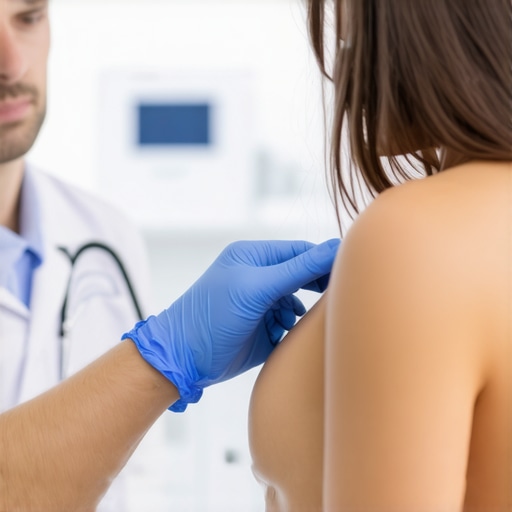
The most critical component of the physical screening is the assessment of skin quality. In the world of high-definition results, the skin is the canvas. If the canvas is stretched, thinned, or lacks elasticity, the “etching” performed on the fat and muscle layers will not be visible. During a consultation, I perform what is known as the “pinch test” and a “recoil assessment.”
We are looking for skin that “snaps back” immediately when pulled. If a patient has significant skin laxity – often due to massive weight loss, multiple pregnancies, or the natural aging process – standard liposculpture may result in sagging skin rather than defined muscles. In these cases, we must discuss a belly skin tightening laser or radiofrequency-assisted lipolysis (RFAL) to provide the necessary contraction. This is why The Skin Screening You Are Not Doing But Absolutely Should is a vital part of my preoperative protocol. We must determine if the skin has the structural integrity to adhere to the underlying muscle. If the skin is too loose, the patient may be a better candidate for a tummy tuck or a modified excision procedure rather than a purely minimally invasive fat removal approach.
Muscle Anatomy Assessment: Finding the Foundation
High-definition liposculpture is not a “one-size-fits-all” procedure; it is a bespoke mapping of your unique anatomy. Before surgery, we must perform a detailed muscle anatomy assessment. I ask my patients to flex their abdominal muscles, obliques, and pectorals so I can palpate the exact location of the muscle bellies and the “linea alba” (the vertical line down the center of the stomach).
For male liposculpture, the focus is often on creating a strong “six-pack” appearance and a sharp “V-cut” at the hips. For women, the goal is typically softer but still defined, highlighting the “linea semilunaris” (the vertical lines on the sides of the abs) for a toned, athletic look. If a patient has significant visceral fat (fat stored behind the muscle wall around the organs), the muscle definition cannot be reached through liposuction alone. The physical screening helps us distinguish between subcutaneous fat, which we can remove, and visceral fat, which must be managed through diet and exercise. This marking process is where the surgeon’s artistic eye meets the patient’s biological reality.
Internal Health: The Lab Work Screening
While the external physical exam is paramount, the internal screening is what ensures a safe and successful recovery. Many lipo doctors will require a standard blood panel, but for a high-intensity procedure like Hi-Def lipo, we go deeper. We look for markers of systemic health that could affect healing and inflammation.
For instance, we often screen for blood sugar levels. The Routine Screening That Catches Pre-Diabetes While It Is Reversible is essential because elevated glucose levels can significantly impair the body’s ability to heal and increase the risk of post-operative infection. Furthermore, I look for The Specific Blood Marker That Flags Silent Inflammation Early, such as C-reactive protein (CRP). High levels of inflammation can lead to prolonged swelling (edema), which can obscure the results of your liposculpture for months. Additionally, we check nutritional markers; for example, Why Your Annual Blood Work Needs a Regular Vitamin B12 Check is relevant because B12 is crucial for nerve health and energy levels during the recovery phase. I always encourage patients to learn How to Get Your Raw Lab Data Before the Doctor Calls You so they can be active participants in their preoperative optimization.
Managing Expectations and Understanding Costs
A thorough screening also involves a deep dive into the patient’s lifestyle and expectations. Hi-def liposculpture is a “finishing” procedure, not a weight-loss surgery. The ideal candidate is already near their goal weight but has “stubborn” pockets of fat that obscure their hard work in the gym. During the consultation, we discuss the liposculpture cost, which is generally higher than traditional liposuction due to the specialized equipment, increased surgical time, and the high level of expertise required.
The cost also depends on the number of areas being treated. While the abdomen is the most common site, many patients opt for arm liposculpture to define the deltoids and triceps, or back lipo to eliminate “bra rolls” and highlight the spinal furrow. Patients should spend time reviewing lipo reviews and studying body sculpture before and after galleries. Seeing real-world results on patients with similar body types provides a realistic preview of what can be achieved. Whether it is love handle liposuction or a full 360-degree contouring, the screening ensures that the financial and physical investment will yield the desired return.
Conclusion: The Path to High-Definition Results
Choosing to undergo hi-def liposculpture is a significant decision that requires more than just a search for “micro laser lipo near me” or “body contouring coolsculpting.” It requires a partnership with a surgeon who understands the delicate balance between anatomy and aesthetics. The physical screening – encompassing skin elasticity, muscle tone, and comprehensive lab work – is the only way to guarantee that you are not just “thinner,” but truly “sculpted.”
If you are ready to see the results of your hard work in the gym finally come to the surface, it is time for a professional assessment. I invite you to view our abdomen liposuction before and after photos to see the level of detail possible with this technique. Whether you are interested in carolinalipo.com‘s expertise in lower body contouring or want to consult with a leader in the field like dr jason miller, the first step is always the screening. Don’t settle for “fat removal” when you can achieve “high definition.” Contact a qualified clinic today to schedule your physical screening and begin your journey toward a more defined, confident you.