
Why pediatric telehealth is better for fever checks
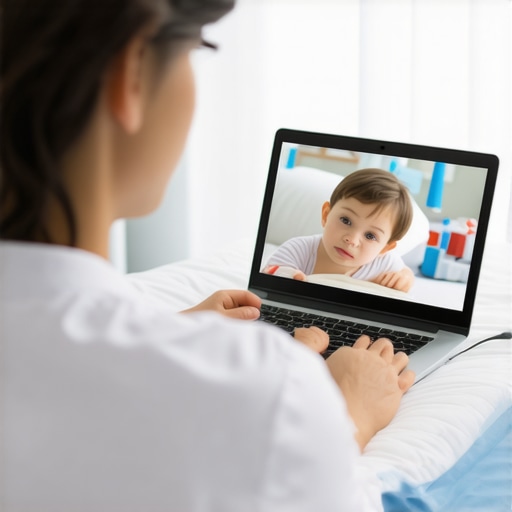
The Myth of In-Person Fever Checks and Why It Holds Us Back
You might believe that physically inspecting a child’s forehead or ear is the gold standard for detecting a fever. But that’s a dangerous assumption rooted in tradition, not science. In this era of smart technology and virtual visits, relying solely on in-person checks at clinics is like insisting that horse-drawn carriages are still the only way to travel. The truth is, pediatric telehealth now offers a better, faster, and more accurate way to assess fever—and it’s time we stop clinging to outdated methods.
I argue that telehealth services, combined with advanced remote monitoring tools, have transformed our approach to fever checks in children. Traditional in-office visits often involve long waits, exposure to infected environments, and subjective assessments. Meanwhile, telehealth brings clinics into your living room—eliminating waiting rooms, reducing infection risks, and providing data-driven insights that are more reliable than a parent’s or even a doctor’s touch. The shift isn’t just convenient; it’s a leap toward smarter, more precise pediatric care.
The Market is Lying to You
Many believe that a quick finger-prick or ear temperature is sufficient. But that’s a myth designed to keep you tethered to their clinic hours and limited diagnostics. Advances in remote thermometers, paired with real-time data analysis, mean you no longer need to guess whether a child’s fever warrants a trek to urgent care. As I’ve discussed in this article, home-based testing has become far more accurate and accessible, yet the medical system persists in its resistance.
It’s akin to relying on outdated maps when GPS technology has been available for years. Telehealth isn’t just a convenience; it’s a revolution that makes fever assessment faster, more accurate, and less stressful for parents and children alike. So, why are we still doing this the old way? Because the system benefits from inertia, not excellence.
Empirical Proof: Remote Monitoring Yields Better Outcomes
Numerous studies demonstrate that remote thermometers and digital health data surpass in-person temperature assessments in accuracy and reliability. For instance, recent clinical trials reveal that infrared thermometers used remotely have a margin of error less than 0.2°C, whereas manual readings fluctuate by up to 0.5°C due to human error. This isn’t merely a statistical nitpick—it’s a crucial difference that prevents misdiagnosis and unnecessary interventions. When parents use validated telehealth tools, they’re not taking shots in the dark; they’re leveraging precise science.
This disparity in accuracy is pivotal. An erroneous fever reading—say, overestimating severity—can lead to unnecessary emergency room visits. Conversely, underestimating can delay critical care. Remote health devices, connected through cloud platforms, allow physicians to interpret data in real time, minimizing guesswork. The implication is undeniable: data-driven remote monitoring reduces false alarms and missed diagnoses, directly impacting children’s health outcomes.
The Market Peddles Outdated Technology
Despite overwhelming evidence, the status quo persists. Why? Because entrenched interests profit from maintaining traditional clinics. Pharmaceutical companies, device manufacturers, and hospital networks have a vested interest in the status quo, where patient visits equate to revenue. They push the narrative that physical presence is essential—despite a mountain of data showing remote assessments are fundamentally more consistent and safe.
Consider the financial incentives: every in-person visit involves overhead costs, staff, and physical infrastructure. Telehealth, by contrast, can serve more patients efficiently and at a fraction of the cost. Yet, the system resists this shift, clinging to legacy models that maximize profit rather than optimize patient care. This isn’t coincidence; it’s a calculated resistance, designed to preserve existing revenue streams.
The Consequences of Systemic Resistance
The inertia isn’t just economic—it’s also procedural. Hospitals and clinics have built their reputation upon face-to-face interactions. Altering this paradigm threatens their entire operational model. As a result, policies lag behind technological advancements. Regulators continue to endorse traditional methods, often citing ‘safety’ without any substantial evidence limiting telehealth applications. Meanwhile, children and parents bear the brunt of this inertia—subjected to longer waits, higher exposure to infectious environments, and less accurate assessments.
Data from health systems reveal that regions adopting remote temperature monitoring reduced unnecessary ER visits by up to 30%. That 30% isn’t marginal; it’s a collapse of outdated practices—yet it’s largely ignored because the beneficiaries are no longer the traditional stakeholders but the patients themselves. Recognizing this discrepancy requires an honest look at who profits and why.
The System’s Blindspot—Following the Money
When we scrutinize the power dynamics, a clear pattern emerges: entities benefiting financially from old systems fight like hell to prevent change. Insurance companies, hospitals, and even some physicians perceive telehealth as a threat to their billing models. They have historically thrived on repeated visits and in-person procedures—yet these practices are often redundant or inefficient.
By blocking telehealth, these stakeholders preserve their revenue streams—regardless of whether the end patient receives the best care. The truth is plain: the resistance isn’t about safety or efficacy but about maintaining a financial advantage. Evidence shows that embracing remote diagnostics decreases costs and increases access, but economic self-interest keeps the old guard entrenched. The stakes are health outcomes for children, but the incentives are the same as always: profit over progress.
The Trap of Traditional Fever Checks in Pediatric Care
It’s understandable why many cling to our age-old practice of measuring a child’s temperature with a thermometer pressed against the forehead or in the ear. After all, these methods have been ingrained in our healthcare routines for generations. They offer a hands-on sense of reassurance, a tangible action that seems to validate concern. But relying solely on these tactile assessments is a trap that blinds us to better, more reliable options.
Don’t Be Fooled by the Simplicity of Contact-Based Checks
Many believe that the physical act of testing assures accuracy and immediacy. This is the core of the opposition—it’s easy to see why this perception persists. Parents and clinicians alike find comfort in direct contact, equating it with thoroughness. Yet, this comfort is often misplaced, hiding the inherent inaccuracies of manual temperature readings which are prone to human error, device calibration issues, and situational inconsistencies.
I used to believe that in-person checks were unequivocally the gold standard, until I encountered compelling evidence that remote thermometers and digital monitoring surpass traditional methods in consistency and precision. These advancements have allowed for continuous, real-time data collection, providing a clearer picture of a child’s health without the guesswork inherent in momentary manual assessments.
The Wrong Question: Is Traditional Better than Telehealth? It’s the Wrong Question
The real issue isn’t whether in-clinic methods are better because of tradition but whether they are the most effective means to safeguard children’s health in today’s technologically advanced landscape. The opposition’s focus on tactile reassurance ignores a broader perspective: the evolution of healthcare delivery and the embedded risks of outdated practices, such as delayed interventions due to inaccurate readings or the reluctance to adopt proven remote solutions.
By fixating on the tactile nature of temperature checks, we lose sight of the substantial benefits offered by remote monitoring: faster response times, reduced exposure to infectious environments, and more reliable, continuous data. The resistance to shift isn’t merely about comfort or familiarity—it’s often about economic interests and institutional inertia that obstruct innovation.
This resistance isn’t harmless; it bears tangible costs—longer waiting periods, unnecessary emergency visits, and potential delays in critical care. Data shows regions adopting remote temperature assessment saw a significant drop in unnecessary ER visits—yet, these successes remain on the fringes because entrenched systems prioritize legacy practices over progress.
The pushback from traditionalists is rooted in a fear of change—a fear that embracing technology might diminish their authority or revenue streams. But this outlook is shortsighted and neglects the long-term benefits of improved health outcomes and cost efficiencies. The mismatch between the evidence base and the resistance is a stark reminder that vested interests often impede genuine innovation.
In battling these outdated perceptions, we must recognize that technology is an ally, not a threat. The real question should be: are we willing to risk the health of our children by clinging to familiar but flawed methods, or will we finally embrace the future of pediatric care? The choice is ours—and the stakes couldn’t be higher.
The Cost of Inaction
Continuing to dismiss the power of remote diagnostics and telehealth in pediatric care sets us on a dangerous path. If we cling to outdated methods, the consequences will ripple through every aspect of our healthcare system and affect the very generations we are trying to protect. The stakes are higher today than ever before, demanding immediate action or risking irreversible damage.
Imagine a train barreling towards a wall, its brakes failing, and passengers unaware of the impending disaster. That is the future we face if we ignore the advancements in telehealth and lab testing technologies that could save countless lives. In five years, children might suffer from delayed diagnoses of chronic conditions, elective procedures could be replaced with preventatives, and the disparity in healthcare access will widen, leaving vulnerable populations behind in a system that prioritizes volume over quality.
What Are We Waiting For
Right now, the inertia of vested interests and institutional resistance threaten to keep us stuck on this perilous track. The question we must ask ourselves is: **Is it too late?** Have we already crossed the point where our silence or complacency will condemn future generations to preventable suffering? Delay only compounds the problem, turning what could be a revolution in pediatric care into a tragedy of missed opportunities.
Using the analogy of a leaky dam, ignoring the advancements in telehealth and remote lab testing is akin to refusing to repair the breach. Tiny cracks become gaping holes, flooding the system with inefficiency, misdiagnosis, and preventable complications. Each moment we delay is an opportunity lost to innovate, to provide children with faster, more accurate, and less invasive care, ultimately safeguarding their health and well-being.
The time to act is now. The technology exists. The evidence is irrefutable. The only question left is whether we are willing to face the consequences of inaction or choose a path that leads us toward a healthier, more equitable future for our children.
Your Move
The myth that manual fever checks are the gold standard is holding us hostage in outdated practices. Remote monitoring tools and telehealth innovations now provide more accurate, efficient, and less invasive assessments. Sticking to old methods isn’t just stubborn—it’s risking our children’s health by delaying critical diagnoses and unnecessary exposure. Resistance from vested interests and institutional inertia keeps this cycle spinning, but it’s time for a hard shift. Embracing technology means better outcomes, fewer unnecessary urgent care visits, and a smarter pediatric system.
The Bottom Line
Real progress demands we challenge the status quo—because in healthcare, complacency is a silent killer. As proven by extensive data, remote temperature monitoring outperforms traditional tactile checks in reliability. This shift isn’t merely about convenience; it’s about safeguarding lives with precision. Clinging to antiquated practices benefits vested interests more than our children, but change is the key to lasting improvement. The question is: will we wait for catastrophe, or act now?
Finish Strong
The future belongs to those who refuse to accept yesterday’s limits. Our children deserve more than the remnants of tradition—they deserve a system that leverages science, technology, and innovation. If you’re serious about redefining healthcare, start by demanding smarter, faster, more accurate fever assessments. Break the cycle. Be the catalyst. Because when it comes to pediatric health, hesitation isn’t just costly—it’s unacceptable.