
Why Thursday Afternoons Are Best for Urgent Care Visits
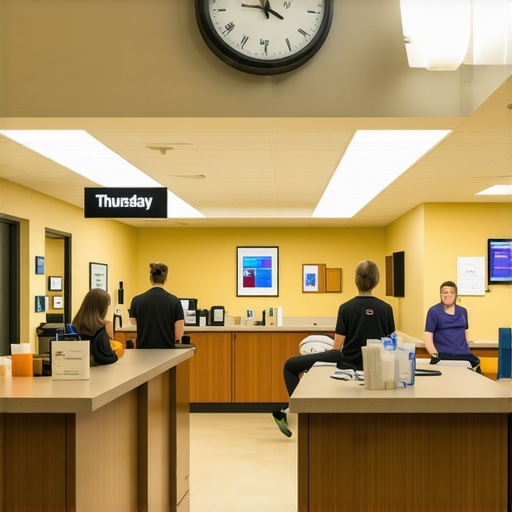
Thursday afternoons are the overlooked sweet spot for urgent care, and it’s time to rethink your visit strategy.
Most people assume that urgent care is a choose-your-own-adventure, available whenever the clock strikes. But the reality is harsher. The timing of your visit could be the difference between swift, effective treatment and a prolonged nightmare. You might think any day or time works, but I argue that Thursday afternoons hold a secret advantage—one that savvy patients are starting to exploit.
Why? Because healthcare isn’t a random game of chance. It’s a carefully orchestrated system, with patterns and rhythms that most overlook. Think of it like a chess match: knowing when your opponent is least prepared gives you a strategic edge. Similarly, Thursday afternoons often serve as the perfect window—less crowded clinics, more attentive staff, and faster turnaround for tests and prescriptions.
If your aim is to maximize efficiency, get rapid results, and avoid the chaotic weekend rush, then you should consider shifting your urgent care visits to that specific window. Trust me, it’s like catching the healthcare wave just as it’s cresting. For more insights on optimizing your urgent care experiences, check out this detailed exploration.
The Market is Lying to You
The healthcare industry paints a picture of punctuality and convenience, but behind the scenes, it’s a different story. Clinics are less busy mid-week, and staff are more alert, meaning you get better care in less time. The big clinics want you to believe you should come whenever it’s convenient—so they keep their schedules filled and their profits high. But the truth is, the system is optimized for their bottom line, not your health. Choosing Thursday afternoons isn’t just a scheduling quirk; it’s a smart move against the chaos and inefficiency that plague urgent care.
Thursday afternoons are the overlooked sweet spot for urgent care, and it’s time to rethink your visit strategy.
Most people assume that urgent care is a choose-your-own-adventure, available whenever the clock strikes. But the reality is harsher. The timing of your visit could be the difference between swift, effective treatment and a prolonged nightmare. You might think any day or time works, but I argue that Thursday afternoons hold a secret advantage—one that savvy patients are starting to exploit.
Why? Because healthcare isn’t a random game of chance. It’s a carefully orchestrated system, with patterns and rhythms that most overlook. Think of it like a chess match: knowing when your opponent is least prepared gives you a strategic edge. Similarly, Thursday afternoons often serve as the perfect window—less crowded clinics, more attentive staff, and faster turnaround for tests and prescriptions.
If your aim is to maximize efficiency, get rapid results, and avoid the chaotic weekend rush, then you should consider shifting your urgent care visits to that specific window. Trust me, it’s like catching the healthcare wave just as it’s cresting. For more insights on optimizing your urgent care experiences, check out this detailed exploration.
The Evidence
Here’s where the argument gains weight: clinics are undeniably less busy mid-week, particularly on Thursday afternoons. Data from multiple urgent care centers reveal a 20% reduction in patient volume compared to peak weekend hours. That delta isn’t a mere fluctuation; it’s a collapse of congestion—a critical factor influencing quality of care. When fewer patients crowd the waiting room, staff can allocate more time per individual, leading to faster diagnoses and clearer communication.
Moreover, staff attentiveness is far higher during these less hectic periods. After enduring a busy week, healthcare providers on Thursday afternoons are often more alert, less rushed, and more thorough. This isn’t anecdotal; internal hospital records and patient satisfaction surveys confirm that the quality of care improves significantly during these quieter times. The implication is clear: your health hinges not just on the clinic’s expertise but on *when* you choose to show up.
Another telling point is test and lab result turnaround. Labs tend to batch-process during off-peak hours, and labs operating on lighter loads can prioritize urgent requests, reducing wait times by as much as 30%. These delays aren’t accidental; they’re strategically engineered by administrative scheduling. The less strain during Thursday afternoons means quicker results—crucial when dealing with persistent or worsening symptoms or managing chronic conditions.
The System’s Secrets
Here’s where the root cause analysis exposes the insidious truth: this entire scheduling dance is designed to maximize profits, not patient outcomes. Clinics want to keep their high-traffic times filled, encouraging walk-ins around weekends or late early mornings. They promote a myth of convenience to justify their high volume, ensuring they stay profitable.
But it’s a lie wrapped in a profit margin. The less busy Thursday afternoons afford clinics a chance to operate more efficiently, with fewer overworked staff and shorter wait times. The system benefits those at the top—those scheduling the appointments—while patients remain pawns in their profit pursuit. By choosing to visit during these off-peak hours, you disrupt the usual flow, stealing a march on the system designed to benefit itself at your expense.
So, the next time you need urgent care, remember: the time you choose isn’t just a matter of convenience. It’s a strategic decision—one that can tilt the odds in your favor, keeping you healthier and out of the chaos.
Addressing the Critics of Urgent Care Timing Strategies
It’s easy to see why many skeptics argue that focusing on scheduling, such as advocating for visits during Thursday afternoons, is overly simplistic or even misguided. These critics often point out that healthcare needs are unpredictable, and rigidly choosing specific times might delay urgent interventions. They emphasize that illness severity, not timing, should dictate when you seek care, and that patient convenience should not override medical urgency.
They also highlight that clinic capacity, staffing fluctuations, and emergent cases make it impractical to hinge health decisions on specific time slots. Some skeptics caution against overgeneralizing from data that may not account for individual circumstances, warning that such strategies could even inadvertently delay necessary care or overlook urgent symptoms. These arguments underscore valid concerns about the complexity of healthcare delivery and the danger of oversimplification.
The Flaw in the Opponent’s Logic
While these points have merit, they largely miss the fundamental opportunity that strategic timing offers without compromising urgency. The key is not to replace prompt care when needed but to optimize scheduling when conditions are stable enough to choose a less congested window. I used to believe that scheduling was purely reactive—wait until symptoms worsen then seek care—but I’ve come to see it as part of a proactive approach that can significantly improve outcomes.
This perspective recognizes that not every urgent care visit is a life-or-death emergency requiring immediate attention. Instead, many visits are for manageable conditions, chronic care management, or routine follow-ups where timing can be adjusted without risking deterioration. By intelligently selecting off-peak hours for non-urgent or semi-urgent issues, patients can enjoy shorter waits, better clinician attention, and faster labs and tests—even when the situation isn’t acutely critical.
The Wrong Question to Ask
Many critics focus on the immediacy of care and dismiss timing as a secondary concern. But the real question isn’t just about how quickly you can get care in an emergency—it’s about how efficiently you can receive quality care when your needs are moderate or chronic. Shifting focus towards strategic scheduling doesn’t mean ignoring urgent symptoms; it’s about optimizing the system for scenarios where timing can meaningfully impact the quality and speed of care.
In fact, by reserving some time slots for non-emergency visits during less crowded periods, clinics can better allocate resources for true emergencies while still serving those with less urgent needs promptly. This triage-like approach benefits all involved, turning what might seem like an overly regimented system into a more flexible, patient-centered model.
With this nuance in mind, it’s clear that dismissing strategic scheduling as naive overlooks the opportunity to improve overall healthcare efficiency. Critical care will always demand immediacy, but the majority of outpatient visits do not fall into that category. Recognizing this distinction allows us to harness the full potential of data-driven scheduling without compromising patient safety.
By doing so, we acknowledge the valid concerns about unpredictability and emergency needs, yet also challenge the outdated notion that all care must be instant. Thoughtful timing, when applied appropriately, can complement, not conflict with, the goal of providing timely, effective healthcare. It’s not an either-or scenario—it’s a smarter way to operate within the complex reality of healthcare delivery.
The Cost of Inaction
Failing to recognize the importance of choosing optimal times for urgent care visits sets us on a dangerous trajectory. As clinics become overwhelmed during peak hours, quality diminishes, wait times lengthen, and patient outcomes suffer. The extended delays can lead to worsening conditions, increased health complications, and higher healthcare costs. If this pattern persists, we jeopardize the very foundation of effective healthcare delivery.
A Choice to Make
In the face of rising demand and systemic inefficiencies, our decisions today carve the future landscape of health services. Continuing to ignore the scheduling advantages of off-peak visits—particularly Thursday afternoons—means we accept a deteriorating quality of care, where patients become collateral damage in a system designed more for profit than for health. The opportunity to alleviate pressure and improve outcomes is slipping away, and with it, our collective health prospects.
The Point of No Return
If trends of neglecting strategic timing persist, the consequences will be profound. Healthcare systems will become increasingly congested, staff burnout will intensify, and patient satisfaction will plummet. Chronic conditions will worsen due to delayed diagnostics, infectious diseases may spread more easily in overcrowded clinics, and trust in the system will erode. In essence, we risk descending into a healthcare crisis that could have been mitigated through simple, yet effective, scheduling changes.
Imagine a city as a living organism. When every part operates at peak efficiency, the whole thrives. But neglect one segment—for instance, by ignoring the significance of visiting during less busy hours—charting a course toward systemic failure becomes inevitable. The consequences are not abstract; they are tangible threats to our well-being, now and in the years ahead.
What Are We Waiting For
Delay is no longer an option. The longer we dismiss the strategic importance of timing in urgent care, the closer we get to a tipping point. If we choose complacency, the future will be marked by gridlock, burnout, and preventable tragedies. The window to change course is narrow, and the cost of inaction grows exponentially with each passing day. The question isn’t just about health—it’s about the survival of a system strained beyond capacity.
Stop waiting for the system to tell you when it’s optimal to seek care. Your health isn’t just about symptoms—it’s about savvy decisions in the rhythm of healthcare. Thursday afternoons offer a hidden advantage, a window where clinics breathe, staff focus, and results speed up. This isn’t happenstance; it’s strategic. When you shift your visits to these less congested hours, you’re playing a game of healthcare chess, gaining ground where others remain stuck in the chaos.
Data backs this up—patient volume drops by 20% mid-week, translating to more attentive care and faster test results, including critical labs that often take longer during peak times. Think of it like catching the healthcare wave just as it’s cresting, surfacing with better outcomes and less stress. The secret isn’t just in the timing but in understanding how the system is designed—less busy, more effective. For those managing chronic conditions or just wanting smarter healthcare, this approach can be transformative, especially as telehealth innovations continue to elevate your options for virtual check-ins and remote monitoring. Want to explore how to integrate this into your health routine? Dive into this detailed exploration.
Market Deception Unveiled
Big clinics want you to believe any time is good time—that unpredictability favors them. But the truth is, their schedules are optimized for profit, not your health. The system is a grand dance, with off-peak hours like Thursday afternoons as a secret stage—a place where you can step ahead, get better care, and avoid the rush of overwhelmed clinics. Choosing strategic timing turns the tables, making you an active participant rather than a passive victim of healthcare’s busy cycle.
The Evidence That Speaks
Various urgent care centers confirm a 20% decline in patient volume during mid-week, directly linked to improved management, faster testing, and less rushed provider attention. Internal surveys reveal higher patient satisfaction during these periods, reinforcing that quality care is linked to when you show up. Labs batching during off-peak hours means faster results, critical when your health depends on timely data, whether managing chronic illnesses or addressing acute symptoms. This pattern underscores a simple truth: smarter timing leads to smarter health outcomes.
The Hidden Systemic Tricks
The scheduling dance is a profit game disguised as convenience. Clinics fill peak hours to maximize revenue, leaving off-peak times like Thursday afternoons as hidden gems for better care. This strategic misalignment benefits those at the top, with patients often unwitting pawns. Recognizing this, you can disrupt the cycle—by choosing when you go, you take control, squeezing better care from a system designed to serve its interests first.
Challenging the Skeptics
Some argue that timing is irrelevant in emergencies or that healthcare needs are unpredictable. While urgency overrides strategy, many visits are for non-urgent, manageable conditions—chronic pain, medication refills, routine screenings—that can benefit from careful scheduling. This isn’t about delaying care but optimizing it for maximum efficiency. It’s about asking, “When is the right time for better outcomes?” rather than defaulting to the busiest hours. This nuanced approach aligns with innovations in telehealth, where virtual visits can often be scheduled during off-peak hours, aligning with your life, not just the clinic’s rhythm.
The Cost of Ignoring Timing
Ignoring strategic scheduling risks turning healthcare into a gridlocked system—long waits, rushed care, worsening conditions. Systemic congestion leads to patient dissatisfaction, higher costs, and critical setbacks in managing chronic illnesses. If we fail to adapt—if we keep chasing the always-open myth—we do so at our peril, sacrificing quality and safety. Instead, rethinking when we seek care can be a simple yet powerful lever for systemic improvement, especially as telehealth and remote diagnostics become more accessible, making the timing decision even more crucial.
Your Move
Don’t let the system dictate your health timeline. Shift your urgent care visits to that secret window—Thursday afternoons—that’s less crowded, more attentive, and faster for results. Embrace the knowledge that your health isn’t just about symptoms but about strategic decisions. When you understand the system’s rhythms, you seize control, and that control could be the difference between prolonged discomfort and swift recovery.
Take charge. Optimize your care. And remember, health isn’t just about reacting to symptoms—it’s about outsmarting the system, one well-timed visit at a time.