
Why You Should Always Request Your Raw Lab Data
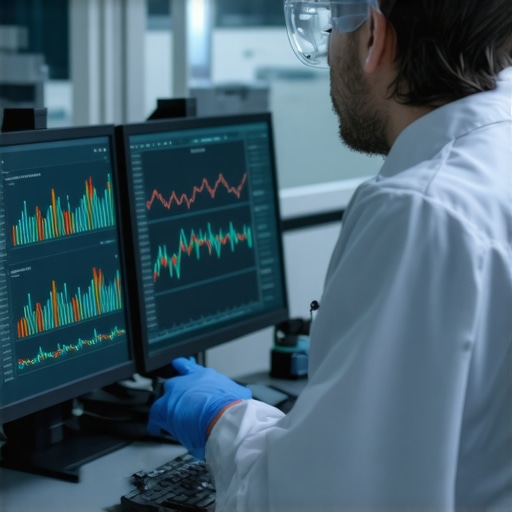
The Hidden Dangers of Relying on Summaries and Why You Must See the Raw Data
Most people accept the conclusions their doctors give them without question. They get a lab report, glance at a few numbers, and move on. But this blind trust is a gamble you shouldn’t be willing to take. The truth is, when it comes to your health, the summary isn’t enough. You need to see the actual raw data, raw and unfiltered. Otherwise, you’re flying blind in a storm, unaware of the permanent damage hiding in your blood test results.
Requesting your raw lab data isn’t just good practice—it’s a crucial step toward taking control of your health. Your doctor’s interpretation can be biased, incomplete, or even deliberately simplified to avoid confusing you. But hidden in the detailed numbers could be clues that predict future illness—clues your doctor might skip or misinterpret. Think of your lab results as a battlefield report—not just the enemy’s position but critical intelligence you need to win the fight against chronic disease or sudden health crashes.
So, why are we still settling for sanitized summaries? Why do health providers often resist sharing the actual data? The answer points back to the system’s flaws—conflicts of interest, overworked staff, and the misguided belief that patients are too clueless to understand the details. But I argue that this approach is a recipe for disaster. Just like a sailor who refuses to read his compass or a chess player ignoring the full board, relying solely on a summarized chart is a strategic error.
In my experience, requesting your data isn’t just about transparency; it’s about empowerment. Without full access, you’re at the mercy of interpretations—interpretations often colored by the provider’s time constraints or hidden agendas. If you want to gauge your true health, spot early signs of illness, or even catch misleading test results that could be just plain wrong, you must demand the raw data.
Let’s be honest: the medical industry is sometimes more interested in maintaining control than empowering patients. They want you dependent, trusting, and uninformed. But in the era of information and transparency, you are no longer powerless. Your health record is your property, and you have every right to view, analyze, and challenge every number—think of it as your personal secret weapon against health misinformation.
As I argued in similar contexts, like how many lab tests are missing key markers that can predict the onset of disease, your data needs to be complete and accessible. For example, standard cholesterol tests often omit vital indicators of your true heart risk—yet your doctor might never tell you that unless you ask for the raw results. Don’t settle for a filtered version; you deserve the full picture. Click here to learn how to get your lab results faster3 and see the difference full transparency can make in managing your health.
The Evidence: Raw Data Reveals What Summaries Conceal
The crux of the matter isn’t just about raw lab results; it’s about *what’s missing* when you settle for a sanitized summary. For example, standard cholesterol tests often ignore high-sensitivity markers like ApoB and Lipoprotein(a), which are critical for assessing true heart risk. When patients accept simplified reports, they’re unwittingly blind to the indicators that predict *catastrophic* health events. This isn’t hyperbole; it’s a reality backed by studies showing that relying solely on broad scores neglects vital nuances—nuances your health could depend on.
Research shows that adverse outcomes correlate more strongly with specific markers left out in routine tests. A 2018 study published in the Journal of Cardiology found that patients with normal LDL levels but elevated ApoB had significantly higher incidences of heart attacks. Yet, most doctors don’t even mention these numbers unless specifically asked. This omission isn’t innocent—it’s a strategic choice rooted in systemic flaws that favor simplified data, making it easier for providers to avoid complex explanations. But the consequence? Patients remain in ignorance, vulnerable to silent damage.
The Root Cause: Systemic Bias Toward Simplicity and Control
It begins with the design of our healthcare testing protocols. Tests are built around what’s cheapest and easiest to process, not what’s most informative. The system prefers to present digestible summaries because to do otherwise threatens their authority and convenience. When providers hand over raw data, they step outside of their comfort zone—challenging the very power they hold. So, instead of empowering the patient, there’s a subdued resistance—fueled by entrenched habits and economic incentives that reward quick diagnoses over deep understanding.
Moreover, the profit motive looms large. Laboratories and healthcare corporations benefit from limited data sharing. The more that data stays obscured, the more they maintain their control—manipulating the narrative, guiding decisions, and, ultimately, bolstering their bottom line. And doctors, often overwhelmed with workloads, have little time or incentive to parse through complex numbers. They default to summaries, not because they are accurate, but because they are convenient.
The Follow the Money: Who Gains from Denying Full Data?
Healthcare giants, insurance companies, and even some medical professionals structurally profit from limited transparency. When patients lack full access, the industry maintains a degree of control—an invisible shackle of dependency. This dependency isn’t coincidental; it’s *baked into* the system designed around simplified metrics. As a result, many unknowingly accept false comfort, believing their health is under control when, in reality, crucial signs are being masked.
This controlled opacity isn’t merely an oversight—it’s a calculated strategy to sustain a certain model of care. And as long as the system benefits from these arrangements, don’t expect wholesale transparency. Because at the end of the day, the real beneficiaries are those who profit from keeping you uninformed. And if you think this is a paranoid conspiracy, consider the growing body of whistleblower testimonies revealing how complex, detailed data is hidden behind layers of bureaucracy, jargon, and proprietary restrictions—always with the excuse of protecting patient privacy or reducing confusion.
But the truth remains—your health data is *your* property. The more you demand access to raw results, the harder it becomes for the industry to sustain its cozy illusion of simplicity. Unless patients challenge the status quo, the system will continue to prioritize control over clarity. The line between informed health decisions and blind trust is razor-thin—and the choice to see the full data sets that line in half.
The Trap Critics Fall Into
It’s easy to see why many believe that trusting simplified lab summaries suffices for health management. They argue that raw data is too complex, too confusing for patients who lack medical training, and that doctors are better equipped to interpret these numbers. The underlying assumption is that detailed data may cause unnecessary anxiety or misinterpretation, leading to more harm than good. This perspective, however, is a dangerous oversimplification that undermines patient autonomy and the pursuit of truly informed healthcare decisions.
But Does Complexity Justify Obfuscation?
I used to believe that simplifying results protected patients from confusion—until I encountered the reality that crucial warning signs are often hidden in the granular details. The challenge isn’t that raw data is inherently too complicated; the challenge lies in the systemic reluctance to share it. This withholding isn’t about patient welfare but about maintaining control, avoiding accountability, and sidestepping uncomfortable truths about our health.
While it’s true that raw numbers require some effort to interpret, dismissing their importance outright ignores the fact that many key health indicators are deliberately left out of summaries. For example, routine lipid panels often omit markers such as ApoB or Lipoprotein(a), which research increasingly links to cardiovascular risk. Relying solely on broad scores like total LDL or HDL numbers is akin to judging a book by its cover—superficial and often deceptive.
Instead of dismissing raw data as too complicated, we should be asking: Why is this data not readily accessible? Who benefits from its concealment? The reality is that systemic bias and economic incentives strongly favor limited, digestible summaries—designed to keep patients dependent and doctors shielded from liability. That’s not health care; that’s control disguised as care.
Questioning the Status Quo is Essential
The question isn’t whether raw data can be challenging to interpret but whether withholding it serves the patient’s interests. Evidence increasingly shows that some of the most predictive health markers are routinely ignored in summaries. This is not a mere oversight but a calculated decision rooted in systemic inertia and profit motives.
Take the example of advanced lipid testing—where detailed particle counts and apo-proteins provide a far more accurate risk profile than standard cholesterol tests. Yet, most patients are never informed about these options, let alone have access to the raw data. This barrier isn’t about security or privacy—it’s about limiting who can see the full story, ensuring that most remain unaware of their true health status.
This breeds a dangerous complacency, a false sense of security based on incomplete information. The very idea that raw data is too complex to understand is a smokescreen—one that obscures the real intent: maintaining the status quo of control and profit.
The Uncomfortable Truth: Power and Profit Over Transparency
Unquestionably, sharing raw data challenges the existing power structures within healthcare. When patients see the full spectrum of their health markers, the entire paradigm shifts from provider-led decisions to patient-led empowerment. This threatens the profits of labs, insurers, and even some practitioners who prefer simplified narratives that justify ongoing interventions and treatments.
Addressing this, we must recognize that systemic resistance to full data transparency isn’t accidental; it’s a calculated barrier to sustain certain economic interests. This isn’t a conspiracy theory but a clear pattern observed across multiple sectors of healthcare. The real challenge isn’t the complexity of data but the unwillingness of entrenched systems to relinquish control.
And here’s the punchline: the real disservice we do ourselves is accepting the narrative that raw data is too complicated to understand. That excuse is a shield for a deeper, uncomfortable truth—that our health system prefers control over clarity, profit over patient empowerment, and convenience over comprehensive care.
The Cost of Inaction
If we choose to neglect the reality that our health data is a powerful tool rather than a mysterious obstacle, we set ourselves on a destructive path. Ignoring this truth means accepting a future where unnecessary illness, preventable crises, and systemic failures become the norm. The stakes have never been higher, and complacency today guarantees a sickly society tomorrow. When essential health markers are hidden behind layers of bureaucracy and profit-driven motives, the true cost is paid not just by individuals, but by all of society.
Without access to full health data, patients remain blind to creeping risks lurking beneath the surface. Potential early warning signs—those critical indicators of chronic deterioration—are buried, dismissed, or deliberately concealed. This leads to delayed diagnoses, wasted treatments, and the tragic reality that genuine prevention becomes impossible. The current trend of data obscurity traps millions in a cycle of misdiagnosis and inefficient healthcare, draining resources and shattering lives.
A Choice to Make
The future spirals into darkness if this path persists. Within five years, the healthcare landscape may resemble a foggy battlefield—patients navigating blindly, only aware of the damage after it’s beyond repair. As data remains locked away, trust in medical institutions erodes. Misplaced confidence in sanitized summaries fosters a false sense of security, making society more vulnerable to devastating health crises like pandemics, heart failures, and neurodegenerative diseases.
This isn’t just about individual health—it’s a threat to national security. Economic productivity declines as preventable illnesses drain labor forces. Public health costs skyrocket, outpacing budgets and allocation. A society resigned to ignorance becomes a ticking time bomb, with the true disaster only visible long after unavoidable catastrophe strikes. We will have willingly handed over our power, trading autonomy for convenience—a bargain that costs far more than money.
What are we waiting for
Imagine this: trusting only the sanitized headlines on your lab results is like steering a ship with a foggy compass, oblivious to the hidden reefs below the surface. The danger is imminent, and the warnings are loud. Yet, the inertia of complacency persists. The question remains—how much more damage must occur before we recognize that the current system is a gamble with our lives? Ignorance is no longer a shield but a blade poised to cut, and time is running out to demand full transparency.
We stand at a crossroads, facing a choice similar to a traveler ignoring the warning signs of an approaching storm. The stakes are a society increasingly dependent on sick care instead of health, a world where preventable crises define our era. Rejecting the responsibility to access and interpret our raw data is not just a missed opportunity—it is an abdication of our fundamental right to self-care. If we do not act now, the price paid in human suffering, economic loss, and systemic collapse will be our own.
Wake up. Demand your full health data. Because the future of medicine depends on whether we embrace transparency or succumb to chaos.
The Final Verdict
Your health depends on seeing the full story—demand raw data from your labs and challenge the sanitized summaries handed to you.
The Twist
What if the biggest threat to your well-being isn’t the disease but your own ignorance—fuelled intentionally by a system that profits from keeping you in the dark?
Your Move
Stop trusting the system to tell you what you need to know. Take control of your health narrative—request the raw data, ask the tough questions, and educate yourself before it’s too late. The power is in your hands; wield it. Remember, health isn’t just a checklist—it’s your most valuable possession. Don’t let complacency be your downfall. Dive deeper, challenge the status quo, and insist on transparency. If not now, when? If not you, who? Learn how to get your full lab results faster and see the difference transparency makes in your health journey. You owe it to yourself to see every number, every marker, every clue—otherwise, you’re flying blind in a storm.