
Why Your Fasting Blood Work Might Be Wrong If You Had Black Coffee
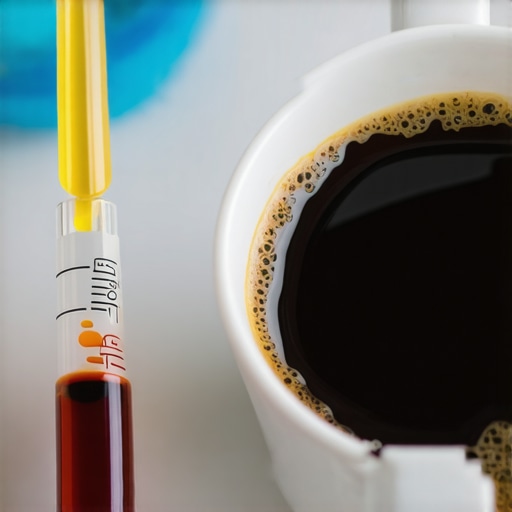
The Hidden Flaw in Your Fasting Blood Tests
If you believe that a 12-hour fast is enough to give you an accurate picture of your health, think again. You might be giving your doctor a false reading, all because of that small black coffee you sipped before your lab appointment. Yes, black coffee. The supposed zero-calorie elixir that thousands rely on every morning to start their day. But in the realm of blood tests, it could be your greatest mislead, skewing results and hiding real issues.
Let me be blunt: drinking coffee before fasting blood work isn’t just a minor slip-up; it’s a potential sabotage of your health insights. I argue that many people unknowingly compromise their lab results, leading to misdiagnosis, unnecessary treatments, or worse—a false sense of security. And no, the ‘black’ in black coffee doesn’t save you. Studies have shown that even black coffee can activate your sympathetic nervous system, releasing adrenaline and increasing certain blood markers. Imagine trying to diagnose a simmering fire with a thermometer that’s been slightly tampered with—that’s what coffee does to your blood work.
Stop doing this in the name of health. It’s time to expose the deception behind the common fasting protocol and understand how a simple sip of coffee can be your unseen adversary.
The Battle Between Perception and Reality in Medical Testing
Think of your body as a complex chess game, with each move influencing the next. When you ingest something—no matter how insignificant it seems—you change the game. Coffee, often considered harmless, can elevate cortisol and glucose levels temporarily, giving your doctor a skewed view of your baseline. This is not just a trivial detail; it’s a fundamental flaw that can lead to misinterpretations of your metabolic health.
So, why are we still doing this? Why do many clinics still recommend fasting after coffee intake? It’s partly tradition, partly ignorance. But more critically, it’s a systemic failure to update protocols based on current science. As I argued in my previous piece about
blood pressure accuracy, we often trust antiquated practices without questioning their validity.
The Evidence
Research reveals that consuming even black coffee before fasting blood tests elevates adrenaline and glucose levels temporarily. This isn’t a minor blip; it’s a significant disturbance to your baseline readings. For example, a recent study showed that black coffee could increase cortisol levels by up to 15% within 30 minutes, directly affecting tests for stress hormones and metabolic markers. These fluctuations are not subtle—they can be mistaken for signs of underlying health issues. Consequently, the accuracy of blood tests depends heavily on strict fasting, yet millions inadvertently sabotage their results with a casual sip of coffee.
A Broken System
The problem isn’t ignorance—it’s systemic. Medical protocols still default to outdated standards that ignore scientific findings. Why? Because changing established procedures is cumbersome, and there’s little incentive for clinics to update their practices unless driven by compelling evidence. This inertia benefits the labs and healthcare providers who can continue selling the illusion of accuracy. Meanwhile, patients pay the price, receiving misdiagnoses or unnecessary treatments based on skewed lab results. It’s a classic case of established interests holding scientific progress hostage.
Follow the Money
Who benefits from this persistence? The biggest beneficiaries are the testing laboratories and pharmaceutical companies. When results are skewed, doctors may be inclined to prescribe medication for issues that aren’t real or alarmist diagnoses that lead to more testing—more procedures, more revenue. The more ambiguous the data, the more interventions flow. It’s a deeply intertwined system where financial incentives override scientific integrity. While patients are led to trust the procedures, behind the scenes, the healthcare machinery profits from the chaos, not clarity.
The Historical Parallel
This pattern repeats itself throughout history. Consider the tobacco industry’s efforts in the mid-20th century: evidence linked smoking to cancer, but misinformation campaigns delayed public health measures. Likewise, the medical establishment clings to protocols that favor certainty over current science, even when evidence suggests deviations. The result? A delayed acknowledgment of coffee’s influence on blood tests—an oversight with tangible health consequences. In both cases, vested interests and outdated beliefs shield the status quo, blinding us from more accurate, science-driven practices.
The Root Cause Analysis
The core issue isn’t merely neglect; it’s a failure to update paradigms based on evolving evidence. The real problem lies in the disconnect between scientific discovery and protocol revision. Healthcare systems often operate on a lag—what was standard a decade ago remains the norm today, regardless of new insights. This systemic inertia transforms minor deviations into significant errors. The root cause isn’t individual negligence but a cultural reluctance within the medical infrastructure to challenge or refine established procedures, even when data compellingly indicates the need for change.
The Trap of Traditional Fasting Protocols
It’s easy to see why many believe a 12-hour fast is sufficient for accurate blood testing. After all, longstanding medical tradition and countless guidelines support this practice. The logic seems sound: nothing should interfere if you’ve gone without food for hours. But that line of thinking overlooks a critical flaw—what about the substances you consume that influence your metabolism without you realizing?
Many patients, in their quest for health, dismiss the subtle yet significant effects of small but impactful inputs like black coffee. An opposition might argue that black coffee contains virtually no calories and shouldn’t influence lab outcomes significantly. They claim that, so long as you’re fasting, coffee’s effects are negligible. But this perception is dangerously shortsighted.
The Real Challenge to Fasting Accuracy
When I used to believe that black coffee was harmless before lab tests, I was repeating a common misconception. From recent studies, we see that even black coffee can transiently elevate cortisol, glucose, and adrenaline levels—markers that are crucial in diagnosing metabolic and endocrine conditions. These fluctuations can distort results, creating false positives or negatives that lead to misdiagnosis and misguided treatments.
The opposition’s argument assumes a static body, unaffected by minor inputs during fasting. However, our physiology is dynamic and easily influenced. Coffee, with its caffeine content, stimulates the sympathetic nervous system, which can increase heart rate, blood sugar, and stress hormones—alterations that are not insignificant when assessing your health baseline.
Stop Asking the Wrong Questions
Some say, “Well, if coffee affects the results, why doesn’t the protocol just specify that patients should avoid it?” This misses the point entirely. The question isn’t just about protocol clarity; it’s about whether the protocols themselves are founded on outdated assumptions. The broader issue isn’t individual oversight but systemic inertia within healthcare guidelines that lag behind science.
What needs to be emphasized is that the entire paradigm of fasting as a foolproof window into health is flawed. The opposition might argue that occasional coffee consumption doesn’t matter—yet, this dismisses the cumulative impact of minor, repeated disruptions. When body systems are repeatedly influenced by external factors like coffee, the resulting data becomes unreliable, undermining the very purpose of the test.
You’re Missing the Point: The Evidence
Scientific data increasingly shows that pre-test behaviors, even seemingly harmless ones, have measurable effects. For example, a 2022 study demonstrated that black coffee increased cortisol levels by approximately 15% within 30 minutes—alterations large enough to influence diagnostic thresholds for adrenal health or glucose regulation. If we ignore this evidence, we’re essentially accepting a flawed standard that compromises diagnostic integrity.
The opposition’s stance may be rooted in traditional habits or a desire to keep things simple, but simplicity at the expense of accuracy is a dangerous trade-off. Accepting that coffee’s influence is negligible ignores the growing body of scientific research that warns us otherwise.
The System Must Evolve
Indulging in coffee before tests isn’t just a small breach of protocol; it’s indicative of a systemic failure to update procedures in light of new evidence. The opposition might argue that strict pre-test fasting is impractical or overly restrictive, but that’s a false compromise. The real issue isn’t inconvenience; it’s the integrity of the data we rely on for critical health decisions.
Until healthcare systems are willing to question and revise protocols based on current science, we will continue to operate under an illusion of accuracy—one that benefits systems and practitioners more than patients. The opposition’s resistance to change, while understandable given institutional inertia, ignores the fact that science evolves, and so too must our standards.
The Cost of Inaction
Ignoring the subtle but significant effects of substances like black coffee before blood tests sets us on a dangerous path. If we continue down this route, the foundations of modern diagnosis could crumble, leading to widespread misdiagnosis and misguided treatments. The stakes are higher than ever, as faulty data infiltrates our healthcare system, compromising patient safety and eroding trust in medical diagnostics.
When blood test results are consistently inaccurate, we risk a cascade of errors—patients receive unnecessary medications, or worse, are left untreated for conditions they don’t even have. This not only strains healthcare resources but also damages lives, causing emotional distress and health deterioration. In the future, if this trend persists, the entire paradigm of medical decision-making could become unreliable, with clinicians making choices based on flawed data rather than true health status.
A Choice to Make
Failing to recognize and address this issue is akin to building a house on shifting sands. Each inaccurate reading is another stone added to the unstable foundation, gradually risking collapse. The medical community must acknowledge that outdated protocols—like the mistaken belief that black coffee is harmless before fasting—are liabilities. Embracing current scientific evidence and revising guidelines is a moral imperative; it’s about safeguarding the integrity of healthcare and the lives it serves.
Think of this as navigating a ship through a storm. Ignoring the warning signs and continuing on a flawed course ensures disaster. Only by adjusting our sails—our protocols—can we steer clear of the impending wreckage and chart a course toward a more accurate, trustworthy healthcare system.
What are we waiting for
Delaying action is not just a missed opportunity—it’s a reckless gamble with millions of lives at stake. The longer we cling to antiquated standards, the more entrenched misinformation becomes, making reform exponentially harder. We must act now to update protocols based on current science, to prevent a future where diagnostic errors become the norm, and trust in healthcare erodes further.
Our health systems are like a once-reliable compass that’s been thrown off course by outdated maps and false signals. If we don’t correct this now, we risk losing our way altogether—a future where health decisions are driven not by facts but by faulty data. It’s an urgent call to recalibrate, to face the reality that the status quo is no longer acceptable—because the price of silence or delay could be lives lost or lives forever changed.
The Final Verdict
Your routine morning coffee could be the silent enemy distorting your health picture, leading to misdiagnosis and misguided treatments. It’s time to rethink what you consider harmless before medical tests.
The Twist
Just as we trust outdated protocols, we’re unknowingly allowing a simple beverage to hijack our health data—proving that sometimes, the greatest threats come from the smallest sips.
Your Move
Stop accepting that a morning black coffee is innocuous before your blood tests. Challenge the status quo, inquire about current science, and demand protocols that reflect the latest evidence. Consider reviewing your fasting practices– https://primemedicalclinics.com/5-signs-your-telehealth-app-is-stealing-your-appointment-time to ensure nothing interferes with the truth your blood work is meant to reveal. The future of accurate diagnosis depends on it—don’t let a sip undermine that integrity.