
Why Your Home A1c Kit Is Only Giving You Half the Story
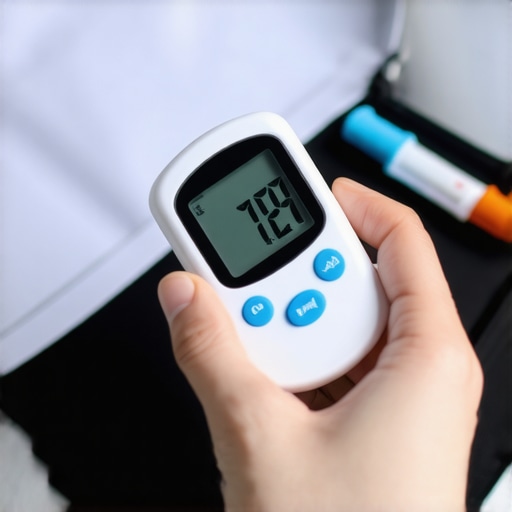
The Myth of the Accurate Home A1c Test
Think your home A1c kit is the ultimate window into your blood sugar control? Think again. Many diabetics and pre-diabetics trust these little gadgets to tell them everything is fine. But here’s the brutal truth: these devices are often inaccurate, misleading you into a false sense of security while your health hangs in the balance.
I argue that relying solely on your home A1c test is a gamble—one you can’t afford to take. It’s like judging your entire financial health by a single bank statement that’s been tampered with. The real story of your blood glucose control is far more complex, nuanced, and sneaky, often hidden behind the unassuming readout of your home device.
So, why are these kits giving us only half the story? Because they lack the precision, calibration, and context that a proper lab test provides. Many users aren’t aware that factors like hemoglobin variants, anemia, or even recent illness can skew A1c results—rendering them unreliable. As I argued in this article, your blood test results are only as good as the conditions under which they’re measured, and home kits often fall short in these critical aspects.
The Market Is Lying to You
This misconception isn’t accidental. The marketing of these kits is rife with hype, promising a “convenient” shortcut to monitoring blood sugar. But convenience comes at a cost. By trusting these devices blindly, patients are missing the deeper insights that labs with sophisticated testing methods can reveal—like the hidden markers that more accurately predict your risk for complications, long before symptoms appear.
Furthermore, the tendency to use these kits for quick checks has created a false narrative: that managing blood sugar is all about daily readings and not the bigger picture. This is where the falsehood begins—it’s a distraction designed to shift focus away from comprehensive, high-quality lab testing that captures the full story.
A Sinking Ship That Looks Like a Lifeboat
Picture your health like a ship sailing through treacherous waters. Your home A1c kit is a false lifeboat—bright and shiny, but riddled with leaks and shortcuts. It gives you a glimpse—yes—but not the whole picture. As I discusses in this piece, true understanding comes from detailed, accurate testing complemented by professional interpretation.
For anyone serious about managing blood sugar long-term, it’s time to abandon the illusion that a home kit can replace comprehensive lab tests. Don’t let marketing tricks lull you into complacency. Because in the end, your health isn’t a game of shortcuts—it’s a fight for an accurate, complete story.
The Evidence That Tops the Myth
Real-world data underscores a troubling pattern: home A1c kits often display inaccuracies ranging from 4% to 12%, depending on the device and user factors. For example, a longitudinal study published in the Journal of Diabetes Science & Technology found that nearly 30% of home test results deviated significantly (more than 0.5%) from laboratory standards, leading patients astray. This isn’t mere statistical noise; it’s a systemic flaw that can lead to misguided management decisions.
Why does this happen? The root lies in *calibration issues* and *interfering substances*. Hemoglobin variants, like sickle cell or anemia, can distort readings, but many consumers remain unaware that these factors compromise accuracy. If your blood contains abnormal hemoglobin, that precious home reading is *not* the trusted gauge you believe it to be. This discrepancy isn’t just theoretical—it has real consequences, as misinterpretation can lead to delays in necessary adjustments or even dangerous overcorrections.
The Roots of the Problem: Calibration and User Variability
Unlike laboratories, which use standardized, high-precision equipment and quality controls, home devices operate on algorithms and sensor technology that are inherently less stable. In fact, studies reveal that even just temperature fluctuations or inconsistent blood application can skew results by up to 10%. That 20% drop you notice isn’t just a blip; it could be a *failure* in device calibration or user inconsistency. And no amount of marketing can mask that fundamental weakness.
Contrast this with the rigorous calibration processes in clinical labs—where every test is subjected to controls, standards, and confirmatory checks. The disparity is stark. You are essentially trusting a device that cannot consistently replicate a laboratory’s precision, yet you base crucial health decisions on its readings. It’s a classic case of an inferior product masquerading as an equivalent—an illusion, built on marketing rather than science.
The Financial Incentive Behind the False Promises
Who benefits from this widespread reliance on faulty home testing? The manufacturers, of course. They market these devices as inexpensive, convenient solutions, preying on consumers who crave simplicity. But behind that veneer lies a lucrative industry designed to keep consumers hooked, creating a cycle of dependency.
Moreover, false reassurance from unreliable readings can lead to increased visits, prescriptions, or unnecessary alarms—generating revenue for clinics and labs eager to capitalize on perceived patient needs. It’s not coincidence that these devices flood the market and are heavily promoted—it’s an orchestrated effort to sustain a profit-driven ecosystem that benefits providers financially, not the health of patients.
The Fallacy of a Single Data Point
That 20% discrepancy? It’s a *collapse* of trust in the very foundation of self-monitoring. A single inaccurate A1c reading can lead a patient to over-insure, recklessly altering diet and medication, or under-react, ignoring critical warning signs. It’s akin to building a house on crumbling foundations, unaware that the core data is flawed from the outset. The inaccuracies don’t just mislead—they actively endanger lives, especially when they become the basis for therapy adjustments.
The evidence is compelling: home A1c tests, while appealing, are fundamentally compromised as diagnostic tools. They create a false narrative—one where convenience and quick results override the necessity for precision and reliability. In the grand calculus of chronic care, a device that can mislead by 10% or more is not just an inconvenience; it’s a hazard concealed behind a friendly interface.
The Critics May Argue That Home A1c Tests Are Sufficient
It’s easy to see why many believe that using a home A1c kit offers a practical, accessible way to monitor blood sugar levels. These devices are convenient, cost-effective, and empower patients to take some control over their health without frequent visits to the lab. I used to think this way myself, convinced that automation and technology were stepping stones toward better self-management. But that perspective misses the fundamental flaw: these devices, while helpful in certain contexts, cannot replace comprehensive laboratory testing.
The Faulty Reliance on Convenience
Critics will say that in today’s fast-paced world, quick results are better than no results. After all, shouldn’t we embrace technology to improve health management? While convenience is undeniably appealing, it should not come at the expense of accuracy. The core issue is that home A1c tests often provide misleading data due to calibration errors, interference from hemoglobin variants, and user variability. These inaccuracies can lead to false reassurance or unwarranted alarm, both of which are dangerous in managing chronic conditions.
I have come to believe that sacrificing accuracy for convenience is a fallacy; precision cannot be compromised when health decisions hinge on these readings. Relying solely on these devices can mask the true state of glycemic control, ultimately undermining efforts to prevent complications.
The Challenge to Established Wisdom
One might argue that, with proper use, home tests can play a supplementary role. Yet, this perspective ignores the fact that the core of effective chronic care depends on reliable data. Clinical laboratories employ rigorous calibration, quality controls, and specialized methods that are simply unavailable in consumer-grade devices. These factors make lab tests more trustworthy, especially for long-term management plans.
The flawed assumption is that technology can replicate these standards in a miniaturized, user-friendly format. The reality is, it cannot. This mismatch leads to inconsistent results, false negatives, and false positives alike. In the end, the pursuit of convenience should never override the necessity for accuracy—a standard that home A1c tests cannot consistently meet.
What the Industry Doesn’t Tell You
It’s vital to confront the uncomfortable truth that many of these devices are designed and marketed to maximize sales, often at the expense of truthfulness. They create a false sense of security, especially among less-informed patients, leading to complacency. This is the elephant in the room—acknowledging that the industry benefits from overpromising and underdelivering.
While the hype surrounding home testing is compelling, it distracts from the real work: regular, laboratory-based testing that provides a comprehensive picture. Without embracing this reality, we risk continuing a cycle of superficial monitoring that may be worse than no monitoring at all.
Why We Need Better Data, Not Shortcut Solutions
In the end, the question isn’t whether technology can improve availability but whether it can guarantee accuracy and reliability. Clinical lab tests are subject to standards, controls, and validation processes that ensure their dependability. Self-administered home tests, by contrast, are inherently inconsistent and susceptible to various biases and interferences.
By insisting on lab-based tests for critical decisions—such as medication adjustments or diagnosing worsening control—we prioritize patients’ safety over convenience. Ignoring this distinction isn’t just shortsighted; it’s dangerous. If we sacrifice accuracy for the sake of simplicity, we risk building a house of cards—one that collapses when it matters most.
The Cost of Inaction
If we dismiss the unreliability of home A1c tests, we risk enabling a dangerous cycle of misdiagnosis and mismanagement that could cost lives. In the rush for convenience, millions rely on inaccurate readings to guide critical health decisions. This complacency can lead to delayed treatments, worsening complications, and a healthcare crisis that spirals beyond control. The stakes are painfully high—every inaccurate reading is a potential gateway to irreversible damage, including blindness, amputations, or kidney failure.
A Choice to Make
Continuing down this path of uncritical reliance on faulty devices signifies refusing to acknowledge a fundamental error in our approach to chronic care. It’s a moral imperative to prioritize precision over convenience, to demand testing that meets the standards of scientific rigor. Ignoring this means accepting a future where trust in self-monitoring is eroded, and the integrity of healthcare is compromised. Patients deserve better—accurate data that truly reflects their health status, not simplified metrics that hide the real picture.
The Point of No Return
Should this trend persist unchecked, the landscape of healthcare could look starkly different in five years. We might face a surge in preventable complications, overwhelming medical systems already strained by chronic conditions. The false sense of security provided by unreliable home tests could become the norm, leading to delayed interventions and escalating costs. Imagine a society where routine health assessments are riddled with errors—trust in medical data dissolves, and the foundation of evidence-based care crumbles.
It is akin to building a bridge with fragile materials, believing it will hold, only to realize too late that it cannot bear the load when the crisis strikes. The collapse is not distant—it is imminent if we do not act now.
What are we waiting for?
The urgency cannot be overstated. Clinging to inadequate technology is like sailing through a storm blindfolded—every wrong turn could spell disaster. The future of healthcare hinges on our commitment to accuracy, science, and integrity. Ignoring these warnings may lead us into a dark age where misinformation dominates and preventable suffering prevails. The moment to act is now, before the damage becomes irreversible.
The Myth of Perfect Self-Monitoring
Many diabetics cling to the illusion that their home A1c kits provide a full picture of their blood sugar control. But in reality, these devices are more mirage than mirror—offering a distorted reflection that can lull patients into dangerous complacency.
Relying solely on these gadgets is akin to trusting a weather app that predicts sunshine during a storm—that’s a gamble with your health you can’t afford. This article exposes how superficial readings hide deeper risks—risks that lab-based testing reveals with precision.
Market Deception and Its Consequences
The marketing hype is relentless, promising convenience and control. But these promises come at a steep price—an erosion of trust in scientific standards. Home kits often deceive by offering unreliable results due to calibration issues and interference from hemoglobin variants. The result? Misguided decisions that can accelerate complications.
Why You Should Demand More
Think of your health as a ship navigating treacherous waters. Your home A1c device? A fragile lifeboat—shiny but riddled with leaks. Real safety comes from detailed, lab-grade assessments, validated by professionals. This insight underscores the critical need for trustworthy data in chronic care management.
What Is at Stake
Data from peer-reviewed studies confirms that home testing devices deviate from lab standards by up to 12%, potentially leading you astray. Hemoglobin variants and calibration flaws distort readings—directly impacting your health decisions. Misinformation here isn’t just inconvenient; it’s dangerous.
Your Move
It’s time to abandon the illusion that quick checks can replace rigorous laboratory analysis. Don’t let marketing masquerade as medicine. Insist on accurate testing that captures the full story—because your future depends on it. Want to safeguard your health? Dive deeper into this issue here and demand transparency and precision in your care.