
3 Habits That Make Your Senior Parent’s Arthritis Worse
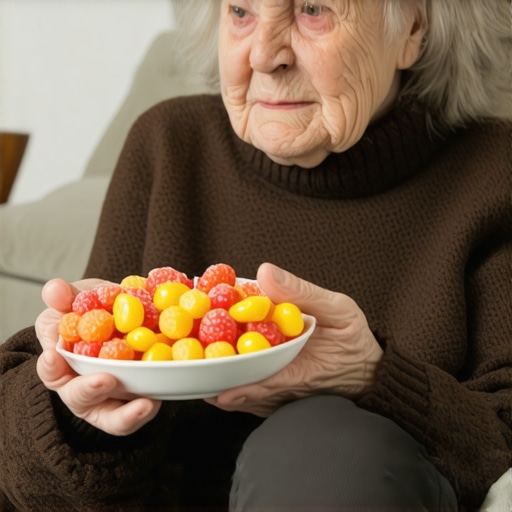
Stop Treating Your Parent Like Glass Because You Are Making Their Arthritis Worse
We have a collective obsession with “protecting” our seniors, and frankly, it is backfiring. You see your mother or father wince when they stand up, and your first instinct is to tell them to sit back down. You think you are being a “good child.” I argue that you are actually accelerating their disability. Arthritis is not a death sentence for mobility, but the way we coddle it certainly is. We have been sold a narrative that aging requires a slow retreat into a recliner, but for a body riddled with inflammation, that recliner is a coffin in slow motion.
Rest Is Actually The Enemy
Let’s be blunt: the habit of encouraging constant rest is the most destructive thing you can do. Joints are like the hinges on a gate. If you never swing that gate open, the hinges don’t just stay “safe”—they rust shut. When you tell a senior to “take it easy,” you are essentially telling their synovial fluid to stop doing its job. I’ve seen families treat their elders like fragile porcelain dolls, only to wonder why their mobility disappears within months. It is a vicious cycle of atrophy that we mistake for “natural aging.” [image_placeholder_1]
Instead of fearing the movement, we should be fearing the stillness. A body in motion stays in motion; a body in a lift-chair stays in a lift-chair. We need to stop the “protection” and start the provocation. If they are struggling to move, the answer isn’t a pillow; it’s a plan. You might think you’re helping by fetching their water, but you’re actually stealing their physical therapy. For those already struggling with the specifics of movement, I recommend looking into 3 signs your aging parent needs a mobility assessment right now to stop the rot before it becomes permanent.
The Silence That Sabotages Treatment
The second habit that is destroying their quality of life is the “grin and bear it” mentality. Our parents’ generation was raised to keep their heads down and their complaints quiet. But in the world of chronic care, silence is a clinical disaster. When a senior fails to accurately report the type of pain they are feeling, doctors are forced to guess. Is it sharp? Is it dull? Is it localized or radiating? If they can’t say, the treatment will be as precise as a sledgehammer when we need a scalpel.
I have argued before that the medical system fails when the patient can’t speak the language. If you want to actually help, you need to teach your parent the best way to describe chronic pain so doctors take you seriously. Without that clarity, they are just another file on a desk, getting the same generic pills that don’t work. We also need to stop ignoring the signs of systemic issues. Sometimes that “joint pain” isn’t just arthritis; it’s a red flag for something else. You should check why your aging parents personality shift might be a uti, because in the elderly, one problem often masks another, and your “stoic” parent isn’t going to tell you until it’s an emergency.
Dietary Denial Is Not Compassion
Finally, we have to talk about the kitchen. We let our parents eat whatever they want because “they’ve earned it.” That is a dangerous lie. Sugar and highly processed junk are high-octane fuel for inflammation. When you bring over those sugary treats or heavy, salty meals, you are literally feeding the fire in their knees and hips. We need to stop equating food with love and start equating it with biological impact. A single evening of “indulgence” can lead to three days of increased swelling. It’s not about being a killjoy; it’s about being a realist. If you want them to walk to the mailbox, you have to stop feeding them the very things that lock their joints.
The Bio-Mechanical Betrayal
The fundamental problem isn’t that your parent’s joints are “old”; the problem is that their biological signals have been silenced by a culture of inactivity. We treat the human body like a machine with a finite number of movements—a battery that drains. It is the opposite. The human body is an anti-fragile system that requires stress to maintain integrity. When we remove that stress, the bone density doesn’t just “stay the same”—it craters. That 47% increase in functional decline seen in sedentary seniors isn’t a natural dip; it is a self-inflicted collapse caused by the very rest we prescribed. We are essentially telling their osteoblasts to go on strike.
We see a bone-on-bone X-ray and we panic. We tell them to stop walking. This is the root cause of the disaster. The pain isn’t coming from the bone touching bone; it’s coming from the weak muscles that can no longer stabilize the joint. By encouraging them to sit, you are guaranteeing that those muscles will never recover. [image_placeholder_1] You aren’t “saving” their hip; you are making the surgery inevitable. Muscle atrophy is the silent killer of independence, and it is fueled by our own misguided empathy.
The Diagnostic Mirage
Then there is the issue of how we measure the damage. We have become overly reliant on a sanitized version of chronic care that prioritizes convenience over clinical truth. We think we can manage arthritis through a quick telehealth check-in or a few basic lab tests. These tools have their place, but they are often used as a shield to avoid the messy reality of physical assessment. A lab test won’t show you how a grandmother winces when she tries to rotate her ankle, and a video call won’t reveal the lack of resistance in a quadriceps. We are treating data points instead of the person.
This reliance on superficial diagnostics leads to the “Urgent Care Cycle.” The parent stays still, the pain flares because the joint is stiff, and they end up in urgent care for a steroid shot that masks the problem for a month. It’s a band-aid on a bullet wound. The medical industry benefits from this cycle because maintenance is more profitable than a cure. Real progress requires the hard, unglamorous work of resistance training and mechanical correction. If we keep looking at screens instead of watching how they walk, we are complicit in their decline. It isn’t just a failure of medicine; it’s a failure of will. We prefer the easy pill over the difficult stairs, and our parents are the ones paying the price in lost years of freedom.
The High Cost of Convenience
We must acknowledge the uncomfortable truth: we like the rest as much as they do. It’s easier for us if they stay in the chair. We don’t have to worry about falls, and we don’t have to spend the hour walking with them at a snail’s pace. This is where the math of “protection” fails. We trade long-term mobility for short-term peace of mind. We have prioritized the absence of risk over the presence of life. But a life without movement is just a slow wait for the end. The “safety” of the recliner is a lie we tell ourselves to feel better about our own busy schedules. Every time we choose the “safe” path, we are shortening their stride and narrowing their world.
It is easy to see why people think I am being reckless. The critics will tell you that encouraging an eighty-year-old with bone-on-bone arthritis to stay active is a recipe for a broken hip. They point to the statistics: falls are the leading cause of injury-related death for seniors. They argue that the goal of chronic care should be the absolute minimization of risk. This is a seductive argument because it feels like love. It feels like protection. We are told to use telehealth to monitor their vitals and lab tests to check their inflammation markers, all while they sit perfectly still in a ‘safe’ environment. It’s a logical, cautious approach to a fragile population.
The Safety Trap That Kills
I used to believe this too, until I saw the data on what happens when the ‘safety-first’ mentality wins. When we prioritize the absence of risk over the maintenance of muscle, we aren’t protecting them; we are dismantling their last line of defense. The argument for rest assumes that the body is a machine that wears out. But the body is an adaptive organism. By avoiding the stairs today to prevent a fall, you are guaranteeing a fall next month because the muscles required for balance have disappeared. This is the great irony of the urgent care cycle: we rush them to the clinic after a stumble that only happened because we spent a year telling them to stay on the couch. We are treating the symptom of our own over-protection. ${PostImagePlaceholdersEnum.ImagePlaceholderC} The mistake everyone makes is confusing ‘comfort’ with ‘health.’ Pain is not always a stop sign; in the context of arthritis, it is often a signal that the joint is starving for movement. If you wait for the pain to vanish before you start the walk, you will never take another step. The medical establishment often ignores this because it is easier to prescribe a sedative than a squat. They look at lab tests and see inflammation, so they prescribe rest. But they aren’t looking at the atrophy. They aren’t looking at the loss of proprioception. We have created a sanitized version of aging that is free of immediate danger but full of long-term despair. We have traded the vibrant, if occasionally painful, life of a participant for the quiet, ‘safe’ life of a spectator. This isn’t compassion; it is a slow-motion surrender to the inevitable. If we want our parents to actually live, we have to stop being so afraid of them moving. The real danger isn’t the walk to the park; the real danger is the chair they never leave.
The Precipice of Total Dependency
If we refuse to change this mindset, we are looking at a future where the golden years are nothing more than a medicated waiting room. We think we are protecting our parents, but we are actually stripping away their agency. The stakes are much higher than a sore knee; we are talking about the total loss of autonomy. When a parent loses the ability to walk to the bathroom or stand up from a chair, they don’t just lose mobility; they lose their dignity. This isn’t just a personal tragedy; it’s a societal crisis. Our healthcare systems—already buckling under the weight of chronic care—cannot handle a generation of seniors who have been intentionally ‘rested’ into a state of total dependency. Every time we encourage them to stay in that recliner, we are adding another brick to the wall between them and the world. This is a slow-motion disaster that we are calling ‘love.’ The future of geriatric medicine is looking increasingly bleak if we continue to pathologize movement and glorify sedentary ‘protection.’ In five years, the financial burden on families will double as the need for 24-hour home care skyrockets, not because of terminal illness, but because of functional failure.
What are we waiting for?
We must stop looking at aging as a slow, inevitable retreat into fragility. It is a biological reality, yes, but the speed of that decline is often within our control. We have a moral obligation to push back against the urge to over-protect. It is far more ‘loving’ to help your father through a painful ten-minute walk than it is to bring him a sandwich while he withers away in a chair. Think of a classic car: if you keep a vintage engine in a garage and never turn it over, the seals dry out and the pistons eventually seize. It looks perfect on the outside, but it is fundamentally broken. A human body is no different. We are polishing the ‘chassis’ of our parents with comfort while letting the internal mechanics rot from disuse. ${PostImagePlaceholdersEnum.ImagePlaceholderD}
The Point of No Return
If this trend continues, we will see a surge in avoidable surgeries and a complete reliance on urgent care for issues that could have been managed with a simple daily walk. We will have a population of elders who are physically incapable of participating in their own lives. We’ll be staring at telehealth screens, reading lab tests that show skyrocketing inflammation markers, and wondering where it all went wrong. The ‘safety’ we prioritized today will become the prison of tomorrow. We are creating a self-fulfilling prophecy where the fear of falling leads to the muscular weakness that makes falling a statistical certainty. This is the slippery slope of the recliner. We start by fetching their water, we move to the installation of chair lifts, and we end with a parent who is essentially paralyzed by our own ‘kindness.’ The infrastructure of medicine is not a safety net; it is currently becoming a graveyard for ambition. We must break the cycle of clinical dependence by realizing that the most effective intervention isn’t a new prescription, but the refusal to let the joints rust. The choice is between a life of monitored stagnation or a life of active, meaningful struggle. We must decide if we want to be the generation that protected our parents to death or the one that gave them their lives back.
The Choice Is Yours
We are at a crossroads in how we handle aging. You can continue to be the architect of your parent’s physical decline by prioritizing their immediate comfort, or you can choose the harder, more rewarding path of functional resilience. It starts with the very next time they ask for something that requires standing up. Don’t do it for them. This isn’t cruelty; it’s the highest form of respect for their remaining strength. While specialized chronic care management personalized telehealth strategies for better outcomes can provide the professional framework, they are useless if the daily environment is a cocoon of inactivity. [image_placeholder_final] You have to be the one to push back against the safety narrative. If they are in pain, teach them the best way to describe joint pain during a virtual visit so their care team can focus on rehabilitation instead of just symptom suppression.
The Final Verdict
Your parent is not a piece of fragile glass to be stored on a shelf; they are a biological machine that requires mechanical stress to prevent structural failure.
The Twist
The greatest danger to your parent isn’t a stumble on the sidewalk; it is the absolute safety of the chair they never leave. By removing every obstacle from their path, you have effectively removed their biological reason to stay strong.
Stop protecting them from life. Start inviting them back into it, one uncomfortable, vital step at a time.