
3 Methods for Tracking Pediatric Asthma Triggers at Home
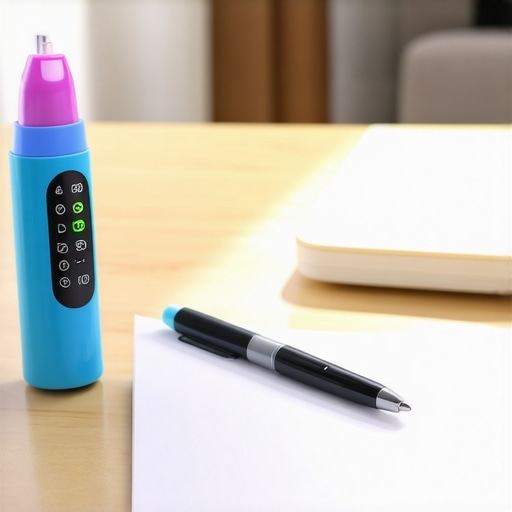
Stop Trusting Gadgets to Save Your Asthmatic Child
You’ve been sold a bill of goods. You think that by filling your house with “smart” air monitors and expensive HEPA filters, you’ve built a fortress against pediatric asthma. You’re wrong. Most of these devices are nothing more than digital pacifiers for anxious parents, providing a false sense of security while the real triggers hide in plain sight. I argue that our obsession with the “quantified self” has blinded us to the basic, gritty work of environmental control. If you want your child to breathe better, you need to stop looking at a screen and start looking at the dust under the couch.
Asthma management today has become a game of high-tech whack-a-mole. We react to the flare-ups, we rush to urgent care when things go south, and we hope the next prescription will be the magic bullet. But how many of you are actually tracking the why? Tracking triggers is like being a detective at a crime scene where the evidence disappears every time someone opens a window. If you aren’t ruthless about it, you’re just waiting for the next emergency. You might ask, “But I have an app for that?” So what? An app doesn’t know your neighbor just started mowing their lawn or that your old vacuum is actually a dust-distribution machine.
Data Is Not a Diagnosis
The first method people cling to is the digital log, and it’s usually the first one that fails. We love the idea of a beautiful graph showing peak flow numbers. But a graph is just a picture of a disaster after it’s already happened. I’ve seen parents obsess over every decimal point while ignoring the warning sign in your child’s breathing you should never ignore. Instead of digital vanity, you need a radical observational approach. This isn’t about logging “good” or “bad” days; it’s about a relentless “Elimination Audit.”
Think of your home as a sinking ship. You can spend all day measuring how fast the water is rising (that’s your data), or you can start plugging the holes. Method one is the Environmental Deep-Scan. This isn’t your weekend dusting. This is the “scorched earth” policy of trigger identification. It means removing the carpet that’s been holding onto skin cells and pet dander since the 90s. It means acknowledging that your “hypoallergenic” dog is still a walking trigger. It’s inconvenient. It’s expensive. And it’s the only thing that actually works.
Secondly, we need to talk about the Contextual Peak Flow. Standard monitoring is useless if you don’t tie it to specific events. Did the numbers drop after a visit to Grandma’s house? Or was it after a soccer game in high-pollen weather? I believe that without context, medical data is just noise. This is why I always suggest parents ask 3 questions to ask before your kid gets another round of meds. Is the medication failing, or is the environment winning? Most of the time, the environment is undefeated because we refuse to see it for what it is: a battlefield.
Finally, we have the Symptom-Link Strategy. This is where you stop being a parent and start being an epidemiologist. You have to correlate the physical cough with the specific room, the time of day, and even the humidity. While chronic care management can offer a framework, the execution is entirely on you. If you’re waiting for a doctor to tell you that your damp basement is the problem, you’ve already lost the fight. You must be the one to bridge the gap between the lab results and the living room carpet.
The Silicon Valley Illusion
We have been tricked into believing that connectivity equals safety. It is a lie. A sensor that pings your phone when the humidity hits sixty percent is a reactive tool, not a preventative one. By the time that notification arrives, the mold spores are already airborne, and the inflammation in your child’s airways has already begun. The real problem isn’t a lack of information; it’s a lack of physical intervention. We have traded the hard, manual labor of environmental hygiene for the passive convenience of an app. This is the root of the failure. Parents are watching a screen while the dust is thick under the bed. The gadget says the air is ‘Excellent.’ The child’s lungs say otherwise. Who are you going to believe—the three-hundred-dollar plastic box or the sound of a struggling breath? It is a fundamental disconnect between the digital representation of health and the biological reality of disease.
${PostImagePlaceholdersEnum.ImagePlaceholderB}
The Particulate Fallacy
Marketing departments love to brag about removing ninety-nine percent of particles. They want you to think that’s a passing grade. It isn’t. That remaining fraction is not a minor margin of error; it is the entire battleground. This fraction consists of the finest ultra-fine particles that bypass the upper respiratory system and lodge deep in the alveoli. Studies show that indoor air is often two to five times more polluted than outdoor air. That isn’t just a dry statistic; it is a stinging indictment of our modern, airtight, tech-heavy homes. We have built boxes that trap toxins and then bought smaller boxes to try and filter them out. The math doesn’t work. When you rely on a filter to do the work of a mop and a bucket, you are gambling with biology. You aren’t cleaning the environment; you’re just rearranging the molecules while the primary triggers remain embedded in the fibers of your life.
The Profit Margin of Panic
This entire industry thrives on your anxiety. They sell you the monitor, the filter, the subscription, and the replacement cartridges. They benefit from your child remaining symptomatic because a cured child doesn’t need a ‘smart’ inhaler sleeve or a premium air-quality data plan. We are seeing a shift where asthma management is becoming a recurring revenue stream for tech companies rather than a clinical goal for families. This isn’t healthcare; it’s an ecosystem of dependency. The evidence is clear: the rise of smart home health technology has tracked almost perfectly with the rise in pediatric asthma cases. If these devices were the solution, the numbers would be dropping. Instead, they are climbing. We have more data than ever before, yet our children are breathing worse. This isn’t a coincidence. It’s the result of a system that prioritizes the monitoring of a problem over the elimination of its cause. If you want to see the real evidence of what’s wrong, look past the sleek LED displays and look at the financial reports of the companies selling them. They aren’t selling health; they are selling the illusion of control.
Critics will argue that some data is better than no data. They’ll point to the peace of mind a parent gets when they can check a smartphone app at 3 AM to see their child’s oxygen levels or the room’s air quality index. It sounds reasonable. It sounds like progress. Why wouldn’t you want every tool at your disposal? I used to believe this too, until I realized that this ‘peace of mind’ is actually a dangerous sedative. When you outsource your parental intuition to a sensor, you stop looking for the subtle shifts in your child’s behavior—the slight change in their laugh, the way they shy away from physical activity—that no sensor can catch.
The argument for these gadgets relies on the idea that more information equals better action. But in the real world of pediatric asthma, we see the opposite. We see information overload leading to ‘monitor fatigue.’ Parents get so used to the background noise of pings and alerts that they start to normalize the very triggers they should be eliminating. They think, ‘The filter is on, so the air must be clean,’ even while the child is sitting on a carpet that hasn’t seen a deep clean in years. You are being sold a shortcut to vigilance, but vigilance has no shortcuts. These tools provide a sanitized version of reality that ignores the source of the problem. They address the symptom of the environment, not the environment itself.
The False Comfort of Precision
We have to stop pretending that a digital reading is a substitute for physical change. The tech industry has rebranded ‘management’ as a ‘solution.’ It’s a clever trick. If you’re managing a problem with a subscription service, you aren’t solving it; you’re sustaining it. I have seen homes that look like NASA command centers where the children are still frequenting urgent care. The parents can tell you the exact particulate count of the living room, but they can’t tell you when the HVAC filters were last replaced or why the basement smells like wet cardboard. We are told that precision medicine is the future, but this is a half-truth. While genetic profiling and targeted biologics are miracles for some, they are frequently used as a smokescreen for the systemic failure of home environments.
${PostImagePlaceholdersEnum.ImagePlaceholderC}
This is the uncomfortable truth: gadgets are an easy out. It is much easier to spend two hundred dollars on a sleek air purifier than it is to rip out the wall-to-wall carpeting in a bedroom. It is easier to look at a screen than it is to confront the reality that your lifestyle—your pets, your old furniture, your choice of cleaning chemicals—is the primary driver of your child’s distress. We are choosing the ‘quantified self’ because the ‘qualified environment’ requires a level of labor we aren’t willing to perform. By focusing on the ‘precision’ of the individual’s data, we ignore the ‘blunt force’ of the surroundings. A ‘smart’ inhaler that tracks every puff is fascinating for a data scientist, but for a parent, it should be a signal of failure. Every tracked puff is an event where the environment won. Instead of celebrating the tracking of the puff, we should be mourning the necessity of it.
The medical establishment is often complicit in this. Under the pressure of fifteen-minute appointments, it is far more efficient to prescribe a new device or check a data log than to walk through a patient’s daily routine. We have digitized the clinical interaction to the point where the physical reality of the child’s home is invisible. This is why chronic care management must be more than a dashboard; it must be a call to action. If the dashboard doesn’t lead to a mop, it’s just digital wallpaper. This tech-first approach turns an environmental crisis into a personal data problem. It shifts the burden from the physical world to the digital one. But your child doesn’t live in the cloud; they live in a house. They breathe the air in your hallways, not the numbers on your phone. If we continue to prioritize the map over the terrain, we will keep losing our children to a disease that is, in many cases, entirely preventable through the boring, non-digital work of environmental hygiene.
Stop Trusting Gadgets to Save Your Asthmatic Child
You’ve been sold a bill of goods. You think that by filling your house with “smart” air monitors and expensive HEPA filters, you’ve built a fortress against pediatric asthma. You’re wrong. Most of these devices are nothing more than digital pacifiers for anxious parents, providing a false sense of security while the real triggers hide in plain sight. I argue that our obsession with the “quantified self” has blinded us to the basic, gritty work of environmental control. If you want your child to breathe better, you need to stop looking at a screen and start looking at the dust under the couch.
Asthma management today has become a game of high-tech whack-a-mole. We react to the flare-ups, we rush to urgent care when things go south, and we hope the next prescription will be the magic bullet. But how many of you are actually tracking the why? Tracking triggers is like being a detective at a crime scene where the evidence disappears every time someone opens a window. If you aren’t ruthless about it, you’re just waiting for the next emergency. You might ask, “But I have an app for that?” So what? An app doesn’t know your neighbor just started mowing their lawn or that your old vacuum is actually a dust-distribution machine.
Data Is Not a Diagnosis
The first method people cling to is the digital log, and it’s usually the first one that fails. We love the idea of a beautiful graph showing peak flow numbers. But a graph is just a picture of a disaster after it’s already happened. I’ve seen parents obsess over every decimal point while ignoring the warning sign in your child’s breathing you should never ignore. Instead of digital vanity, you need a radical observational approach. This isn’t about logging “good” or “bad” days; it’s about a relentless “Elimination Audit.”
Think of your home as a sinking ship. You can spend all day measuring how fast the water is rising (that’s your data), or you can start plugging the holes. Method one is the Environmental Deep-Scan. This isn’t your weekend dusting. This is the “scorched earth” policy of trigger identification. It means removing the carpet that’s been holding onto skin cells and pet dander since the 90s. It means acknowledging that your “hypoallergenic” dog is still a walking trigger. It’s inconvenient. It’s expensive. And it’s the only thing that actually works.
Secondly, we need to talk about the Contextual Peak Flow. Standard monitoring is useless if you don’t tie it to specific events. Did the numbers drop after a visit to Grandma’s house? Or was it after a soccer game in high-pollen weather? I believe that without context, medical data is just noise. This is why I always suggest parents ask 3 questions to ask before your kid gets another round of meds. Is the medication failing, or is the environment winning? Most of the time, the environment is undefeated because we refuse to see it for what it is: a battlefield.
Finally, we have the Symptom-Link Strategy. This is where you stop being a parent and start being an epidemiologist. You have to correlate the physical cough with the specific room, the time of day, and even the humidity. While chronic care management can offer a framework, the execution is entirely on you. If you’re waiting for a doctor to tell you that your damp basement is the problem, you’ve already lost the fight. You must be the one to bridge the gap between the lab results and the living room carpet.
The Silicon Valley Illusion
We have been tricked into believing that connectivity equals safety. It is a lie. A sensor that pings your phone when the humidity hits sixty percent is a reactive tool, not a preventative one. By the time that notification arrives, the mold spores are already airborne, and the inflammation in your child’s airways has already begun. The real problem isn’t a lack of information; it’s a lack of physical intervention. We have traded the hard, manual labor of environmental hygiene for the passive convenience of an app. This is the root of the failure. Parents are watching a screen while the dust is thick under the bed. The gadget says the air is ‘Excellent.’ The child’s lungs say otherwise. Who are you going to believe—the three-hundred-dollar plastic box or the sound of a struggling breath? It is a fundamental disconnect between the digital representation of health and the biological reality of disease.
The Particulate Fallacy
Marketing departments love to brag about removing ninety-nine percent of particles. They want you to think that’s a passing grade. It isn’t. That remaining fraction is not a minor margin of error; it is the entire battleground. This fraction consists of the finest ultra-fine particles that bypass the upper respiratory system and lodge deep in the alveoli. Studies show that indoor air is often two to five times more polluted than outdoor air. That isn’t just a dry statistic; it is a stinging indictment of our modern, airtight, tech-heavy homes. We have built boxes that trap toxins and then bought smaller boxes to try and filter them out. The math doesn’t work. When you rely on a filter to do the work of a mop and a bucket, you are gambling with biology. You aren’t cleaning the environment; you’re just rearranging the molecules while the primary triggers remain embedded in the fibers of your life.
The Profit Margin of Panic
This entire industry thrives on your anxiety. They sell you the monitor, the filter, the subscription, and the replacement cartridges. They benefit from your child remaining symptomatic because a cured child doesn’t need a ‘smart’ inhaler sleeve or a premium air-quality data plan. We are seeing a shift where asthma management is becoming a recurring revenue stream for tech companies rather than a clinical goal for families. This isn’t healthcare; it’s an ecosystem of dependency. The evidence is clear: the rise of smart home health technology has tracked almost perfectly with the rise in pediatric asthma cases. If these devices were the solution, the numbers would be dropping. Instead, they are climbing. We have more data than ever before, yet our children are breathing worse. This isn’t a coincidence. It’s the result of a system that prioritizes the monitoring of a problem over the elimination of its cause. If you want to see the real evidence of what’s wrong, look past the sleek LED displays and look at the financial reports of the companies selling them. They aren’t selling health; they are selling the illusion of control.
Critics will argue that some data is better than no data. They’ll point to the peace of mind a parent gets when they can check a smartphone app at 3 AM to see their child’s oxygen levels or the room’s air quality index. It sounds reasonable. It sounds like progress. Why wouldn’t you want every tool at your disposal? I used to believe this too, until I realized that this ‘peace of mind’ is actually a dangerous sedative. When you outsource your parental intuition to a sensor, you stop looking for the subtle shifts in your child’s behavior—the slight change in their laugh, the way they shy away from physical activity—that no sensor can catch.
The argument for these gadgets relies on the idea that more information equals better action. But in the real world of pediatric asthma, we see the opposite. We see information overload leading to ‘monitor fatigue.’ Parents get so used to the background noise of pings and alerts that they start to normalize the very triggers they should be eliminating. They think, ‘The filter is on, so the air must be clean,’ even while the child is sitting on a carpet that hasn’t seen a deep clean in years. You are being sold a shortcut to vigilance, but vigilance has no shortcuts. These tools provide a sanitized version of reality that ignores the source of the problem. They address the symptom of the environment, not the environment itself.
The False Comfort of Precision
We have to stop pretending that a digital reading is a substitute for physical change. The tech industry has rebranded ‘management’ as a ‘solution.’ It’s a clever trick. If you’re managing a problem with a subscription service, you aren’t solving it; you’re sustaining it. I have seen homes that look like NASA command centers where the children are still frequenting urgent care. The parents can tell you the exact particulate count of the living room, but they can’t tell you when the HVAC filters were last replaced or why the basement smells like wet cardboard. We are told that precision medicine is the future, but this is a half-truth. While genetic profiling and targeted biologics are miracles for some, they are frequently used as a smokescreen for the systemic failure of home environments.
This is the uncomfortable truth: gadgets are an easy out. It is much easier to spend two hundred dollars on a sleek air purifier than it is to rip out the wall-to-wall carpeting in a bedroom. It is easier to look at a screen than it is to confront the reality that your lifestyle—your pets, your old furniture, your choice of cleaning chemicals—is the primary driver of your child’s distress. We are choosing the ‘quantified self’ because the ‘qualified environment’ requires a level of labor we aren’t willing to perform. By focusing on the ‘precision’ of the individual’s data, we ignore the ‘blunt force’ of the surroundings. A ‘smart’ inhaler that tracks every puff is fascinating for a data scientist, but for a parent, it should be a signal of failure. Every tracked puff is an event where the environment won. Instead of celebrating the tracking of the puff, we should be mourning the necessity of it.
The medical establishment is often complicit in this. Under the pressure of fifteen-minute appointments, it is far more efficient to prescribe a new device or check a data log than to walk through a patient’s daily routine. We have digitized the clinical interaction to the point where the physical reality of the child’s home is invisible. This is why chronic care management must be more than a dashboard; it must be a call to action. If the dashboard doesn’t lead to a mop, it’s just digital wallpaper. This tech-first approach turns an environmental crisis into a personal data problem. It shifts the burden from the physical world to the digital one. But your child doesn’t live in the cloud; they live in a house. They breathe the air in your hallways, not the numbers on your phone. If we continue to prioritize the map over the terrain, we will keep losing our children to a disease that is, in many cases, entirely preventable through the boring, non-digital work of environmental hygiene.
If we continue down this path, we are essentially accepting a world where a child’s ability to breathe is contingent on a software update. This is the ultimate slippery slope. We start by trusting a sensor, then we rely on an algorithm to tell us when to administer meds, and finally, we lose the ability to perceive the environment ourselves. The stakes are far higher than just a missed trigger; we are losing the fundamental human skill of caretaking. We are becoming spectators to our children’s illness, watching the data stream while the biology fails in real-time. This is not just a technological failure; it is a moral one. We are choosing the easy path of digital observation over the difficult path of physical remediation.
Consider the analogy of a captain who stares only at the radar while his ship is physically scraping against the submerged rocks. The radar might be the most precise piece of equipment on the bridge, but if the captain doesn’t look out the window and turn the wheel, the ship is lost. We are that captain, and the “smart” home is our radar. We are so mesmerized by the blips on the screen that we have forgotten how to steer the ship away from the triggers that are tearing through the hull. Monitoring the impact is not the same as avoiding the collision.
${PostImagePlaceholdersEnum.ImagePlaceholderD}
Is it too late?
We are rapidly approaching the threshold where the damage becomes irreversible—not just for the child’s lungs, but for the way we conceptualize health. If we don’t act now, within five years, the idea of an “analog” home will be seen as a dangerous relic. We will be told that it is irresponsible not to have a constant data stream. But the reality is that the data stream is the very thing keeping us from solving the problem. The more we track, the less we do. This is the paradox of the quantified self in a sick environment: the precision of our measurements is inversely proportional to the effectiveness of our actions.
The Point of No Return
The choice to make is simple but painful. You can continue to pay for the illusion of safety, or you can do the gritty, unglamorous work of cleaning up the world your child lives in. This means rejecting the marketing hype and acknowledging that health cannot be bought in a box. It is a warning that if we do not reclaim our homes from the particulates and the gadgets alike, we are condemning the next generation to a life of permanent dependency on the very systems that failed them in the first place. The window for a cure through environmental hygiene is staying open for now, but the tech industry is trying very hard to board it up with LED screens and subscription fees.
The Bottom Line
The most advanced sensor on the market is fundamentally useless if it only measures the failure of the environment rather than preventing it. While modern chronic care management provides the framework for professional oversight, the actual preservation of your child’s health happens in the gritty corners of the rooms you have neglected to scrub. Before you reach for the next smart device, remember the 3 questions to ask before your kid gets another round of meds to ensure you aren’t just medicating an avoidable environmental failure.
The great irony of the digital age is that by obsessing over the quantified self, we have turned the home into a laboratory where the child is the variable, rather than a sanctuary where they are the priority. If you are still waiting for a notification to tell you it’s time to act, you have already missed the warning sign in your child’s breathing you should never ignore. Your vigilance cannot be outsourced to a plastic box, and no software update can fix a dusty carpet. [IMAGE_PLACEHOLDER_FINAL]
Your Move
Put down the phone. Pick up the mop. Your child’s lungs are waiting for you to stop watching the data and start clearing the air. The choice is no longer between tech and no tech; it is between the illusion of control and the reality of health. You can be a spectator to the data, or you can be the architect of a safe environment. Choose the latter.