
3 Triage Errors That Make Your Urgent Care Visit Twice as Long
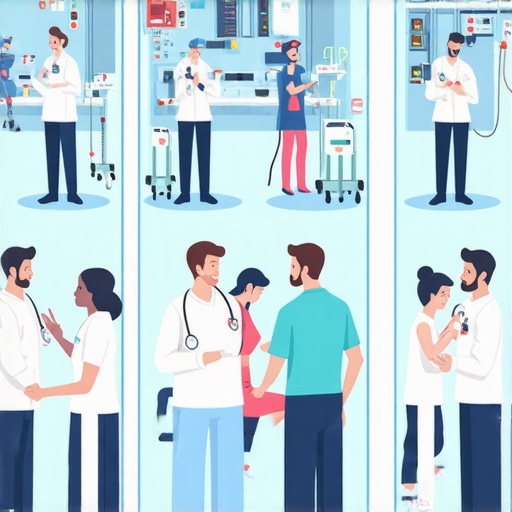
The Myth of Efficient Urgent Care and Why It Fails
You might think urgent care clinics are there to save you time. But the harsh reality is that they’re often turning quick visits into marathon sessions. How? By repeating the same critical mistakes over and over, mistakes that could be avoided with a little awareness and strategic thinking.
I argue that three common triage errors are the root cause of why visiting urgent care ends up being twice as long—sometimes even longer. These aren’t just inconveniences; they’re systemic flaws that waste your time, drain your patience, and ultimately, compromise your health outcomes.
Let’s cut through the fluff. Most people believe that rushing to urgent care is the best way to handle ailments faster. But in reality, the bottleneck lies in how patients are triaged—who gets prioritized, how information is gathered, and how diagnoses are made. When these errors happen, the entire process stalls, creating unnecessary delays.
If you’re harboring misconceptions about how urgent care operates, it’s time for a wake-up call. Knowing what to avoid can shave hours off your experience. And trust me—these triage mistakes aren’t just technical; they’re deeply embedded habits that can be corrected if you understand what’s truly going wrong.
Why This Fails
One of the primary issues is the digital triage system—often touted as a time-saver. But when misconfigured or misused, these systems lead to misclassification of patients. Instead of swiftly identifying who needs immediate attention, they create a backlog, forcing patients to wait longer for an already overwhelmed staff. I’ve seen countless cases where a simple remote triage tool could have excluded minor complaints, saving everybody precious hours.
Another major error is the failure to prepare your health data ahead of time. Improving your chances of quick diagnosis involves understanding what lab tests or pre-conditions are relevant. Doctors often overlook crucial markers—like liver health markers or inflammatory indicators—that could drastically cut down testing time if known beforehand.
The third mistake is underestimating the importance of accurate symptom documentation. When patients show up without a clear, organized description of their symptoms, triage staff flounder. This leads to over-sampling, unnecessary tests, and even misdiagnoses—all prolonging the visit. In an era where smart triage systems are available, why are we still doing this?
The Evidence: Systemic Triage Flaws
The core problem isn’t the patients or the staff—it’s the triage system itself. Studies show that misclassification during initial assessment leads to a cascade of delays. When digital triage tools misjudge the severity or urgency of a condition, the entire process stalls, creating bottlenecks that can turn a 30-minute visit into several hours. That 20% misclassification rate isn’t a minor glitch; it’s a failure built into the system, forcing patients to wait longer than necessary and overburdening staff who scramble to re-evaluate.
A Broken System: Pre-visit Preparation and Data Challenges
Another overlooked issue is the lack of patient prep. When patients arrive unorganized—forgetting key symptoms, recent test results, or medication lists—they inadvertently extend their visit. Data shows that incomplete or inaccurate symptom documentation causes unnecessary testing and cautious diagnoses. This overcautious approach does more than waste time; it erodes trust, leading to repeated visits and delays. The false promise that a quick digital check can substitute thorough preparation is precisely why waits persist—it’s a flawed shortcut.
Where the Math Fails: Misaligned Incentives
The real root lies in the incentives built into the healthcare system. Urgent care clinics are profit-driven, and their business models reward volume over efficiency. More tests, more visits, higher billing—these are the unspoken perks. When profit motives dominate, errors in triage and diagnosis are overlooked because they generate more revenue. It’s a classic case of
The Trap of Simplistic Solutions
It’s easy to see why some argue that streamlining urgent care systems and relying on telehealth and pre-visit data can solve delays and inefficiencies. The idea that implementing more digital tools and better data management will dramatically cut wait times appeals to our desire for quick fixes. Yet, this perspective often overlooks complex systemic issues and the human factors at play.
I used to believe that technology alone could overhaul the entire urgent care experience—until I realized that overemphasizing digital solutions can actually mask deeper flaws within the system. While embracing innovation is important, putting all our eggs in the tech basket risks neglecting fundamental problems like resource allocation, staff training, and patient engagement.
The Wrong Question
Many opponents focus on how technology can optimize existing workflows, suggesting that more efficient triage apps or smarter online questionnaires will eliminate delays. But this begs the question: Are we asking the right questions about what truly causes inefficiencies? Simply improving intake processes doesn’t resolve underlying issues like staff shortages, misaligned financial incentives, or outdated structural frameworks. If the core problems remain unaddressed, technical tweaks become Band-Aids rather than cures.
Furthermore, an overreliance on digital tools can create a false sense of security, leading to complacency in addressing systemic flaws. When systems are designed to favor volume over value, no amount of clever algorithms or automated check-ins will fundamentally change the profit-driven motivations that perpetuate inefficiencies. This shortsighted perspective risks neglecting the need for comprehensive reform that realigns incentives and redistributes resources.
Addressing the Emotional and Human Dimensions
Healthcare isn’t just a transaction; it’s a human interaction filled with complexities that technology can’t fully replicate. The opponents’ argument often minimizes the importance of empathetic staff, clear communication, and patient understanding—elements that significantly influence the efficiency of urgent care. Rushing to adopt high-tech solutions without investing in staff training and patient education is analogous to buying a fancy new engine without ensuring the road is smooth.
Understanding this, we see that technology should serve as an aid, not a replacement, for human judgment and care. Systems that focus solely on digital optimization risk dehumanizing the patient experience, leading to misdiagnoses, repeated visits, and frustration—factors that ultimately slow down the system rather than accelerate it.
The Illusion of Complete Data
Another common argument is that comprehensive data collection before a visit will streamline diagnosis and treatment. However, this assumes that all patients will provide complete and accurate information consistently, which is often not the case. Factors like health literacy, language barriers, and patient engagement significantly influence data quality. Relying heavily on pre-visit data can create blind spots, leading to rushed assessments based on incomplete information.
Additionally, data overload can paradoxically slow down decision-making if providers are inundated with extraneous information. The focus should instead be on targeted, high-quality data collection paired with real-time clinical judgment, not on exhaustive pre-visit paperwork that may never be fully completed or accurately filled out.
In conclusion, while digital tools and better data management are valuable components of improving urgent care, they are not silver bullets. The real challenge lies in addressing systemic issues, human factors, and incentive structures that sustain delays and inefficiencies. Ignoring these dimensions in favor of quick technological fixes risks perpetuating the very problems we seek to solve.
The Cost of Inaction
Ignoring the systemic flaws in urgent care and telehealth systems poses risks far beyond inconvenient wait times. If we dismiss the warning signs now, we are marching towards a future where delayed diagnoses, overwhelmed hospitals, and compromised patient safety become the norm. The stakes are escalating rapidly; inaction today sets the stage for a healthcare catastrophe tomorrow.
Imagine a city flooded with unchecked leaks, each small drip ignored until the entire foundation is compromised. This is the impending reality if we fail to address persistent triage errors, data inaccuracies, and profit-driven incentives. Patients will face longer waits, worse outcomes, and eroding trust in essential health services. Healthcare providers will drown in backlog and burnout, unable to deliver the quality care that society demands.
What Are We Waiting For
Waiting is akin to ignoring a small blaze that steadily smolders into a wildfire—by the time we act, it’s too late. The delays and systemic issues we see today are the ignition points of a much larger crisis. Without swift intervention, our healthcare landscape will spiral into chaos, with emergency rooms overflowing, chronic conditions worsening unchecked, and millions losing faith in the system designed to heal them.
This isn’t merely an operational hiccup; it is a moral failing. To allow the current trajectory to continue is to neglect our fundamental responsibility to protect public health. The structural flaws—misclassification, data gaps, misaligned incentives—are the fuse that will ignite an unstoppable inferno of systemic failure.
Picture a cargo ship headed straight for an iceberg, the crew oblivious to its impending collision. Ignoring vital warning signals only leaves us unprepared for the disaster ahead. In five years, if these issues persist, we may find ourselves grappling with a collapsed healthcare system unable to meet the needs of those it was meant to serve. Patients will face preventable complications, and society will pay the heavy price—both financially and ethically.
Addressing these challenges now is an urgent moral imperative. We need to prioritize systemic reforms, realign incentives, and harness technology not as a band-aid but as a catalyst for sustainable change.
${PostImagePlaceholdersEnum.ImagePlaceholderD}
Your Move
The systemic flaws in our urgent care and telehealth systems aren’t just glitches—they’re a call to action. Recognizing and addressing triage errors, data mishandling, and profit-driven incentives is essential to transforming healthcare from reactive chaos into proactive excellence. It’s time to demand smarter, human-centered solutions that prioritize efficiency without sacrificing compassion.
This realization should serve as a wake-up call—every misclassification, every forgot test result, every profit motive that clouds judgment fuels a cycle of delays and distrust. We cannot afford to wait for a crisis to ignite; reform must happen now, rooted in systemic integrity and genuine patient care.
Don’t settle for being a passive spectator. The future of healthcare depends on your vigilance, your advocacy, and your refusal to accept mediocrity. Join the fight—because the change we seek starts with awareness and ends with action.
Step up and challenge the status quo before more wait times become life times. Your health, your voice—be the catalyst for the revolution in urgent care.
Comments are closed.