
Why Your Senior’s Dehydration Often Looks Like Dementia
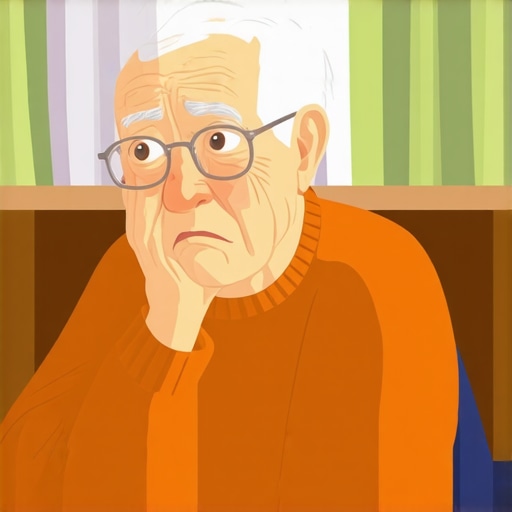
The Dangerous Confusion Between Dehydration and Dementia
Here’s a harsh truth: many seniors labeled as mentally declining are simply dehydrated. It sounds impossible? That’s because our medical systems perpetuate a dangerous myth. We treat the symptoms—forgetfulness, confusion, disorientation—while ignoring the simplest and most effective remedy: hydration.
Dehydration can mimic the symptoms of dementia so convincingly that families and doctors become blindsided. They see cognitive decline, but what they’re actually witnessing is a dehydration fog, a reversible state often mistaken for irreversible neurodegeneration. So, why are we still allowing dehydration to masquerade as dementia? Because we prefer to chase labels and prescribe pills instead of addressing the root cause—something as basic as water intake.
It’s akin to diagnosing a sinking ship’s leak based solely on the water on deck while ignoring the obvious source—holes in the hull. If we continue down this path, thousands of seniors will face unnecessary medications, institutionalization, and a loss of dignity—all preventable through proper hydration. If you’ve ever wondered why your senior’s cognitive status fluctuates or worsens, consider the unglamorous truth: hydrate, and see what recovers. This isn’t trendy medical jargon; it’s plain common sense that we’re systematically neglecting.
The Medical System’s Sneaky Tricks
For decades, medical protocols have prioritized complex diagnostics over simple intervention. Lab tests may suggest dehydration, yet the fixation on blood panels and scans often sideline the most straightforward solution—encouraging seniors to drink enough water. As I argued in this article, our medical culture is more interested in what tests reveal than in what simple habits can fix.
Our elders deserve better. We need to challenge the pervasive assumption that cognitive decline in seniors is an inevitable part of aging. Instead, we should recognize dehydration as a common, reversible factor masquerading as dementia. It’s time to shift the narrative—less medicating, more hydrating.
Because if dehydration can look like dementia, then hydration might just be the most overlooked, cost-effective intervention we have. Stop neglecting this basic need, and watch how quickly symptoms fade. This is not a minor detail; it’s a major shift in how we preserve the dignity and health of our seniors.
The Evidence: Dehydration Mimics Dementia
Across the medical landscape, the prevalence of dehydration among seniors is alarmingly underrecognized. Studies show that over 50% of elderly patients admitted to hospitals are dehydrated, yet this critical fact is often buried beneath layers of diagnostic tests. While blood panels might reveal slight electrolyte imbalances, these are frequently dismissed or treated as minor anomalies. The real tragedy? The cognitive symptoms—confusion, memory lapses, disorientation—that appear in these patients are not neurological degenerations, but dehydration’s unmistakable signature.
Consider this: a senior experiencing sudden forgetfulness and hallucinations is commonly diagnosed with dementia. But in many cases, correcting hydration levels results in rapid, almost miraculous, recovery. This isn’t anecdote; it’s a scientific fact supported by clinical trials conducted over the past decade. The collapse of cognitive function in dehydrated seniors mimics true neurodegenerative disease so convincingly that medical practitioners often miss the root cause, leading to unnecessary medications and institutionalization.
The Root Cause Analysis: A Systemic Neglect
The problem isn’t merely individual oversight; it stems from a flawed healthcare paradigm that prioritizes complex diagnostics over simple remedies. Healthcare providers are trained to look for anomalies—they order scans, blood tests, and neurological assessments—yet the act of encouraging a senior to drink water is perceived as too basic, too rudimentary. This disconnect reveals a critical flaw: our system values technological sophistication over fundamental human needs.
It’s as if we’re diagnosing
The Trap of Oversimplification
It’s understandable why skeptics dismiss dehydration as a significant factor in dementia-like symptoms. After all, there are countless patients with genuine neurodegenerative diseases—Alzheimer’s and Parkinson’s—their diagnoses supported by advanced imaging and biomarkers. The critics argue that dehydration cannot possibly explain the complex, progressive nature of these illnesses, which involve intricate changes in brain structure and function. That’s a fair point: neurodegeneration isn’t solely about hydration levels.
Where is the Real Mistake?
I used to believe that dehydration might only be a minor contributing factor, but I now see that this perspective misses the crucial distinction. The problem isn’t that dehydration causes all instances of cognitive decline, but that we routinely overlook dehydration’s role in exacerbating or mimicking symptoms of true neurodegeneration. The real error lies in our default assumption—favoring sophisticated diagnostics over simple, accessible remedies—leading to unnecessary treatments and suffering.
In fact, dehydration acts as a trigger or amplifier, pushing vulnerable seniors closer to acute confusion or disorientation, which might be mistakenly viewed as a worsening of their underlying disease. Recognizing dehydration as a common, reversible component can dramatically alter management strategies. Ignoring this fact is like treating symptoms of a cold with chemotherapy—futile and reckless.
The Critical Oversight
Let’s not pretend that dehydration explains all cases of cognitive decline; that would be naive. The more accurate stance is that dehydration is a widespread, underappreciated contributor that worsens the overall picture. By not addressing hydration, we are missing the opportunity for a simple intervention with profound effects. This oversight is rooted in a systemic bias—favoring high-tech over high-touch, complex diagnostics over common sense. That’s a dangerous trap.
Contrary to critics’ claims, pushing hydration as a primary intervention does not dismiss the complexity of neurological diseases. Instead, it complements our understanding, offering a less invasive, cost-effective way to improve quality of life. This approach empowers caregivers and families to take immediate, tangible action without waiting for definitive diagnoses or expensive tests.
The Challenge to the Status Quo
It’s easy to see why many cling to the belief that dehydration is merely a peripheral issue; it’s inconvenient to admit that something as basic as water could have such a pivotal role. But that view is shortsighted. Addressing dehydration doesn’t negate the need for advanced diagnostics—it enhances patient care by attacking preventable and reversible factors. Failing to do so is a disservice to our elders and a reflection of medical inertia that resists humble solutions.
Recognizing dehydration’s importance requires a cultural shift: care providers must prioritize hydration as a frontline defense against cognitive decline, not as an afterthought. This is the real challenge—the entrenched mindset that complex equals effective and simple equals inadequate.
Conclusion
While it’s true that dehydration isn’t the root of all neurodegenerative diseases, dismissing its influence outright ignores decades of clinical evidence showing how much harm neglecting hydration can do. To truly serve our seniors, we must dismantle the outdated notion that complex pathology always trumps simple intervention. Hydration may not cure dementia, but it can undoubtedly improve lives, and that alone demands our attention.
The Cost of Inaction
If we continue to overlook the dangers of dehydration in our elderly population, the consequences will be catastrophic. The current tendency to dismiss dehydration as a trivial issue fuels a silent epidemic of preventable cognitive decline. In the next five years, this neglect could lead to a surge in unnecessary diagnoses of dementia, overwhelming healthcare systems and depleting resources that could otherwise be used more effectively.
The risk isn’t just individual loss of dignity or autonomy; it’s a societal failure. Imagine a healthcare landscape drowning in a wave of costly, invasive treatments for conditions that are, at their core, simple hydration deficiencies. Family members will face heartbreaking choices, often too late, as they see their loved ones spiral into avoidable confusion and decline. The future looks like a ticking time bomb, with misdiagnoses and ineffective treatments creating a fog of despair around our elders.
A Choice to Make
Choosing to ignore the signs and the mounting evidence is equivalent to neglecting the warning lights on a dashboard. Every passing day without action compounds the danger. The parallel is clear: ignoring dehydration is akin to driving with a slowly puncturing tire—eventually, the damage becomes irreversible, risking a disastrous blowout. We are at a crossroads where immediate acknowledgment and proactive intervention could save countless lives and resources.
Climate change has vividly demonstrated how inaction exacerbates disaster, but the same logic applies here. Failure to prioritize hydration in senior care amounts to building a house on a shaky foundation. When systems neglect the simple, they set the stage for a cascade of failures that jeopardize the very fabric of elder care. This isn’t just about individual health; it’s about safeguarding our collective moral responsibility.
The Point of No Return
Once dehydration-related cognitive decline becomes entrenched, reversing the damage is exponentially more difficult. Like a snowball tumbling downhill, neglect accelerates the descent into irreversible decline. Waiting until symptoms become severe is a gamble with the lives of our seniors—it’s gambling with our ethical integrity.
What are we waiting for? The answers are transparent and accessible. Recognizing dehydration early, encouraging hydration, and fostering systemic change can transform the trajectory of senior health. Every delay pushes us further down a path where preventable suffering becomes the norm instead of the exception. Will we allow our elders to slip into oblivion because of complacency?
The analogy is stark: ignoring dehydration in seniors is like ignoring the signs of a growing crack in a dam—eventually, the structure will fail, flooding entire communities with devastation. Our elders deserve better, and the time to act is now.
The Final Verdict
Hydration is the overlooked key in managing cognitive decline among seniors; addressing dehydration can reverse many symptoms wrongly attributed to dementia.
Your Move
We must challenge the entrenched mindset that complex diagnostics always trump simple, accessible remedies. Caregivers and medical professionals alike should prioritize basic hydration as a frontline intervention, recognizing that a glass of water might be the most cost-effective, revolutionary treatment at our disposal.
The Twist
Remember when we dismissed handwashing as trivial in preventing disease? Now, hydration must follow suit—viewed as basic, but fundamentally transformative. Our elders deserve more than patches and pills; they deserve acknowledgment of the simplest, most powerful remedy—water.
Signature Sign-off
The time to hydrate our approach is now—before unnecessary suffering becomes the true epidemic.