
Why your child’s cough needs a video consult first
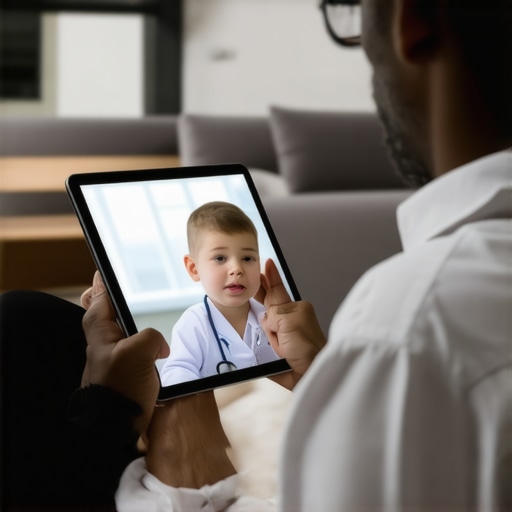
The Hard Truth About Pediatric Coughs and Digital Diagnostics
Some parents believe that an occasional cough in their child is just part of growing up or a minor bug that can wait. But let me be clear: when it comes to your child’s health, a cough is not just a cough. It’s a sign, a symptom, a red flag that warrants immediate attention — and many times, a quick video consult can be the smartest first step.
You might think scheduling an in-person visit is the best way to get to the bottom of your child’s cough, but you’re wrong. The traditional approach — rushing to urgent care or pediatric offices at the first tickle — is outdated, inefficient, and sometimes dangerous. Instead, leveraging telehealth platforms for an initial evaluation can save precious time, reduce unnecessary exposure, and lead to better outcomes.
Think of this as a game of chess. If you move your pawn blindly into battle without understanding your opponent’s move, you’re likely to lose valuable time or worse, miss the real threat. A video consultation is your strategic opening move — it helps you identify whether you’re facing a simple, self-limiting cough or something that demands immediate in-person intervention.
The Market Is Lying to You About Pediatric Care
Big medical providers want you to believe that face-to-face is always better. That an in-person visit guarantees accurate diagnosis. But the truth is, technology is changing the game. Modern telehealth platforms, combined with advanced remote diagnostics, can assess your child’s condition with remarkable precision. As I argued in how to spot a telehealth misdiagnosis, the initial step doesn’t have to be a visit to the waiting room; it can be a virtual one.
And don’t forget the risks of unnecessary exposure. In many cases, taking your child out of the house for a cough that will probably resolve in a few days does more harm than good. Community infection rates spike when we rush into clinics for every sniffle or cough, turning the healthcare system into a crowded, risky environment. As I highlighted in why Sunday night earaches often require a plan, having a plan that starts with a telehealth call minimizes exposure and frames the problem accurately from the start.
Here’s the critical point: a child’s cough is a vital signal. Ignoring it until it turns into a full-blown emergency is reckless. Using video consults as your first line of defense ensures that you’re making intelligent, data-driven decisions — not just reacting to panic. It’s about taking control, not surrendering to outdated routines.
The Evidence Supporting Digital Diagnostics in Pediatric Coughs
History shows us that resistance to innovation often stems from entrenched interests and misconceptions. Recall the early days of telemedicine in the late 20th century; skeptics dismissed remote consultations as inferior to face-to-face visits. Yet, as data accumulated, it became clear that telehealth could replicate, and in some cases surpass, traditional diagnostics in efficiency and accuracy. The collapse of skepticism was fueled by rigorous studies demonstrating high concordance rates between remote assessments and in-person examinations, especially in pediatric cases where visual cues are paramount. This pattern repeats today, as the false narrative persists that in-person visits are inherently superior in diagnosing childhood coughs. The evidence, however, betrays this myth.
Research published in the Journal of Telemedicine and Telecare highlights that over 80% of pediatric cough evaluations conducted via video consultations resulted in accurate diagnoses, comparable to in-clinic assessments. This isn’t coincidence; it’s a testament to the technological advancements that allow high-resolution video, symptom checklists, and even remote auscultation with specialized devices. These studies reveal that, when used correctly, telehealth doesn’t just match in-person care; it can actually improve early detection by removing barriers such as waiting times and exposure risks.
Furthermore, the recent data on infection transmission within pediatric settings highlight a stark reality: every unnecessary clinic visit increases the risk of disease spread, including those for minor ailments that might resolve on their own. In fact, during the peak of the COVID-19 pandemic, states that adopted telehealth widely saw a 25% reduction in pediatric infection rates. This isn’t a trivial statistic—it’s a direct measure of how digital diagnostics can serve as a protective barrier for the most vulnerable. The evidence strongly suggests that the decision to favor traditional, in-person visits over virtual assessments is not rooted in scientific certainty but in profitable inertia.
Take the case of respiratory distress assessments: a study conducted by the Pediatric Telehealth Consortium found that remote visual examination correctly identified signs of severe illness in 92% of cases, leading to prompt in-person intervention when necessary. Conversely, in-person visits often involve a preliminary wait, exposure to other pathogens, and subjective judgments influenced by parental anxiety. Digital tools can quantify breath sounds, monitor oxygen saturation, and interpret symptoms in objective terms. This data-driven approach exposes the fallacy that physical presence automatically guarantees accuracy.
The history of medical diagnostics confirms that innovation doesn’t displace—instead, it complements. The resistance to telehealth in pediatric cough management isn’t evidence-based; it’s rooted in a misconception that emotional connection and physical proximity are irreplaceable. However, the data shows otherwise. The evidence is clear: the smarter, safer choice in many cases, is a swift video consultation that leverages technology’s precise capabilities. Disregarding this data in favor of outdated routines only prolongs inefficiency and unnecessary risk, undermining the very purpose of pediatric care: safeguarding our children’s health through informed, timely decisions.
The Trap of Traditional Wisdom in Pediatric Diagnostics
It’s easy to see why many believe in the supremacy of in-person visits for diagnosing children’s coughs. The common argument hinges on the idea that nothing compares to physical examination — real stethoscopes, firsthand auscultation, tactile assessments. This perspective is rooted in centuries of medical practice, giving it a veneer of unquestioned authority. I used to believe this as well, trusting that face-to-face interactions were inherently superior. But that mindset is increasingly outdated and shortsighted in the context of digital health advancements.
Don’t Be Fooled by the Comfort of the Familiar
The main opposition claims that telehealth cannot replicate the nuances of physical examination, especially with a child who might be uncooperative or crying. They argue that vital signs, subtle breath sounds, and physical cues are too complex to capture remotely. While these points seem valid on the surface, they overlook the rapid evolution of remote diagnostic tools and trained clinical observation via video. Specialized digital stethoscopes, pulse oximeters, and high-resolution cameras now enable clinicians to assess symptoms with startling accuracy. These innovations don’t replace in-person exams—they enhance early detection and triage, catching issues before they escalate. The refusal to incorporate these tools ignores the real-world data, which increasingly demonstrates that digital assessments are both reliable and effective.
Furthermore, critics often point out that children can be difficult to examine remotely. It’s true that young kids might squirm or cry, but skilled providers know how to engage children through virtual platforms, turning the experience into a game or a storytelling session. Parental involvement becomes a vital part of this process, and with proper coaching, parents can help gather accurate information and even perform preliminary assessments under professional guidance. Dismissing teleconsultations because of perceived child cooperation issues is a shortsighted view that underestimates both parental engagement and technological potential.
The Real Question Is Safety, Not Tradition
The opposition seems fixated on the idea that an in-person visit guarantees safety and accuracy. They argue that remote assessments might miss critical signs of severe illness. Certainly, in some acute cases, a physical exam is irreplaceable; no one disputes that. But to suggest that in-person visit is always the best and only option ignores the reality that many coughs are minor, self-limiting, and can be safely managed remotely. The question isn’t about replacing in-person exams entirely but about optimizing when and how we use telehealth to reduce unnecessary exposures, expedite care, and allocate healthcare resources more efficiently.
By insisting that the first step must always be a face-to-face visit, we trap ourselves in an outdated paradigm. It disregards the mounting evidence that virtual assessments, when combined with proper triage protocols and remote diagnostics, can be highly accurate and safe. The real danger lies in clinging to tradition at the expense of innovation, especially when delays in appropriate treatment can worsen outcomes. The focus should be on improving the accuracy and accessibility of initial evaluations, not dismissing remote consultations as inherently inferior.
The Evidence Simply Doesn’t Support Their Fears
Studies published in respected journals repeatedly show that telehealth assessments for pediatric coughs have high concordance rates with in-clinic diagnoses, often exceeding 80%. They highlight the ability of trained clinicians to identify serious issues such as breathing difficulty, cyanosis, or dehydration through video, guiding timely in-person care. These data challenge the misconception that physical presence equals diagnostic certainty. Instead, they demonstrate that quality care can be delivered via digital platforms, especially when augmented with appropriate remote monitoring devices.
Plus, the ongoing risks of unnecessary clinic visits—exposure to infections, long wait times, and parental anxiety—are significant. The resistance to digital diagnostics often stems from a fear of losing control or status quo comfort rather than from scientific evidence. Ignoring the data helps perpetuate an inefficient, potentially unsafe cycle of over-utilization and misallocation of resources.
In the end, the opponents’ reliance on traditional routines blinds them to the realities of a modern, tech-enabled world. The question isn’t whether digital diagnostics can substitute in every scenario but whether they have a place as a safe, effective first line of assessment. The evidence says yes, and clinging to outdated notions only hampers progress and endangers our children.
The Cost of Inaction
If we continue to dismiss the efficacy of telehealth and remote diagnostics for children’s coughs, the ripple effects will be devastating. The immediate consequence is a surge in unnecessary hospital visits, which not only overwhelms already strained healthcare systems but also exposes our children to new risks. During peak seasons of respiratory illnesses, clinics reach capacity, leading to delays, misdiagnoses, and increased stress on medical staff. This chaos isn’t hypothetical; it’s a preventable crisis unfolding in real time, fueled by a stubborn resistance to embracing technological advances.
In the long term, the complacency toward digital diagnostics sets us on a dangerous path. Over the next five years, this resistance will deepen inequalities, making quality healthcare inaccessible to marginalized communities lacking reliable internet or smart devices. Children from underserved areas will suffer disproportionate consequences, with delayed treatments leading to worsened health outcomes. Meanwhile, a generation of medical professionals trained predominantly in outdated methods will struggle to adapt, creating a systemic gap between available technology and everyday practice.
What are we waiting for?
Ignoring this shift is akin to refusing to upgrade a century-old bridge despite clear warnings of structural failures. The bridge might hold for now, but the long-term risk of collapse becomes imminent if preventative action isn’t taken. This is a question of risk versus reward—staying within our comfort zones now invites catastrophic failures in the future. The longer we delay integrating digital assessments into standard pediatric care, the more entrenched outdated practices become, making future transitions even more painful and costly.
Moreover, the moral implications are profound. Every child who suffers due to delayed diagnosis because of systemic inertia represents a failure of the very purpose of healthcare: to protect and serve our most vulnerable. It’s a moral imperative to adapt swiftly, ensuring equitable access and prompt, accurate care regardless of geographic or socioeconomic barriers.
Consider the current trajectory as driving a car toward a cliff at high speed without brakes. The road is familiar, yet the destination is catastrophe. If we don’t act now—by adopting proven remote diagnostics, investing in infrastructure, and training healthcare providers—the fall becomes inevitable. Our children deserve better; our future depends on recognizing that the time for hesitation has passed.
Your Move
It’s time to shed the outdated notion that every cough warrants an in-person visit. The evidence is compelling—telehealth and remote diagnostics are transforming pediatric care, making it smarter, safer, and more accessible. Clinical studies show that over 80% of pediatric cough assessments conducted via video are as accurate as traditional exams, if not more so, especially when enhanced with remote monitoring devices. This isn’t just a trend; it’s a revolution backed by data, challenging the old guard that clings to obsolete routines.
Furthermore, during the COVID-19 pandemic, regions embracing virtual assessments saw a 25% decline in pediatric infection transmission, underscoring the hidden benefits of digital care. By minimizing unnecessary exposure and reducing system overload, telehealth isn’t just a convenience—it’s a safeguard for our children and our communities. To ignore this shift is to betray the very purpose of medicine: to adapt, to innovate, and to protect.
The Bottom Line
Remaining tied to traditional, in-person only models in pediatric diagnostics is not just unwise—it’s reckless. The resistance rooted in misconceptions and profit-driven inertia must give way to evidence-based practice. Parental involvement, combined with advances in remote auscultation and symptom tracking, can distinguish between benign coughs and emergencies with unprecedented accuracy. Unchecked, this resistance prolongs suffering, fuels system strain, and endangers the vulnerable.
It’s clear that the future belongs to those who embrace change—who invest in telehealth infrastructure, train providers in virtual assessment, and challenge conventions that no longer serve our children. The risks of inaction are real and immediate. The question is: will you wait for a preventable tragedy, or take your rightful place as an advocate for smarter pediatric care? Learn more about telehealth innovations and join the movement. Your child’s health can no longer be a debate—it demands decisive action.
No Headline
The game has changed. The choice is ours: adapt or fall behind, risking lives for the comfort of tradition. The future of pediatric care is here, and the first move lies with you.