
How to Screen for Colon Cancer Without an Immediate Procedure
Why This Ruts Will Sink You
You’re told that screening for colon cancer demands a colonoscopy—the invasive, uncomfortable procedure that feels more like a rite of passage for middle-aged adults. But what if I told you that this obsession with immediate, invasive procedures is a misconception designed to keep the healthcare machine running, not necessarily to keep you healthy? It’s time to question the status quo.
Imagine a chess game where players make their moves based solely on the opponent’s last move, never considering alternative strategies. That’s where we are with colon cancer screening—focused on the procedure rather than the strategy. The truth is, there are methods to assess your risk and detect early signs without defaulting to an immediate scope. This isn’t just about convenience; it’s about empowering you to take control before the doctor’s knife becomes the first resort.
The Myth of the One-Size-Fits-All Screening
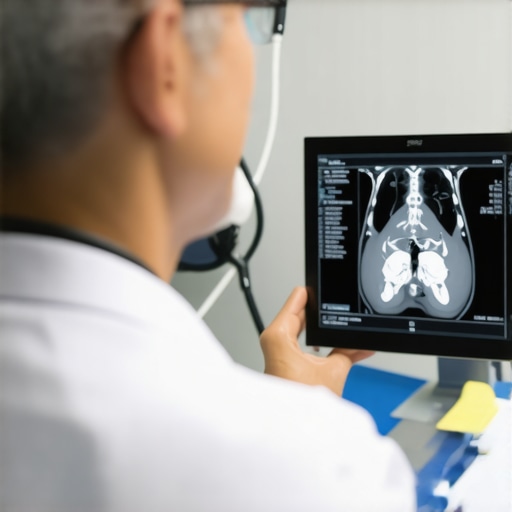
Many assume that colonoscopies are the gold standard, the only reliable way to spot trouble. Not so. Evidence increasingly supports the role of non-invasive tests—such as stool DNA tests, blood-based biomarkers, and advanced imaging methods—that can detect early warning signs more comfortably and sometimes more effectively for certain risk groups. Relying solely on a colonoscopy ignores these emerging tools, which, if utilized correctly, can significantly reduce unnecessary procedures and their associated risks.
This isn’t a plea to abandon colonoscopies altogether but to recognize that the one-size-fits-all approach is outdated. As I argued in how to interpret lab tests properly, understanding your unique risk factors should guide screening choices—not an arbitrary protocol.
Proactive Steps to Detect Early Signs
Early detection begins long before a scope is inserted. Taking proactive measures—such as maintaining a healthy diet, engaging in regular physical activity, and monitoring specific biomarkers—can substantially lower your risk. Technologies like telehealth screenings now enable clinicians to evaluate symptoms and risk factors remotely, offering an invaluable safety net for those hesitant about invasive procedures.
Furthermore, psychological barriers shouldn’t force you into a surgical chair before necessary. As I pointed out in virtual visits for anxiety management, addressing fears early can prevent anxiety-driven decisions leading to unnecessary procedures.
Conclusion: Toward a New Screening Paradigm
The old paradigm—screening equals colonoscopy—needs an overhaul. By embracing non-invasive testing and personalized risk assessments, we can prevent the sinking ship of over-treatment. Don’t accept that discomfort or inconvenience is your only safeguard; demand smarter, less invasive options. Your health, and your autonomy, depend on it.
The Evidence That Validates Personal Risk Assessments
Decades of research reveal that blanket protocols for colon cancer screening—particularly the universal recommendation of colonoscopies—are more about perpetuating a system than safeguarding individual health. For instance, studies show that non-invasive stool DNA tests and blood-based biomarkers can detect premalignant conditions with remarkable accuracy, especially in low-risk populations. These methods aren’t just comfortable alternatives; they are backed by data indicating they can identify risks earlier and more efficiently for specific groups, challenging the entrenched reliance on invasive procedures.
The Root of the System’s Flaws
The core problem isn’t a lack of evidence or technological advancement; it’s a *financial motivation*. The healthcare industry benefits enormously from the volume of invasive procedures performed annually. Hospitals, endoscopy centers, and even physicians are incentivized—directly or indirectly—to prioritize colonoscopies over personalized assessments. When the system’s financial engines chug along smoothly, patient-centric care becomes secondary. This misalignment between profit and health explains why less invasive, potentially more effective methods are sidelined—because changing the protocol threatens lucrative institutional practices.
Follow the Money – Who Gains?
Pharmaceutical companies and medical device manufacturers, for example, profit from the sale of colonoscopy equipment and related supplies. Insurance reimbursement models favor procedures over preventive measures, creating an environment where the more procedures performed, the higher the revenue. Conversely, non-invasive testing options often lack the same financial backing, keeping them marginalized despite their demonstrated efficacy. This dynamic reveals how economic interests override scientific evidence, shaping policies that prioritize institutional gain over patient autonomy and health outcomes.
Evaluating Risk Through Objective Data
Considering data trends, the risks associated with unnecessary colonoscopies—including perforation, bleeding, and sedation-related complications—are often understated. Yet, statistics indicate that unnecessary procedures contribute significantly to patient harm, especially when performed on asymptomatic, low-risk individuals. Instead, integrating risk assessment tools—like genetic profiling, lifestyle analysis, and biomarker monitoring—can stratify patients effectively. This approach empowers *individuals* to make informed decisions, rather than submitting to protocol-driven medical interventions driven by systemic greed.
Mythbusting the Screening Consensus
The prevailing narrative positions colonoscopies as inviolable pillars of preventive care. But this dogma ignores mounting evidence that a tailored approach saves lives and resources. It ignores the fact that early-stage detection via simple blood tests or stool analysis can be equally indicative of potential problems, without exposing patients to unnecessary risks. Clinging to outdated practices under the guise of scientific authority is a failure to adapt—an erosion of trust rooted in economic interests masquerading as clinical necessity.
The Wrong Question
It’s easy to see why many defend colonoscopy as the irrefutable gold standard for colorectal cancer screening. Critics argue that non-invasive tests are unreliable, that early detection through traditional procedures saves lives, and that personal risk assessments are too subjective. These are compelling points, especially given the extensive clinical history supporting colonoscopies. After all, they’ve been the cornerstone of preventive care for decades, with proven efficacy in detecting and removing precancerous polyps.
Why the Best Isn’t Always the Only
I used to believe this too—until I recognized that clinging to a one-size-fits-all approach ignores individual variability and evolving technology. The best screening method for one person might differ significantly from another’s, based on age, genetics, lifestyle, and risk factors. Relying solely on colonoscopy dismisses advancements like stool DNA tests, blood-based biomarkers, and virtual screening tools that are less invasive but equally informative for many at low or moderate risk. These alternatives can detect early warning signs without subjecting patients to unnecessary discomfort or procedural risks.
Critics will say that alternative tests lack sufficient accuracy, but the evidence increasingly shows that, for select groups, these methods perform remarkably well—sometimes even outperforming colonoscopy in real-world settings. It’s not about abandoning proven procedures but about tailoring screening to the individual—using the right tool at the right time. This approach respects patient autonomy and promotes smarter resource allocation, aligning with principles of personalized medicine.
The Flawed Focus on Procedure Volume
The argument that colonoscopies are indispensable because they diagnose and prevent disease is valid only when we view screening as a monopoly rather than a spectrum of options. The system’s emphasis on procedure volume often masks an underlying profit motive. Endoscopy centers, medical device companies, and hospital systems benefit financially from high numbers of invasive procedures. This creates a bias toward promoting colonoscopies, sometimes at the expense of less invasive, equally effective alternatives.
If we shift our focus from procedure counts to true patient outcomes—such as quality-adjusted life years, reduced adverse events, and patient satisfaction—it’s clear that a diverse array of screening options better serves public health. Personal risk assessments and non-invasive tests can prevent unnecessary procedures, reduce healthcare costs, and improve patient experience—yet these methods are still sidelined, not because they lack merit, but because they threaten entrenched financial interests.
An Uncomfortable Truth
The uncomfortable reality is that the current screening paradigm is heavily influenced by economic incentives rather than evidence-based best practices. This systemic bias discourages adopting personalized, less invasive strategies that could actually improve health outcomes. Recognizing this doesn’t mean dismissing colonoscopy altogether; it means questioning whether a protocol that applies the same standard to everyone makes sense in a complex, variable population.
For years, I’ve believed in the importance of early detection, but I’ve also come to see that prevention must be personalized. Integrating objective risk data, embracing technological advances, and respecting individual choices can lead to smarter screening—one that balances efficacy, safety, and patient dignity. Clinging to the outdated notion that only colonoscopies can save lives oversimplifies a nuanced reality and delays the adoption of truly patient-centered care.
The Cost of Inaction
If we dismiss the evidence supporting personalized, less invasive screening and cling to outdated protocols, we risk setting off a perilous chain reaction. The current complacency acts like a fuse burning toward a disaster waiting to happen. In five years, unchecked, this trend could lead to a surge in late-stage cancer diagnoses, overwhelmed healthcare systems, and a fractured trust in medical guidance. The devastating consequence is a society where preventable diseases become commonplace, and the gap between effective early intervention and costly emergency care widens exponentially.
A Choice to Make
It’s a moral imperative to reframe our approach and embrace a more nuanced, patient-centered paradigm. Ignoring the mounting data and technological advances condemns countless individuals to unnecessary suffering and financial hardship. Our failure to act now transforms health from a personal pursuit into a gamble, where the odds are stacked by financial interests rather than scientific truth. Every day we delay, we compound the damage—losing the opportunity to save lives with smarter, safer screening methods rooted in objective risk assessments.
The Point of No Return
Imagine a ship sailing blindly into a storm because the crew refuses to adjust course, trusting outdated maps over modern navigation tools. The storm represents the escalating burden of advanced disease, the ship—a failing healthcare system strained beyond capacity. The longer we ignore the warning signs and cling to ineffective practices, the closer we edge toward catastrophe. The question isn’t whether we will face consequences but how severe they will be. It’s a race against time, with lives and future generations hanging in the balance.
What are we waiting for?
Many believe that change can wait until crisis strikes, but history shows us that hesitation only exacerbates the damage. Delaying action equates to watching our health infrastructure erode while the preventable toll rises. This is a moment of clarity: the decisions we make today will define the health landscape of tomorrow. Standing still now isn’t just complacency—it’s acceptance of a future riddled with suffering and loss. The time to act is now, before the warning signs become irreversible, and the damage is beyond repair.
${PostImagePlaceholdersEnum.ImagePlaceholderD}
The Final Word on Screening and Systemic Motives
Ironically, the scream for invasive, one-size-fits-all procedures like colonoscopies masks a much darker truth: a profit-driven system that profits from anxiety, procedures, and fear-mongering. The real question isn’t about what works but about who’s making the money while you’re subjected to unnecessary risks, discomfort, and wasted resources. The expertise to tailor health strategies exists—yet it’s sidelined in favor of outdated, profitable protocols.
This connects directly to the push for virtual visits, remote risk assessments, and personalized preventive strategies—tools that empower *you* over the system. Imagine a healthcare paradigm where your unique biometrics and lifestyle factors dictate your screening path, not a blanket mandate. This shift isn’t just sensible; it’s revolutionary and long overdue.
Your move—demand transparency, advocate for personalized care, and scrutinize the motives behind every protocol. The future of health is individualized, efficient, and free from the shackles of institutional greed. The time to act is now, to rewrite the narrative that has long favored profits over people.