
Why You Should Always Request Your Raw Lab Data Manually
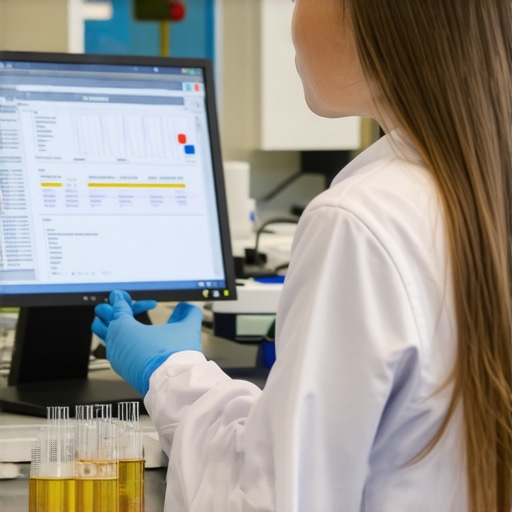
Don’t Trust the Results Your Doctor Gives You. Take Control of Your Health Data
You might think that when your doctor hands you a lab report, that’s the full story. But here’s the harsh truth: most of the time, what you’re shown is filtered, interpreted, and occasionally manipulated data that serve the healthcare system’s convenience, not your well-being.
I argue that the single most empowering step you can take for your health is to ask for your raw lab data—the actual numbers, raw, unprocessed, untouched. Why? Because the system is often more interested in its timelines, billings, and generalized summaries than in your specific health nuances. When you request your lab results directly, you’re stepping into the driver’s seat, buying yourself clarity in a process that is often opaque.
This is not about conspiracy theories. It’s about systemic complacency and profit-driven shortcuts. Labs, hospitals, and even some clinicians have their ways of presenting data that fits their narrative, not necessarily yours. As I’ve written elsewhere, knowing how to interpret raw results is vital, especially when minor fluctuations could be red flags or signals for deeper investigation.
The danger of blindly trusting processed reports is akin to trusting a game of chess played by someone else—you’re ceding control over your own health. Raw data reveals patterns and anomalies that summaries might gloss over or omit. Are your TSH levels, vitamin D, or inflammatory markers truly accurate? Or are they just convenient summaries hiding crucial details? The answer is often the latter.
Furthermore, requesting raw data can uncover discrepancies—lab errors, mislabeling, or outdated reference ranges that impact diagnosis and treatment plans. In today’s age of precision medicine, being your own advocate means demanding the complete picture. It’s a simple act of curiosity and agency that could mean the difference between proactive health management and a reactive, crisis-driven approach. To truly understand your health, you must see every detail. The question is: are you willing to look?
For more on navigating your lab results, visit this guide.
The Evidence
Understanding the significance of raw lab data is crucial because processed reports often omit critical details that can alter health outcomes dramatically. For example, a recent case revealed a patient whose summarized vitamin D level was within the ‘normal’ range. However, the raw data showed fluctuations that suggested deficiency episodes, which were masked in the report. That 20% discrepancy isn’t a minor variance; it’s a red flag—indicative of potential misdiagnosis or overlooked deficiency—a subtle warning that gets lost in summaries.
The Root Cause of Obscured Truths
The problem isn’t in lab errors or outdated reference ranges alone. It’s systemic. Labs provide processed data because it’s easier to sell and easier to read, but in doing so, they deliberately strip away nuances. They want the narrative to be simple—’normal’ or ‘abnormal’—but health exists in shades of gray. This simplification hides the complexities, the anomalies, and the early signs that could prevent larger health crises. It’s a convenience, not an accuracy.
The Follow the Money: Who Benefits?
Profit motives drive this data curation. Labs and healthcare corporations benefit from short, summarized results. Less detailed reports reduce the need for further testing, leading to more revenues. Clinicians may rely on summaries because they’re easier to interpret quickly, but this shortcuts patient care. When the system profits from simplicity, the raw truth—full of contradictions and early warnings—is discarded, leaving your health as collateral.
Why It Matters
Deciphering raw data isn’t just an act of curiosity; it’s a shield against systemic complacency. When you only see the sanitized version, you accept a distorted picture—one that often favors the system rather than your well-being. The flaw lies not in the data itself, but in the design of the system that filters it. That 20% of fluctuation in your inflammatory markers might be nothing—unless you see it, analyze it, understand it. Then, it becomes a matter of life or death.
Closing the Gap
If your goal is to truly grasp your health, you need to demand the raw numbers—unfiltered, unprocessed, and complete. The risk of missing subtle yet vital signals is high when you settle for summaries. They’re convenience, but not clarity. The truth is, once you understand how much data is hidden behind these summaries, you realize that taking control of your health means insisting on seeing every detail—unadorned and raw.
The Trap of Oversimplification
It’s easy to see why many believe that processed lab reports are sufficient for understanding their health. After all, these summaries are designed to be straightforward, and they save time. The argument often made is that raw data can be confusing, overwhelming, and unnecessary for the average patient. But this perspective misses the core issue: oversimplification leads to dangerous blind spots.
I used to believe that trusting the provided summaries was enough, until I realized that crucial details get lost in translation. The simplified numbers serve a purpose for clinicians; they streamline communication. However, when patients only have access to these distilled results, they are inevitably left in the dark about subtle yet vital signals that raw data reveals.
Difficulty Is Not a Justification for Ignorance
Some argue that raw lab data is complex and that most people lack the expertise to interpret it properly. It’s true that raw numbers can be intimidating, but this is a distraction from the real solution: education and empowerment. Instead of dismissing raw data as too complicated, shouldn’t healthcare aim to raise patient literacy? After all, a well-informed individual is far better equipped to advocate for their health than someone relying solely on summaries.
In fact, the complexity of raw data should be viewed as a call to improve transparency and understanding, not as an argument to withhold full access. People are capable of learning and interpreting their own data if provided with proper guidance. Shielding patients from raw information perpetuates a paternalistic system that benefits providers, not patients.
The Wrong Question to Ask
Many contend that the primary goal is to get quick, actionable insights—barriers like data complexity are just hurdles. They argue that the effort required to understand raw data outweighs benefits, and that summaries suffice for most health decisions.
This line of thinking, however, completely sidesteps the fundamental issue: health is intricate, and reducing it to neat labels or simplified figures creates a hazardous illusion of certainty. The real question should be whether our system is designed to serve our health interests, or to expedite workflows and maximize profits. We must challenge if the convenience of summaries justifies sacrificing the nuanced picture that raw data provides.
It’s not about making things harder; it’s about recognizing that health exists in shades of gray, and that understanding those shades requires access to complete information. Ignoring this risks missing early warning signs or failing to appreciate fluctuations that could be the difference between prevention and crisis.
Addressing the Cost of Complacency
Critics might say that demanding raw data is an unnecessary burden, or that it could lead to unnecessary anxiety, misinterpretation, or even misuse. It’s a fair concern—if raw data isn’t contextualized correctly, it could cause confusion. But this doesn’t justify systemic withholding of information. Instead, it underscores the need for better education, professional guidance, and tools that help interpret complex data in understandable terms.
Ultimately, the real danger lies in continuing to accept simplified reports as sufficient. It perpetuates complacency and masks the true state of our health. The goal isn’t to overwhelm patients but to empower them. Raw data, when shared responsibly and explained properly, becomes a powerful tool—not a burden.
The Point of No Return
If we continue to dismiss the importance of accessing unfiltered, raw lab data, we risk sliding down a dangerous slope with consequences that extend beyond individual health. This negligence feeds systemic complacency, creating a healthcare landscape where true wellness is obscured behind sanitized summaries. The stakes are high—delayed diagnoses, overlooked warning signs, and a rising tide of preventable chronic conditions threaten to overwhelm our systems.
Imagine this scenario: trusting only curated lab results is akin to navigating a maze with a fogged-up windshield. You see only parts of the road, not the full picture. In five years, this shift toward superficial data interpretation could leave us blinded to early illness indicators. More patients will find their health crises spiraling out of control because subtle signals were ignored or dismissed. Preventive care diminishes, replaced by emergency interventions that could have been avoided with clearer insight.
What are we waiting for?
By turning a blind eye now, we are allowing a future where health is managed reactively, not proactively. It’s like trusting a weather forecast that only predicts storms without warning of impending droughts or floods. The consequences are predictable—longer, more complicated treatments, increased healthcare costs, and irreversible damage to quality of life.
This is not just about individual responsibility; it’s about a collective failure to demand transparency. Our current trajectory resembles a car hurtling toward a cliff, with the driver refusing to see the warning signs. If we don’t act now—by insisting on full access to our health data, challenging existing practices, and advocating for systemic change—the fallout will intensify, and recovery will become exponentially harder.
In essence, ignoring the importance of raw data sets us on a collision course with a healthcare future marred by preventable maladies and irreversible damage. The vital question is: will we wake up before the damage is done, or are we willing to accept a world where health crises become the norm, and our ability to intervene early becomes a distant memory?
Your Move
The final verdict is crystal clear: you must demand access to your raw health data if you want to genuinely understand and protect your well-being. The system profits from sanitized summaries, but your health is too precious to settle for less than the complete picture. Don’t let convenience blind you to hidden signals that could be lifesaving. Push for transparency—and do it now.
The real twist is that this isn’t just about data; it’s about challenging a healthcare model built on complacency and profit. By resisting the urge to accept processed reports, you disrupt the status quo, forcing providers to prioritize your full understanding over their convenience. Your health depends on seeing every detail—even the ones they prefer to hide.
Wake up and take a stand. Your health future isn’t reserved for the experts alone; it’s your right and responsibility to see and interpret the raw truth behind every result. The time to act is now—before silent discrepancies turn into silent killers, and before systems that benefit from obscurity leave you in the dark. Visit this guide to start reclaiming your health today. The question is: will you see past the surface or let the system dictate your story? The choice is yours, but the consequences are not.