
A Smarter Way to Track Blood Sugar Patterns Without Constant Pricks
Why the Current Blood Sugar Monitoring System is Failing You
If you’ve ever been on a rollercoaster of blood sugar readings, you know the routine—finger prick after finger prick, a relentless cycle that feels more like punishment than progress. But here’s the brutal truth: the obsession with traditional testing methods is outdated, invasive, and frankly, unnecessary in an age that promises smarter healthcare.
Despite the plethora of new gadgets and remote monitoring options, most diabetics and those at risk are still tethered to the same old finger sticks, a practice that’s as primitive as reading your news with a typewriter. You might think this provides the most accurate picture of your glucose levels—think again. Advances in technology have made continuous, painless tracking not just possible but preferable. Yet, the healthcare industry drags its feet, resisting change for fear of losing control or money.
There’s a disconnect between what’s available and what’s widely adopted, a gap that keeps millions of Americans in the dark about their true health status. While telehealth and remote patient monitoring are heralded as the future, they’re often held back by outdated norms and regulatory hurdles. The question is: why are we still forcing people to pay the price of constant pricks, when solutions exist that can provide real-time insights with zero discomfort?
If you’re tired of the pain and inconvenience, it’s time to challenge the status quo. Smarter blood sugar tracking isn’t just a convenience—it’s a necessity for better disease management. For more on how telehealth is revolutionizing chronic care, check out this article.
The Market is Lying to You
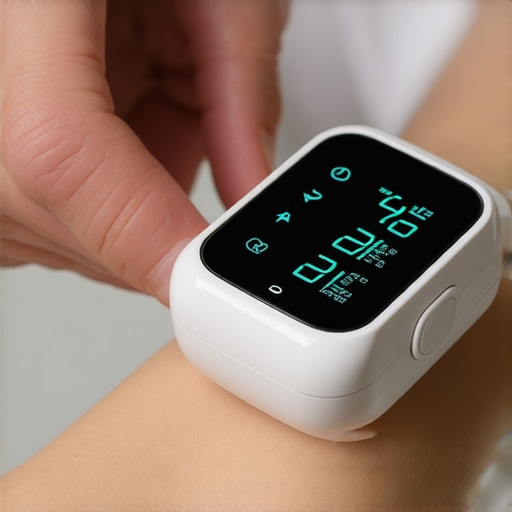
The companies pushing traditional glucometers want you to believe that constant pricks are the only way, because that’s how they make money. Their profits depend on your pain, their obsolescence, and your continued dependence. But technology isn’t waiting for them to catch up. New wearable devices and non-invasive sensors are already on the horizon, promising a future where blood sugar levels can be monitored remotely and painlessly, much like a fitness tracker tracks steps or heart rate.
Think of it like a game of chess—every move by these legacy systems is a gamble against progress. So, why are we still playing with pawn pieces when the king of innovation stands ready to checkmate outdated practices? The time for complacency is over. The future is in real-time data, accessible anytime, anywhere—if only we refuse to accept the old narrative.
The Evidence That Challenges the Status Quo
Numerous studies have shown that continuous glucose monitoring (CGM) systems provide more accurate and timely data compared to traditional finger pricks. For instance, research published in the Journal of Diabetes Science and Technology demonstrates that patients using real-time sensors experience improved glycemic control and fewer hypoglycemic episodes. This isn’t just about convenience; it’s about effective disease management supported by solid data.
Moreover, the FDA has approved several non-invasive glucose sensors that eliminate the need for blood samples. These devices use spectroscopic technology to read glucose levels through the skin, a breakthrough confirmed by clinical trials showing accuracy comparable to invasive methods. The facts are clear: the hardware capable of painless, continuous monitoring already exists, yet adoption remains sluggish.
How Resistance to Innovation Is Fueled
The resistance isn’t purely about regulation. It’s a classic case of entrenched interests blocking progress. Big Pharma and device manufacturers who profit from traditional testing stand to lose billions if smarter, more efficient solutions gain widespread acceptance. Their financial incentives create a powerful barrier, anchoring outdated practices in place under the guise of safety and reliability.
This pattern resembles past industrial resistance. When the electric light bulb challenged gas lamps, the established industry fought back tooth and nail. Similarly, today’s entrenched players cling to old technology, financing campaigns and lobbying efforts that delay the adoption of superior alternatives. The evidence suggests that their motives are profit-driven, not patient-centered.
The Cost of Compliance with Old Norms
Consider the economic angle: traditional blood glucose testing costs patients and insurers billions annually. Frequent test strips, lancets, and clinic visits add up. Meanwhile, the cheaper, more efficient option—continuous monitoring—has proven to reduce long-term complications, ultimately lowering healthcare expenditures. The math is straightforward: sticking with the old system isn’t just outdated; it’s economically unsustainable.
Yet, even with compelling evidence, regulatory hurdles stall progress. The complex approval process ensures that new technologies face unnecessary delays, protecting incumbent industries. They’ve managed to embed their products into the system, making change a slow, painful process. The evidence underscores that these delays are less about safety and more about maintaining the status quo for financial gain.
The Fallacy of ‘Accuracy’ in Traditional Methods
How often do finger pricks truly reflect the patient’s health? The answer is: not always reliably. Blood glucose levels fluctuate rapidly; a single finger prick captures only a snapshot, often missing the ongoing rollercoaster. The data points that inform critical decisions—insulin doses, dietary choices—are inherently limited and delayed. In a landscape where seconds count, the outdated reliance on invasive testing becomes a dangerous anachronism.
The evidence makes this painfully clear: the future belongs to real-time, continuous, non-invasive monitoring. Anything less is an acceptance of mediocrity, a refusal to leverage technology that can improve lives. The question is: why do we tolerate these outdated practices when the facts lean decisively in favor of innovation?
Critics Will Say That Traditional Testing Is Still the Gold Standard
It’s easy to see why many cling to finger-prick blood glucose tests as the definitive method; after all, they’ve been used for decades and are deeply ingrained in healthcare routines. Critics argue that continuous glucose monitoring (CGM) and non-invasive sensors lack the proven reliability and clinical validation necessary for widespread acceptance. They emphasize concerns about accuracy, regulatory approval, and the potential for technological failures, suggesting that the old ways are safer and more dependable.
However, this perspective overlooks a critical oversight: the innovation already available. The best argument against the traditional approach is the substantial body of evidence demonstrating that real-time, continuous monitoring significantly improves disease management outcomes. The fact that new devices have received FDA approval and are validated in multiple clinical trials should not be dismissed merely because they challenge the status quo.
The Wrong Question to Ask
I used to believe that proof of reliability was the only barrier to adopting non-invasive monitoring, until I realized that the real issue is resistance to change rooted in economic interests. Critics often focus on the supposed immaturity of newer technologies, but dismissing them ignores how rapidly this field is evolving. The question isn’t whether these devices are perfect—nothing is—but whether they are an improvement over outdated, invasive methods. And the answer is a resounding yes.
It’s a fallacy to assume that traditional methods are inherently superior because they are familiar. The inconvenience, pain, and delayed data from finger pricks are well-established limitations. The truth is, the best argument for the status quo is based on inertia, not evidence. Clinging to tests that provide only snapshot data while ignoring continuous insights is shortsighted.
Don’t Be Fooled by Safety Fears
Yes, some critics worry about the safety and accuracy of cutting-edge sensors. But these devices have undergone rigorous clinical testing and regulatory review, often outperforming traditional methods in detecting glucose trends, hypoglycemia, and hyperglycemia episodes. The safety concern is sometimes a smokescreen for industry resistance to new competitors threatening established profit streams.
Real-time data from non-invasive sensors can actually prevent dangerous glucose fluctuations, saving lives and reducing hospitalizations. Fear of unproven technology should not be an excuse to deny patients access to better tools. Instead, the focus should be on ongoing validation and adopting innovations that clearly outperform outdated practices.
The Reality of Progress
Deep down, most opponents acknowledge that continuous monitoring offers benefits, but they fear displacing entrenched players in the healthcare industry. Financial interests shape much of the resistance. It’s no secret that legacy glucometers and test strip sales generate billions annually, creating a powerful lobby that fights against lower-cost, non-invasive solutions.
Recognizing this, it’s essential to challenge the assumption that profit motives align perfectly with patient safety. History shows us that industries often resist change to protect their bottom line, even when evidence favors innovation. We shouldn’t tolerate delays rooted in greed and inertia; instead, push for a healthcare system that prioritizes patient well-being over corporate earnings.
The Future Is Already Here
The inconvenient truth is that the technology exists today to replace painful finger pricks with painless, continuous monitoring. Regulatory agencies have approved several non-invasive sensors, and ongoing research promises even better accuracy and integration. The only reason for delay is the fear of disrupting the old order.
Sticking with outdated methods might seem safer in the short term, but it costs dearly in quality of life and long-term health outcomes. The real question is whether we’re brave enough to embrace innovation or if we’ll continue to be held hostage by the interests that profit from delay.
The Point of No Return
If we choose to ignore the advancements in telehealth, chronic care, and non-invasive diagnostics, we’re heading toward a future where healthcare is a dystopian maze instead of a beacon of hope. The consequences of inaction today will ripple through the fabric of society, creating a landscape filled with unnecessary suffering, economic chaos, and lost lives.
Imagine a world five years from now where data silos, outdated practices, and corporate interests have stifled progress. Patients will be left in the dark, managing illnesses with systems that are not only invasive but also slower and less effective. The gain in health outcomes will stagnate and decline, as preventable complications and crises become endemic. This is not a distant sci-fi nightmare; it’s a near-future reality if we refuse to act now.
The stakes are higher than just health—they extend into our economy and social cohesion. Healthcare costs will soar as chronic diseases go unmanaged, hospital overcrowding intensifies, and insurance premiums skyrocket. The opportunity cost of inaction is staggering: billions wasted on outdated practices, lives lost due to delayed interventions, and a society that becomes increasingly divided by inequality in access to quality care.
Maintaining the status quo acts like a slow poison. We become complicit in a cycle of neglect, silently endorsing a system that profits from pain instead of alleviating it. The longer we delay embracing innovations like continuous remote monitoring and AI-driven diagnostics, the more we entrench ourselves in a world where healthcare is reactive instead of proactive, where emergencies are the norm rather than exceptions.
What are we waiting for
Without decisive action, we risk becoming the architects of our own decline. It’s akin to neglecting a small fire that slowly engulfs a house—by the time the flames are visible, the damage is irreversible. Our window to revolutionize healthcare is closing, and the cost of delay will be paid in lives, in financial stability, and in moral integrity.
This moment demands clarity and urgency. The technology, evidence, and moral obligation are clear. Can we afford to let inertia and greed determine the future of healthcare? The answer, painfully, seems to be yes—if we continue to do nothing. But the time to act is now, before our inaction becomes an irreversible mistake.
The Final Verdict
The era of invasive blood sugar testing must end if we are serious about improving healthcare and patient lives.
The Twist
What if the barriers to innovation aren’t safety or accuracy, but the greed and inertia of those who benefit from the status quo?
Your Move
It’s time to demand a healthcare system that prioritizes progress over profit, convenience over cost, and patient well-being over outdated habits. Make your voice heard, challenge the industry’s resistance, and push for real-time, painless monitoring options. The technology exists—stop accepting half-measures that keep us in the dark and in pain. Visit this page to learn how you can be part of the change. The future of chronic care is in your hands; are you ready to seize it?