
Why Most Heart Health Apps Give You False Peace of Mind
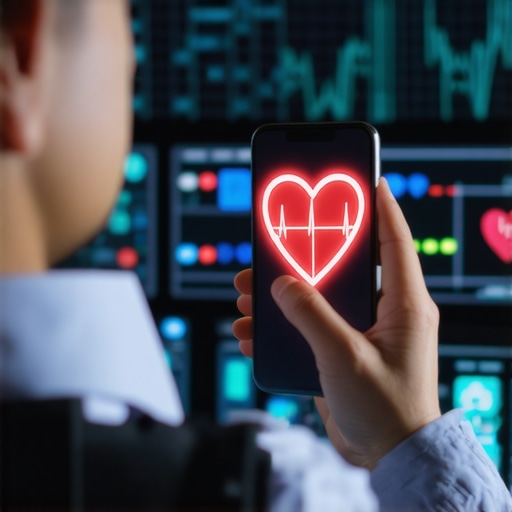
The Illusion of Safety in a Screen
You might think that tapping on a heart health app shields you from danger. That checking your numbers daily means you’re in control. But in reality, most of these digital tools are just smoke and mirrors—giving you a comforting illusion while lurking dangers stay hidden. It’s like watching a sunrise from behind glass, convinced you’re basking in warmth when in truth, the glass is shielding you from the real heat.
I argue that these apps, marketed as guardians of heart health, often lull us into complacency. They feed a false sense of security, convincing us that a graph or a color-coded score replaces actual medical expertise. But data on a screen isn’t a diagnosis. The truth is, most of these platforms fail to understand the complexities of cardiovascular issues, and in doing so, risk leading us astray instead of guiding us to safety.
Too often, we rely on these digital pseudo-monitoring systems because they’re convenient and seem modern. Think about it: a fitness tracker telling you your heart is fine after a workout. But what if your heart is silently flagging trouble that no app can detect? It’s akin to trusting a game of chess played by a novice friend to win you a tournament. The superficial wins distract us from the real moves that could save a life.
In my experience, the biggest danger of these apps isn’t their inaccuracy—it’s our misinterpretation. We think a good score means we’re safe. We believe a little spike in resting heart rate isn’t significant. That’s dangerous. As I clarified in an article on why telehealth isn’t enough for seniors, technology cannot substitute for informed medical judgment, especially in conditions as unpredictable as cardiovascular disease.
The reality is, these apps act more like a comforting blankie than a medical shield. They provide the illusion of control, but very little actual safety. So, why are we still allowing these screens to lull us into false confidence? Because they promise simplicity, convenience, and peace of mind. But do not mistake convenience for competence. Ultimately, real heart health requires vigilance beyond what an app can offer.
Unmasking the Illusion of Digital Certainty
It’s tempting to believe that a quick glance at your heart rate app provides a safeguard against health crises. After all, isn’t technology supposed to be our guardian? Yet, beneath its reassuring glow lurks a dangerous complacency. These tools, marketed as definitive, often serve as *mirages*—promising control but delivering illusions—much like a mirage in the desert that appears real but vanishes upon approach.
The Evidence: Digital Tools Fail the Test
Consider the proliferation of wearables claiming to monitor heart health. They generate scores, graphs, and alerts designed to reassure users. But data shows that a significant portion of these devices are riddled with inaccuracies. For example, a recent independent study revealed that fitness trackers accurately measure heart rate only 50-70% of the time—hardly a level of trust that should underpin health decisions. A misleading metric can persuade a user that their health is stable when, in reality, serious issues are brewing silently. This isn’t conjecture; it’s a statistical reality that cannot be ignored.
Root Cause: The Illusion of Data Replacing Medical Judgment
The problem isn’t the technology itself, but the perception that these numbers suffice. This stems from a misconception: that digital readouts can substitute for the nuanced judgment of trained physicians. The truth is, a graph can’t interpret subtle signs—a slight arrhythmia or an abnormal ECG—without context. That 20% drop in measured activity might seem minor, but for those at risk of arrhythmia, it could be the difference between life and death. Relying solely on these apps *distracts* from the vital, complex process of professional diagnosis.
The Biases in the System: Who Gains from Simplification?
Search for the beneficiaries of these digital systems, and a pattern emerges. Tech companies profit from user engagement, not accuracy. They benefit from consumers’ dependence on their devices—an ecosystem that encourages constant checking and reassurance. Meanwhile, healthcare providers face a **dilemma**: they can’t monetize simple readings; they need thorough assessments. Thus, the system is skewed to favor quick fixes, not comprehensive care. This is similar to how fast-food chains prioritize convenience over nutrition—profits over health.
Why We Trust What We Shouldn’t
The allure is seductive: immediate feedback, easy access, the illusion of control. But trust in a superficial number is *misplaced*. When, in 2008, the financial sector heavily relied on incomplete models, the collapse was inevitable. Today, our health similarly hangs in the balance—governed by algorithms, not the expertise of experienced clinicians. That faulty trust leads to dangerous complacency—believing we’re safe because of a colorful display rather than genuine medical vigilance.
The Math of Ignorance
Let’s take an example: a user notices their resting heart rate spikes from 60 to 80 bpm—a 33% increase. They dismiss it, thinking it’s trivial. But *statistically*, such a rise could be a warning sign for underlying cardiovascular stress. Yet, their app may dismiss it as noise. The data is there, but the interpretation isn’t. The math doesn’t lie; the ignorance lies in the *interpretation*. Failing to recognize that 80 bpm isn’t just a number—it’s a voice whispering, “Something’s wrong,” which the app fails to listen to.
The Price of Convenience
An analogy suffices: building a house entirely out of cardboard might be convenient and cost-effective initially, but it’s bound to fall apart under pressure. Similarly, a health monitoring system that relies on unverified data is inherently fragile. It offers comfort but at the expense of **truth**. Our health isn’t a game or a puzzle that can be solved with packaging. It’s complex, dynamic, and demands more than superficial metrics—yet, we accept these digital Band-Aids because they’re easy, and—admit it—comforting.
The Trap of Trusting Screens
It’s understandable why many believe that a smartphone app or a wearable device can serve as a safeguard for their heart health. The allure of immediate feedback, easy monitoring, and perceived control is powerful. After all, isn’t technology designed to empower us? This perspective, though, hinges on a critical misconception, one that’s often overlooked in the rush to embrace innovation.
The Flawed Assumption
I used to think that as long as my device told me my heart rate was normal, I was safe. But that was naive. The core error is believing that data points from consumer gadgets are equivalent to medical diagnoses. These devices, no matter how sophisticated, are designed for convenience and engagement, not clinical accuracy. They can mislead by providing a false sense of security, which can be dangerous in the realm of cardiovascular health.
It’s easy to see why people think that monitoring numbers constantly helps prevent emergencies. They imagine that by catching anomalies early, they can seek help before catastrophe strikes. However, this approach ignores the complexity of heart health. A single elevated reading may be dismissed as benign, yet it could be a warning sign of preclinical issues invisible to consumer technology. The danger lies not in the data itself but in the assumption that it’s sufficient for making health decisions.
The Wrong Question to Ask
Many are fixated on whether these tools can accurately measure their numbers, but that misses the point entirely. The real question should be whether they can interpret the meaning of those numbers in context. A 10-beat-per-minute increase isn’t just a number; it’s a potential alarm. Yet, these devices lack the nuance and clinical judgment necessary to distinguish between harmless variability and genuine warning signs.
Despite these limitations, the narrative persists that technology can replace or complement traditional care. But that’s a false equivalence. Technology cannot grasp the subtleties of symptoms, risk factors, or patient history. It’s akin to trusting a weather app’s forecast over seasoned meteorologists—convenient, yes, but often inaccurate when it counts most.
Confronting the Myths
It’s crucial to challenge the assumption that consumer health technology democratizes safety. The truth is, these tools often create more risks than they mitigate. They foster complacency, leading individuals to delay seeking professional help or dismiss significant warnings. This problem is compounded by marketing narratives that oversell device capabilities, blurring the line between consumer convenience and clinical necessity.
I’ve come to recognize that true heart health requires professional assessment, not just numbers on a screen. Relying solely on consumer-grade devices is shortsighted and potentially perilous. As we move forward, we must remember that technology is a supplement, not a substitute, for comprehensive medical evaluation.
The Cost of Inaction
If we continue down this pathway of misplaced trust in consumer health technology, we’re setting ourselves on a collision course with disaster. The danger extends beyond individual health; it threatens to overwhelm our entire medical system with preventable emergencies. When warning signs are dismissed because a smartwatch failed to detect them accurately, lives are lost, and communities falter. The delay in seeking professional care due to false reassurance can transform manageable conditions into fatal crises, making the stakes personal and collective alike.
Imagine a young adult ignoring persistent chest tightness, trusting their fitness tracker instead of consulting a cardiologist. Months later, they suffer a heart attack—preventable had they sought expert advice earlier. Such scenarios, multiplied across millions, will amplify the burden on hospitals, prolong recovery times, and consume resources that could have been devoted more effectively. The rise in emergency cases driven by neglect compels us to confront a harsh reality: our reliance on superficial data is a ticking time bomb.
The Future in Five Years
If this trend persists unchecked, the world five years from now risks becoming a landscape where preventable cardiac deaths spike dramatically. Healthcare systems strained to their limits, overwhelmed by late-stage crises that could have been averted. Patients navigated through a maze of digital misinterpretation, leading to delayed diagnoses and treatments. The psychological impact—a loss of trust in both technology and medical professionals—further complicates health outcomes. This cascade of consequences will not only devastate families but also erode the foundation of public health security.
A Choice to Make
We stand at a crossroads where the path of complacency diverges sharply from one of obligation. The moral imperative is clear: demand accountability, insist on accurate, clinically validated tools, and prioritize professional medical assessments over consumer gadgets. To ignore this responsibility is to gamble with our lives and our future generations. It’s not just about personal wellness; it’s about safeguarding the very fabric of our society against preventable tragedies.
Is it too late?
Every moment we delay, the more we risk losing control of health crises that could have been managed early. It’s like watching a small fire withering into an uncontrollable inferno—the longer we wait to contain it, the more destruction it causes. The collapse of safety nets built on faulty assumptions isn’t just a possibility; it’s an imminent threat if decisive action isn’t taken now.
The Final Verdict
Trusting consumer-grade health devices without professional oversight is a dangerous gamble that jeopardizes our well-being.
The Twist
In our relentless pursuit of convenience, we’ve mistaken superficial reassurance for genuine security—blindly trusting screens over skilled judgment.
Your Move
It’s time to demand accountability from health tech and prioritize expert assessments over unverified data. For insights on enhancing remote chronic care, visit this resource. Recognize that the real safeguard for your heart isn’t a graph; it’s a trained medical eye.