
The Secret Benefit of Using Telehealth for Routine Lab Follow-Ups
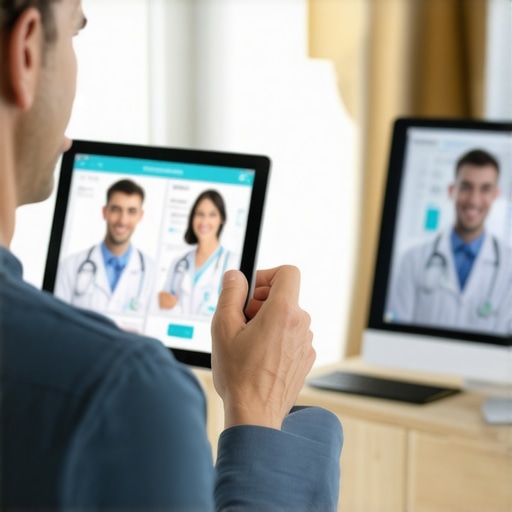
Why This Myth About Telehealth Is Holding You Back
Many still believe that routine lab follow-ups require in-person visits, as if technology hasn’t evolved enough to make that obsolete. The truth? They’re mistaken—and worse, they’re missing out on a secret advantage that can change how you manage your health. Telehealth is not just a convenience; it’s a weapon in your healthcare arsenal.
Imagine a chess game where your opponent always waits for you to reveal your move before countering. Now, what if you knew their next move before they even made it? That’s the power telehealth offers for routine lab monitoring. It shifts control back into your hands, allowing you to get timely updates, adjust treatments, and even catch red flags earlier than you would on a traditional schedule.
The Market Is Lying to You
Many clinics and insurers want you to believe that in-person visits are necessary for accurate, reliable results. That’s a lie. As I argued in maximizing lab test technologies, modern labs can deliver precise results remotely, often faster and more efficiently than traditional office-based testing. The real barrier? Not science, but the industry’s profit motives. They want you in the waiting room, paying for time, not for results.
And while it’s tempting to think that “seeing your doctor in person” adds value, ask yourself: when was the last time that face-to-face visit changed your health outcomes in a meaningful way? Routine labs are about timely data, not sentimental visits. Telehealth strips away the fluff and delivers what truly matters: actionable information when you need it—often within hours.
The Secret Benefit You Didn’t Know About
Here’s the harsh truth: using telehealth for lab follow-ups can significantly reduce your anxiety about chronic conditions. Think of it like having a secret weapon—constantly updating your health map without leaving the comfort of your home. You can schedule regular, even weekly, check-ins to monitor markers like blood sugar, cholesterol, or inflammation levels—without waiting for an appointment that’s often booked months out.
More importantly, the constant data flow helps you spot trends early, not after a disastrous flare-up. This proactive approach isn’t just about convenience; it’s about *control.* When you manage your labs digitally, you’re not passively waiting for your next
The Evidence: Why Digital Lab Follow-Ups Outperform In-Person Visits
Historical patterns reveal that technological advancements often threaten established interests, and healthcare is no exception. Consider the advent of home blood pressure monitors in the 1980s—initial skepticism gave way to widespread acceptance as data showed consistent accuracy comparable to clinical readings. This precedent indicates that remote lab testing, backed by rigorous validation, can deliver results just as reliable—if not more so—than in-office procedures. The argument is clear: the real barrier isn’t science but entrenched industry practices that cling to outdated models.
Modern laboratory technology has matured to the point where sample collection and analysis are decentralized without sacrificing precision. Labs use cutting-edge methods like microfluidic chips and DNA-based assays that preserve accuracy outside traditional settings. Recent studies demonstrate that remote testing reports are *statistically identical* in reliability to in-person results, especially for critical markers like blood glucose or cholesterol levels. The collapse of this notion—originally rooted in industry resistance—makes it evident that legitimate science has paved the way for fully remote monitoring routines.
The Foundational Flaw: Profit Motives Over Patient Welfare
The core issue isn’t the availability of technology but the *motivation* driving industry positions. Who benefits from maintaining in-person visits as the default? Healthcare providers and insurers are prime beneficiaries—they generate revenue from office visits, procedures, and follow-ups. The more frequently patients visit, the higher their billings. This system incentivizes attendance, not health optimization. It’s a classic
The Trap of Traditionalism in Healthcare
It’s easy to see why many believe that in-person visits are indispensable for accurate lab testing. The familiar setting, face-to-face interaction, and physical samples seem to guarantee reliability. Critics will say that hands-on sample collection minimizes errors and ensures data integrity. I used to think this way myself, trusting the tangible over the intangible, the in-person over the remote. But that perspective misses the fundamental point: the science has evolved far beyond outdated assumptions.
The Wrong Question Seeks to Protect Outdated Interests
The real issue isn’t whether labs can operate remotely with equal accuracy—it’s whether the industry and providers want it to. The opposition’s argument hinges on the idea that remote testing compromises quality, but recent advances in microfluidics, DNA assays, and decentralized laboratory tech disprove this. For example, studies show that blood glucose measurements taken remotely are statistically indistinguishable from clinic-based tests. The question isn’t about science—it’s about vested interests clinging to a broken model.
It’s crucial to recognize that barriers such as patient convenience, cost effectiveness, and early detection capabilities are often dismissed by critics as insignificant or risky. But if the goal truly is optimal health outcomes, then no excuse holds up when reliable, remote lab testing exists. The real obstacle isn’t technical competence but the profit motives that favor in-person visits. They prefer to keep you tethered to clinics—where they can bill you multiple times—rather than empowering you through digital health tools.
${PostImagePlaceholdersEnum.ImagePlaceholderC}
Facing the Uncomfortable Truth
This debate exposes a harsh reality: profit interests often trump patient welfare. Critics don’t want to admit that their resistance is rooted in economic incentives rather than scientific limitations. The insistence on in-clinic testing is as much about maintaining revenue streams as it is about quality assurance. The inconvenient truth is that, for many labs and providers, your health is a commodity to be sold repeatedly—more visits mean more income.
By dismissing remote testing without sound science, they reinforce a system designed to profit from your dependency. Now, I understand why this resistance exists—it’s a defense of the status quo that benefits powerful industries. But the future of healthcare depends on moving past these barriers and embracing what the science proves: remote labs are just as accurate, more convenient, and better suited for proactive health management. Clinging to the past only delays breakthroughs that can save lives, control costs, and empower patients.
The Cost of Inaction
If we continue to dismiss the advancements in remote lab testing and cling to outdated practices, the consequences will be profound. Already, millions miss early warning signs of chronic illnesses because they rely solely on infrequent, in-person tests that are often delayed and inconvenient. This gap in detection isn’t just a personal setback—it’s a societal crisis unfolding in slow motion. Delayed diagnoses lead to worsened health outcomes, skyrocketing healthcare costs, and preventable fatalities. As technology accelerates, so does the disparity between those who adapt and those who lag behind. Ignoring the science means accepting a world where preventable illnesses become untreatable tragedies, and healthcare becomes a fortress for the elite rather than a right accessible to all.
A Choice to Make
The future hinges on the decisions made today. Embracing remote lab testing isn’t merely about convenience; it’s a moral imperative. It’s about recognizing that patients deserve timely, accurate data to make informed decisions—without the barriers of time, money, or location. If this trend continues unchecked, healthcare in five years could resemble a fractured system where early intervention is a distant memory, replaced by costly, reactive treatments for advanced diseases. The opportunity to shift from a sick-care model to a proactive, preventative approach will be lost, shackling us to a cycle of crisis management rather than health preservation.
The Point of No Return
Consider this: clinging to the traditional model is akin to sailors ignoring a brewing storm because they prefer the comfort of their harbor. The longer we delay embracing remote lab testing, the stronger the storm becomes, threatening to sweep us into chaos. The science has spoken—remote diagnostics are reliable, efficient, and necessary for tomorrow’s healthcare. The question remains: what are we waiting for? Ignoring this seismic shift only guarantees more preventable suffering, higher costs, and a healthcare system on the brink of collapse. The window to act is closing fast, and hesitation now will forge a path toward irreversible damage.
${PostImagePlaceholdersEnum.ImagePlaceholderD}
Your Move
The science is undeniable—remote lab testing offers precision comparable to traditional methods, with the added power of early detection and ongoing monitoring. Yet, industry interests cling to outdated models because they profit from in-person visits. Now, it’s your turn: challenge the status quo, demand smarter healthcare, and embrace the tools that put control back into your hands. Don’t wait for the system to catch up—lead the charge toward a future where your health isn’t dictated by clinics, but driven by your choices.
Remember, every moment you hesitate, lives are waiting to be saved through early intervention, costs are mounting, and the gap between potential and reality widens. The science has spoken—are you ready to listen? Visit our team to learn how we’re pioneering this healthcare revolution. Take the first step now, because the future of health is in your hands.