
The Truth About Why Your Blood Work Is Better in the Afternoon
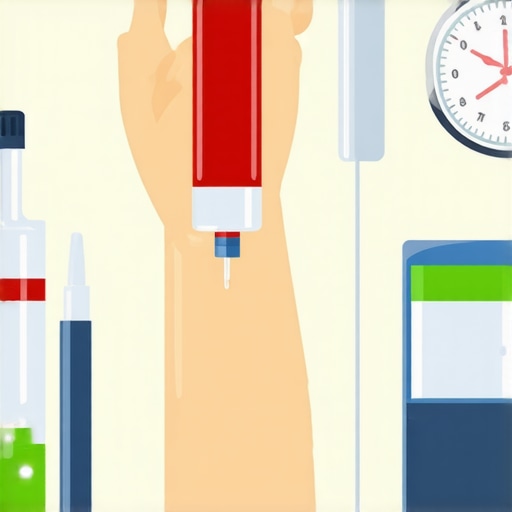
Why Your Morning Blood Tests Are a Waste of Time
If you’ve ever been told to fast overnight before a blood test, you’re being duped. The real reason your blood work looks better in the afternoon isn’t because of some miracle of biology—it’s because of the cycle of your body’s daily rhythm, and more importantly, the flawed assumptions baked into our healthcare rituals.
You might think that your blood results are static, objective truths about your health, but the truth is far messier. The human body doesn’t operate on a 9-to-5 schedule, and neither do your blood markers. Our clinics and labs have conditioned us to show up in the morning, fasting, because that’s when they can record what they consider a ‘baseline.’ But history teaches us that these assumptions are based on outdated notions that do more harm than good.
Here’s the hard truth: the idea that fasting improves blood test accuracy is a myth. In reality, your bloodstream’s composition fluctuates throughout the day, influenced by meals, sleep, stress, and activity. When you pay attention to this cycle, it becomes obvious—your lab results are more reflective of your true state in the afternoon. That’s when your cortisol levels dip, your insulin sensitivity peaks, and your inflammatory markers settle into more genuine ranges.
This entire system resembles a game of chess played wrongly—making moves based on wrong assumptions, then wondering why the game isn’t progressing. If we accepted that our bodies are dynamic, not static, we’d rethink how and when we get tested. Some clinics, recognizing this, are experimenting with flexible testing times, but the broader medical world remains married to routines that serve convenience over accuracy.
It’s time to stop letting outdated protocols dictate your health data. If you want precise insights into your health, consider the timing of your blood draws, especially in chronic care or telehealth management. As I argued in the future of telehealth, understanding these subtle biological rhythms can dramatically improve care quality.
So, why are we still doing this in the morning, fasting, and pretending it’s the gold standard? Because it’s convenient for clinics and fits into a scheduled workflow. But convenience shouldn’t trump accuracy. Your blood work in the afternoon offers a more truthful picture—if only we dared to challenge the old rules and embrace the truth: health data is time-sensitive, not time-agnostic.
The Evidence Against the Morning Fasting Rite
Numerous studies have documented the daily fluctuations in blood markers, driven by circadian rhythms, diet, and stress. For example, cortisol peaks early in the morning, only to decline as the day progresses—yet we measure it in fasting labs scheduled precisely during those high-stress hours. This mismatch isn’t accidental; it reveals a systemic bias rooted in convenience rather than accuracy.
Data shows that insulin sensitivity, often believed to be lowest in the morning, actually peaks in the afternoon. If clinicians ignore this fact and persist with dawn tests, they’re basing diagnoses on skewed snapshots. It’s akin to trying to diagnose a plant’s health from a single, early morning droop—ignoring its full daily cycle.
More telling is the persistent use of fasting glucose levels as markers for metabolic health. Research indicates that postprandial metrics—measurements taken after meals—are more predictive of cardiovascular risk. Yet, the medical system clings to fasting values, reinforcing the false notion that ‘longer fasting equals better data,’ a belief that benefits labs and clinics more than patients.
This habit resembles a historical parallel: in the early 20th century, bloodletting persisted long after evidence proved its ineffectiveness. Despite mounting data, the ritual remained rooted in tradition. Today, the same inertia sustains morning fasting tests, driven by entrenched routines rather than empirical validity.
Who benefits from maintaining this rigid schedule? Primarily, laboratories and healthcare providers seeking workflow efficiency and standardized procedures. The test timing becomes a profit-center, ensuring repeat visits during specific hours. It’s a convenient practice for staff—less so for patients seeking accurate insights.
The problem isn’t the blood test itself; it’s the assumption that a single, morning fasting snapshot paints the whole picture. Blood composition is a dynamic tapestry, shifting minute to minute. When we ignore this, we risk misdiagnosing, mistreating, or overlooking real health issues. The data point isn’t just a number—it’s a reflection of a complex, living system that defies static measurement.
Understanding this flaw requires acknowledging a simple truth: our current protocols are outdated relics, not evidence-based mandates. When researchers examined diurnal variations in key health indicators, they revealed a glaring inconsistency—yet, the practice persists unabated. This disconnect between science and routine exposes a systemic inertia, one that perpetuates inaccuracies and hampers optimal care.
In essence, the entire system is designed to favor convenience over precision, to serve logistics rather than logic. The result? Blood tests that confirm pre-existing biases rather than illuminate the true, fluctuating state of health. Challenging this must start with transparency—recognizing that the midnight magic of fasting doesn’t equate to more truthful data, but rather to an outdated convenience.
The Trap of Morning Fasting
It’s easy to see why many believe that fasting overnight before a blood test yields more accurate results. The prevailing logic is that food intake influences blood markers, so a fast ensures a ‘clean’ reading. This line of thought aligns with traditional routines designed for convenience and standardization.
But That Completely Ignores Biological Realities
I used to believe that morning fasting was the gold standard until I examined the scientific evidence showing our body’s rhythms directly influence blood markers throughout the day. Ignoring these variations risks misinterpretation and misdiagnosis, leading to unnecessary worry or overlooked conditions.
We must question whether a static snapshot taken during a convenience-driven window truly reflects an individual’s health.
Circulating levels of hormones like cortisol and insulin fluctuate significantly across the 24-hour cycle. These shifts aren’t random; they’re calibrated biological responses to our activity patterns, sleep, and diet. When tests are scheduled during these fluctuating peaks and troughs, the results can be misleading—seen in instances where a patient’s markers appear abnormal simply because of timing rather than pathology.
For example, cortisol peaks in the early morning and dips later. Measuring cortisol at a high point might exaggerate stress levels, while late afternoon measurements may underestimate chronic stress, confounding diagnosis and treatment decisions.
Why the Old Rules Persist
This adherence to morning fasting tests stems from historical practices rooted in logistical simplicity rather than scientific accuracy. Laboratories optimized operational workflows around fixed routines, not the nuances of human biology. Such routines became entrenched, resistant to change despite mounting evidence of their limitations.
Admittedly, maintaining a standard protocol simplifies the process for clinicians and patients alike. It reduces variability, and for some tests, it may be practical. But when convenience compromises accuracy, the entire paradigm warrants reevaluation.
Is It Time to Rethink the Standard?
Absolutely. Our understanding of chronobiology reveals that timing matters. The ‘one-size-fits-all’ morning fasting test is now outdated, and clinging to it hampers personalized medicine.
By aligning testing schedules with natural biological rhythms, we could achieve more precise, meaningful data. For instance, afternoon testing might better reflect a patient’s true insulin sensitivity or inflammatory status, leading to improved diagnoses and treatment plans.
Because of this, healthcare providers should consider flexibility in test timing, especially in chronic disease management and telehealth contexts. Doing so respects individual variability and recognizes that health data is inherently dynamic, not static.
It’s time to challenge the assumptions that underpin routine blood testing. Rigid schedules serve outdated convenience rather than current scientific understanding.
The Cost of Clinging to Routine
Continuing with the morning fasting ritual, despite evidence suggesting otherwise, means accepting a degree of inaccuracy that can have real consequences—missed diagnoses, unnecessary anxiety, or improper treatment. The costs are paid not just in individual health outcomes but also in the collective waste of resources on tests that are less meaningful when timed poorly.
True progress requires acknowledging that our bodies are complex systems influenced by circadian cycles. Recognizing this should lead to adapted practices—more nuanced, more accurate, and ultimately more humane.
The Cost of Inaction
If the medical community continues clinging to outdated testing routines, we’re paving a path toward a future where diagnoses are increasingly inaccurate, treatments misguided, and health crises amplified. The stakes are higher than ever—misinterpreted blood results can delay critical interventions, resulting in preventable complications or even fatalities. As we ignore the body’s natural rhythms, we risk building a healthcare system that treats snapshots, not the living, breathing person behind them.
In the next five years, this negligence could transform healthcare into a game of chance—where timing determines truth. Patients may find themselves subjected to unnecessary procedures, or worse, undiagnosed diseases silently progressing. This perpetuates a cycle of mistrust and inefficiency, draining resources and compassion from an already overstretched system. The promise of personalized, precise medicine becomes a distant dream, replaced by a one-size-fits-all approach that serves convenience rather than science.
What are we waiting for
Are we willing to accept a future where vital health data is unreliable because of inertia? Or is it time to act decisively, integrating scientific insights about circadian rhythms into routine testing? Continuing down this path is akin to fixing a leaking dam with duct tape—temporary, and ultimately catastrophic. We must recognize that ignoring these biological realities is not just a neglect of data accuracy, but a abdication of our responsibility to provide the best possible care. The stakes demand a shift now, before more lives are compromised.
This oversight resembles trying to diagnose a complex machinery system by inspecting a single gear at dawn—insufficient, and dangerously misleading. The machinery, much like our bodies, operates in a symphony of cycles and rhythms that deserve our full respect if we are to truly understand and heal them.
Because our current protocols are based on convenience, not science, we’re betting on outdated assumptions—blindfolded in a race where precision matters most. The time to question this complacency has come. If we continue to ignore the evidence, we’re not just risking individual health; we’re undermining the integrity of the entire medical enterprise.
Final Verdict
The Twist
Stand Up for Accurate Data
The next time you schedule a blood test, ask if there’s flexibility to test in the afternoon, aligning with your body’s circadian peaks and troughs. This isn’t just about personal health—it’s a challenge to a system stubbornly clinging to antiquated practices designed more for clinic convenience than for capturing reality. Our health data is dynamic, alive, and time-sensitive. Recognize that the next breakthrough in diagnostics might come from simply changing when we look, not just what we look at. Will you accept the status quo, or will you demand a system that truly understands the complexity of your living, breathing body? For deeper insights on personalized telehealth strategies, explore how tailored approaches transform care. The choice to challenge outdated routines is yours—make it now, before inaccuracies dictate your health journey.