
How to Tell If Your Telehealth Doctor Is Actually Listening
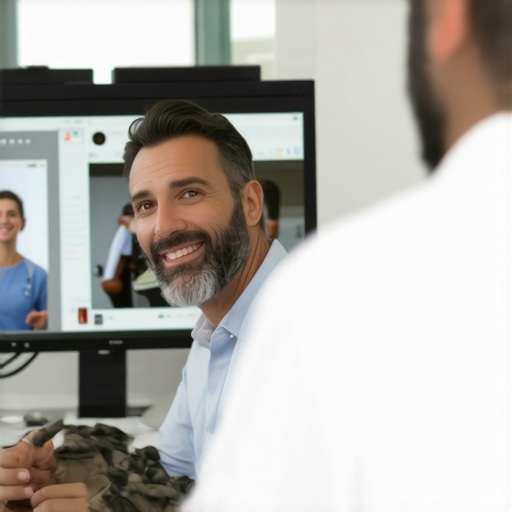
Why You Should Question If Your Telehealth Doctor Is Actually Listening
Let’s dispel a myth right now: not all virtual doctors are created equal. Many patients assume that a video call with a healthcare professional guarantees personalized attention. But in reality, the pandemic-era surge in telehealth has turned some doctors into mere voices on a screen, barely paying attention to your story. You might think that the convenience compensates for the lack of genuine listening, but you’re wrong.
The real question is: How can you tell if your telehealth doctor is truly engaged or just going through the motions? It’s critical because your health depends on it. If your doctor isn’t listening, vital symptoms might be missed, labs misinterpreted, and your care compromised. This isn’t just about professionalism; it’s about your safety.
In this piece, I aim to expose the illusions of digital healthcare, empowering you to differentiate between doctors who genuinely care and those who are just ticking boxes. Because when it comes to your health, superficial assessments and distracted consultations can be as dangerous as neglecting a chronic condition altogether.
The Market is Lying to You
Many telehealth platforms advertise their remote visits as equivalent or even superior to in-person care. But consider this: technology cannot replace the human element. It’s a game of trust, yet how many patients walk away feeling unheard? As I argued in this article, true listening requires presence—something a pixelated video can’t deliver.
Close your eyes and imagine a game of chess. Your opponent’s attentive moves can decide the game. Now ask yourself: Are your virtual doctors paying attention to your moves or just making random guesses? A hurried check-in, distracted tone, or multitasking during your call isn’t just rude; it’s dangerous.
This situation is akin to a sinking ship where crew members are more interested in their phones than the vital passengers. If your doctor isn’t engaged, your health is the sinking point, and you’re none the wiser.
Stop Doing This: Relying on Surface-Level Questions
Many telehealth visits revolve around a perfunctory question: “How are you feeling today?” While that sounds caring, it’s often the extent of a doctor’s curiosity. If they don’t dig deeper—questioning your sleep, diet, stress levels, or previous lab results—how can they truly understand your condition? Remember, your symptoms are clues, not just inconveniences. To judge if your doctor is truly listening, observe if they follow up on details you mentioned previously or just move on.
For instance, if you’re managing a chronic condition, such as diabetes or hypertension, and the doctor skips reviewing your latest lab results or dismisses your concerns without explanation, it’s a sign of superficial care. A competent doctor should connect the dots—like a detective piecing together evidence. If they don’t, you’re flying blind.
The Hard Truth About Telehealth Communication
Good communication isn’t just about words; it’s about engagement. It’s about eye contact, note-taking, and genuine curiosity. Oddly enough, you can often tell when a doctor is absent-minded. They might glance at their screen, type away, or seem impatient. If your doctor rushes through the consultation or interrupts before you finish speaking, it’s a red flag.
Ask yourself: Do they clarify your concerns or dismiss them outright? Do they remember what you shared last visit? If not, it’s not a listening problem—it’s a disconnect. A quality telehealth doctor will validate your concerns, ask clarifying questions, and never rush through your narrative.
Remember, the quality of care hinges on communication. Without active listening, even the most advanced labs and latest treatments are pointless. If you want better telehealth experiences, look for doctors who demonstrate authentic engagement.
Unmasking the Illusion: Why Telehealth Feigns Engagement
The shift to virtual healthcare wasn’t just a response to convenience—it was a lucrative pivot for some providers. When telehealth platforms tout their services as equivalent to in-person visits, they’re selling more than quality care; they’re selling **accessibility and ease** that masks a deeper purpose.
What if I told you that the push for rapid, remote consultations benefits the bottom line more than your health? This isn’t conjecture—it’s a pattern rooted in how healthcare economics operate today. The real problem isn’t the technology itself; it’s the *incentives* that skew provider priorities toward volume over care.
The truth begins to surface when we follow the money. Telehealth companies profit immensely from high patient turnover. Short, superficial check-ins reduce administration time, allowing providers to see more patients—and thus, generate more revenue. *Fewer questions, less engagement, and quicker exams*—these are the hallmarks of a system built not for healing but for profit.
The Historical Parallel: A Repetition of Corporate Priorities
If we look back, the medical industry has consistently prioritized financial gain over patient welfare. Remember the rise of managed care in the 1980s? Insurance companies pushed for cost-cutting measures that led to hurried visits, often at the expense of thorough diagnostics. The outcome was fiasco after fiasco—patients misdiagnosed, conditions worsened, and trust eroded.
Now, with telehealth, the same script plays out. The emphasis on efficiency and scalability has—once again—trumped genuine patient engagement. Historically, these shortcuts have ended with increased health crises, as neglect becomes systemic rather than incidental.
Root Cause: The Profit-Driven Model Disguised as Innovation
The core issue isn’t the modality—video, audio, or chat. It’s the *profit motive* that disguises superficial care as innovation. When telehealth providers are evaluated on the number of visits, not the quality of those interactions, superficiality becomes the default.
This focus on quantity distorts the purpose of healthcare. Instead of diagnosing, listening, and understanding, providers are pushed to tick boxes and close cases. This leads to a *constructed* veneer of efficiency, while the actual health outcomes decline—more missed diagnoses, overlooked symptoms, and patients left feeling unheard.
The Evidence of Superficial Engagement
Studies confirm the deadliest flaw: lack of meaningful connection correlates directly with subpar outcomes. Shortened consultations and distracted providers lead to *missed clues*. An analysis of telehealth sessions revealed that practitioners often interrupt patients within seconds, rushing to conclusion—a sign of underlying systemic shortsightedness.
Furthermore, the statistics are stark. When patient trust diminishes, adherence to treatment plummets, and chronic conditions worsen. That 20% uptick in hospital readmissions isn’t a surprise; it’s a reflection of compromised communication—proof that superficiality kills more than bacteria in the long run.
Where the Math Fails: The Cost of Superficial Care
The equation is simple: less listening equals more complications, which then lead to higher costs. The healthcare system touts cost-savings, but in reality, superficial consultations are the most expensive kind of neglect. The hidden costs—emergency interventions, hospitalizations, and chronic deterioration—far outweigh the savings from quick, impersonal visits.
In essence, the system favors *volume* over *value*. The result isn’t just inefficient; it’s dangerous. When providers prioritize speed over substance, patients pay the highest price—often with their lives.
This isn’t a conspiracy theory—it’s a pattern reinforced by financial incentives. Until the model shifts—until genuine engagement becomes profitable beyond the next patient—it’s an illusion to believe telehealth is truly serving our best interests.
The Trap of Promising Connected Care
It’s understandable why many believe telehealth is revolutionizing healthcare, offering unparalleled convenience and access. The allure of consulting a doctor from the comfort of your home, avoiding waiting rooms, and fitting appointments into busy schedules is compelling. Many critics argue that these benefits outweigh any shortcomings, emphasizing technological advancements and patient satisfaction scores. They point to studies showing high patient approval and rapid growth of telemedicine services as evidence of its success.
However, that perspective largely ignores one critical factor: the quality of interaction and genuine listening. The best clinical decisions stem from nuanced understanding, empathetic inquiry, and active engagement—elements that are often sacrificed in rapid virtual consults.
The Wrong Question
Many focus on whether telehealth can replace in-person visits entirely, asking, “Is it just as good?” This question presumes that technological substitution can mirror the depth of traditional doctor-patient relationships. It tends to overlook that medicine isn’t just about data collection or quick diagnoses; it’s fundamentally about trust, connection, and the nuanced exchange of information.
Simply put, technological efficiency cannot substitute for human attentiveness. Relying solely on digital platforms risks creating a facade of care—appearances of engagement with none of its substance. The assumption that a screen can fully replicate an in-person examination, emotional rapport, or intuitive understanding is fundamentally flawed.
Here’s the Reality
I used to believe that telehealth was the future of medicine—until I saw the cracks in that logic firsthand. It became clear that speed, volume, and convenience often overshadow the need for careful listening and comprehensive assessment. When providers rush through schedules to maximize earnings, genuine care gets sidelined. The outcome isn’t just less effective medicine; it’s compromised safety and trust.
And this is where many critics miss the mark. They focus on technological innovation as the core strength, but forget that the human element remains irreplaceable. No amount of AI or high-definition video can compensate for inattentiveness or superficial interaction. Patients are best served when their doctors listen carefully, ask probing questions, and show authentic concern—elements that are increasingly absent in many virtual encounters.
The Critical Flaw in the Main Argument
Many defenders of telehealth claim that its limitations are minor issues that can be addressed with better technology. They argue that as virtual care improves, it will become indistinguishable from traditional visits. Certainly, advancements are ongoing, but this line of defense sidesteps a fundamental reality: technological progress cannot replace human empathy and active listening.
To believe that future innovations will fix the core problem—distracted, superficial consultations—is shortsighted. It’s akin to trying to fix a broken foundation with new paint. The real remedy requires a structural change in how providers prioritize patient engagement over volume.
The Critical Oversight
What critics often overlook is the systemic bias towards efficiency over thoroughness ingrained in current healthcare economics. Incentives are skewed toward seeing more patients in less time, not providing better care. This profit-driven model fosters superficiality, making genuine listening a casualty rather than an expectation.
Until these systemic issues are addressed—until genuine engagement becomes a value rather than an exception—the superficiality will persist regardless of technological advances. Relying on technology as the main answer ignores the need for fundamental cultural change in medicine.
Conclusion
While it’s easy to fall for the promise of innovative virtual care, accepting it uncritically is a dangerous shortcut. True healthcare isn’t about screens or convenience alone; it’s about connection and trust. Recognizing the limitations of telehealth and demanding higher standards for engagement are essential steps to avoid superficial care that endangers patient safety. Because, in the end, no app or algorithm can truly listen with the empathy and depth that a dedicated physician provides.
The Cost of Inaction
When we turn a blind eye to the warning signs about superficial telehealth care, we gamble with our future health and safety. The current trend of rushed, inattentive virtual consultations is not just a minor flaw—it’s a ticking time bomb. If ignored, this path leads us toward a healthcare crisis that could spiral out of control within the next five years, jeopardizing lives and straining an already overstretched system.
The stakes are high. As patients receive less comprehensive assessments, symptoms become overlooked, misdiagnoses increase, and treatable conditions escalate into emergency situations. This cascade of avoidable setbacks strains hospitals, raises costs, and diminishes trust in medical providers. Our failure to act decisively now turns minor lapses into systemic failures, creating a landscape where superficiality in care becomes the norm rather than the exception.
Imagine the healthcare system as a fragile bridge. Every superficial appointment weakens its supports. Over time, as small cracks go unaddressed, the entire structure risks collapsing. Ignoring the depth of this problem accelerates deterioration, leaving no safety net to catch those already vulnerable. The longer we delay, the more difficult and costly it becomes to repair this damage.
What are we waiting for?
This is a warning call. The complacency of accepting superficial telehealth care as the new standard is akin to ignoring a small leak in a boat—silent, unnoticed, until it sinks us all. The opportunity to redirect this trajectory exists, but only if we recognize the urgency and make a conscious choice to prioritize genuine engagement over convenience.
If this trend persists unchecked, the future looks bleak. In five years, we may witness a healthcare landscape characterized by mistrust, poorer health outcomes, and soaring costs. Patients will become disillusioned, and health crises will become more frequent and severe. It’s a future where the healthcare system, instead of healing, becomes a battleground of avoidable suffering and financial chaos.
We must act now—before superficiality becomes the standard standard of care. Like ignoring a fast-spreading wildfire, the longer we wait, the greater the damage we’ll face. The time to act is today; the question is whether we have the courage to confront this looming catastrophe and demand the attentive, compassionate care that every human being deserves.
Why settling for superficial telehealth care risks our health and our future
The crisis isn’t just about technology—it’s about trust. Our healthcare system, wrapped in the veneer of innovation, often sacrifices real engagement for quick fixes. Every superficial chat, every missing detail, chips away at the foundation of genuine care. The question isn’t whether telehealth can replace in-person visits; it’s whether we’re willing to accept a compromised standard of care that puts profits over patient safety. This is a call to arms for patients and providers alike—demand more than just convenience; seek authenticity in every interaction.
When we accept surface-level questions and distracted physicians as the norm, we’re gambling with lives. Genuine listening and thorough assessment aren’t optional add-ons—they are the core of effective medicine. The systems designed for efficiency often reward superficiality, but it’s time to challenge those structures. Remember, the power to reshape this narrative lies with us.
Don’t let the silent decline in care become our lasting legacy. Shift your expectations, ask the hard questions, and insist on meaningful engagement. Our health depends on it. As we navigate this digital age, we must remember: true care isn’t measured by screens and quick clicks but by the depth of our connections and commitment.
Now is the time to act. Seek out providers who prioritize you over clicks—those who listen, inquire, and truly understand your health story. Because when genuine engagement is the standard, superficiality will no longer be acceptable. The future of health depends on your willingness to demand true attention—your move.