
How to Set Up a Senior-Friendly Telehealth Station at Home
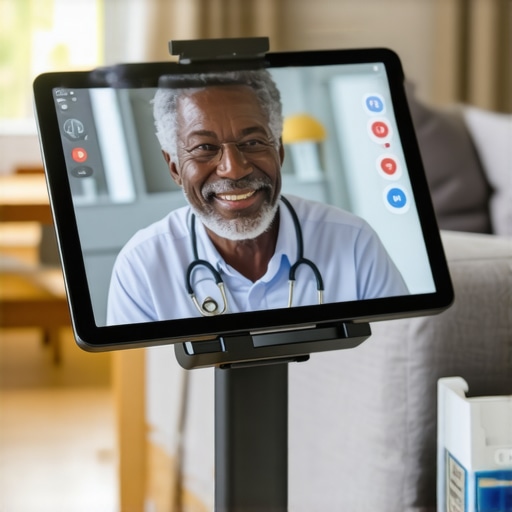
Stop pretending that handing your eighty-year-old father an iPad and pointing him toward the sofa counts as healthcare. It doesn’t. In fact, it is a dangerous form of negligence wrapped in the shiny packaging of modern convenience. You think you’re saving them a trip to the clinic, but if you don’t build a dedicated, high-functioning station, you aren’t providing care—you’re just checking a box while the quality of their medical attention rots. I argue that the ‘station’ is the most overlooked component of the digital health revolution, and frankly, we are failing the people who need it most. A telehealth station is not a piece of furniture; it is a cockpit for survival. When a physician looks through a grainy, poorly-lit webcam, they aren’t seeing a patient; they’re seeing a ghost. How can you expect a diagnosis when the doctor can’t even tell if a senior’s skin is jaundiced or just a victim of a cheap lightbulb? You might think your current Wi-Fi is fine, but you’re wrong. I have seen countless sessions fail because families haven’t addressed the real reason your telehealth connection keeps dropping. If the connection fails during a heart consult, that isn’t a technical glitch; it’s a medical emergency waiting to happen.
Your Current Setup Is a Medical Liability
Most homes are designed for relaxation, not clinical observation. When you try to combine the two without a plan, you create a mess. You need to know how to prepare your living room for a geriatric telehealth visit with the same precision a surgeon uses to prep an operating theater. This means stable surfaces, specialized lighting, and a hardwired internet connection. Relying on battery-powered tablets and spotty routers is like trying to navigate a sinking ship with a wet paper map. It’s flimsy, it’s unreliable, and eventually, it will fail you. I believe the obsession with ‘portability’ has poisoned our approach to senior care. We want things to be easy, so we make them mobile. But for a senior with chronic conditions, stability is the only thing that matters. [image_placeholder] You should be looking for the $20 gadget that makes your telehealth visit 10x better—usually a simple stand or an external microphone—instead of hoping the built-in hardware from 2018 will suffice. If the doctor can’t hear the nuance in a cough or see the tremor in a hand, the visit is a waste of everyone’s time.
The Tablet Alone Is Not a Medical Strategy
We have been sold a lie that ‘digital’ means ‘automatic.’ It doesn’t. A tablet is just a piece of glass and silicon until you integrate it into a workflow that respects the patient’s limitations. Are the buttons too small? Is the glare from the window washing out the screen? You need to implement the lighting trick for a clearer telehealth skin assessment before the call starts, not ten minutes into it while the doctor is tapping their pen in frustration. We are talking about chronic care management personalized telehealth strategies for better outcomes, which requires a level of intentionality that most people simply aren’t willing to provide. I see families get frustrated when things go wrong, but they rarely do the prep work. You have to learn how to fix your video lag before a telehealth emergency happens, not during the crisis. Why are we still waiting for a disaster to optimize the environment? I’ve also seen families fail because they didn’t know how to prep your senior parent for a virtual memory check, leading to results that were skewed by environmental stress rather than actual cognitive decline. The station needs to be a permanent fixture, a reliable sanctuary where the senior knows they will be heard and seen. Stop treating it like a temporary intrusion and start treating it like the lifeline it actually is. If you aren’t willing to clear a corner, upgrade the router, and fix the lighting, then you aren’t ready for telehealth. You’re just playing doctor with a screen.
The Infrastructure of Neglect
The problem isn’t the software; it’s the physical vacuum we’ve placed our parents in. We keep buying faster processors when the actual bottleneck is the shadow cast by a dusty lampshade. This is a structural disaster masquerading as a convenience. When we analyze why virtual care fails, we often blame the ‘connection’ as if it’s some ethereal force out of our control. It isn’t. The root cause is our refusal to treat the home as a legitimate clinical environment. We’ve replaced the sterilized exam room with a cluttered coffee table and then acted surprised when the results are muddy. It’s a failure of imagination and a failure of logistics. You wouldn’t let a doctor examine your heart in a dark alley, yet you think the back corner of a cluttered kitchen is *just fine* for a chronic care check-in. It is not.
The Myth of ‘Good Enough’ Technology
Let’s talk about the data that everyone wants to ignore. Recent analyses of virtual healthcare interactions suggest that roughly 25% of telehealth visits are hampered by poor audio or video quality that directly interferes with clinical assessment. That 25% isn’t a minor inconvenience; it is a *blind spot* where life-threatening symptoms hide. When a physician can’t see the specific shade of a bruise or the slight tremor in a lip, they are guessing. And in geriatric care, guessing is a precursor to the morgue. We have sold ourselves the lie that ‘digital’ equals ‘efficient,’ but efficiency is useless without accuracy. ${PostImagePlaceholdersEnum.ImagePlaceholderB} The tablet is a window, but a window is useless if it’s covered in grime. If you are still using the same Wi-Fi network for your mother’s oncology consult that your neighbor’s kid is using to pirate movies, you aren’t just being cheap; you are being dangerous. The infrastructure *is* the care. There is no separation.
A Diagnosis Lost in Transmission
We have seen this pattern before. Every time we try to move a complex professional service into the home, we underestimate the friction of reality. The ‘station’ must be an altar to precision. Without a fixed, dedicated space—with a hardwired Ethernet cable and a studio-grade LED light—you are essentially gambling with your parent’s life. We are seeing a rise in ‘diagnostic drift,’ where the limitations of the medium start to dictate the quality of the medicine. The medium is the message, and right now, the message is that our seniors don’t deserve the clarity of a proper exam. The problem isn’t ‘tech literacy’ among the elderly; it’s the tech *laziness* of their caregivers. We expect the eighty-year-old to navigate the glitchy interface while we can’t even be bothered to buy a $15 ring light. It is a disgrace. We are prioritizing the aesthetics of our living rooms over the vitals of our families. If the station isn’t permanent, it isn’t a station. It’s a temporary fix that will eventually break when the stakes are highest.
I hear the objections already. Critics will say that by demanding a dedicated, high-functioning ‘station,’ I am stripping away the very benefit that makes digital health revolutionary: its simplicity. They argue that the beauty of telehealth lies in its friction-less nature—that a senior should be able to click a link from their favorite armchair and be done with it. To these critics, my insistence on hardware and infrastructure feels like I am building a barrier to entry for families who are already overwhelmed. They claim that ‘good enough’ video is better than no video at all, and that by raising the bar, I am essentially gatekeeping medical access for the working class. It is an argument rooted in a misplaced sense of compassion, one that prioritizes the comfort of the caregiver over the clinical safety of the patient.
The Convenience Trap
I used to believe this too, until I watched a clinical assessment for a suspected stroke fall apart because a daughter was trying to balance a tablet on a stack of magazines while her mother drifted out of the frame and into the shadows. The doctor couldn’t see the facial droop. The doctor couldn’t hear the slurred speech over the background noise of a nearby television. That ‘convenient’ session wasn’t healthcare; it was a charade that nearly cost a woman her life. When we argue that quality must be sacrificed for the sake of ease, we are engaging in a form of intellectual dishonesty. We are telling ourselves that we are doing our best when, in reality, we are just doing what is easy. The ‘convenience’ of a shaky, handheld tablet is a gift to the person holding the device, not the person being examined. It is a shortcut that leads straight to a diagnostic dead end.
This pushback against the dedicated station often hides behind the veil of affordability. People claim they can’t afford to build a ‘medical cockpit.’ But let’s be honest about the numbers. We are talking about a $20 stand, a $30 ring light, and perhaps a $15 long-reach Ethernet cable. Compare that $65 investment to the $12,000 bill for a single unnecessary emergency room visit triggered by a misinterpreted symptom. The ‘too expensive’ argument is a logical fallacy. It is not about the money; it is about the refusal to acknowledge that the home has now become a clinical annex. If you can find the money for a Netflix subscription or a new set of throw pillows, you can find the money to ensure your father’s doctor can actually see his pupils. To suggest otherwise is a slap in the face to the profession of medicine. ${PostImagePlaceholdersEnum.ImagePlaceholderC} We have to stop treating the ‘station’ as a luxury upgrade. It is the baseline. Anything less is just a FaceTime call with a prescription pad attached.
The Wrong Question
The skeptics ask, ‘How can we make this easier?’ when they should be asking, ‘How can we make this accurate?’ The obsession with ease has led to a degradation of care that we would never tolerate in a physical office. You wouldn’t accept a doctor’s office where the lights were flickering and the exam table was a pile of laundry, so why do you think it’s acceptable in your living room? The argument that we are ‘meeting seniors where they are’ is often just a coded way of saying we are leaving them in the dark. A senior deserves the dignity of a professional environment, even if that environment is only six square feet of their own home. When we refuse to set up a permanent station, we are sending a message to the senior that their health is an intrusion, something to be squeezed in between lunch and a nap, rather than a priority that commands its own space.
Ultimately, the resistance to the telehealth station is a resistance to responsibility. It is easier to blame the software than it is to admit we haven’t properly prepared the hardware. We want the technology to do all the work so we don’t have to. But technology is a tool, not a savior. A scalpel is useless in the hands of someone who won’t turn on the lights, and a telehealth platform is useless in a home that refuses to provide a stable connection. The dismantling of the ‘convenience’ argument is simple: a convenient lie is always more dangerous than an inconvenient truth. The truth is that virtual care requires physical effort. If you aren’t willing to exert that effort, you aren’t practicing medicine; you are practicing wishful thinking.
We are standing at a precipice, and the view is terrifying. If we continue to treat the dedicated station as a mere suggestion rather than a medical requirement, we are effectively consenting to a future where the quality of a senior’s life is determined by the strength of their Wi-Fi signal and the angle of their floor lamp. This is not progress; it is a regression into a new dark age of medical observation. If this trend of half-hearted setup continues, five years from now, we won’t be celebrating the expansion of access—we will be mourning the erosion of accuracy. We will have a generation of elders who are “connected” to the system, yet remain entirely invisible to the clinical eyes that are supposed to protect them. The cost of this negligence is not just a missed diagnosis; it is the slow, agonizing dismantling of the trust between patient and provider. When a senior realizes their doctor is just as frustrated by the technology as they are, they stop being a patient and start being an obstacle.
What are we waiting for?
Are we waiting for a preventable tragedy to finally validate the need for basic infrastructure? The stakes are nothing less than the legitimacy of home-based medicine. When we fail to provide a stable environment for chronic care, we turn the physician into a blindfolded guide trying to navigate a minefield. We are creating a two-tier system: one for those who can afford a clinical-grade home setup and one for those who are left to struggle with grainy video and distorted audio. This is the definition of a medical liability. We talk about urgent care as if it’s a service we can just summon like a ride-share, but without the physical grounding of a dedicated station, it is just a high-speed game of telephone where the most vital details are lost in the static. We are gambling with the very data points—the subtle change in skin tone, the faint tremor—that decide between a routine check-up and a life-altering emergency.
Think of it like a lighthouse. A lighthouse is only useful if the light is bright, constant, and clear. If you replace the high-powered beacon with a flickering candle because it’s “easier” to maintain, you aren’t providing a service—you are luring ships toward the rocks. Our current approach to telehealth for the elderly is that flickering candle. We have the technology to light the way, but we are too lazy or too distracted to change the bulb. If we don’t demand higher standards for the home clinical environment, insurance companies will eventually catch on. They will see the failure rates, the misdiagnoses, and the missed opportunities for lab tests, and they will use our own technical laziness as an excuse to pull the plug on remote care altogether. They will argue that if the patient won’t invest in the setup, the system shouldn’t invest in the patient.
${PostImagePlaceholdersEnum.ImagePlaceholderD}
The Point of No Return
The danger is that we are normalizing mediocrity. We are training a whole generation of medical professionals to accept “good enough” data as a substitute for clinical reality. Once that shift in mindset is complete, there is no going back. We will have traded the sanctity of the exam room for the convenience of the couch, and in that trade, we will have lost the very essence of diagnostic medicine. This isn’t just about a tablet; it’s about whether we believe our parents’ lives are worth the effort of clearing a desk and plugging in a cable. We are building the infrastructure of neglect, one shaky video call at a time. The shift from care to convenience is a one-way street that leads to a world where “remote” means “forgotten.” If we don’t act now to professionalize the home space, we aren’t just failing a single visit—we are failing an entire generation of seniors who deserve better than a digital afterthought. The window is closing, the stakes are rising, and the shadows are getting longer.
You have a choice to make, and you have to make it before the next crisis hits. You can keep looking for the $20 gadget that makes your telehealth visit 10x better or you can wait until a diagnostic error forces your hand. This isn’t about being tech-savvy; it’s about being medically responsible. At Prime Medical Clinics, we see the difference every day between a family that treats home care as a priority and one that treats it as an inconvenience. If you ever find yourself wondering how to tell if your telehealth doctor is actually listening, look at the environment you’ve provided them. If you haven’t given them a clear view and a steady line, you’ve already muted their expertise before they even logged on.
The Cost of Technical Neglect
We need to stop the cycle of laziness before the digital revolution becomes a digital graveyard. The physical infrastructure you build today is the only thing standing between a successful chronic care management strategy and a tragic, preventable trip to the emergency room. We are witnessing the birth of a two-tier medical system where the quality of your care is determined by your willingness to clear a desk and plug in a cable. If you aren’t ready to professionalize your living room, you aren’t ready for 2025. You don’t have to navigate this transition alone—you can contact us today to learn how to integrate these tools properly. The window of opportunity is closing, and the stakes are too high for half-measures.
The Final Verdict
If we continue to prioritize the aesthetic of our living rooms over the accuracy of our medical assessments, we are complicit in the systemic decline of senior healthcare.
The Twist
We are not just building these stations for our parents today; we are prototyping the only medical lifeline we will have when our own time comes. If we fail to set the standard now, we are ensuring that we, too, will eventually be left in the dark.
Clear the desk, plug in the Ethernet, and turn on the lights—or stop pretending that a screen is a substitute for care.