
The Specific Reason to Avoid Exercise Before a Kidney Test
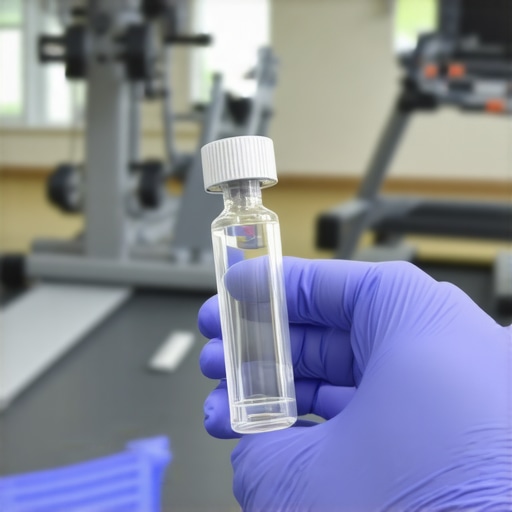
Stop Pretending Your Pre-Test Run Is a Badge of Honor
If you hit the gym at 6:00 AM before a 9:00 AM blood draw, you aren’t being a hero. You’re being an obstacle. We’ve been conditioned to believe that physical activity is the ultimate virtue, a shield against all infirmity. But when you step into that sterile clinic for a renal panel, your discipline becomes a distraction. You are effectively walking into a courtroom and handing the judge a forged document. I argue that the cult of the ‘daily grind’ has blinded us to a simple, biochemical reality: your muscles and your kidneys are in a constant, noisy conversation, and a heavy workout turns that conversation into a deafening roar that drowns out the truth about your health.
Why are we so obsessed with ‘performing’ health even when it sabotages the very data meant to save us? You might think you’re showing the doctor your best self, but you’re actually creating a false narrative. As I’ve argued regarding 3 lab mistakes that lead to false positive results, the preparation—or lack thereof—is often more significant than the test itself. When you strain your muscles, you release creatinine, the very waste product doctors use to measure how well your kidneys are filtering your blood. By exercising before the needle hits your arm, you are artificially inflating your waste levels. It’s not fitness; it’s statistical noise.
Your Muscles Are Hijacking Your Renal Panel
Think of your kidneys as a delicate filtration system in a quiet pond. Exercise is the equivalent of jumping in and kicking up the silt at the bottom just before the inspector arrives to check the water clarity. The inspector doesn’t see a healthy pond; they see a murky mess. This is the precise reason your physician might look at your results and see a looming crisis where there is only a recent bench press session. Is it worth the anxiety of a follow-up call just because you couldn’t skip the squat rack for twenty-four hours? I think not. The obsession with raw numbers often ignores the context of the body, yet we provide the worst possible context by over-exerting ourselves.
We have to stop viewing medical tests as pass/fail exams that we need to ‘study’ for through extra effort. The reality is that why your raw lab data is more important than the summary is because it reflects a moment in time—and if that moment is influenced by acute physical stress, the data is garbage. Your Glomerular Filtration Rate (GFR) isn’t a direct measurement; it is a mathematical estimation based on your creatinine. If you’ve just shredded your muscle fibers in a HIIT class, your creatinine spikes, your GFR ‘drops,’ and suddenly you’re being flagged for stage 2 kidney disease. Is that progress? No, it’s a self-inflicted medical error.
So, why are we still doing this? Why do we value the streak on our fitness trackers over the accuracy of our clinical records? Perhaps it’s because we’ve forgotten that the body requires stillness to be truly seen. For those dealing with long-term issues, the stealth kidney markers that show up years before failure are easily obscured by the ‘noise’ of an active lifestyle if we aren’t careful about when we test. We must demand a more nuanced approach to our own diagnostics. Stop the treadmill, sit down, and let the lab see the real you—not the exhausted, inflamed version of you that just finished a spin class.
The core of the issue is not a failure of technology, but a failure of our own priorities. We have reached a point where the ‘daily grind’ has become a secular religion, and like any zealot, the modern fitness enthusiast refuses to let reality interfere with their rituals. The problem isn’t the sensitivity of the lab equipment. The problem is our refusal to acknowledge that the body is a chemical processing plant, not a static monument to our willpower. By insisting on that 5:00 AM CrossFit session before a metabolic panel, you are intentionally contaminating the site of your own investigation.
The Biological Bottleneck We Ignore
Let’s speak plainly about the chemistry. Your muscles are not just engines of movement; they are massive reservoirs of potential metabolic waste. When you lift, sprint, or spin, you are essentially tearing down structural proteins. This process releases creatinine into the bloodstream—a substance the medical community uses as a primary proxy for kidney function. When a lab tech sees elevated creatinine, they don’t see your ‘gains.’ They see a filtration system that is failing to clear waste. That 40% spike in serum levels following high-intensity training isn’t a badge of honor; it is a clinical distortion that forces your doctor to make decisions based on fiction rather than fact.
${PostImagePlaceholdersEnum.ImagePlaceholderB}
Where the Math Fails the Patient
The system relies on the Glomerular Filtration Rate (GFR), which is not a direct measurement but a calculated estimate. This formula assumes you are at a steady state. It assumes you haven’t just spent ninety minutes crushing your quadriceps into submission. When you introduce the acute stress of exercise, the math breaks. We are handing the lab a portrait painted in strobe lights and wondering why the image is blurry. It is a fundamental mismatch between the stability required for science and the volatility of our modern lifestyles. We prioritize the ‘streak’ on a fitness app over the integrity of a medical record, and that is a dangerous trade-off. This isn’t just about a slightly high reading; it’s about the cascades of unnecessary testing, the ‘just in case’ ultrasounds, and the genuine anxiety that follows a ‘flagged’ result.
A Legacy of Misinterpreted Stress
The root cause is a systemic misunderstanding of what a baseline actually represents. A baseline is not your peak performance. It is not what you look like when you are ‘crushing it.’ It is your body at its most mundane, quietest state. We have become so addicted to the high of physical exertion that the idea of forty-eight hours of stillness feels like a defeat. But in the context of diagnostics, stillness is the only way to achieve clarity. Every time you push through the fatigue to hit the gym before a blood draw, you are choosing vanity over veracity. You are choosing to present a version of your physiology that is actively lying to the person trying to keep you alive. It is time we stop viewing the ‘day off’ as a sign of weakness and start seeing it for what it is: the only way to get an honest answer from your own blood.
It is easy to see why the dedicated athlete or the weekend warrior feels slighted by the demand for stillness. The most common pushback I hear is rooted in a sense of biological exceptionalism: ‘But this is my normal. I workout every day. If you test me at rest, you aren’t seeing the real me; you’re seeing a version of me that doesn’t exist.’ This argument suggests that for an active person, a sedentary baseline is a localized lie. They believe that because their body is constantly processing the stress of a five-mile run or a heavy lift, the elevated creatinine levels should be the new ‘standard’ for their care. It is a seductive thought because it validates our effort. It frames our metabolic noise as a sign of superior adaptation rather than a clinical nuisance.
The Myth of the Special Snowflake Metabolism
I used to believe this too, until I saw how the math of a diagnostic lab actually functions. The uncomfortable truth that most patients want to ignore is that clinical reference ranges are not personalized participation trophies. They are standardized benchmarks based on massive populations, designed to catch deviations from a stable, non-acute state. When you argue that your ‘active’ blood should be the standard, you are essentially asking the lab to rewrite the laws of physiology just for you. The lab tech doesn’t have a slider for ‘dedication’ or ‘grit’ that they can use to adjust your GFR. They have a machine that detects chemical markers. If those markers are high, the machine flags them. Period.
${PostImagePlaceholdersEnum.ImagePlaceholderC}
By insisting on your pre-test workout, you are falling into the ‘Elephant in the Room’ scenario: you are prioritizing your identity as an athlete over your reality as a patient. We have become so attached to the ‘active’ label that we view forty-eight hours of rest as an existential threat. But your kidneys do not care about your identity. They care about filtration pressure and metabolic load. When you flood your system with the byproducts of muscle breakdown, you aren’t showing the doctor how fit you are; you are effectively clogging the sensor. You are choosing to be a difficult patient under the guise of being a high-performance one.
The argument that a doctor ‘should just know’ how to interpret an athlete’s blood is equally shortsighted. While a seasoned physician might recognize that a high creatinine level in a bodybuilder isn’t necessarily kidney failure, why force them to guess? Medicine is already a field of high stakes and thin margins. When you provide tainted data, you are forcing your medical team to navigate a fog of your own making. This leads to the ‘just to be safe’ diagnostic spiral—more blood draws, expensive imaging, and unnecessary specialist referrals. Is your ego so fragile that you would rather waste thousands of dollars in healthcare resources than skip one morning of cardio? This isn’t about your fitness; it’s about your inability to follow instructions that require a temporary surrender of control. The most athletic thing you can do for your health is to sit still, shut up, and let your body return to a state where it can actually be measured.
The consequences of this vanity extend far beyond a single phone call from a concerned nurse. We are currently witnessing a silent, systemic erosion of medical integrity. If we refuse to humble ourselves before the needle, we are essentially poisoning the well of clinical data that future generations will rely on to define human health. Within the next five years, as machine learning and AI begin to dominate diagnostic interpretation, these ‘active’ spikes won’t just be ignored—they will be baked into the algorithm. We are training the doctors of the future on corrupted data, teaching them that a state of constant inflammation and metabolic overload is the new normal.
Is it too late to salvage the truth?
If we don’t act now, we risk entering an era where the ‘baseline’ is a mythological creature. It is a terrifying prospect: a world where a genuine renal emergency is dismissed because the patient’s record is already a chaotic landscape of self-inflicted spikes. The current trajectory is a recipe for medical gaslighting on a global scale. We are effectively trying to tune a delicate radio while standing directly under a jet engine; we hear the noise, but we’ve completely lost the signal. ${PostImagePlaceholdersEnum.ImagePlaceholderD}
The Point of No Return for Clinical Clarity
This is a moral imperative as much as a medical one. Every time you walk into a lab without the requisite rest, you are stealing time from a doctor who could be treating someone with actual pathology. You are consuming resources—ultrasounds, follow-up panels, specialist consultations—that are finite. The ‘daily grind’ has become a parasitic force that eats away at the efficiency of our healthcare system. We must choose to value the quiet, unglamorous reality of our bodies at rest. If we cannot find the discipline to be still for forty-eight hours, we have lost the right to claim we care about our health. The warning is clear: continue to perform for the lab, and eventually, the lab will have nothing real left to tell you. We are standing at a crossroads where the choice is between the ego of the athlete and the survival of the patient. Choose wisely, because the data never forgets, and the system is losing its patience.
The Quietest Choice is the Healthiest One
We are at a crossroads where the ego of the athlete is actively sabotaging the survival of the patient. If you truly care about your longevity, you must find the strength to do nothing. This connects to my previous discussion on why your standard physical is missing these 3 critical health markers; we often focus on the wrong data because we provide the wrong physical context. To move forward, we must treat the forty-eight hours before a blood draw as a sacred period of metabolic silence. For those already managing long-term conditions, chronic care management personalized telehealth strategies for better outcomes depend entirely on the purity of these baseline readings. If the signal is lost in the noise of your morning run, even the most advanced diagnostic technology cannot save you from a preventable misdiagnosis.
${PostImagePlaceholdersEnum.ImagePlaceholderE}
Reclaiming the Baseline
The final verdict: Real health is not a performance for a lab technician—it is an unadorned truth found only in stillness. The twist? The very discipline that makes you a hero in the gym makes you an obstacle in the clinic. If we continue to value the ‘daily grind’ over the accuracy of our clinical records, we are essentially choosing a slow, expensive path to medical confusion. This is particularly evident when considering the truth about why your blood work is better in the afternoon and the clinical importance of physiological timing. Stop the theater. Stop the vanity. Sit down, wait, and let your body speak for itself. Your health is far too important to be drowned out by the sound of your own heartbeat.