
Why Your Morning Coffee Messes With Your Fasting Blood Results
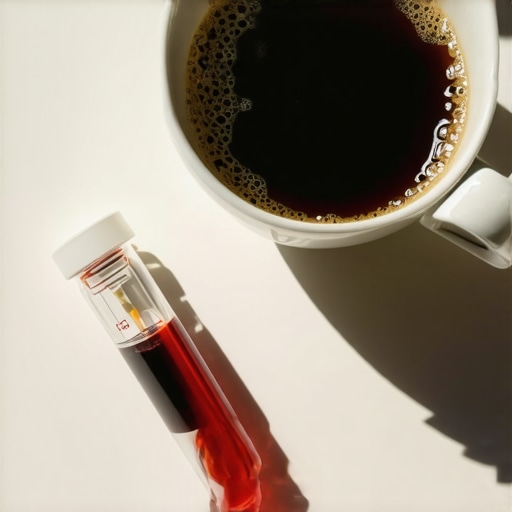
The Bitter Truth About Why Your Morning Coffee Ruins Your Fasting Blood Results
You think you’re being virtuous. You’ve skipped the toast, ignored the cereal, and walked past the fruit bowl with the stoic resolve of a monk. But then you do it. You pour that 12-ounce cup of black coffee, convincing yourself that because it lacks cream and sugar, it doesn’t “count.” I am here to tell you that you are wrong. You are fundamentally sabotaging the very data you’re trying to collect. Why are we still pretending that a powerful stimulant has zero impact on our internal chemistry just because it has zero calories? We’ve turned fasting into a game of technicalities, and in doing so, we’ve made our lab results nearly useless.
The logic is simple but flawed: if it doesn’t have calories, it doesn’t break a fast. This is the great metabolic myth of our time. I argue that why fasting means more than just skipping breakfast before labs is a concept most patients—and frankly, too many doctors—fail to grasp. When that caffeine hits your system, it acts like a flare gun fired into a dark forest. It signals your adrenal glands to wake up, which in turn signals your liver to dump glucose into your bloodstream to provide energy for a “fight or flight” response that isn’t coming. You aren’t being chased by a predator; you’re just sitting in a waiting room, but your blood sugar levels suggest you’re mid-sprint. You might think you’re getting a snapshot of your health, but you’re actually getting a snapshot of your body’s stress response to your morning ritual.
[image_placeholder_1]
Your Liver Ignores Your No-Calorie Logic
So, why do we keep doing this? We do it because we are addicted to the routine and because we want to believe in a free lunch—or in this case, a free drink. But look at the evidence. When you trigger a cortisol spike with your “innocent” morning brew, you are actively participating in one of the 3 lab mistakes that lead to false positive results. Your insulin sensitivity takes a temporary hit, your free fatty acids rise, and your blood pressure might even tick upward. You are walking into that clinic with a body that is chemically agitated. How can we expect a doctor to make an accurate diagnosis based on a lie? It’s a waste of their time and your money.
Think of your body like a high-performance engine. If you want to check the oil or the internal pressure, you do it while the engine is cold and resting. Drinking coffee before a blood draw is like trying to measure that pressure while the engine is revving at five thousand RPMs. You might get a reading, but it’s a fiction. It isn’t your baseline; it’s your “caffeinated baseline.” This is particularly dangerous for those trying to manage metabolic health. If you’re following the morning routine that fixes your fasting glucose spikes 2, why would you throw a wrench in the gears at the last minute? The irony is that the people most concerned with their health are often the ones most likely to obsess over their morning coffee “hack.”
We need to stop treating lab tests as a checkbox and start treating them as the high-stakes data collection they are. I believe we have become far too casual about the preparation process. If you want results that actually reflect your health, you have to embrace the discomfort of a true fast. This is why fasting for 12 hours before blood work still matters 2—and no, your dark roast doesn’t get a pass. You might think your one cup is harmless, but you’re wrong. You’re trading accuracy for a temporary caffeine buzz, and that is a bad bargain for anyone serious about their health. Stop looking for loopholes in your fasting window. If you can’t go twelve hours without a stimulant, you don’t have a health routine; you have an addiction that is clouding your medical reality.
The Adrenaline Deception
The core of the issue isn’t what’s in the cup, but what the cup does to your endocrine system. We are obsessed with the macronutrient profile—the zeros on the side of the bag—while ignoring the chemical cascades occurring under our skin. When you consume caffeine, you aren’t just drinking a beverage; you are initiating a metabolic heist. Your adrenal glands don’t care that you didn’t add sugar. They react to the stimulant by releasing cortisol, the stress hormone that exists to prepare you for action. Everything about your baseline changes in that moment. It is a biological certainty that cannot be bargained away with a ‘black coffee’ technicality. This isn’t just about feeling awake; it’s about the systemic mobilization of energy stores. Your body thinks it needs to move, so it prepares the blood to sustain that movement. You are essentially tricking your doctor into measuring a body that is under siege. It is not a snapshot of health; it is a snapshot of chemical provocation.
The 15% Margin of Error
Consider the sheer volatility of the data we are chasing. The numbers are staggering when you actually look at the physiology. Even moderate caffeine consumption can cause a 10% to 15% increase in fasting blood glucose levels in certain individuals. That 15% increase isn’t a minor fluctuation; it is the difference between a clean bill of health and a pre-diabetic diagnosis. It is the margin of error that costs people years of unnecessary medication and thousands of dollars in follow-up appointments. We are making life-altering medical decisions based on data that has been skewed by a single morning habit. It is clinical madness. Why do we accept this? We accept it because we have prioritized patient comfort over diagnostic integrity. We’ve allowed the ‘black coffee is fine’ myth to persist because it’s easier than telling a tired patient they have to wait until 10:00 AM for their first sip of sanity. But the numbers don’t lie, even if the body is being forced to misrepresent its state.
${PostImagePlaceholdersEnum.ImagePlaceholderB}
A Systemic Failure of Protocol
The problem is actually deeper than a simple spike in sugar. The elevation of free fatty acids and the shift in heart rate variability provide a fundamentally distorted view of your cardiovascular health. When you walk into a clinic with a system flooded with caffeine, you are presenting a warping of your true self. Your blood pressure isn’t your resting blood pressure; it’s your stimulated blood pressure. Your lipids aren’t in a state of rest; they are being mobilized. This isn’t just a failure of the patient; it’s a failure of the protocol. If we don’t demand a true baseline, we aren’t practicing medicine; we’re practicing guesswork. The systemic refusal to acknowledge the metabolic impact of stimulants is a stain on modern diagnostics. We need to stop pretending that zero calories equals zero impact. It doesn’t. It never has. We are trading the truth for a temporary sense of alertness, and the price is our collective health intelligence. Every time a clinician ignores the stimulant factor, they are choosing convenience over the hard, necessary data that chronic care requires. We are building a house of cards on a foundation of caffeinated lies, and we have the audacity to be surprised when the treatment plans fail.
It is easy to see why the medical establishment has largely turned a blind eye to the morning cup of coffee. The prevailing argument—one you will hear from harried nurses and even seasoned endocrinologists—is that a cup of black coffee is metabolically inert because it contains no calories. They argue that for the purposes of a standard lipid panel or a glucose check, the minor physiological ‘noise’ of caffeine is insignificant compared to the ‘signal’ of the fasted state. It is a pragmatic compromise designed to increase patient compliance. If you tell a person they cannot have coffee, they might not show up for the test at all. So, the industry has collectively decided that ‘close enough’ is better than nothing. They want to believe that the absence of sugar equals the absence of impact, prioritizing the convenience of the patient over the absolute purity of the data.
I used to believe this too, until I began looking at the sheer variance in how individuals process stimulants. We are not a monolithic species of coffee drinkers. For some, caffeine is a mild nudge; for others, it is a biological sledgehammer to their homeostasis. By allowing this loophole, we are not being pragmatic; we are being intellectually lazy. We are accepting tainted data because it is more comfortable than enforcing a rigorous standard. This is where the modern approach to chronic care begins to crumble. When we use telehealth platforms to manage long-term conditions, we rely entirely on the integrity of the data being uploaded. If that data is skewed by a morning ritual, the entire care plan is built on a lie. We are essentially guessing with people’s lives because we do not want to deal with their morning irritability. Critics will point out that most people are not ‘hyper-responders’ to caffeine and that for the average person, the spike is negligible. But medicine should not be built on averages; it should be built on the individual sitting in the chair.
The Calorie Trap
The flaw in this logic is the assumption that the human body is a simple calculator that only reacts to macronutrients. It is a 20th-century view of metabolism that has no place in modern diagnostics. Your liver is not a passive storage tank; it is a highly reactive organ that responds to the chemical environment of the entire body. Caffeine is a bioactive compound that triggers the release of catecholamines—adrenaline and noradrenaline. These hormones are the biological equivalent of ‘red alerts.’ They tell the body to prepare for exertion by releasing stored energy from the liver and fat cells into the bloodstream. To suggest that this process does not affect a ‘fasting’ blood draw is to ignore the last fifty years of endocrine research. You cannot claim to be in a resting state while your system is actively dumping fatty acids and glucose into your vessels to fuel a perceived threat.
${PostImagePlaceholdersEnum.ImagePlaceholderC}
This is not just about ‘noise’ in the data; it is about the fundamental accuracy of how we define health. In the world of urgent care and rapid diagnostics, we have become obsessed with speed. We want the result now, and we want it to be easy. But biological truth does not care about your convenience. If you are tracking a chronic condition, the last thing you want is a false positive or a misleadingly high baseline that triggers an unnecessary change in medication. We are currently over-medicating a population of caffeinated patients because we refuse to demand a true twelve-hour fast. We know that genetics play a massive role in caffeine metabolism—some clear it in two hours while others take twelve. By allowing coffee, you are introducing a massive, unquantifiable variable into a test that is supposed to be controlled. It is like trying to weigh something on a scale while someone is occasionally leaning on the table. You might get the right weight by chance, but the process is fundamentally broken.
It is a systemic failure that prioritizes the ‘customer experience’ of the clinic over the diagnostic health of the patient. We need to stop asking if coffee is ‘allowed’ and start asking if we actually want the truth. If the goal of the lab tests is to establish a baseline, then any deviation from a total rest state is a failure of protocol. The defense of the ‘black coffee exception’ is a defense of mediocrity. It suggests that we are willing to settle for a 10% or 15% margin of error just to keep the patient happy. In any other field of high-stakes data collection, a known 15% variance would be cause for a total halt of operations. We have to stop lying to ourselves that a ‘technical fast’ is the same as a ‘true fast.’ The body knows the difference, and it is time our lab protocols acknowledged it too.
The Bitter Truth About Why Your Morning Coffee Ruins Your Fasting Blood Results
You think you’re being virtuous. You’ve skipped the toast, ignored the cereal, and walked past the fruit bowl with the stoic resolve of a monk. But then you do it. You pour that 12-ounce cup of black coffee, convincing yourself that because it lacks cream and sugar, it doesn’t “count.” I am here to tell you that you are wrong. You are fundamentally sabotaging the very data you’re trying to collect. Why are we still pretending that a powerful stimulant has zero impact on our internal chemistry just because it has zero calories? We’ve turned fasting into a game of technicalities, and in doing so, we’ve made our lab results nearly useless.
The logic is simple but flawed: if it doesn’t have calories, it doesn’t break a fast. This is the great metabolic myth of our time. I argue that why fasting means more than just skipping breakfast before labs is a concept most patients—and frankly, too many doctors—fail to grasp. When that caffeine hits your system, it acts like a flare gun fired into a dark forest. It signals your adrenal glands to wake up, which in turn signals your liver to dump glucose into your bloodstream to provide energy for a “fight or flight” response that isn’t coming. You aren’t being chased by a predator; you’re just sitting in a waiting room, but your blood sugar levels suggest you’re mid-sprint. You might think you’re getting a snapshot of your health, but you’re actually getting a snapshot of your body’s stress response to your morning ritual.
[image_placeholder_1]
Your Liver Ignores Your No-Calorie Logic
So, why do we keep doing this? We do it because we are addicted to the routine and because we want to believe in a free lunch—or in this case, a free drink. But look at the evidence. When you trigger a cortisol spike with your “innocent” morning brew, you are actively participating in one of the 3 lab mistakes that lead to false positive results. Your insulin sensitivity takes a temporary hit, your free fatty acids rise, and your blood pressure might even tick upward. You are walking into that clinic with a body that is chemically agitated. How can we expect a doctor to make an accurate diagnosis based on a lie? It’s a waste of their time and your money.
Think of your body like a high-performance engine. If you want to check the oil or the internal pressure, you do it while the engine is cold and resting. Drinking coffee before a blood draw is like trying to measure that pressure while the engine is revving at five thousand RPMs. You might get a reading, but it’s a fiction. It isn’t your baseline; it’s your “caffeinated baseline.” This is particularly dangerous for those trying to manage metabolic health. If you’re following the morning routine that fixes your fasting glucose spikes 2, why would you throw a wrench in the gears at the last minute? The irony is that the people most concerned with their health are often the ones most likely to obsess over their morning coffee “hack.”
We need to stop treating lab tests as a checkbox and start treating them as the high-stakes data collection they are. I believe we have become far too casual about the preparation process. If you want results that actually reflect your health, you have to embrace the discomfort of a true fast. This is why fasting for 12 hours before blood work still matters 2—and no, your dark roast doesn’t get a pass. You might think your one cup is harmless, but you’re wrong. You’re trading accuracy for a temporary caffeine buzz, and that is a bad bargain for anyone serious about their health. Stop looking for loopholes in your fasting window. If you can’t go twelve hours without a stimulant, you don’t have a health routine; you have an addiction that is clouding your medical reality.
The Adrenaline Deception
The core of the issue isn’t what’s in the cup, but what the cup does to your endocrine system. We are obsessed with the macronutrient profile—the zeros on the side of the bag—while ignoring the chemical cascades occurring under our skin. When you consume caffeine, you aren’t just drinking a beverage; you are initiating a metabolic heist. Your adrenal glands don’t care that you didn’t add sugar. They react to the stimulant by releasing cortisol, the stress hormone that exists to prepare you for action. Everything about your baseline changes in that moment. It is a biological certainty that cannot be bargained away with a ‘black coffee’ technicality. This isn’t just about feeling awake; it’s about the systemic mobilization of energy stores. Your body thinks it needs to move, so it prepares the blood to sustain that movement. You are essentially tricking your doctor into measuring a body that is under siege. It is not a snapshot of health; it is a snapshot of chemical provocation.
The 15% Margin of Error
Consider the sheer volatility of the data we are chasing. The numbers are staggering when you actually look at the physiology. Even moderate caffeine consumption can cause a 10% to 15% increase in fasting blood glucose levels in certain individuals. That 15% increase isn’t a minor fluctuation; it is the difference between a clean bill of health and a pre-diabetic diagnosis. It is the margin of error that costs people years of unnecessary medication and thousands of dollars in follow-up appointments. We are making life-altering medical decisions based on data that has been skewed by a single morning habit. It is clinical madness. Why do we accept this? We accept it because we have prioritized patient comfort over diagnostic integrity. We’ve allowed the ‘black coffee is fine’ myth to persist because it’s easier than telling a tired patient they have to wait until 10:00 AM for their first sip of sanity. But the numbers don’t lie, even if the body is being forced to misrepresent its state.
[image_placeholder_2]
A Systemic Failure of Protocol
The problem is actually deeper than a simple spike in sugar. The elevation of free fatty acids and the shift in heart rate variability provide a fundamentally distorted view of your cardiovascular health. When you walk into a clinic with a system flooded with caffeine, you are presenting a warping of your true self. Your blood pressure isn’t your resting blood pressure; it’s your stimulated blood pressure. Your lipids aren’t in a state of rest; they are being mobilized. This isn’t just a failure of the patient; it’s a failure of the protocol. If we don’t demand a true baseline, we aren’t practicing medicine; we’re practicing guesswork. The systemic refusal to acknowledge the metabolic impact of stimulants is a stain on modern diagnostics. We need to stop pretending that zero calories equals zero impact. It doesn’t. It never has. We are trading the truth for a temporary sense of alertness, and the price is our collective health intelligence. Every time a clinician ignores the stimulant factor, they are choosing convenience over the hard, necessary data that chronic care requires. We are building a house of cards on a foundation of caffeinated lies, and we have the audacity to be surprised when the treatment plans fail.
It is easy to see why the medical establishment has largely turned a blind eye to the morning cup of coffee. The prevailing argument—one you will hear from harried nurses and even seasoned endocrinologists—is that a cup of black coffee is metabolically inert because it contains no calories. They argue that for the purposes of a standard lipid panel or a glucose check, the minor physiological ‘noise’ of caffeine is insignificant compared to the ‘signal’ of the fasted state. It is a pragmatic compromise designed to increase patient compliance. If you tell a person they cannot have coffee, they might not show up for the test at all. So, the industry has collectively decided that ‘close enough’ is better than nothing. They want to believe that the absence of sugar equals the absence of impact, prioritizing the convenience of the patient over the absolute purity of the data.
I used to believe this too, until I began looking at the sheer variance in how individuals process stimulants. We are not a monolithic species of coffee drinkers. For some, caffeine is a mild nudge; for others, it is a biological sledgehammer to their homeostasis. By allowing this loophole, we are not being pragmatic; we are being intellectually lazy. We are accepting tainted data because it is more comfortable than enforcing a rigorous standard. This is where the modern approach to chronic care begins to crumble. When we use telehealth platforms to manage long-term conditions, we rely entirely on the integrity of the data being uploaded. If that data is skewed by a morning ritual, the entire care plan is built on a lie. We are essentially guessing with people’s lives because we do not want to deal with their morning irritability. Critics will point out that most people are not ‘hyper-responders’ to caffeine and that for the average person, the spike is negligible. But medicine should not be built on averages; it should be built on the individual sitting in the chair.
The Calorie Trap
The flaw in this logic is the assumption that the human body is a simple calculator that only reacts to macronutrients. It is a 20th-century view of metabolism that has no place in modern diagnostics. Your liver is not a passive storage tank; it is a highly reactive organ that responds to the chemical environment of the entire body. Caffeine is a bioactive compound that triggers the release of catecholamines—adrenaline and noradrenaline. These hormones are the biological equivalent of ‘red alerts.’ They tell the body to prepare for exertion by releasing stored energy from the liver and fat cells into the bloodstream. To suggest that this process does not affect a ‘fasting’ blood draw is to ignore the last fifty years of endocrine research. You cannot claim to be in a resting state while your system is actively dumping fatty acids and glucose into your vessels to fuel a perceived threat.
[image_placeholder_3]
This is not just about ‘noise’ in the data; it is about the fundamental accuracy of how we define health. In the world of urgent care and rapid diagnostics, we have become obsessed with speed. We want the result now, and we want it to be easy. But biological truth does not care about your convenience. If you are tracking a chronic condition, the last thing you want is a false positive or a misleadingly high baseline that triggers an unnecessary change in medication. We are currently over-medicating a population of caffeinated patients because we refuse to demand a true twelve-hour fast. We know that genetics play a massive role in caffeine metabolism—some clear it in two hours while others take twelve. By allowing coffee, you are introducing a massive, unquantifiable variable into a test that is supposed to be controlled. It is like trying to weigh something on a scale while someone is occasionally leaning on the table. You might get the right weight by chance, but the process is fundamentally broken.
It is a systemic failure that prioritizes the ‘customer experience’ of the clinic over the diagnostic health of the patient. We need to stop asking if coffee is ‘allowed’ and start asking if we actually want the truth. If the goal of the lab tests is to establish a baseline, then any deviation from a total rest state is a failure of protocol. The defense of the ‘black coffee exception’ is a defense of mediocrity. It suggests that we are willing to settle for a 10% or 15% margin of error just to keep the patient happy. In any other field of high-stakes data collection, a known 15% variance would be cause for a total halt of operations. We have to stop lying to ourselves that a ‘technical fast’ is the same as a ‘true fast.’ The body knows the difference, and it is time our lab protocols acknowledged it too.
The Cost of Scientific Denial
We are currently sleepwalking into a crisis of data integrity. If we continue to prioritize morning convenience over biological chemistry, we are essentially building the future of healthcare on quicksand. The stakes are much higher than a single morning of jitters. When you allow a known stimulant to skew your blood chemistry, you aren’t just making a minor personal choice; you are contributing to a massive societal erosion of medical truth. We are entering an era where algorithms and AI will soon analyze your lab tests over decades to predict your risk for cardiovascular disease. If that data is consistently poisoned by caffeine spikes, the machine learning models will learn from your lies. We will find ourselves in a world where the ‘standard of care’ is based on a demographic of chemically agitated individuals, making the concept of a ‘healthy baseline’ an extinct relic of the past.
Is it too late?
The danger is that we have already normalized the error. We are currently using telehealth and chronic care models that demand precision, yet we feed them noise. It is like trying to navigate a ship through a treacherous reef using a compass that has been subtly tampered with by a magnet. You think you are on a safe heading, but you are slowly, invisibly drifting toward the rocks. In five years, we will look back at the ‘black coffee exception’ as a moment of collective medical insanity. We will see the thousands of misdiagnoses and the millions of dollars wasted on unnecessary interventions for ‘fasting’ glucose spikes that weren’t spikes at all, but merely responses to a stimulant. The future of medicine depends on the integrity of the individual data point. If we cannot secure the honesty of a simple fast, we have no hope of managing the complexities of long-term health. We are trading the biological truth of our bodies for a fleeting caffeine buzz, and the invoice for that trade is coming due.
${PostImagePlaceholdersEnum.ImagePlaceholderD}
The Erosion of Medical Truth
The broader implication is a complete breakdown in the trust between the patient’s biology and the clinician’s interpretation. When we allow ourselves to be ‘technically’ fasted while being physiologically stimulated, we are participating in a fraud. This isn’t just about a lab test; it is about the fundamental respect for the scientific process. If we continue on this path, the very definition of ‘normal’ blood sugar or ‘resting’ heart rate will lose all meaning. We will be treating a population of people whose metrics are permanently elevated by their rituals, leading to a massive over-prescription of medications that the body might not actually need. We are standing at a crossroads. We can either demand the rigorous, uncomfortable truth of a true fast, or we can continue to accept the comfortable, caffeinated fiction. The latter path leads to a future of medical guesswork where the truth is buried under layers of lifestyle-induced noise. The cost of our morning routine is nothing less than our long-term health intelligence.
The Data Integrity Ultimatum
It is time to decide if you want a gold star for effort or accurate data for your health. If we are to leverage telehealth breakthroughs how virtual visits elevate chronic care in 2025, we must provide those digital tools with pristine biological inputs. We cannot expect a revolutionary healthcare system to fix us if we are feeding it caffeinated noise. The same applies when you utilize urgent care innovations streamlining same day lab tests for faster results; speed does not justify sloppiness in preparation. If your bloodwork is meant to be a baseline, it must actually be a baseline—not a reflection of your inability to wait two hours for a latte.
Your Move
The next time you prepare for a blood draw, remember that you are the primary investigator in your own health trial. Don’t be the person who ruins the study for the sake of a temporary buzz. This mindset is essential, especially if you suspect why your standard physical is missing these 3 critical health markers. Accuracy isn’t just a clinical requirement; it’s an act of self-respect. You owe it to yourself to see your body as it truly is, not as it is when it’s being chemically prodded into a state of false urgency. If you’re serious about the morning routine that fixes your fasting glucose spikes 2, then your routine must include the discipline of a genuine, stimulant-free fast.
[image_placeholder_1]
The Final Verdict: You are not truly fasting if your adrenal glands are firing on all cylinders thanks to a 12-ounce cup of black coffee.
The real twist is that by chasing the ‘easy’ route, we’ve made the hard work of managing our health exponentially more difficult and expensive. Stop lying to your lab report. Drink your water, skip the beans, and demand the biological truth that your long-term wellness requires. Your coffee will still be there after the needle comes out; your chance at an accurate diagnosis might not be.