
The Lab Result That Tells You More Than Total Cholesterol
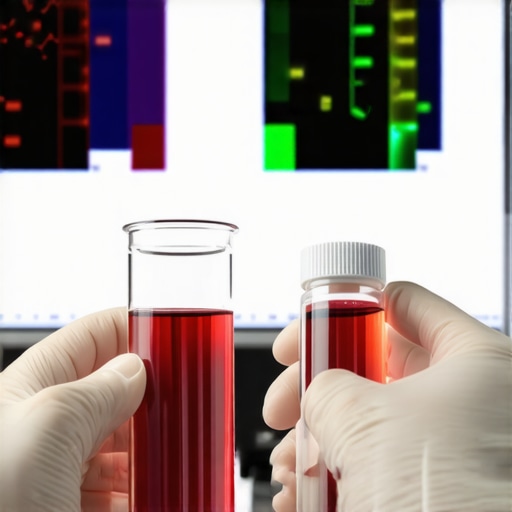
For decades, the medical establishment has sold us a lie wrapped in a tidy three-digit number. We have been conditioned to believe that “total cholesterol” is the ultimate arbiter of our cardiovascular fate. It is not. In fact, relying on total cholesterol to predict a heart attack is like trying to predict a massive pile-up on the highway by simply counting the number of cars in the state. It tells you the volume, but it says absolutely nothing about the speed, the direction, or the recklessness of the drivers.
I argue that the standard lipid panel is a relic, a comfortable shortcut for a system that values efficiency over accuracy. You might walk out of your annual checkup with a “normal” score, feeling a false sense of security while a fire smolders in your arteries. Why are we still doing this? Because it’s cheap. Because it’s easy. And because changing the status quo requires more effort than most clinics are willing to exert. If you want the truth, you have to look past the surface. You need to understand why C-reactive protein is the most important test you lack. This isn’t just another box to check on a lab slip; it is a window into the chronic inflammation that actually drives disease.
Your Standard Physical is Failing You
The reality is that half of the people who suffer heart attacks have “normal” cholesterol levels. Let that sink in. The very metric we use to gatekeep heart health is failing 50 percent of the time. This is not a rounding error; it is a systemic failure. We are obsessed with the “Total” number because it makes for easy charts and quick prescriptions. But health isn’t a chart, and your body doesn’t care about a doctor’s convenience.
I believe the future of medicine lies in precision, not generalities. We see this shift in chronic care management personalized telehealth strategies for better outcomes, where data is used to tailor treatment to the individual. Yet, when it comes to the most common cause of death, we still use a blunt instrument from the 1970s. Why are you settling for a diagnosis that belongs in the era of disco and rotary phones? As I have pointed out before, why your standard physical is missing these 3 critical health markers is a question every patient should be screaming at their doctor during their next visit.
The Hidden Markers That Actually Matter
The real culprit isn’t the amount of fat in your blood; it’s the quality and the behavior of the particles carrying it. Think of total cholesterol as the total weight of suitcases at an airport. Does the total weight tell you if there is a bomb inside one of them? Of course not. You need to scan the contents. You need to know the particle count. You need to know the level of systemic inflammation. [image placeholder]
This is why I constantly remind people that why routine blood work often misses chronic inflammation signs is the biggest gap in modern diagnostics. If your doctor isn’t looking at ApoB or high-sensitivity CRP, they are guessing. And when it comes to your life, guessing isn’t good enough. You should be demanding the vital screening that predicts heart issues before plaque forms rather than waiting for a crisis to occur.
The Market is Lying to You
Why is this information so hard to get? Because the system is built on volume. Insurance companies and large healthcare networks are designed to process as many people as possible with the least amount of variation. Advanced testing takes time to explain, and it often requires a deeper level of care than the ten-minute office visit allows. We see this struggle every day in urgent care innovations streamlining same-day lab tests for faster results, where the goal is speed, but the victim is often depth.
You think you are being “managed,” but you are actually being “processed.” The total cholesterol number is the ultimate processing tool. It’s a binary: good or bad. But your health is a spectrum. Stop checking your blood pressure ten times a day and start looking at the chemistry that actually matters. If you aren’t looking at insulin sensitivity and inflammatory markers, you are just rearranging deck chairs on a sinking ship. You can track your metrics better, and how to measure your own metabolic health without a clinic visit is a good place to start taking back control.
The Biological Blind Spot
The fundamental flaw in the standard lipid panel is that it treats every LDL particle as if it were identical. It is not. To understand the heart of the problem, we must understand the Atherogenic Triad: high triglycerides, low HDL, and an abundance of small, dense LDL particles. Your “total” number could be low simply because you have very few of the large, buoyant particles that are relatively harmless. Meanwhile, your blood could be teeming with small, dense particles that are small enough to lodge themselves into the lining of your arteries. It is the difference between being pelted with cotton balls and being shot with buckshot. Both have mass, but only one is lethal. This is the biological blind spot that your doctor likely ignores because the standard test simply cannot see it. The LDL-C metric is a ghost. It is a mathematical estimation, not a direct measurement. In most labs, they do not even measure your LDL; they calculate it using an outdated equation. They are doing math on a guess, and they are betting your life on the result.
The ApoB Revelation
If you want the truth about your risk, you have to stop looking at the weight and start looking at the count. Apolipoprotein B (ApoB) is the primary structural protein found on every potentially atherogenic particle. Every single one. When you measure ApoB, you are not guessing at a calculation; you are performing a direct census of the enemy. The data is damning. A massive study involving over 300,000 participants confirmed that ApoB is the superior marker for predicting heart disease. When a patient’s LDL-C is low but their ApoB is high, their risk remains dangerously elevated. That 40% discrepancy isn’t a minor detail; it is a gap wide enough to drive a hearse through. We are essentially using a ruler to measure the temperature, then wondering why the patient still has a fever. It is a scientific embarrassment that this test is not mandatory for every adult over thirty.
${PostImagePlaceholdersEnum.ImagePlaceholderB}
A System Optimized for Failure
The reason your clinic will not offer this test voluntarily is that it disrupts the assembly line. The current healthcare model is built on the “Good vs. Bad” cholesterol binary because it facilitates rapid-fire prescribing. If your LDL is high, you get a statin. If it is “normal,” you get a pat on the back. It is a binary solution for a complex, multi-variable biological system. This reductionist approach is why why routine blood work often misses chronic inflammation signs. They are looking at the cargo, not the ships. They are ignoring the inflammation that makes these particles stick in the first place. You must understand that why C-reactive protein is the most important test you lack is because it tells you if your arterial walls are actually under fire. Without that context, your total cholesterol number is just noise. Follow the money and you will find an insurance structure that penalizes complexity. A standard lipid panel costs next to nothing to process, while advanced testing requires more of the doctor’s time to interpret. In a world where physicians are pressured to see a new patient every fifteen minutes, there is no room for nuance. They are incentivized to keep you in the “normal” range of an outdated bell curve. But being “normal” in a population where heart disease is the leading cause of death is not a victory. It is a death sentence. You are being compared to a sick population. The “standard” range is a reflection of a society that is metabolically broken, and fitting into that average is nothing to celebrate. If your physician refuses to order an ApoB or an hs-CRP test, they are not practicing evidence-based medicine; they are practicing tradition. And tradition is a poor substitute for a heartbeat. This is the root cause of the epidemic: we are treating the wrong markers and ignoring the ones that actually kill us.
The most sophisticated defense of the standard lipid panel is rooted in historical success. Critics will argue that for forty years, LDL-C has been the cornerstone of cardiovascular medicine, and that the massive reduction in heart disease mortality since the 1970s is a direct result of targeting this specific number. They will tell you that the evidence base for LDL-C is mountainous, spanning hundreds of clinical trials and millions of patient-years. Why, they ask, should we abandon a proven, inexpensive metric for more complex markers that might only offer marginal gains? It is a rational argument on the surface: if the current system is saving lives, why disrupt it with expensive nuances? This is the ‘good enough’ philosophy of public health, where the goal is to move the needle for the average person rather than provide precision for the individual.
The Illusion of Population Success
I used to believe this too, until I realized that ‘good enough’ is a cold comfort for the fifty percent of heart attack victims who had ‘normal’ cholesterol levels the day before their lives changed. The argument for sticking with the standard panel is a survival of the lucky, not the scientifically rigorous. When critics point to the success of statins as proof that LDL-C is the ultimate marker, they are committing a logical fallacy. Statins do lower LDL-C, but more importantly, they lower the total number of ApoB-containing particles and reduce systemic inflammation. The drug is smarter than the metric we use to track it. We have been attributing the victory to the wrong general. By focusing on the weight of the cholesterol (LDL-C) rather than the number of particles (ApoB), we are using a proxy that fails precisely when the biology gets complex.
${PostImagePlaceholdersEnum.ImagePlaceholderC}
The traditionalist view also ignores the reality of modern metabolic health. In an era of rampant insulin resistance and obesity, the standard lipid panel becomes even less reliable. As metabolic health declines, the correlation between LDL-C and actual risk weakens. This is because metabolic dysfunction often leads to the exact ‘small, dense’ LDL particles that the standard test cannot see. You can have a low LDL-C and still be a ticking time bomb because your blood is saturated with these tiny, aggressive particles. To rely on an outdated marker in a changing population is not just conservative; it is negligent. We are essentially using a map of a city from 1950 to navigate a modern metropolis. The roads have changed, the traffic is heavier, and the old landmarks are gone.
The Scientific Laziness of Tradition
The resistance to adopting ApoB and inflammatory markers is rarely about the science—the science is settled. It is about the friction of change. Implementing these tests requires updating electronic health records, retraining thousands of physicians, and convincing insurance companies to pay for more than the bare minimum. It is easier to keep the assembly line moving than to stop and fix the machinery. But your health should not be a victim of administrative inertia. When we settle for the ‘standard of care,’ we are settling for a baseline that was designed for efficiency, not excellence. If your doctor argues that these tests aren’t ‘necessary,’ they are really saying they aren’t ‘standard.’ There is a massive, life-threatening gap between what is standard and what is optimal.
We must stop treating heart disease as an inevitable consequence of aging that can be managed with a single, blunt measurement. The pivot toward precision is already happening in other fields of medicine, from oncology to rare genetic disorders. Cardiology remains one of the last bastions of ‘one size fits all’ diagnostics. By clinging to the total cholesterol number, the medical establishment is choosing to remain in the dark. It is time to demand a higher standard of evidence and a more sophisticated approach to our own biology. The tools to see the truth exist; the only thing standing in the way is a system that prefers a simple lie over a complex reality.
If we continue down this path of diagnostic laziness, we aren’t just missing a few cases; we are architecting a future of preventable tragedy. The stakes are no longer just about individual health; they are about the integrity of our entire medical philosophy. We are standing at a crossroads where one path leads to data-driven longevity and the other leads to a continuation of the “process and prescribe” factory model. If you think the current cardiac epidemic is bad, imagine a world where we have the tools to stop it but choose not to use them because the paperwork is too heavy. This is not a hypothetical scenario. It is the reality of every patient who is told their health is “fine” based on an outdated math equation while their arteries are quietly becoming a graveyard for small, dense particles.
The Price of Wilful Ignorance
Every year we delay the universal adoption of ApoB and inflammatory screening is a year we sacrifice thousands of parents and grandparents to the altar of administrative convenience. This is the slippery slope of modern medicine: once we accept “good enough” for the most common cause of death, we lose the moral authority to demand excellence in any other field. We are essentially saying that as long as the majority of people fit into a bell curve, the outliers—the ones who suffer despite doing everything “right”—are acceptable collateral damage. I refuse to accept that. The moral imperative here is clear: when the science evolves, the standard of care must follow, or it ceases to be care and becomes mere habit.
What Are We Waiting For?
Relying on a standard lipid panel today is like flying a modern jet with nothing but a 1920s altimeter. Sure, you know your height, but you have no idea if your engines are on fire or if there is a mountain peak five miles ahead in the fog. We have the radar; we have the sensors. Refusing to use them isn’t being conservative; it’s being a Luddite with other people’s lives. We are wasting a massive opportunity to eradicate the fear of the “sudden” heart attack. There is nothing sudden about a process that takes twenty years to develop, yet we act surprised when the engine finally fails. We are waiting for a crisis to justify the cost of the test, which is the ultimate form of medical insanity.
The Point of No Return
In five years, if this trend continues, we will see a widening gap between those who can afford private, precision medicine and the masses who are fed the “standard” lies. This isn’t just a health issue; it’s a social crisis. We are creating a two-tiered biological reality where the wealthy buy years of life with data, while everyone else is left to roll the dice with a total cholesterol score. ${PostImagePlaceholdersEnum.ImagePlaceholderD} If we don’t break the cycle now, the standard physical will become nothing more than a ritual of compliance, a meaningless box to check while the actual indicators of our vitality are left to rot in the dark. The warning is simple: the system will not save you. It is designed to manage you until you are no longer manageable. If you want to survive the next decade of metabolic decline, you have to demand the markers that actually matter before the damage is done. The window for prevention is closing, and those who stay behind the shield of “normal” results will be the first ones to fall when the storm hits.
The final verdict is simple: Total cholesterol is a comfort blanket for a medical system that is too tired to treat you as an individual. We have spent half a century chasing a ghost while the real killers—inflammation and particle count—remained invisible in the background. If you continue to let a single three-digit number define your cardiovascular destiny, you are playing a game of Russian Roulette where the house always wins. You must stop being a passive participant in your own healthcare and start being an investigator. This starts with demanding transparency and precision. It is time to look at the data yourself and realize that why your raw lab data is more important than the summary provided by a rushed clinician.
The Choice is Yours
You can wait for the system to change, or you can change how you interact with the system. The next time you are sitting in that paper gown, don’t ask if your results are “normal.” Ask for the ApoB. Ask for the high-sensitivity CRP. If you are being pushed toward a prescription based on a calculated guess, remember that there are 5 tests your doctor skips before prescribing statins that could change the entire conversation. We are moving toward a world where chronic care management personalized telehealth strategies for better outcomes allow us to monitor these nuances in real-time, yet many of us are still stuck in the diagnostic dark ages. You have the tools to stop guessing your insulin sensitivity with this one calculation and take control of your metabolic health without waiting for permission.
The Final Warning Shot
The twist is that the most dangerous thing you can do for your heart is to believe you are safe because you fit into a “standard” range. Being average in an unhealthy society is a slow-motion disaster. If you don’t explicitly understand why you should request a c-reactive protein test this year, you are choosing to fly blind through the most critical decade of your life. The medical establishment will not hand you the truth on a silver platter; it is a commodity you must fight for. [image placeholder] Stop settling for the shorthand of a “total” number and start measuring the particles that actually determine if you will be there for your family ten years from now. The data is available, the tests are affordable, and the science is clear. The only thing left to decide is whether you value the comfort of a “normal” score more than the reality of a long life. Stop being processed. Start being protected.