
The Checklist for a Productive 15-Minute Virtual Check-In
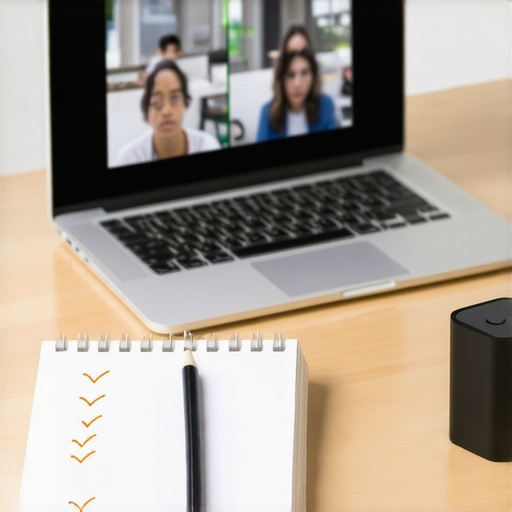
Stop Pretending Your 15-Minute Telehealth Call is a Social Hour
Most patients treat a virtual check-in like a casual FaceTime with a distant relative. They show up in bad lighting, with background noise, and a vague list of complaints that would take an hour to untangle. I argue that this passivity is the primary reason virtual medicine feels ‘less than’ traditional care. You aren’t just a participant; you are the eyes and ears of the physician. If you don’t act like a professional medical assistant for your own case, don’t complain when the diagnosis is vague or the treatment feels rushed. You think showing up is enough? It is not.
The 15-minute window is a hard limit, not a suggestion. In that span, your doctor has to review your history, hear your current crisis, and formulate a plan. If you spend ten minutes trying to fix your video lag, you have already failed the session. We have become too comfortable with the convenience of our couches, forgetting that medical data is the currency of these meetings, not pleasantries. A virtual check-in without preparation is like a pilot trying to land a plane while the control tower is whispering in a different language; it is a disaster waiting to happen.
Your Silence is Killing the Diagnosis
Why do we expect a doctor to be a psychic? I have seen patients withhold information because they did not think it was ‘relevant,’ only to wonder why their chronic care management feels stalled. A virtual visit is like trying to solve a jigsaw puzzle where you are holding half the pieces under the table. You must be the one to bring the hard data to the screen. You need to know if your telehealth doctor is actually listening, but more importantly, you must give them something worth listening to.
Stop relying on the generic ‘summary’ your clinic sends you after a blood draw. I firmly believe that your raw lab data is more important than the summary. If you haven’t looked at your numbers before the call, you are effectively flying blind. You should be coming to the table with specific questions about why certain markers were ignored, such as why C-reactive protein is the most important test you lack. If you aren’t challenging the status quo of your own health, who will? Efficiency isn’t about moving fast; it is about moving with intent. This checklist is your only shield against a mediocre medical experience.
The Digital Devaluation of Professionalism
The problem isn’t the screen. It is the mindset we carry to it. We have spent two decades training our brains to associate webcams with leisure, gossip, and the performative vanity of social media. Now, when we are asked to use that same portal for a high-stakes clinical assessment, our discipline evaporates. We treat the doctor’s time like a TikTok feed—something to be consumed passively until the next thing grabs our attention. This is the root cause. The friction of a physical office—the commute, the waiting room, the smell of antiseptic—serves as a psychological on-ramp that prepares the patient for a serious exchange. Without that friction, the exchange becomes cheap. It becomes lazy. They lied to us. They told us that the system was built for our comfort, but in reality, it was built for cost-cutting, and we have played right into their hands by treating our living rooms as diagnostic centers without first turning them into clinics.
The 20 Percent Blind Spot
Look at the clinical outcomes. Studies indicate a significant discrepancy in diagnostic precision when patients fail to provide self-reported vitals during virtual visits. That 20% gap isn’t a technical glitch; it’s a clinical surrender. It is what happens when you expect the physician to do all the heavy lifting with half the sensory input. If you aren’t providing blood pressure readings, temperature logs, or the visual clarity of a well-lit room, you are effectively asking for a guess. You are paying for a professional opinion and receiving a coin flip instead. This data deficit is a choice you make every time you log on without your numbers ready. If you wouldn’t let a mechanic fix your car via a blurry video without showing him the engine, why do you expect a doctor to fix your endocrine system based on a grainy shot of your forehead?
${PostImagePlaceholdersEnum.ImagePlaceholderB}
Profit in Passivity
The system is perfectly designed to fail the quiet patient. In a billing environment that rewards volume over depth, a patient who asks no questions and provides no data is a fast patient. A fast patient is a profitable patient. Who benefits from your lack of preparation? Not you. The insurance companies and the high-volume medical groups thrive when you are passive. They want you in and out. They want the doctor to click ‘stable’ and move to the next billable unit as quickly as possible. Your silence is the fuel for this machine. Silence is compliance. If you want better care, you have to be more difficult—not by being rude, but by being aggressively prepared. Bring the raw data. Force the conversation. Refuse to be a 15-minute slot that requires zero effort from the provider because you did all the work beforehand.
The False Idol of Convenience
We have traded accuracy for the ability to stay in our pajamas. This is the ultimate root of the telehealth crisis. We’ve been told that healthcare should be as easy as ordering a pizza, but your health is not a commodity to be delivered; it is a collaborative project. When you show up to a call with background noise and no records, you are telling the doctor that your time is more valuable than your health. You are signaling that you don’t take the session seriously, so why should they? Physicians are human. They respond to the energy in the room—even the virtual one. If you present as a professional medical assistant for your own body, you command a level of attention that the passive scroller will never receive. Stop being a victim of the ‘convenience’ narrative. Efficiency is only a virtue if it produces a result. A fast diagnosis that misses the mark is just a very efficient way to stay sick.
The Accessibility Argument is a Smokescreen
It is easy to see why people think the burden of a successful telehealth visit should rest entirely on the medical establishment. Critics will argue that patients are already overstressed, under-informed, and navigating a healthcare system that treats them like cattle. They say that expecting a grandmother in a rural zip code or a working parent on a lunch break to curate a ‘professional clinical environment’ is not just unrealistic—it is elitist. I understand the logic. If you are paying for a service, you shouldn’t have to do the provider’s job for them. We have been conditioned to believe that ‘access’ is synonymous with ‘quality,’ and that as long as we can log into the portal, the doctor’s expertise will bridge any gap in communication or data.
The Victimhood Trap
I used to believe this too, until I spent enough time analyzing the wreckage of misdiagnoses that could have been prevented by a simple three-minute preparation. The argument that the system is broken is correct, but it is also a dangerous distraction. Using systemic failure as a reason to show up unprepared is like refusing to wear a seatbelt because the road has potholes. Yes, the road should be smoother, but your survival is still your responsibility. When you lean into the ‘patient-as-victim’ narrative, you aren’t fighting the system; you are simply making yourself its easiest target. The system thrives on your lack of data because it allows for the path of least resistance: a generic prescription and a follow-up in six months. If you don’t bring your own metrics, you are effectively consenting to a lower standard of care.
${PostImagePlaceholdersEnum.ImagePlaceholderC}
The reality is that ‘health equity’ doesn’t mean the doctor does all the work while you sit in the dark with your TV blaring. In fact, the most vulnerable patients are the ones who can least afford a botched virtual visit. If you have limited time and limited resources, you cannot afford to waste a single second of your clinical encounter on technical difficulties or vague symptom descriptions. The ‘it’s the doctor’s job’ mindset is a luxury for those who have the time and money to get it wrong twice. For everyone else, preparation is the only way to level the playing field. This isn’t about being ‘pro-system’; it’s about being pro-survival in a system that is fundamentally indifferent to your specific outcome.
The False Comfort of Low Expectations
We have confused empathy with indulgence. It feels empathetic to say, ‘It’s okay that you didn’t check your blood pressure before the call; it’s the clinic’s fault for not providing the kit.’ But that brand of empathy is actually a form of soft abandonment. It validates the patient’s passivity while the underlying medical issue remains unaddressed. By lowering the bar for what constitutes a ‘good’ patient contribution, we are essentially saying that virtual medicine is a second-tier service for people who can’t handle the rigors of real clinical work. I refuse to accept that. Virtual medicine has the potential to be superior to in-person care because it allows for a continuous stream of real-world data, but that only happens if the patient stops acting like a spectator.
The argument that patients aren’t ‘trained’ to provide data is equally hollow. You don’t need a medical degree to ensure your camera is stable, your lighting is clear, and your telehealth clinic has the information it needs. We navigate complex banking apps and social media algorithms every day; the idea that we can’t figure out a digital thermometer is an insult to the average person’s intelligence. This is not a matter of capability; it is a matter of priority. If you prioritize the convenience of the couch over the clarity of the diagnosis, you have already made your choice. You aren’t being ‘failed’ by the screen; you are failing the opportunity the screen provides.
The normalization of laziness in the virtual exam room is not just a personal failing; it is a structural invitation for the medical industry to abandon the standard of care. If we continue to treat our health like a drive-thru service, we should not be surprised when the results are nutritionally empty. We are essentially giving the healthcare complex permission to provide us with the ‘lite’ version of medicine while still charging us full price. This is the slippery slope toward a future where ‘access’ means having a 24/7 connection to a provider who knows absolutely nothing about you because you never bothered to tell them the truth. In five years, if this trajectory holds, the doctor on the other side of the screen may not even be a person. It will be a large language model trained on the very same generic, data-poor summaries that we are currently accepting as ‘good enough.’ The system will have optimized itself for our passivity. It will provide the path of least resistance: a prescription for every symptom and a referral for every question, with no one actually looking at the underlying cause. We will have traded the wisdom of the physician for the efficiency of the machine, all because we could not be bothered to turn on a light and read our own lab results. ${PostImagePlaceholdersEnum.ImagePlaceholderD}
Is it already too late?
The answer depends entirely on your next login. We are currently in the ‘wild west’ phase of digital medicine, where the norms are still being established. If we set a high bar now—if we demand that our virtual visits be as data-rich and focused as a surgical consultation—we can force the technology to serve us. But if we continue to treat it like a casual chat, we are signaling to the payers and the providers that we do not value the depth of the interaction. The analogy of a high-performance athlete is fitting here. An elite runner does not show up to a training session and expect the coach to do the running for them. They bring their metrics, their diet logs, and their recovery data. They treat the coach as a strategic partner, not a servant. If you want elite health outcomes, you must adopt an elite mindset. You cannot expect a championship-level diagnosis when you are playing at a recreational level of engagement.
The Impending Era of Disposable Medicine
The warning is clear: passivity breeds obsolescence. Every time you show up unprepared, you are contributing to the devaluation of the medical profession. You are telling the world that a doctor’s years of training are unnecessary because you are not providing the data required for them to use that training. This is how we lose the best minds in medicine. The doctors who actually care about outcomes will flee the virtual space if it becomes a wasteland of grainy videos and ‘I don’t know’ answers. What will be left are the volume-chasers—the providers who are happy to see forty unprepared patients a day because they do not plan on doing anything more than clicking ‘refill.’
The Point of No Return
We are approaching a threshold where the ‘convenience’ of telehealth will become a permanent excuse for mediocrity. Once the insurance companies realize they can get away with paying for a lower tier of digital service because patients do not demand more, there is no going back. The reimbursement rates will drop, the time slots will shrink even further, and the expectation of quality will vanish. Your silence in the face of this trend is your signature on the contract for a future of second-rate health. The stakes are not just your individual diagnosis; the stakes are the very survival of the clinical standard. Wake up, log on, and step up, or prepare to be the victim of a system you helped create.
The Accountability Mandate
We have reached the point where the screen is no longer an excuse for mediocrity. You cannot claim the technology is inadequate while you simultaneously contribute to its failure by showing up unprepared. This connects to my core argument: personal agency is the only remaining defense against a medical system that increasingly prefers to process you rather than heal you. If you aren’t using the $20 gadget that makes your telehealth visit 10x better or ensuring you know exactly how to demand a specialist referral during a virtual call, you are effectively a passenger in your own medical emergency. The system is perfectly optimized for your passivity, and your passivity is the currency of its profit. If you want better outcomes, you must disrupt the cycle of low expectations.
The Final Choice
You must decide today if you want to be a patient or a project. If you want a doctor who acts like a high-level professional, you must present yourself as a high-level collaborator. This involves more than just ‘checking in’; it involves a tactical shift in how you inhabit your home-based clinical space. This is why I advocate for how to set up a senior-friendly telehealth station at home for every member of the family—not just the elderly. By creating a physical space dedicated to data and clarity, you signal that the session has weight. Stop treating your health like a convenient transaction and start treating it like a tactical operation. The system will not change for you, but it will respect the person who brings the evidence. Your screen is not a barrier; your behavior is. Own your data, or the system will own your decline.