
How to Spot Nutrient Deficiencies in Seniors Before Falls
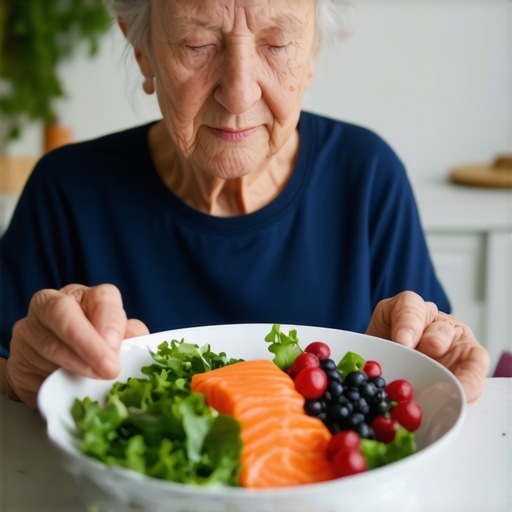
Stop Waiting for the Bone to Break: The Dangerous Ignorance of Senior Nutrition
We treat a senior’s fall like a bolt of lightning—unpredictable, tragic, and inevitable. We rush to buy grab bars and non-slip mats, patting ourselves on the back for “safety.” But I argue that this is nothing more than a cosmetic fix for a structural collapse. Gravity isn’t what knocks our elders down. It is the invisible hunger of their neurons and muscles that we have ignored for a decade.
You might think that as long as they are eating three meals a day, they are fine. You are wrong. The standard “healthy” diet for a twenty-year-old is a slow-motion disaster for an eighty-year-old. When we ignore the bio-chemical signals of decline, we are not just letting them age; we are letting them starve in plain sight. This is not a matter of choice; it is a matter of biological survival that our current healthcare system treats as an afterthought.
The Medical System is Failing the Fragile
So, why are we still doing this? Why do we wait for an emergency room visit to ask what someone has been eating? The current medical model thrives on “fix it when it breaks,” but you cannot easily fix a shattered hip in a body that lacks the raw materials to repair itself. I have seen it repeatedly: a senior is labeled “unsteady,” but no one checks their micronutrient levels until the damage is irreversible. We need to stop treating aging as a disease and start treating nutrition as the primary preventative medicine it actually is.
Consider the metaphor of a lighthouse with a flickering bulb. If the light goes out and a ship hits the rocks, do we blame the rocks? No, we blame the lack of maintenance on the bulb. In the same way, the hidden signs of vitamin B12 deficiency in older adults are the flickering light. When B12 levels drop, the nerves that tell the brain where the feet are located begin to fray. The “clumsiness” you see is not aging; it is a communication breakdown between the brain and the ground.
Routine Blood Work is a Lazy Excuse
Do not let a doctor tell you that “standard labs” are enough. They are not. Most annual physicals skip the very markers that predict a fall. I believe that every senior deserves a deep dive into their specific metabolic needs. If you are relying on a generic check-up, you are flying blind. We must demand more than just a cursory glance at a chart. If we can utilize chronic care management and personalized telehealth strategies for heart disease, why are we not doing the same for the very nutrients that keep people upright?
We also need to get proactive about the physical side of this equation. While diet is the fuel, movement is the engine. But you cannot run an engine on bad fuel. I have discussed the balance exercise that prevents hip fractures in your 70s before, but even the best exercise fails if the muscles are too starved of protein and Vitamin D to respond. We are building houses on sand and wondering why the walls are cracking.
It is time to stop the polite silence. It is time to stop accepting “frailty” as a natural conclusion. If you are caring for a parent, how you prep your senior parent for a virtual memory check or a nutritional assessment matters more than the color of their new cane. We need to look at the plate, look at the labs, and look at the reality: the fall starts in the kitchen, not the hallway.
The Protein Gap is a Canyon
The medical establishment treats the Recommended Dietary Allowance (RDA) as a gold standard, but for the elderly, it is a death sentence. We have been told that a moderate amount of protein is sufficient for everyone, regardless of age. They lied. As we age, our bodies develop what researchers call anabolic resistance. This means an eighty-year-old needs significantly more protein than a thirty-year-old just to maintain the same muscle mass. When we ignore this biological reality, we aren’t just letting seniors get thin; we are watching their skeletal systems dissolve. The problem isn’t a lack of appetite. The problem is a systemic failure to recognize that the aging body is a high-performance engine that requires specialized fuel, not just a smaller portion of the standard American diet.
Standard Lab Ranges are a Death Sentence
I have looked at hundreds of blood panels where a senior’s Vitamin D or B12 levels are marked as ‘normal’ simply because they fall within the widest possible statistical margin. This is a dangerous lie. ‘Normal’ for a lab is not the same as ‘optimal’ for a human being trying to avoid a hip fracture. When a senior’s Vitamin D levels hover at the bottom of the range, their bones are essentially becoming porous sponges. The data shows that nearly 50% of seniors admitted to hospitals are already malnourished. That 50% figure isn’t a statistic; it’s a systemic indictment. It tells us that half of our elders are walking around in a state of biological bankruptcy, waiting for the one stumble that the system has done nothing to prevent.
${PostImagePlaceholdersEnum.ImagePlaceholderB}
The Sarcopenia Scrutiny
We need to talk about sarcopenia—the age-related loss of muscle mass—as the true root cause of the geriatric crisis. The medical industry prefers to focus on osteoporosis because there are expensive drugs to sell for bone density. But bones do not move themselves. Muscles are the only thing keeping a human upright. If the muscles are starved of leucine and essential amino acids, they cannot fire fast enough to catch a trip on a rug. The problem isn’t the rug. The problem is the muscle-wasting that was ignored for ten years because ‘they were eating their vegetables.’ Vegetables are great, but they do not build the quadriceps necessary to stand up from a chair. We are witnessing a mass-scale starvation of the very tissue that grants independence.
Synthetic Satiety and the Calorie Lie
The focus on calories is another catastrophic error in judgment. A senior can be obese and still be starving. This is the paradox of ‘overfed but undernourished.’ If a parent is filling up on processed carbohydrates and ‘senior-friendly’ soft foods, they are effectively shutting down their body’s ability to repair itself. High-sugar diets in the elderly don’t just lead to diabetes; they accelerate cognitive decline and muscle loss through systemic inflammation. It is a feedback loop of destruction. We give them ‘easy to chew’ mush, their blood sugar spikes, their muscles waste away, and then we act surprised when they can no longer navigate a flight of stairs. It is not an accident of nature; it is a direct result of the fuel we provide.
The Comfort Trap
I know the argument against my position. It’s a seductive one, often framed as “compassion.” Critics and even some well-meaning geriatricians argue that after eight decades of life, a person should be allowed to eat whatever they want. They claim that enforcing a high-protein, nutrient-dense regimen is a form of medical overreach that ruins the twilight years. Why force a steak on someone who wants tea and toast? They argue that we should focus on comfort rather than clinical optimization. This perspective suggests that biological decline is a dignified, natural slide that we shouldn’t interrupt with “aggressive” nutrition.
I used to believe this too, until I watched that same “compassionate” neglect turn a vibrant retiree into a bedridden patient in under six months. The tea-and-toast diet is not a lifestyle choice; it is a fast track to muscular atrophy. When we frame the refusal to intervene as “respecting their wishes,” we are often just avoiding the hard work of actual care. True quality of life is not found in a bowl of sugary cereal; it is found in the ability to walk to the bathroom without assistance, to pick up a grandchild, and to remain cognitively present. You cannot have those things without the raw materials of protein and essential fats. What we call “natural aging” is frequently just the predictable outcome of metabolic starvation.
The Myth of Minimal Needs
The establishment pushes the idea that as we get less active, we need less. This is the wrong question to ask. We shouldn’t ask what the minimum amount of fuel is to keep a heart beating; we should ask what is required to keep a human being functional. The “standard of care” for seniors is essentially a managed descent into frailty. By the time a doctor notices weight loss, the most vital tissues—the heart muscle and the diaphragm—have already begun to waste away. This is not medical ethics; it is a surrender. We treat a 20-year-old athlete with rigorous nutritional science to optimize performance, but we treat an 80-year-old with a “don’t worry about it” shrug. This double standard is a form of ageism that hides behind a mask of kindness.
${PostImagePlaceholdersEnum.ImagePlaceholderC}
People often bring up the cost and complexity of specialized nutrition. They say that lab tests for micro-nutrients or high-quality protein supplements are too expensive for those on a fixed income. But compare the cost of a high-leucine protein powder to the $30,000 bill for a hip fracture surgery and the subsequent nursing home stay. We are being penny-wise and pound-foolish. The healthcare system is designed to pay for the catastrophe, not the prevention. If you think eating well is expensive, try the cost of losing your independence. We have been conditioned to accept a version of aging that is far more painful and limited than it needs to be because it is easier for the system to manage a quiet, weak patient than a demanding, strong one.
The argument that “they’ve earned the right to eat what they want” is a hollow victory when that food is what ultimately traps them in a wheelchair. We need to stop equating indulgence with love. Real love for an aging parent involves the hard conversation about why that “senior-friendly” processed meal is actually a metabolic poison. It involves demanding that their doctor looks beyond the basic blood panel to see the brewing storm of deficiency. We are not fighting nature; we are fighting the ignorance that has allowed us to think that getting old means getting hungry and fragile. The body still knows how to repair itself, but it can’t build a fortress out of crackers and jam.
If we continue to treat senior nutrition as a luxury rather than a fundamental pillar of medical care, we are steering directly into a sociological storm. In five years, the ‘silver tsunami’ will become a tsunami of preventable disability. We are not just talking about a few more canes or walkers; we are talking about a complete overwhelm of our long-term care systems by people who should still be active, vibrant, and independent. When we ignore the metabolic signals of decay, we are choosing to build more nursing homes instead of better kitchens. It is a cynical, expensive, and ultimately cruel way to manage a population. We are essentially watching a slow-motion train wreck and arguing about the color of the upholstery instead of hitting the brakes.
What are we waiting for?
The cost of our collective denial is paid in human dignity. Every time a senior is forced into a wheelchair because their muscles were allowed to wither away, a part of our social contract breaks. We owe the generation that built our world more than just a survival-level existence. If we don’t demand a move toward proactive telehealth and more rigorous lab tests now, we are complicit in the upcoming crisis. This isn’t just about ‘eating better’—it’s about a radical shift in how we value the final third of human life. ${PostImagePlaceholdersEnum.ImagePlaceholderD}
The Warning is clear: The skeletal muscle of our elders is the physical foundation of their freedom. If we let that foundation rot, the entire structure of their lives will inevitably collapse. Imagine a city that ignores the rust on its bridges for decades, only to express shock when the first heavy truck sends the spans into the river. That is where we are with geriatric nutrition. We see the rust—the weakness, the thinning hair, the slow gait—and we call it ‘natural.’ It is not natural; it is neglect. By 2030, the number of people over 65 will outnumber children for the first time in human history. If that population is metabolically bankrupt, the economic and emotional strain on families will be catastrophic. We will see a generation of ‘sandwich’ caregivers crushed not by the natural aging of their parents, but by the entirely preventable frailty caused by nutritional ignorance.
The Point of No Return
We have the tools. We have the data. What we lack is the courage to admit that our current ‘standard of care’ is actually a standard of decline. If we do not act, the next decade will be defined by a mass-scale loss of autonomy that will bankrupt both our healthcare budgets and our consciences. The choice is binary: we can invest in the biological integrity of our elders today, or we can pay for their institutionalization tomorrow. There is no middle ground, and time is running out. We are standing at a threshold where the clinical meets the moral. To choose the ‘tea and toast’ status quo is to choose the end of independence for millions. We must stop pretending that we don’t know why people are falling. We know. We just haven’t decided that their strength is worth the effort. Every hip fracture we fail to prevent is a failure of our imagination and our empathy; it is time to stop accepting the unacceptable and start feeding the future we want to live in.
The Bio-Chemical Choice We Refuse to Face
We are currently sleepwalking into a crisis of our own making. We spend billions on reactive treatments while ignoring the very fuel that determines if a person can stand up from their own bed. If you are waiting for a physician to bring this up during a ten-minute check-up, you are waiting for a miracle that isn’t coming. You must be the disruptor in the exam room. Demand to know why your standard physical is missing these 3 critical health markers that actually predict muscular and skeletal resilience. This isn’t just about eating more—it is about leveraging advanced lab test technologies to see the truth before the crisis hits.
The Final Verdict
True elder care is not the absence of injury; it is the presence of physiological strength that makes injury impossible.
A Different Perspective on Care
The twist in this narrative is that we often view specialized nutrition as an extra for those who can afford it, yet we find the money for surgeries and long-term care facilities without a second thought. We are subsidizing decline while taxing vitality. If we applied the same personalized telehealth strategies to senior nutrition that we do to cardiovascular disease, the silver tsunami would look less like a disaster and more like a triumph of human longevity.
The time for polite suggestions has passed. If you care about the dignity of the seniors in your life—or your own future self—it is time to stop accepting the status quo. Reach out and demand a metabolic plan that treats you like a living person, not a declining statistic. Stop waiting for the bone to break. Feed the strength that keeps you standing.