
The Specific Reason to Avoid Exercise Before Your Kidney Function Test
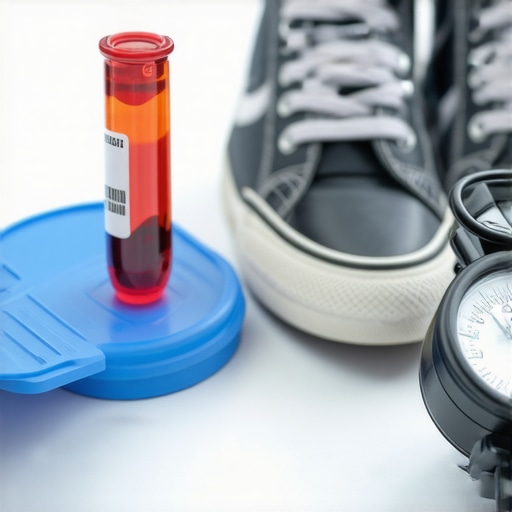
Stop Treating Your Blood Work Like a Fitness Challenge
Let’s get one thing straight: your kidneys aren’t failing, but your common sense might be. We live in a culture that worships the grind, where missing a workout is seen as a moral failure. But if you hit the gym for a high-intensity session before heading to the lab for a metabolic panel, you aren’t being a hero. You are being a fool. I argue that the obsession with staying active at all costs is exactly what leads to the false positives and medical anxiety currently clogging up our healthcare system. You might think you’re presenting the healthiest version of yourself to the clinician, but in reality, you’re handing them a fiction. Why are we so desperate to perform for a needle that we ignore the basic biological requirements of a valid test?
The blunt truth is that your muscles are essentially sabotaging your medical data. When you tear down muscle fibers in the weight room or during a long run, your body produces a waste product called creatinine. This is the exact same marker doctors use to measure how well your kidneys filter blood. If you spike those levels with a heavy lifting session, your lab report will suggest your kidneys are on the verge of collapse. It is like trying to weigh yourself while holding a heavy bowling ball and then wondering why the scale says you have gained twenty pounds. The scale isn’t broken; you just refused to follow the rules of the measurement.
Your Muscles Are Lying to Your Doctor
This isn’t about some minor variance. A intense workout can send your creatinine levels into a range that mimics stage 2 or stage 3 chronic kidney disease. I have seen how people ignore the basics, much like the reason your morning coffee ruins your blood test results. We need to stop overcomplicating our health and start respecting the baseline. If you cannot sit still for twenty-four to forty-eight hours before a blood draw, you are compromising your own care. This is a common failure, similar to the fasting rule that most people get wrong before blood work. Once the data is skewed, you are stuck in a cycle of unnecessary re-tests, specialist referrals, and frantic searches for answers that aren’t there.
Why do we do this to ourselves? Perhaps it’s because we want the doctor to see a person who is fit and disciplined. But the lab doesn’t care about your deadlift personal record. It wants to know if your organs are functioning in a resting state. When you ignore the requirement to rest, you are essentially vandalizing your own medical record with noise. You can find the secret to getting your lab results without the long wait, but those results are worthless if the data is garbage from the start. We have to stop viewing medical preparation as an inconvenience and start seeing it as the most critical part of the diagnostic process. If you want a clear picture of your health, you have to stop shaking the camera right before the shutter clicks.
The Vanity of the Unbroken Streak
The root cause of our skewed medical data isn’t a lack of education. It is an ego problem. We have built a culture where rest is synonymous with regression, and this psychological twitch is now actively sabotaging our clinical outcomes. The problem isn’t that you don’t know exercise affects your blood; the problem is that you are terrified of what happens to your self-image if you sit still for forty-eight hours. You want to be the ‘fit’ patient, the one whose resting heart rate impresses the nurse, but in your quest to perform health, you are actually destroying the evidence of it. It is a performance trap. You are so committed to the identity of the athlete that you refuse to provide the one thing the lab actually needs: a baseline.
This pathological refusal to embrace the sedentary state creates what I call ‘biological noise.’ When you walk into a lab after a heavy lifting session, you aren’t presenting a healthy body; you are presenting a body in the midst of an acute inflammatory crisis. Your muscles are leaking enzymes, your kidneys are under stress, and your hormonal profile is a chaotic mess of cortisol and repair signals. This isn’t health. It is trauma. And yet, we wonder why the doctor is confused by the results. The problem is not the test. The problem is the person taking it. We have commodified fitness into a personality trait that cannot be switched off, even when our lives depend on an accurate diagnosis.
${PostImagePlaceholdersEnum.ImagePlaceholderB}
The Biochemistry of a False Alarm
Let’s look at the actual math of this failure. When we talk about liver enzymes like AST and ALT, we are looking at markers that doctors use to screen for hepatitis or cirrhosis. But here is the reality: your muscles contain these enzymes too. If you crush a high-intensity interval training session and then get your blood drawn, those numbers don’t just ‘tick up.’ That 400% spike in Creatine Kinase (CK) isn’t a slight variance; it is a statistical explosion. It is the difference between a controlled burn and a forest fire. To a clinician who doesn’t know you spent the morning flipping tires, that lab report looks like a medical emergency. It looks like liver damage or a myocardial infarction in progress.
We are drowning the system in these false positives because we refuse to acknowledge that the body requires a neutral gear. We’ve seen this before in other areas of data collection where the observer effects the outcome, but here, the cost is measured in human anxiety and wasted resources. That 400% spike isn’t a badge of honor. It is a diagnostic disaster that triggers a cascade of unnecessary follow-ups. You are forced into more blood draws, perhaps an ultrasound you don’t need, and hours of scrolling through medical forums in a panic. All of this because you couldn’t skip ‘leg day’ for one afternoon. It is a self-inflicted wound disguised as discipline.
Why Efficiency Is the Enemy of Insight
The true cost of this obsession is the erosion of diagnostic precision. The medical system is built on the assumption that we are measuring a person at a steady state. When you introduce the massive physiological stress of intense exercise into that equation, you aren’t being efficient; you are being an outlier. This isn’t about ‘optimizing’ your schedule to fit in a workout before your appointment. It is about the fundamental integrity of the data. We have to stop treating medical prep like a hurdle to be jumped over and start treating it as the foundation of the entire process. If the foundation is cracked, the entire house—no matter how many specialists you consult—is going to lean.
It is time to stop the performance. Your doctor doesn’t need to see your ‘active’ self; they need to see your actual self. The one that exists when the gym lights are off and the heart rate monitor is put away. If you cannot give the lab a clean slate, you are essentially vandalizing your own medical record with noise that doesn’t need to be there. This isn’t just about avoiding a few extra needles; it’s about respecting the biological reality that you are a complex organism, not a machine that can be pushed until the moment the blood leaves your vein. The math fails because you refused to follow the formula.
I know the argument you’re rehearsing. You’ll tell me that your lifestyle is one of constant movement, and that testing you in a state of forced inactivity is like testing a race car while it’s parked in the garage. It feels dishonest. You believe the doctor needs to see the ‘real’ you—the one who runs ten miles and survives on double espressos—not some hypothetical version of you that has been lounging on the couch for forty-eight hours. It is a seductive logic because it aligns with our modern obsession with authenticity. We want our data to be as raw and unedited as our lives. But this is exactly where the logic collapses into dangerous territory. Clinical diagnostics are not a documentary of your life; they are a calibrated measurement against a standardized norm. When you walk into an urgent care clinic or a specialist’s office for lab tests, the equipment isn’t looking for your peak performance. It is looking for your baseline stability.
The reason we require you to stop is not because we want to hide your fitness level. It’s because the reference ranges used by every facility, from your local lab to the most advanced chronic care system, are built on the ‘resting’ human. When a scientist determines what a ‘normal’ level of creatinine or AST looks like, they aren’t looking at a body in the middle of a massive muscular repair cycle. They are looking at a body at equilibrium. I used to believe this too, until I watched a colleague spend three weeks chasing a phantom liver condition in a patient whose only real ‘disease’ was a penchant for heavy deadlifts the night before his annual physical. We wasted thousands of dollars in telehealth consultations and follow-up imaging just to find out the guy was simply sore. His ‘real life’ data was medical garbage.
The Myth of Your Functional Reality
By insisting on being tested in your ‘natural’ active state, you are essentially speaking a different language than the lab equipment. The machine expects English; you are shouting in a dialect of physiological stress that it wasn’t programmed to translate. This isn’t just a minor misunderstanding. In the context of chronic care management, where tiny fluctuations determine whether a medication dosage is changed or a new diagnosis is added to your permanent record, this ‘authenticity’ is a liability. You aren’t giving the doctor more information; you are giving them the wrong information. You are forcing a clinician to differentiate between a life-threatening pathology and your Saturday morning spin class. Why would you want to make your doctor’s job harder by introducing variables that don’t need to be there?
${PostImagePlaceholdersEnum.ImagePlaceholderC}
The truth is that the ‘real you’ is a biological moving target. To hit that target with any degree of accuracy, we have to ask you to stand still. The ‘sedentary’ requirement isn’t an insult to your athleticism; it is the lens through which your health becomes visible. Without that lens, you’re just a blur of data points that could mean anything—or nothing at all. We have to stop viewing the resting state as a ‘fake’ version of ourselves and recognize it as the only version that provides a clean signal. If you want to use telehealth effectively or manage a condition through an urgent care center, you have to provide them with data they can actually use. Anything else is just vanity posing as health, and it’s a performance that might eventually cost you more than just a ruined workout. The lab doesn’t want your sweat; it wants your stability.
The Cost of Inaction
The stakes of this ego-driven data pollution go far beyond a single awkward conversation with your doctor. We are currently presiding over the slow-motion destruction of diagnostic integrity. When you prioritize your morning run over the integrity of your blood work, you aren’t just an ‘active patient’—you are a contributor to a systemic crisis. We are moving toward a reality where medical data is no longer seen as a source of truth, but as a riddle that requires layers of expensive, unnecessary interpretation just to filter out the noise of our own vanity. This isn’t just about you; it’s about the erosion of a system designed to keep people alive.
Imagine a pilot trying to land a commercial airliner in zero visibility, relying entirely on cockpit instruments to stay in the air. Now imagine that pilot deliberately feeding the flight computer false altitude data because they want the logbook to show they were flying at a more ‘heroic’ height during the descent. That is exactly what you are doing when you hit the gym before a metabolic panel. You are polluting the only signal that keeps the clinician on the ground from making a catastrophic error. You are sabotaging the navigation system of your own healthcare, and eventually, the ground is going to come up to meet you much faster than the instruments predicted.
Will we ever trust our data again?
If this trend of performing health continues, the medical landscape five years from now will be a graveyard of false positives and wasted resources. We will see an explosion of electronic medical records littered with phantom diagnoses—stage 2 kidney failure and liver dysfunction labels that follow patients for decades—all because we refused to acknowledge that our muscles are not the only thing that matters. The healthcare system, already strained by actual illness, will be paralyzed by the weight of ‘healthy’ people whose only disease is a refusal to sit still. We are trading the clarity of objective science for the short-term dopamine hit of a fitness tracker.
${PostImagePlaceholdersEnum.ImagePlaceholderD}
The Point of No Return
This is a fundamental betrayal of the patient-provider relationship. We expect our doctors to be precise, to be tireless, and to be right. Yet, we hand them data that we have knowingly corrupted with physiological stress. We are asking for a map of a city while we are actively setting fire to the landmarks. It is a moral failure to demand high-quality care while providing low-quality information. The burden of this failure falls on everyone: the lab technicians who run the tests, the specialists who have to investigate the anomalies, and the insurance pools that pay for the follow-up imaging that should never have been ordered.
We are approaching a cultural crossroads where we must decide what we value more: the reality of our biological state or the performance of our lifestyle. If we continue to treat clinical preparation as an optional suggestion rather than a rigid requirement, we are effectively choosing to live in a world of medical fiction. The ‘truth’ found in a blood draw will become a relic of a simpler time when people understood that rest was not a sign of weakness, but a prerequisite for accuracy. The system cannot save you if you refuse to show it who you actually are. We are drowning in data, but we are starving for the truth, and the noise is entirely our own making.
The Reckoning
We have reached the limit of what medicine can do for a patient who refuses to be still. We are entering an era where our diagnostic tools are more precise than ever, yet our clinical outcomes are being muddied by our own inability to disengage from the ‘grind.’ This pathological need to be seen as healthy by the lab is the very thing preventing us from actually being healthy. We are trading the signal for the noise, and the price is our own diagnostic safety.
The Final Verdict
If you prioritize your workout streak over a valid clinical baseline, you are not a high-performer; you are a liability to your own medical diagnosis.
The Twist
The great irony of modern wellness is that the very metrics we use to prove our vitality—our high-intensity sessions and relentless activity—are the exact factors that render our actual medical data useless. We think we are showing the doctor how hard we work, but all we are really doing is showing them how little we respect the science of the human body. This is arguably one of the 3 habits that make your chronic condition harder to manage because it fundamentally breaks the feedback loop between patient and provider. As we look at the future of telehealth transforming chronic disease monitoring today, we must realize that these innovations are only as good as the honesty of the patient. If the inputs are corrupted by ego, the outputs will be irrelevant. This failure in preparation is as damaging as the error of taking your medications right before a blood draw; it creates a fiction that no specialist can solve. Your body is not a stage for your fitness identity; it is a biological system that requires a neutral state to be understood. If you cannot provide a clean slate, do not expect a clear answer.
The Warning Shot
The medical system is not your personal validation machine. It is a diagnostic engine that requires specific, calibrated conditions to function. When you walk into a lab after a heavy session, you are purposefully throwing a wrench into the gears. Eventually, the noise you create will mask a signal you actually need to hear. Stop performing. Stop pretending. Shut up and sit down. Your health depends on it.