
The Sneaky Way Your Afternoon Coffee Ruined Your Thyroid Lab
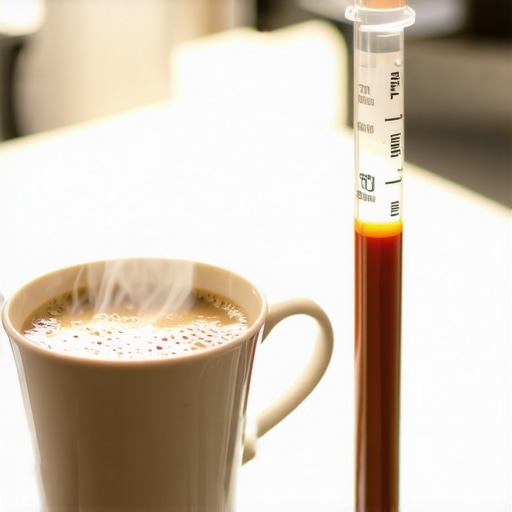
Your Afternoon Coffee Is Gaslighting Your Doctor
You think you’re being responsible. You scheduled that blood draw for 3:00 PM because that’s when you’re free. You grabbed a quick americano to push through the mid-day slump. You didn’t eat, so you think you’re still within the safety of a fasting window. You’re wrong. I argue that the casual indifference we show toward pre-lab habits is creating a crisis of misdiagnosis in chronic care. Your afternoon pick-me-up isn’t just a caffeine boost; it’s a biochemical wrecking ball for your endocrine data. Why are we still pretending a lab result is gospel when we sabotaged the evidence an hour prior?
The medical establishment fails to emphasize that a thyroid panel isn’t a static measurement. It is a living, breathing snapshot of your metabolism that reacts to every stimulus you throw at it. Caffeine is one of the most aggressive stimulants available, and when it hits your system, it triggers a cascade of hormonal shifts that can artificially mask or exaggerate your TSH levels. I’ve seen patients struggle with unexplained symptoms for years, only to realize their “normal” labs were a lie fueled by their 2:00 PM caffeine habit. If you are wondering the specific reason your morning coffee ruins thyroid lab results, imagine what an afternoon dose does when your body is already naturally fluctuating toward its evening rhythms.
Stop Treating Lab Tests Like Casual Errands
Caffeine hitting your system before a thyroid test is like trying to measure the calm of a lake while someone is doing cannonballs off the pier. It is impossible to see the true surface. Most people assume that because they didn’t eat a bagel, they are “fasting.” This is a dangerous oversimplification. I believe we have become too comfortable with the convenience of the fasting rule that most people get wrong before blood work. We treat the lab like a drive-thru, squeezing it in between meetings and errands, forgetting that the quality of the data is entirely dependent on the state of the machine—your body. [IMAGE_PLACEHOLDER]
When you walk into an urgent care or a lab facility in the late afternoon, your TSH is already at its lowest point of the day. If you add a stimulant to that mix, you are effectively hiding the very dysfunction you are trying to find. Are you actually healthy, or did that espresso just kick your pituitary gland into a temporary, false overdrive? This is exactly why your chronic fatigue needs a thyroid panel update that is actually accurate. If we want better outcomes in chronic care, we have to stop lying to our doctors with our bad habits. We need to demand more than just a needle in the arm; we need to respect the biological window required for truth. So, are you going to keep prioritizing your caffeine schedule over your clinical accuracy?
The Circadian Deception
The core of the issue is not the lab equipment; it is the biological illiteracy of the timing. Your body operates on a rhythmic clock that the modern medical system, in its rush for efficiency, chooses to ignore. Thyroid-stimulating hormone (TSH) follows a rigorous circadian pattern. It peaks during the deep hours of the night and early morning, then begins a steady, uncompromising decline as the day progresses. By the time you sit in that plastic chair at 3:00 PM, your TSH levels have already retreated. Studies indicate that TSH levels can drop by up to 50% from their peak in the early morning to their trough in the late afternoon. This 50% drop is not a minor fluctuation; it is a clinical erasure. It is the difference between a doctor identifying a life-altering hypothyroid state and being told that your exhaustion is simply a ‘lifestyle issue.’ You are presenting a fraction of the truth, and the medical system is accepting it as the whole story. ${PostImagePlaceholdersEnum.ImagePlaceholderB}
Caffeine as a Biochemical Blinder
Caffeine does not merely wake your brain; it rewires your endocrine signaling for the duration of its half-life. When you consume that afternoon espresso, you are introducing a potent adenosine antagonist into a system that is already struggling to maintain balance. This is the root cause of the data crisis. Caffeine stimulates the adrenal glands and suppresses the very signaling pathways the lab test is designed to measure. It is a biochemical blinder. It forces a temporary state of artificial homeostasis that does not exist when the stimulant wears off. The pituitary gland, under the influence of a stimulant, may not signal the need for more thyroid hormone even if the body is starved for it. You aren’t just caffeinated; you are *chemically masked*. The lab result reflects the coffee, not the patient. This isn’t just a mistake. It is an act of unintentional sabotage against your own diagnostic history.
A System Built for Convenience, Not Cure
The problem is actually the commodification of the blood draw. We have allowed lab work to be treated as a retail transaction rather than a clinical procedure. Telehealth platforms and urgent care centers compete on the basis of access and convenience, rarely on the strictness of their pre-test protocols. They want you in and out. They want the volume. Because of this, the nuance of *when* and *how* you test is discarded in favor of the ‘now.’ If a patient is allowed to walk in off the street in the late afternoon with three cups of coffee in their system and still have their blood drawn for a chronic care panel, the system has failed. The data produced is garbage. We are building treatment plans on a foundation of sand. It is a hollow victory to have ‘normal’ results when those results were purchased at the price of accuracy. We must stop pretending that all data points are created equal regardless of the biological context. They are not. A late-day lab is a lie, and a caffeinated late-day lab is a fantasy. If we want to solve the crisis of chronic fatigue and endocrine dysfunction, we must demand a return to biological reality over administrative convenience.
Critics will argue that I am advocating for a level of precision that is simply not compatible with the modern world. They say that for a single mother working two jobs or a rural patient relying on a local telehealth kiosk, a 3:00 PM lab draw is the only option. They argue that ‘any data is better than no data.’ They believe that the medical system should adapt to the patient’s schedule, not the other way around. It sounds compassionate. It sounds progressive. It sounds like a victory for patient access. But in reality, it is a dangerous form of clinical negligence that trades long-term health for short-term convenience. This pragmatism is a mirage. It suggests that we can somehow compensate for poor input with superior medical intuition, but no amount of expertise can fix a foundation of flawed evidence.
I used to believe this too, until I watched the medical industry transform into a high-volume retail machine that treats blood work like a fast-food order. I saw how ‘approximate’ data leads to ‘approximate’ medicine, where symptoms are treated with band-aids because the root cause—the endocrine dysfunction—remains hidden behind a curtain of caffeine and circadian timing. If the data is wrong, the diagnosis is wrong. If the diagnosis is wrong, the treatment is wrong. At that point, access isn’t a benefit; it’s a detour that keeps the patient trapped in a cycle of unresolved illness. We are giving people the ‘access’ to be misinformed about their own bodies.
The Convenience Lie
The argument that doctors can just ‘adjust’ their interpretation of these results to account for the time of day or caffeine intake is a total fabrication. When a physician looks at a lab report, they are comparing your numbers against a standardized reference range that was built on fasting, morning subjects. They aren’t looking at your coffee receipt. They aren’t calculating the metabolic half-life of your double espresso. They are making life-altering decisions based on a snapshot that you unknowingly doctored before you even arrived at the clinic. ${PostImagePlaceholdersEnum.ImagePlaceholderC}
The elephant in the room is the financial incentive for high-volume lab throughput. Urgent care centers and telehealth platforms thrive on the ‘now.’ They don’t want to tell you to come back at 8:00 AM on a fasting stomach because there is a high probability you won’t come back at all. They would rather take the sub-par data and the insurance payment today than risk losing the transaction tomorrow. We have commodified diagnostic medicine to the point where the integrity of the sample is secondary to the speed of the service. This is the crisis of chronic care. We are prioritizing the ‘user experience’ of the patient over the survival of the patient. If we keep pretending that a caffeinated afternoon lab draw is valid, we are essentially agreeing to be lied to as long as the lie is convenient.
This is why the ‘any data’ argument falls apart. In chronic care, bad data is significantly more dangerous than no data. No data leaves you with a question; bad data leaves you with a false answer. If you have no data, you continue to investigate. If you have a false ‘normal’ result from a 3:00 PM lab draw, your doctor stops looking. They tell you that your fatigue is just stress, your weight gain is just aging, and your brain fog is just a lack of sleep. They close the book on your thyroid while the organ is actually screaming for help. You are sent home with a clean bill of health that is actually a death sentence for your quality of life. We must stop worshiping at the altar of accessibility and start demanding the truth of biology.
The Looming Bankruptcy of Modern Diagnostics
The danger we face isn’t just a few missed thyroid cases; it is the total erosion of diagnostic integrity across the entire spectrum of chronic care. We are entering an era of biological gaslighting where the tools meant to save us are being used to silence us. If we continue to prioritize the convenience of a 3:00 PM lab draw over the rigid demands of human physiology, we aren’t just getting bad data—we are building a healthcare system that is fundamentally blind. We are trading the slow, deliberate work of healing for the high-speed efficiency of a retail transaction. The stakes could not be higher. Every time a patient is told they are ‘fine’ based on a caffeinated, late-day blood sample, we lose another opportunity to stop a chronic illness before it becomes a lifelong burden.
What are we waiting for?
Are we waiting for a complete collapse of public trust in lab work? If this trend continues, the next five years will see a massive surge in ‘unexplained’ chronic conditions that are actually just common ailments hidden behind poor testing protocols. We will see a rise in autoimmune progression and metabolic decay, all while our electronic health records proudly display rows of ‘normal’ results. It is a terrifying prospect. We are essentially flying a plane with instruments that have been calibrated to show what we want to see rather than where the ground actually is. This is not progress. It is a sophisticated form of denial that benefits the insurance provider and the high-volume lab, while leaving the patient to rot in a state of sub-clinical misery.
Attempting to manage chronic care with these tainted snapshots is like trying to navigate a dense fog with a map that only shows where the sun used to be. It provides a false sense of security while you are drifting toward a cliff. We have allowed the ‘customer service’ aspect of medicine to cannibalize the clinical rigor of medicine. In our rush to make healthcare easy, we have made it ineffective. The medical establishment must realize that truth is not convenient. Truth requires a fasting stomach at 8:00 AM. Truth requires the discipline to say ‘no’ to that afternoon espresso when a diagnosis is on the line. If we refuse to demand this level of precision, we are consenting to a future of medical guesswork disguised as data science.
${PostImagePlaceholdersEnum.ImagePlaceholderD}
The Erosion of Clinical Truth
The warning is clear: we are reaching a point of no return where the medical record will no longer reflect the human being it is supposed to represent. It will instead be a log of lifestyle interferences and administrative shortcuts. This is the ultimate cost of inaction. When we stop respecting the biological window, we stop respecting the patient. We must decide if we want a system that makes us feel comfortable or a system that makes us well. There is no middle ground. The current path leads to a world where doctors are merely technicians managing a spreadsheet of lies. We must demand a return to the morning draw, the fasting state, and the stimulant-free window. We must stop pretending that a lab test is a casual errand. It is a sacred inquiry into the state of a human life, and it is time we started treating it that way. The choice is yours: will you continue to participate in this convenient fiction, or will you demand the hard truth that leads to an actual cure?
The Biological Debt
We are currently paying a high price for the illusion of accessibility. Every time we prioritize a late-day appointment because it fits our schedule, we are taking a gamble with our biological truth. This isn’t just about thyroid panels; it’s about the entire philosophy of chronic care. If you want results that actually mean something, you have to play by the body’s rules, not the lab’s business hours. This is why I always emphasize the tactical reason to book your blood work on a Tuesday morning—it forces the system to meet you at your most metabolically honest moment.
The future of healthcare doesn’t lie in more throughput at a local urgent care; it lies in the precision of the data we collect. While maximizing urgent care efficiency with advanced lab test technologies is a noble goal for acute injuries, chronic management requires a slower, more deliberate approach. We need chronic care management personalized telehealth strategies for better outcomes that prioritize the integrity of the sample over the convenience of the visit. [IMAGE_PLACEHOLDER]
Your Move
The real danger isn’t just a missed diagnosis; it’s the fact that we’ve been conditioned to prefer a comfortable lie over a difficult truth. The most ‘convenient’ test is often the most expensive one in the long run—not in dollars, but in years of life lost to untreated illness. By accepting a lab result that was influenced by your 2:00 PM caffeine hit, you are effectively opting out of a cure. You’ve seen the reason your morning coffee ruins your blood test results, so why would you expect an afternoon dose to be any different?
The Final Verdict: The medical establishment’s obsession with convenience over biological precision has created a crisis where the data we rely on to treat chronic conditions is fundamentally broken.
The Twist: We have turned diagnostic science into a retail experience, and in doing so, we have traded our health for a shorter commute.
The clock is ticking on your health—don’t let a 3:00 PM appointment be the reason you never find the answer.