
Why You Must Stay Hydrated Before a Difficult Blood Draw
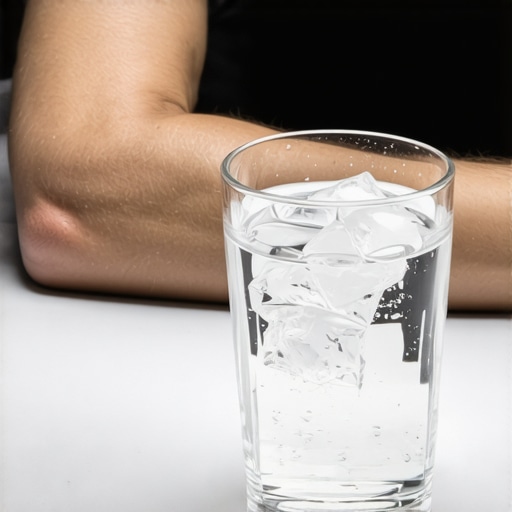
Your Dry Veins are Not a Medical Mystery
Stop blaming the phlebotomist for your bruised forearm. We love to play the victim when a needle misses its mark, complaining about “deep veins” or “bad luck,” but the reality is often much simpler and more self-inflicted. I argue that the vast majority of “difficult” blood draws are a direct result of patient negligence regarding basic hydration. You wouldn’t expect a garden hose to perform with the pressure of a fire hydrant if the main valve is barely cracked open, so why do you expect your circulatory system to cooperate when you’ve been living on nothing but caffeine and spite for twelve hours? This isn’t a failure of the clinic; it’s a failure of your own kitchen sink.
The obsession with fasting has created a dangerous side effect: people think “nothing by mouth” includes the very liquid that keeps their blood volume functional. I’ve seen it repeatedly in chronic care management; patients follow the rules to the letter but ignore the spirit of biology. When you show up parched, your veins are less like robust pipes and more like wet noodles hidden under a rug. It is a completely avoidable disaster that wastes time, stresses out staff, and drains healthcare resources. Why are we still pretending this is out of our control? It’s not a mystery; it’s physics.
The Fasting Myth is Hurting Your Health
We have spent decades telling people to starve themselves before a lab test, but we’ve failed to scream the most vital instruction: drink water. I’ve previously pointed out the fasting rule that most people get wrong, and hydration sits at the top of that list. If you aren’t drinking water, your blood becomes viscous, sluggish, and frankly, difficult to pull into a vacuum tube. This isn’t just about comfort; it’s about accuracy. A dehydrated sample is a compromised sample, and you’re paying for results that might be skewed by your own thirst. Are you really willing to risk your diagnosis because you couldn’t be bothered to finish a glass of water?
Look at the elderly, who are frequently the victims of multiple needle sticks and frustrated technicians. It is common to wonder how to tell if your aging parent is actually dehydrated, but the answer is often written in the bruises on their arms after a lab visit. We are failing our seniors and ourselves by treating water as an optional accessory to medical testing. As I’ve noted when discussing why your fasting blood work needs a water-only rule, the difference between a one-stick success and a three-stick nightmare is often just sixteen ounces of H2O.
Stop Torturing the Phlebotomist
Let’s be honest: nobody likes being poked, but have you considered the person holding the needle? They aren’t magicians. They are highly trained professionals who require a visible, palpable target to do their job correctly. When you arrive in a state of self-imposed drought, you are essentially asking them to hit a bullseye in the dark while the target is actively shrinking. I believe we have a moral obligation to prepare our bodies for medical interventions. If you aren’t hydrated, you’re not just a “tough stick”—you’re an unprepared patient. We talk about urgent care innovations and streamlining results, but no technology can fix a flat vein. Your blood volume is the fuel for this entire diagnostic machine. If the tank is empty, don’t be surprised when the engine stalls. It is time we take responsibility for the fluid in our veins instead of acting like a difficult draw is some unavoidable act of god. Stop making excuses. Start drinking. Your veins—and your nurse—will thank you for finally doing the bare minimum for your own biology.
The Cruel Math of Dehydration
The problem is not the needle. The problem is your plasma. When you arrive at a clinic parched, your blood volume drops, and the concentration of solids—red cells, proteins, and minerals—spikes. This creates a viscous sludge where there should be a free-flowing river. It is a biological reality that most patients ignore in favor of a convenient excuse. Research suggests that even a mild 2% drop in body water can lead to significant changes in hemodynamic stability. That 2% isn’t a minor fluctuation; it is a structural failure of your internal plumbing. When your volume is low, your veins lose their turgidity. They become flat, elusive, and prone to collapsing the moment the vacuum of the collection tube hits them. You aren’t a ‘hard stick’ by birthright; you are a hard stick by choice.
We talk about medical efficiency as if it is something the system owes us, yet we refuse to provide the raw materials required for that system to function. It is a classic case of demanding a finished product while withholding the parts. If you are participating in chronic care management, you are already dealing with complex health variables. Why would you voluntarily add another layer of difficulty? It is a self-sabotage that borders on the absurd. We have become so accustomed to the ‘instant’ nature of modern medicine that we have forgotten that our bodies are still governed by the same laws of physics that apply to a garden hose. No pressure, no flow. It is that simple.
${PostImagePlaceholdersEnum.ImagePlaceholderB}
The Failure of Physical Preparation
The root cause of the bruised forearm is rarely the incompetence of the technician and almost always the arrogance of the patient. We assume that because we have been ‘fasting,’ we have done our part. We haven’t. Fasting is about caloric restriction, not liquid deprivation. In fact, the lack of food makes water intake *more* critical, as food provides a significant portion of our daily hydration. When you cut out the meals, you must double down on the water. To do otherwise is to walk into a lab with your veins in a state of retreat. They are hiding because they are empty. They are flat because you are thirsty. This is not a medical mystery; it is a predictable outcome of physiological neglect.
I have sat in waiting rooms and watched patients complain about the wait times for urgent care innovations while clutching a giant espresso—the very diuretic that is currently emptying their veins. It is a staggering display of cognitive dissonance. They want speed, they want accuracy, and they want it to be painless, yet they are actively dehydrating themselves with every sip of caffeine. The system is stressed enough without us adding the burden of our own unpreparedness. We have a moral obligation to show up ready. If you aren’t drinking at least sixteen ounces of water in the hour before your draw, you are the bottleneck in the system. You are the reason the line is moving slowly.
A Broken Physical Logic
The math of a successful blood draw is non-negotiable. If the technician has to go fishing for a vein, the risk of hemolysis—the rupturing of red blood cells—skyrockets. A hemolyzed sample is often useless. This means you have to come back, get poked again, and waste another hour of your life. All because you thought a glass of water was optional. This isn’t just about your comfort; it is about the integrity of the data. Your doctor makes decisions based on these numbers. If the sample is compromised by your dehydration, the diagnosis could be too. Is your pride really worth a skewed lab result? It is time to stop viewing medical instructions as suggestions. They are the manual for your own survival. If you can’t follow the simplest instruction in the world—to drink water—then you have no right to complain when the needle doesn’t find its home on the first try. The truth is uncomfortable, but the needle doesn’t have to be.
Critics will say that I am being too harsh on the patient and too lenient on the medical staff. They will argue that some people are simply born with ‘deep’ or ‘rolling’ veins, or that years of medical trauma have left their vasculature scarred beyond repair. This is the intellectual high ground of the perpetually bruised: the claim that their biology is an outlier, a special case that defies the standard laws of hydration. It is easy to see why people think this way. It shifts the blame from a personal failure—forgetting to drink water—to an immutable physical trait. If your veins are ‘bad’ by design, then your purple forearm isn’t your fault; it’s just your cross to bear. It’s a comforting lie that keeps the patient in the role of the victim and the phlebotomist in the role of the villain. I used to believe this too, until I spent enough time watching the same ‘impossible’ patients miraculously become easy sticks after being forced to drink two liters of water in the waiting room. The reality is that while anatomical anomalies exist, they are the exception, not the rule. The vast majority of people who claim to have ‘difficult veins’ are actually just suffering from chronic, low-grade dehydration that they’ve normalized. We have reached a point where we view the baseline state of being slightly parched as the human default. We are so used to our mouths being dry and our energy being low that we don’t even realize our internal systems are screaming for fluid. When you show up for blood work in this state, you aren’t bringing your true anatomy to the table; you’re bringing a shriveled, dehydrated version of it.
The Genetic Excuse is a Lie
The argument that ‘rolling veins’ are a genetic curse is often a misunderstanding of basic physiology. Veins roll when they lack the internal pressure to stay anchored against the surrounding tissue. In a well-hydrated body, a vein is turgid—it has the structural integrity of a garden hose with the water turned on. When you are dry, that vein is like a limp noodle; it moves because it has no internal force to hold its shape. Blaming your genetics for a rolling vein is like blaming the wind for a flat tire. The problem isn’t the tire’s design; it’s the lack of air. By clinging to the idea of ‘bad luck,’ you are choosing to ignore a variable that is entirely within your control. This is the ultimate form of medical gaslighting—convincing yourself that you are a mystery when you are actually just thirsty. There is also the ‘inexperienced technician’ argument. People love to demand the ‘best’ person on staff, assuming that a more seasoned professional can somehow conjure blood out of a desert. While it’s true that some phlebotomists have a better touch than others, no amount of skill can overcome the physical absence of volume. If there is no fluid to pull, even the most legendary nurse is going to struggle. By refusing to hydrate, you are setting the staff up for failure and then punishing them for the inevitable result. It is a toxic cycle that places the burden of performance on everyone except the person whose body is actually being tested. Stop looking for a better needle and start looking for a bigger glass of water.${PostImagePlaceholdersEnum.ImagePlaceholderC}The elephant in the room is our refusal to accept that our daily habits have immediate, measurable consequences on our medical outcomes. We want the convenience of urgent care innovations and the precision of modern diagnostics, but we aren’t willing to do the biological grunt work. We treat our bodies like high-performance machines while fueling them like garbage disposals. If you are involved in chronic care management, you are likely already overwhelmed by instructions, but ‘drink more water’ is the one command that makes every other part of your care easier. It reduces the pain of the draw, increases the accuracy of the result, and gets you out of the clinic faster. To ignore this isn’t just a mistake; it’s a choice to suffer. The needle isn’t the enemy, and the technician isn’t the problem. The bottleneck is the glass of water you didn’t drink this morning.
The consequences of our collective thirst extend far beyond a bruised arm or a frustrated nurse. We are flirting with a systemic collapse of diagnostic integrity. When we treat basic physiological preparation as an optional suggestion, we introduce a level of noise into the medical data stream that no algorithm can filter out. If this trend of medical apathy continues, we aren’t just looking at longer wait times in clinic lobbies; we are looking at the total erosion of the trust between the patient and the laboratory. We are essentially choosing a future where medical results are perpetually shadowed by the doubt of poor preparation.
What are we waiting for?
The current trajectory is unsustainable. If we continue to treat our bodies like closed systems that don’t require maintenance before testing, the healthcare industry will be forced to compensate in ways that will ultimately punish the patient. Imagine a world five years from now where lab technicians, tired of the litigation and the wasted hours, refuse to even attempt a draw unless a patient can prove they have consumed a specific volume of water. We are moving toward a reality where your status as an unprepared patient isn’t just an annoyance—it’s a liability that could lead to higher insurance premiums or deferred care. This isn’t science fiction; it is the logical end-point of a system that can no longer afford to waste its limited capacity on avoidable failures.
Operating the modern medical machine without personal hydration is like trying to run a state-of-the-art hydroelectric dam while the river is drying up. You can have the most expensive turbines and the smartest engineers, but if the water level is below the intake, the whole operation is a hollow shell of potential. This is exactly what we do when we show up for chronic care management or urgent care labs with empty veins. We are providing a hollow shell of a human body and expecting the machine to produce magic. It is an exercise in futility that we continue to repeat day after day.
${PostImagePlaceholdersEnum.ImagePlaceholderD}
The Point of No Return
The moral imperative here is clear: we must stop being the friction in our own healing process. Every time a sample is discarded because it hemolyzed due to your dehydration, you are effectively stealing time and resources from a patient who actually showed up prepared. This isn’t just a personal choice anymore; it is a drain on a system already gasping for air. We talk about medical advancements as if they are gifts from the heavens, yet we refuse to do the basic labor required to receive them. If we don’t change this mindset, the next generation of diagnostic tools will be useless because the human variables—us—remained too stubborn to drink a glass of water. The failure of the needle is a symptom; the failure of the patient is the disease.
The Responsibility of the Patient
We love to talk about the failings of the healthcare system, but we rarely discuss the failings of the person sitting in the waiting room chair. Choosing to remain dehydrated before a lab visit is a form of self-sabotage that ripples through the entire clinic. It is one of the most persistent habits that make your chronic condition harder to manage because it creates unnecessary obstacles for your care team. When you refuse to hydrate, you aren’t just making it hard for the phlebotomist; you are actively undermining the urgent care efficiency we all claim to want. We have reached a point where patient compliance needs to extend beyond taking pills to the basic act of drinking a glass of water.
The Bottom Line
Your biology is not an exception to the laws of physics, and your veins will only cooperate if you provide the fluid they need to remain functional. If you want to know the move that shortens your lab wait time on busy mornings, look no further than your kitchen tap. This isn’t about medical luck; it’s about medical maturity. The truth is that we have blamed the needle for decades when the real culprit was the empty glass in our hands. If you are ready to stop the cycle of bruises and frustration, you can contact our team to learn how to properly prepare for your next diagnostic step. The ease of your next blood draw depends entirely on the volume of your own preparation. Stop being your own biological bottleneck. Drink the water.