
How to Tell if Your Child’s High Fever Is an Urgent Care Emergency
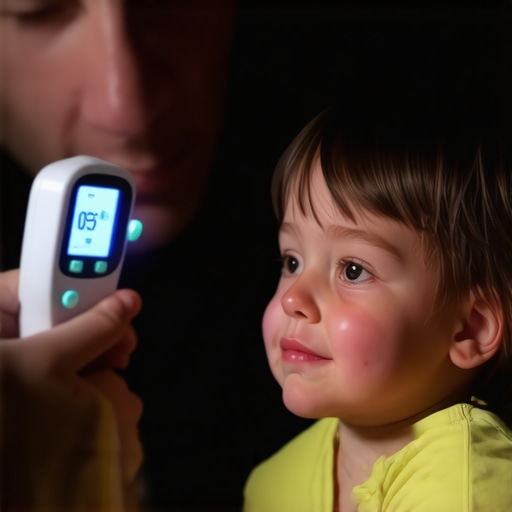
Stop Treating the Thermometer Like an Emergency Siren
Parents today are obsessed with digits. We stare at a piece of plastic showing 103 degrees and react as if the house is actively collapsing. I argue that our collective fever phobia has turned us into high-strung data collectors who have forgotten how to actually look at our children. A fever is not the enemy. It is a biological signal, a natural defense mechanism that our bodies have used for millennia. Yet, the moment the mercury rises, we rush to the car, fueling a cycle of medical anxiety that clogs waiting rooms and leaves families exhausted.
You might think that a high number equals a high risk. You are wrong. The number on that screen is the least important part of the equation. What matters is the child behind the number. Are they playing? Are they drinking? Or are they listless and gray? We have outsourced our common sense to digital sensors, and in doing so, we have lost the ability to distinguish between a routine virus and a genuine crisis. This is why I believe why you should stop using Dr. Google for your child’s high fever. Searching for symptoms online at 2 AM is a recipe for a panic attack, not a diagnosis.
The ER is Not Your Safety Blanket
The modern emergency room has become a catch-all for parental insecurity. We treat the ER like a drive-thru for peace of mind, ignoring the fact that these facilities are designed for life-altering trauma, not a standard pediatric flu. It is a waste of resources and, frankly, a waste of your time. Instead of rushing into the night, we need to embrace the middle ground. Most emergencies are actually just discomforts that require a steady hand and a bit of patience.
Think of a fever as a smoke detector. It is supposed to go off. If you rip it out of the ceiling every time you sear a steak, you are missing the point. Sometimes the smoke is just a byproduct of the body doing its job. This is where modern tools actually help if used correctly. I am a firm believer in the check-in before the check-out. Using the reason your child needs a virtual triage before the ER can save you six hours in a plastic chair next to someone with a hacking cough. We must stop sprinting to the finish line before the race has even started. Real urgency is not found in a number; it is found in the struggle to breathe, the inability to wake up, or the persistent lethargy that no amount of medicine can touch. Everything else is just the body at work.
The Convenience Culture Trap
The problem isn’t the fever; the problem is our pathological need for immediate certainty in a biological world that thrives on nuance. We have transitioned into a society where we expect health to function like a high-speed internet connection—constant, predictable, and fixable with a single click. When a child’s temperature climbs, we don’t see a body fighting an infection; we see a broken thermostat that needs an emergency repairman. This is a fundamental misunderstanding of human physiology. We have been conditioned to believe that discomfort is a defect. It is not. Discomfort is often the sound of the immune system’s gears turning. By rushing to the ER for a simple viral spike, we aren’t just wasting time; we are participating in a culture that prioritizes the illusion of control over actual clinical necessity.
${PostImagePlaceholdersEnum.ImagePlaceholderB}
Numbers Are Not Diagnoses
Let’s look at the cold, hard reality of the waiting room. Statistics from the CDC and various pediatric associations consistently show that nearly 50% of pediatric emergency room visits are classified as non-urgent. That 50% is not a statistic; it is a collapse of parental confidence. It represents millions of hours spent in fluorescent-lit hallways for conditions that required nothing more than hydration and a dark room. We are obsessed with the digits on the thermometer because they are objective, and in an era of medical anxiety, we cling to the objective like a life raft. But a 104-degree fever in a child who is still cracking a smile and sipping juice is infinitely less concerning than a 99-degree temperature in a child who is grey and unresponsive. The number is a distraction. The child is the evidence. When we prioritize the sensor over the subject, we lose the ability to parent with our eyes and start parenting with our calculators.
The Erosion of Parental Instinct
The root cause of this frantic dash to the hospital is the systematic erosion of parental intuition. We have been told, subtly and constantly, that we are unqualified to observe our own children. We are led to believe that without a battery of lab tests or a physician’s nod, we cannot possibly know if our child is ‘okay.’ This is a lie. This dependency creates a feedback loop of anxiety that fuels unnecessary urgent care visits and clogs the system for those in genuine peril. It is a manufactured crisis. We treat chronic care issues and acute viral symptoms with the same level of hair-trigger intensity, failing to distinguish between a long-term management plan and a short-term immune response. This lack of discernment is what leads to the ‘ER or bust’ mentality. We have forgotten that for most of human history, a fever was respected as a sign of strength, not a harbinger of doom. We need to reclaim that perspective. We must stop viewing the body as a machine that is constantly on the verge of breaking and start viewing it as an incredibly resilient organism that knows exactly what it is doing.
A Broken System of Escalation
When you bypass your primary care provider or a simple telehealth consultation to sprint straight to the emergency department, you are escalating a minor skirmish into a full-scale war. The system is designed to triage based on the worst-case scenario. If you show up, the machinery of defensive medicine begins to grind. This often leads to unnecessary interventions—blood draws that terrify the child, imaging that isn’t required, and the exposure to actual, dangerous pathogens lingering in the air of a crowded waiting room. It is a cycle of escalation that serves no one. The real emergency isn’t the temperature of the child; it is the temperature of the room. We are overheated with panic, and until we learn to cool our own heels before we cool our children’s skin, the cycle will only get worse.
The Safety Fallacy
Critics will argue that a child’s life is far too precious to gamble on a ‘wait and see’ approach. They will tell you that the cost of being wrong far outweighs the inconvenience of a six-hour wait in a plastic chair. This is the ultimate conversation-stopper. The ‘better safe than sorry’ mantra is a powerful emotional shield that guards against any rational discussion of clinical necessity. It suggests that the ER is a risk-free environment where safety is guaranteed and the only cost is time. I used to believe this too, until I realized that the emergency room itself is a theater of risk. When you bring a child with a simple virus into a room filled with genuinely sick people, you aren’t just seeking safety; you are trading a manageable fever for potential exposure to much more aggressive pathogens. You are trading a calm recovery for the trauma of invasive lab tests that a panicked system feels forced to perform. The ‘safety’ of the hospital is often a mirage that hides the very real dangers of over-medicalization.
We have been conditioned to think that the most expensive, most intense intervention is inherently the best. But in the world of pediatrics, the best care is often the least invasive. The argument that ‘only a doctor can tell’ is exactly why telehealth and virtual triage exist. They provide the professional filter without the collateral damage of a hospital admission. By bypassing these steps, you aren’t being extra careful; you are being impulsive. You are operating out of a fear that has been commercialized by a healthcare system that profits from your uncertainty.
${PostImagePlaceholdersEnum.ImagePlaceholderC}
The Professional Shield Trap
The common trap many parents fall into is believing that by physically being in a hospital, they have successfully outsourced their responsibility. They feel that if something goes wrong, it’s now ‘on the doctors.’ This is a psychological coping mechanism, not a medical strategy. It ignores the fact that most chronic care and acute viral recovery happen at home, in the quiet hours of the night, through observation and hydration. When we rush to the ER, we are often just looking for a professional to tell us what we already know, but at a cost that is becoming unsustainable for our medical infrastructure. The emergency room is a blunt instrument designed for blunt trauma. Using it for a fever is like using a sledgehammer to hang a picture frame. You might get the job done, but you’re going to destroy the wall in the process.
The reality that no one wants to talk about is that our anxiety has become a commodity. Every unnecessary lab test and every redundant urgent care visit is a symptom of a society that has lost its grip on the concept of ‘normal.’ A fever is normal. It is a sign of a functioning immune system. To treat it as a catastrophic failure of the body is to fundamentally misunderstand what it means to be human. We need to stop asking ‘what if it’s the worst-case scenario?’ and start asking ‘what does my child actually need right now?’ Usually, the answer isn’t a specialist or a sterile room; it’s a parent who isn’t vibrating with panic, a cool washcloth, and the patience to let the body do exactly what it was built to do.
If we do not arrest this slide into medical dependency, the consequences will extend far beyond the fluorescent lights of the local ER. We are currently witnessing the systematic dismantling of the most basic human skill: the ability to assess our own survival. If this trend continues, five years from now, the healthcare system will not just be strained; it will be unrecognizable. We will have a society where the ‘worried well’ occupy every available bed, while those with actual, life-threatening traumas are forced to wait behind a line of parents seeking a professional blessing for a runny nose. This isn’t just about resource management; it is about the atrophy of the human spirit and the loss of our biological confidence.
What Are We Waiting For?
We are waiting for a permission slip that will never come. We are waiting for a piece of technology to tell us that our children are resilient, when we should already know they are. We have become like pilots who have spent so much time relying on autopilot that we have forgotten how to feel the wind or read the horizon. When the system glitches—and it always does—we are left paralyzed, staring at a screen while the plane handles perfectly fine on its own. This dependency is a prison of our own making. We are trading our freedom and our peace of mind for the cold, clinical comfort of a data point that means next to nothing in isolation.
${PostImagePlaceholdersEnum.ImagePlaceholderD}
The Final Threshold of Common Sense
The most terrifying implication of this shift is the message we are sending to the next generation. We are raising children who believe that a slight elevation in body temperature is a catastrophic event requiring professional intervention. We are teaching them that their bodies are unreliable machines that need constant monitoring by outside experts. This is a recipe for a lifetime of health anxiety and a total loss of agency. By the time these children reach adulthood, the concept of ‘waiting it out’ or ‘trusting the process’ will be viewed as a dangerous heresy. We are effectively engineering the resilience out of our species, replacing it with a fragile reliance on a medical-industrial complex that is already buckling under the weight of our demands.
The Point of No Return
We are standing at a crossroads where the path of least resistance leads to total systemic failure. Every time we choose the ER over the quiet observation of our own home, we add another brick to the wall between us and our instincts. This is the moment where we must decide if we want to be parents or if we want to be data entry clerks for a healthcare system that doesn’t have the capacity to hold us. The warning signs are flashing red, and they aren’t on the thermometer—they are in our culture. If we do not reclaim our roles as the primary guardians of our children’s health, we will find ourselves in a future where we are no longer capable of recognizing life’s natural rhythms, leaving us vulnerable to every minor breeze that blows our way. The time to stop the panic is not at the hospital door; it is in the quiet of the nursery, before the first dose of medicine is even poured.
The Warning Shot
If we continue to outsource our common sense to every digital sensor in the house, we are not just wasting our time—we are systematically eroding the fabric of our own intuition. This is the moment where we must decide if we want to be parents or if we want to be data entry clerks for a healthcare system that simply does not have the capacity to hold us. When we look at urgent care innovations streamlining same day lab tests for faster results, we see tools designed to supplement care, not replace the fundamental human ability to assess a child’s basic well-being. If we do not stop treating every biological flicker like a house fire, the day will come when the system is so overwhelmed it cannot respond to the real ones. We are engineering the resilience out of our species, replacing it with a fragile reliance on a medical-industrial complex that thrives on our inability to trust ourselves.
The Final Verdict
The emergency room is a sanctuary for the critically ill, not a high-priced reassurance center for the digitally anxious.
The Twist
The great irony of our obsession with ‘safety’ is that by rushing into a hospital for a routine virus, we are exposing our children to the very pathogens we fear most, turning a mild discomfort into a legitimate medical gamble. We must shift our focus toward chronic care management personalized telehealth strategies for better outcomes to handle the nuances of long-term health, while reclaiming our eyes for the immediate. The greatest medicine you can provide a feverish child is a parent who refuses to vibrate with panic. Stop parenting your calculator and start parenting your child.