
Why You Should Never Ignore a Sudden Change in Mole Color
Your Skin is Not a Mood Ring—Ignoring a Mole Change is a Gamble You Will Lose
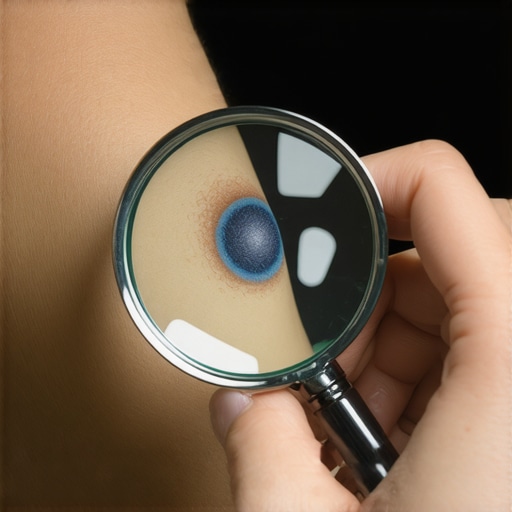
Imagine your body is a high-performance engine. If a dashboard light flashes red, you don’t keep driving and hope the bulb burns out. You pull over. Yet, when a mole on your skin shifts from a familiar tan to an aggressive charcoal or a muddy red, the collective response is often a shrug. You might think a little discoloration is just “getting older” or a harmless sun spot. You’re wrong. In fact, you are dangerously misinformed. I believe that ignoring a sudden change in mole color is not just a lapse in judgment; it is a calculated risk where the house always wins.
We live in an age of radical self-optimization, where people obsess over their sleep cycles and their fasting windows. Yet, we remain stubbornly blind to the most accessible diagnostic map we possess: our own skin. A mole that changes its hue is a biological whistle-blower. It is the frayed wire in the server room. When that wire sparks, you don’t wait for the fire alarm to sound before you investigate. I’ve often pointed out that the error of skipping your annual skin cancer screening is the first step toward a preventable disaster. Why are we so comfortable gambling with the only body we have?
The Danger of the Wait and See Delusion
So, why do we procrastinate? Is it fear, or is it a bizarre form of vanity that assumes we are invincible? The consensus usually suggests “monitoring” a spot. I challenge that. Monitoring is just a polite word for watching a problem grow. If you notice a change, the window for “monitoring” has already slammed shut. This is especially true when we talk about hard-to-reach places. For instance, why your annual skin check should include your scalp is a question most people never even ask until it’s too late. The scalp, the back, the soles of the feet—these are the blind spots where survival goes to die because we assume if we can’t see it, it isn’t happening.
You might tell yourself that you’re too busy for a specialist or that the local clinic is too far. These are excuses, not reasons. In the modern era, how to get a specialists referral via a telehealth call has become a basic life skill. We have the technology to bridge the gap between suspicion and certainty. If you can order a pizza with your thumb, you can certainly schedule a consultation for a suspicious lesion. I argue that we have become lazy consumers of our own health, waiting for the system to save us instead of taking the initiative. We’ve forgotten that why you should never wait for a sick visit for these 3 symptoms includes any rapid change in a skin lesion. Speed isn’t just a convenience; it is a clinical necessity.
Even when we do use modern tools, we often do it poorly. I’ve seen people try to show a doctor a mole over a grainy video call in a dark room. That’s useless. Understanding the lighting fix for better virtual dermatologist visits is part of the responsibility you bear as a patient. If you aren’t willing to provide a clear view of the problem, you aren’t really looking for a solution; you’re looking for a hollow reassurance. Stop treating your skin like a casual hobby and start treating it like the vital organ it is. The change in color isn’t a suggestion; it’s a command to act.
The Arithmetic of Neglect
The problem isn’t a lack of awareness; the problem is a fundamental failure in how we calculate risk. We treat a changing mole like a minor annoyance, a cosmetic blemish that can wait until the next convenient opening in our schedules. This is a fatal calculation. Consider the cold, hard numbers that the medical establishment often presents with a soft touch. When melanoma is caught in its earliest stage, the five-year survival rate sits at a reassuring 99 percent. But if you wait—if you let that charcoal smudge deepen and breach the dermis—that number doesn’t just dip; it collapses to roughly 35 percent once it reaches distant organs. That is not a statistical variation. It is a cliff. Every week you spend ‘watching’ a shifting border is a week you are handing over to a relentless, dividing enemy.
We are currently witnessing a bizarre paradox in modern health. We have an entire generation of people who can tell you their resting heart rate and their deep sleep percentages to the minute, yet they cannot tell you when a spot on their left shoulder transitioned from a circle to an uneven blotch. Our obsession with digital metrics has blinded us to the analog reality of our own skin. We trust the algorithm more than the evidence staring back at us in the mirror. I argue that this isn’t just ignorance; it is a specialized form of vanity. We believe that because we are ‘healthy’—because we run marathons or eat kale—that we are somehow exempt from the cellular errors that lead to malignancy. Nature does not care about your fitness streak. It only cares about the mutation that went unchecked.
${PostImagePlaceholdersEnum.ImagePlaceholderB}
The Biological Trait of Denial
The root cause of this delay is a cultural obsession with ‘urgent care’ as a reactive tool rather than a proactive shield. People wait for pain. They wait for a lump, a bleed, or a fever. But skin cancer is a silent architect. It builds its foundations in the dark, beneath a surface that looks largely unchanged to the untrained eye. By the time a mole is painful or bleeding, the battle is already in its middle stages. This is why the ‘wait and see’ approach is essentially a suicide pact with your own cells. If you see a change, the time for observation is over. You have already observed the shift; now you must respond to it.
We also suffer from a misguided reliance on the ‘annual checkup’ as a catch-all safety net. If a mole changes in February and your appointment isn’t until November, waiting for that date is an act of insanity. The system is designed to facilitate your health, not to dictate the timeline of your survival. We have the tools. We have the ability to secure a specialist’s eyes through a screen in a matter of hours. To ignore these resources in favor of ‘keeping an eye on it’ is a move of staggering arrogance. You are betting your life that your amateur intuition is better than clinical pathology. The house always wins that bet, and the currency is your time.
It is time to stop pretending that every change is benign. It is time to stop looking for excuses to stay home. The reality is simple: a mole that evolves is a mole that is active. And in the world of oncology, activity is often the precursor to aggression. You aren’t being ‘careful’ by monitoring it yourself; you are being negligent. The skin tells you exactly what is happening if you are brave enough to listen to the warning. Ignoring it doesn’t make the problem go away; it just gives it a head start.
Critics will argue that I am advocating for a state of permanent hypochondria, a world where we spend our mornings cataloging every freckle with a magnifying glass. They suggest that the ‘over-medicalization’ of skin care leads to unnecessary biopsies, skyrocketing insurance premiums, and a culture of fear. They point to the ‘worried well’—people who occupy specialist slots that should be reserved for the truly ill. It is easy to see why people think this way; we are bombarded with health warnings daily, and the desire to tune out the noise and live a ‘normal’ life without constant self-scrutiny is a powerful, relatable instinct.
I used to believe this too, until I saw the data on how quickly a ‘minor’ discoloration becomes a systemic invasion. The argument against proactive checking is built on a foundation of intellectual laziness. It assumes that the cost of a false positive is higher than the cost of a missed diagnosis. This is a mathematical absurdity. A biopsy is a ten-minute inconvenience with a one-week recovery; a metastatic melanoma is a multi-year battle with no guarantee of survival. When you frame the discussion as ‘avoiding anxiety,’ you are prioritizing a temporary emotional state over the permanent biological reality of your cells. We have been conditioned to believe that moderation is always the virtuous path, but in the case of evolving lesions, moderation is just a polite word for a gamble you cannot afford to lose.
The Myth of the Over-Anxious Patient
The system is indeed flawed, but using that flaw as an excuse for personal negligence is a tactical error. People claim they don’t want to ‘bother’ a doctor or they don’t want to appear paranoid. This is a bizarre form of social performance. You are essentially willing to risk a lethal malignancy to avoid a moment of social awkwardness or a copay. I argue that the ‘anxiety’ of a skin check is actually an evolutionary asset. It is your survival instinct attempting to overcome your modern apathy. If your smoke detector went off, you wouldn’t sit in the living room arguing that most alarms are false; you would check the kitchen.
${PostImagePlaceholdersEnum.ImagePlaceholderC}
The current pushback against ‘over-diagnosis’ is particularly dangerous because it ignores the actual nature of skin pathology. Unlike a slow-growing internal tumor that might be found during a routine scan years later, skin cancer is visible. It is the only cancer that hands you the blueprint of its own destruction. To ignore that blueprint in the name of ‘not being that person’ is a failure of logic. We are not talking about checking your pulse every ten seconds; we are talking about noticing when a part of your body changes its fundamental appearance. That isn’t hypochondria; it is basic maintenance.
We also need to address the idea that waiting is a neutral act. It isn’t. Every day a suspicious mole is left unexamined, the potential for it to breach the basement membrane increases. The ‘wait and see’ crowd suggests that if it doesn’t change quickly, it must be fine. But cancer doesn’t always move at a sprint; sometimes it crawls until it finds a blood vessel, and then it takes flight. By the time you are ‘sure’ enough to seek help, the window for a simple excision may have already closed. The truth is that we have become comfortable with the wrong risks. We fear the doctor’s office more than we fear the disease, and that is a mindset that only serves the pathology, not the patient.
If we continue down this path of selective ignorance, the consequences will ripple far beyond individual tragedies. We are currently architecting a future where preventable illness becomes the primary driver of our healthcare collapse. When you ignore a changing mole today, you aren’t just taking a personal risk; you are contributing to a systemic normalization of neglect. If this trend of reactive rather than proactive care persists, five years from now we will see a medical landscape choked with late-stage diagnoses that should have been simple office visits. We will be forced to explain to a generation why we had the tools of the gods—telehealth, instant lab tests, and specialist access at our fingertips—but chose to look the other way because it was inconvenient to acknowledge a blemish.
What happens when the silence ends?
The stakes couldn’t be higher. We are talking about the difference between a minor excision and a terminal prognosis. Imagine a dam with a single, hairline crack. Today, that crack can be sealed with a single trowel of cement and a few minutes of effort. This is the stage where a suspicious mole is caught early. But if you ignore that crack, convinced it is just a cosmetic flaw in the concrete, the pressure of the reservoir continues to build. By the time you hear the roar of the water, the time for repair has passed. The entire valley is at risk. That is the biological reality of melanoma. It doesn’t stay on the surface; it breaches the walls and floods the system. The price of our current apathy is a future defined by avoidable mourning.
${PostImagePlaceholdersEnum.ImagePlaceholderD}
The Point of No Return
We are standing at a crossroads of our own making. We can choose to be an active participant in our survival or a passive observer of our decline. The ‘wait and see’ culture is a slow-motion disaster that drains our resources, our families, and our collective health. If we don’t change how we respond to the biological signals our bodies send, we are effectively choosing a lower quality of life. This isn’t just about skin; it’s about our fundamental relationship with truth. When the evidence is staring at you from the mirror and you choose to call it ‘nothing,’ you are training yourself to ignore reality in all its forms. This cognitive dissonance is a contagion. It spreads from how we treat a mole to how we treat chronic care and eventually to how we value life itself.
In five years, I fear we will look back at this era of ‘digital health’ as a wasted golden age. We have the connectivity to solve these problems in real-time, yet we use it for everything except our own preservation. The warning light is flashing red on the dashboard of our collective well-being. To keep driving without stopping is not an act of bravery; it is an act of profound and terminal stupidity. The house is already winning. Every second we spend debating whether a change is ‘serious enough’ is another second the house collects its interest. The bill is coming due, and it is a debt that cannot be paid with excuses.
The Final Verdict
The arithmetic of survival is unforgiving, and the variable you control is time. If you continue to treat your skin like a passive canvas rather than a vital organ, you are not just ignoring a symptom; you are forfeiting your future. We have entered an era where telehealth breakthroughs how virtual visits elevate chronic care in 2025 have removed every valid excuse for delay. The technology exists to save you, but it requires the humility to admit you might be wrong about that ‘harmless’ spot.
${PostImagePlaceholdersEnum.ImagePlaceholderA}
The Twist
The twist in this narrative is that the very tools we use to distract ourselves—our smartphones and high-speed connections—are the same tools that offer a direct path to resolution. Utilizing urgent care innovations streamlining same day lab tests for faster results is no longer a luxury; it is a clinical necessity for anyone who notices a shift in their biological landscape. You are not a ‘worried well’ patient for seeking clarity; you are a rational actor in a world where the house always wins against those who wait.
Your Move
Stop treating the ‘wait and see’ approach like a virtue. It is a gamble with a 35 percent survival rate once the stakes get high. You wouldn’t ignore a fire in your kitchen because you’re busy; don’t ignore the fire on your skin. The next time you look in the mirror and see a border that has blurred or a color that has deepened, don’t ask yourself if it can wait. Ask yourself if you are prepared to lose everything because you were too polite to be certain. The silence of a changing mole is not a comfort; it is a countdown. Stop watching the clock and start moving the needle. Your life is worth more than a moment of social convenience.