
How to Keep Your Senior Parent Hydrated Without Constant Nagging
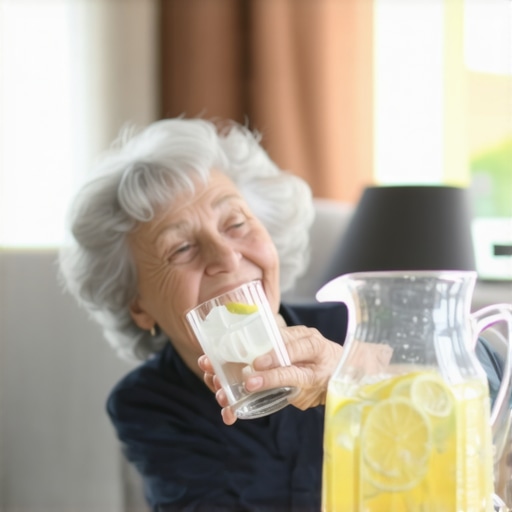
Your Nagging is Not a Hydration Strategy
Stop asking your elderly parents if they are thirsty. They are going to say no. They will say it while their skin is papery, their eyes are sunken, and their confusion is mounting. You might think you are being helpful by hovering with a massive 32-ounce plastic bottle, but you are actually becoming the obstacle. Constant prodding does not solve the physiological decline of the thirst mechanism; it just turns a biological necessity into a power struggle. We treat our seniors like unruly toddlers, and then we wonder why they resist our ‘help’ with such fierce, irrational stubbornness.
I argue that the current approach to senior hydration is fundamentally broken because it relies on willpower rather than environment. By the time a senior feels thirsty, they are already behind the curve. Their brain is essentially sending a ‘low battery’ signal long after the system has started to shut down. If you want to keep them out of the hospital, you have to stop acting like a drill sergeant and start acting like a designer. You need to understand how to tell if your aging parent is actually dehydrated before the physical symptoms become a crisis that requires an emergency room visit.
The Thirst Mechanism is Lying to Them
Think of a senior’s hydration level like a vintage car with a slow-leaking radiator. You do not wait for the smoke to billow from the hood to add coolant, yet you do not stand over the engine with a gallon jug every five minutes either. You simply ensure the fluid is there, accessible, and integrated into the machine’s operation. As we age, the signal between the gut and the brain weakens. The sensation of thirst isn’t just ‘lessened’—it is often absent. This is a cold, hard biological betrayal. When you nag, you are asking them to respond to a signal they literally cannot feel.
[image-placeholder]
Instead of the ‘big bottle’ approach, we should be looking at stealth hydration. Why are we obsessed with plain water? It is boring, it causes frequent bathroom trips that seniors fear, and it feels like a chore. High-water-content foods, smaller and more frequent sips, and flavored options are far more effective than a lecture on cellular health. If you are managing complex health issues, you already know the stakes. You are likely already navigating the strategy for managing multi-medication schedules in seniors, and adding a ‘water schedule’ to that list is a recipe for burnout—for both of you. You have to make the water invisible, not an event.
We also have to talk about the ‘difficult draw.’ Have you ever taken your parent for blood work and watched the technician struggle to find a vein? That is a direct result of the hydration failure you are trying to prevent. I have seen families endure hours of stress because they didn’t realize why you must stay hydrated before a difficult blood draw. It isn’t just about general health; it is about making the entire medical process less traumatic. If you want to stop the nagging, you have to stop making water the enemy and start making it an effortless part of their day-to-day reality.
The Hypothalamus is Offline
The primary issue isn’t stubbornness. It is biological atrophy. As the body ages, the osmoreceptors—the sensors that monitor blood concentration—simply become less sensitive. This is a total system failure masquerading as a personality trait. When we demand that a senior ‘just drink more,’ we are asking an engine with a broken sensor to tell us when it is overheating. It cannot. The sensor is dead. The brain is effectively telling the body that everything is fine while the blood thickens and the organs labor. We treat this as a behavioral problem, but it is a hardware failure. You cannot negotiate with a broken sensor. You cannot lecture a malfunctioning hypothalamus into working again. It is a biological betrayal that we misinterpret as a lack of willpower.
We have spent decades focusing on the psychology of the ‘difficult’ patient when we should have been looking at the biology of the aging brain. The signal that triggers the urge to drink is not just delayed; it is often muted to the point of silence. This is why your nagging feels like an assault. To them, you are forcing a solution for a problem they do not physically experience. They feel full. They feel fine. Until they dont. ${PostImagePlaceholdersEnum.ImagePlaceholderB}
The Statistics of Neglect
The data on this is not just concerning; it is an indictment of our current care models. Research indicating that nearly 40% of elderly patients arriving at the emergency room are chronically under-hydrated is not a minor oversight. That 40% figure is a collapse of the domestic care system. It proves that our reliance on the individual’s instinct to drink is a losing bet. We are betting against biology, and we are losing every single day. If four out of ten seniors are hitting the ER because they are ‘dried out,’ then the strategy of ‘asking them if they want water’ has officially failed. It is a dead strategy walking.
This lack of fluid is not just about thirst; it is the catalyst for a cascade of catastrophic failures. Dehydration is the quiet engine behind falls, urinary tract infections, and sudden cognitive declines that families mistake for permanent dementia. When the blood volume drops, the brain is the first to suffer. A senior who was lucid at breakfast can be hallucinating by dinner simply because their blood pressure plummeted along with their fluid levels. We are not just talking about dry skin; we are talking about the integrity of the central nervous system.
The Social Friction of the Sippy Cup
The problem is also the architecture of the intake. Look at the standard water glass. It is heavy, it is wide, and for someone with arthritis or a tremor, it is a weapon of potential embarrassment. We set these people up for failure and then act surprised when they opt for ‘no thanks.’ The problem is the delivery system. A 20-ounce tumbler is a mountain. A 4-ounce juice glass is a manageable step. If the vessel is too heavy or the path to the bathroom is too long, the math of hydration will always result in a deficit. Seniors are smart; they calculate the cost of a glass of water. They see the weight of the glass, the effort to stand, and the risk of an accident on the way to the toilet. Often, they decide the water isn’t worth the risk. It is a rational choice based on an irrational biological state. If we want to fix this, we have to stop treating the water as an option and start treating it as a non-negotiable part of the environment. The glass must be light, the sips must be small, and the ‘ask’ must be replaced by the ‘availability.’ No more questions. Just presence.
Critics will say that we must respect the dignity of risk—the idea that an eighty-year-old has earned the right to decide what goes into their body, even if that choice is objectively harmful. It sounds compassionate. It feels like we are preserving their agency in a world that is rapidly stripping it away. We tell ourselves that forcing a glass of water on someone who says they aren’t thirsty is a violation of their personhood. It is easy to see why people think this hands-off approach is the ethical high ground. We want to avoid the ‘parent-child’ reversal that so many seniors dread. But this perspective completely ignores the cold, hard reality of biological failure. When the brain’s thirst center is effectively offline, ‘choice’ is no longer a functional concept. I used to believe this too, until I watched a family celebrate their father’s ‘independence’ while his kidneys were quietly shutting down. They thought they were being respectful; in reality, they were watching him evaporate. We have fallen into a common trap where we mistake a symptom of neurological decline for a valid lifestyle preference. If a senior had a broken leg, you wouldn’t ‘respect their choice’ to run a marathon. You would recognize the physical limitation and provide the necessary support. Dehydration is no different. It is a physical limitation of the internal sensors. By framing this as a matter of autonomy, we are essentially gaslighting ourselves into avoiding a difficult conversation.
The Autonomy Trap is a Dangerous Lie
The argument for autonomy fails because it assumes a level of internal data that the senior simply does not have. To make a choice, you need information. If your body isn’t telling you that you’re thirsty, you aren’t choosing not to drink; you are simply unaware of the need. This is where our current care models in chronic care and urgent care settings are failing. We wait for the lab tests to show elevated creatinine or sodium levels before we take the situation seriously. We wait for the telehealth appointment where the doctor notices the sunken cheeks and the raspy voice. But by then, the damage is done. We are reacting to a crisis instead of preventing a biological certainty. ${PostImagePlaceholdersEnum.ImagePlaceholderC} This obsession with ‘not being a bother’ or ‘respecting their space’ is a luxury that medical reality cannot afford. When we prioritize the comfort of the caregiver—who wants to avoid a conflict—over the hydration of the patient, we are participating in a form of soft neglect. We need to stop asking for permission and start integrating fluid intake into the environment as a non-negotiable standard. This doesn’t mean physical force; it means changing the architecture of the day so that ‘no’ isn’t even an option. If you are managing chronic care at home, your primary job isn’t to be a waiter; it is to be a life-support system. The data from every urgent care clinic in the country tells the same story: seniors are arriving in states of profound dehydration that were entirely preventable. When we look at the results of lab tests for these patients, we see a profile of systemic stress that could have been mitigated by four or five small glasses of water spread throughout the day. The ‘respect autonomy’ crowd will tell you that the emotional cost of the struggle is too high. I argue that the physical cost of a hospital admission, the risk of a fall-induced hip fracture, and the trauma of an IV start in a dehydrated vein are infinitely higher. We are choosing a small, daily peace over a long-term, catastrophic war. It is time to stop pretending that ‘I’m not thirsty’ is an informed medical opinion.
If we continue to treat hydration as a matter of polite suggestion, we are effectively signing a death warrant for the next generation of seniors. The price of our collective politeness is a rising tide of metabolic collapse. When we ignore the biological reality that the thirst mechanism is a broken sensor, we aren’t being respectful; we are being negligent. This is not a minor oversight. It is a systemic failure that ripples through every level of our medical infrastructure, from the family living room to the overcrowded hallways of the local emergency room. We are standing on the edge of a precipice, watching our elders fade into a state of preventable fragility because we are too afraid to challenge the myth of ‘choice’ in the face of physiological decay.
The Price of Our Politeness
The stakes could not be higher. Right now, every time a caregiver accepts ‘no’ for an answer from a dehydrated senior, they are inviting a cascade of medical catastrophes. We are talking about the difference between a functional afternoon and a life-altering hip fracture. When fluid levels drop, the blood thickens, the heart works harder, and the brain begins to misfire. This is the moment where ‘slight confusion’ turns into a permanent state of cognitive decline. If we don’t change our approach, the cost will be measured in more than just dollars; it will be measured in the loss of quality of life and the unnecessary acceleration of mortality. We are trading long-term safety for short-term comfort, and it is a bargain that no medical professional should ever accept.
A Future of Preventable Collapse
Imagine the world five years from now if this trend persists. As the global population ages, our healthcare systems will be swallowed whole by a surge of cases that should never have happened. If the current rates of under-hydration continue, the pressure on chronic care facilities and urgent care clinics will reach a breaking point. We will see a world where hospital beds are perpetually filled with seniors who simply needed better access to fluids. Telehealth platforms will be clogged with consultations for symptoms that could have been resolved with a glass of water, and lab tests will continue to return results that scream of systemic stress. This is a vision of a medical system in a state of self-inflicted siege. We have the data, we have the tools, and we have the knowledge, yet we remain paralyzed by a fear of being overbearing.
${PostImagePlaceholdersEnum.ImagePlaceholderD}
What Are We Waiting For?
To understand the gravity of this situation, consider the analogy of a drought-stricken forest. A forest without moisture is not just ‘thirsty’; it is a tinderbox waiting for a single spark to trigger a total wildfire. In this scenario, the senior’s body is that dry timber. Dehydration is the state of being ready to ignite. A minor infection, a slight change in medication, or a small stumble becomes the spark that burns the entire system down. We cannot wait for the smoke to appear before we start the irrigation. By then, the damage is internal and often irreversible. We must treat water as the preventative rain that keeps the entire ecosystem from a catastrophic burn. This isn’t just about drinking; it is about fireproofing the human body against the inevitable heat of aging.
This shift from passive to active care is a moral imperative. We have to stop looking at the ‘I’m not thirsty’ response as a valid medical status and start seeing it for what it truly is: a symptom of a failing system. The transition to a more aggressive, environment-based hydration strategy is the only way to safeguard the future of senior health. We are currently wasting the opportunity to significantly reduce the burden on our medical institutions and the trauma on our families. The warning signs are everywhere, etched in the results of every difficult blood draw and every avoidable ER admission. We have reached the point where silence is complicity.
The Final Verdict
The era of polite suggestions has failed our elders, and the only path forward is to replace the question of hydration with the certainty of environment.
We have spent too long hiding behind the shield of ‘respecting autonomy’ when what we were actually doing was avoiding the discomfort of a difficult conversation. True advocacy for a senior means recognizing that their brain is no longer providing the data they need to survive. When you finally learn how to tell if your aging parent is actually dehydrated, you lose the luxury of being a passive observer. You become the critical link in their life-support system. This isn’t about control; it’s about the fundamental duty of care that we owe to those who can no longer sense their own needs.
[image-placeholder]
The most profound shift we can make is moving from reactive crisis management to proactive environmental design. This aligns with the broader movement in telehealth breakthroughs where we use technology and strategy to prevent the collapse before it starts. If we continue to wait for the emergency room to provide the fluids, we are participating in a cycle of systemic failure that exhausts caregivers and traumatizes patients. We must leverage every tool available, from urgent care innovations that provide rapid diagnostics to the simple, daily act of placing a small glass of water on a nightstand.
The Bottom Line
The twist is that by ‘forcing’ hydration through stealth and environmental cues, we are actually preserving the very independence we claim to protect. A hydrated senior is a lucid senior, a mobile senior, and a senior who stays out of the hospital. We are not just giving them water; we are giving them their life back. Stop asking if they are thirsty. They are not. Drink for them anyway. Hydration is not a lifestyle choice; it is the fundamental maintenance of a human life. It is time we started treating it that way.