
How to Treat a Sprained Wrist at Home Before Calling Urgent Care
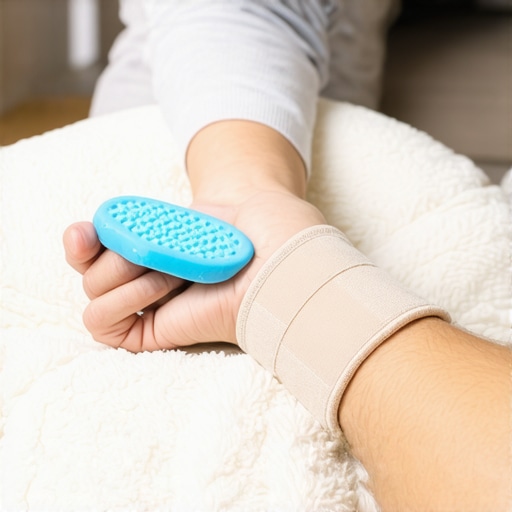
Stop Panicking and Put Down the Car Keys
You tripped. Your wrist hit the pavement with a sickening thud. Now, there is a dull throb and a faint purple hue blooming under your skin. Your first instinct? Panic. Your second? Grabbing your keys to drive to the nearest clinic. I argue that this knee-jerk reaction is exactly what is wrong with our modern approach to health. We have become a culture of clinical addicts, seemingly incapable of icing a joint without a professional holding our hand. Most of you are rushing to the doctor when you should be raiding your freezer for a bag of frozen peas. Why do we insist on paying a premium for someone to tell us what we already know? You might think you are being responsible by seeking immediate help, but you are often just cluttering a system that is already gasping for air. You have been conditioned to believe that ‘peace of mind’ is something you buy at a front desk for a fifty-dollar co-pay. I am here to tell you that peace of mind starts with a bit of grit and some basic ice.
The Medical System Is Not Your Safety Blanket
Seeking professional help for a minor wrist tweak is like calling the fire department because you burnt a piece of toast. It is overkill, and frankly, it is expensive. I have seen it time and again: people sit in waiting rooms for three hours only to be told to buy a ten-dollar brace and take some ibuprofen. I am telling you now: stop. If you can move your fingers, if the bone is not poking through the skin, and if the pain is not making you lose consciousness, you have time. You have the ability to manage this yourself. We have forgotten that our bodies are resilient machines, not fragile glass sculptures. When you rush out the door at the first sign of swelling, you ignore the reality that your local ER is the wrong place for that sprained ankle or wrist. It is a drain on your wallet and a drain on public resources that should be reserved for those actually facing a crisis.
Before you even think about a co-pay, you need to master the art of the home triage. This is not about being ‘tough’ in some masculine, outdated sense. It is about being smart. I believe that if you cannot manage a basic sprain at home, you are failing a fundamental test of modern survival. Wrap it. Ice it. Raise it above your heart. If the swelling has not gone down in forty-eight hours, then—and only then—should you consider a professional opinion. Even then, you should be looking for the triage hack that skips the long urgent care waiting room instead of just showing up unannounced like an unwanted guest at a dinner party. We need to stop acting like every minor bruise is a life-threatening catastrophe that requires a white coat for validation. If you truly want to be efficient with your time, learn the quick triage hack for faster urgent care visits for the times when the injury is actually significant. Until then, sit down, stay put, and wait. Your wrist—and your bank account—will thank you for the restraint. We have outsourced our common sense to insurance-covered facilities, and it is time we took it back. Do you really need a doctor to tell you that hitting the ground hurts? I think not. Treat the inflammation, watch the clock, and reclaim your agency.
A Catastrophic Failure of Intuition
The problem isn’t a lack of healthcare access; the problem is a catastrophic failure of basic human intuition. We have been sold a lie that every physical sensation requires a professional diagnosis. This is the commodification of reassurance. When you walk into an urgent care for a wrist that is merely sore, you aren’t looking for a cure. You are looking for a blessing. You want a person in a white coat to give you permission to keep living your life. It is a psychological crutch, and it is expensive. They know it. They profit from it. We have traded our autonomy for a co-pay, and the result is a system clogged with the worried well.
Look at the numbers. They are damning. Data consistently shows that nearly thirty percent of emergency room visits are for conditions that could have been handled in a primary care setting—or better yet, at home with a bag of ice and some patience. That thirty percent is not a statistic; it is a systemic hemorrhage. It is the reason you wait four hours for a flu shot. It is the reason the nursing staff looks perpetually haunted. We are suffocating the very professionals we claim to respect by demanding they treat us for the crime of being clumsy. It is an act of medical narcissism to think your minor bruise deserves the same immediate attention as a cardiac event.
The Mirage of Clinical Necessity
The root cause of this behavior is a fundamental distrust of our own biology. We act as if the human body is a precarious house of cards that will collapse if not constantly monitored by an external authority. This is nonsense. Your body has evolved over millennia to handle trauma far more significant than a slip on the sidewalk. Yet, the moment we feel a twinge, we outsource our logic to an insurance-coded algorithm. The system doesn’t discourage this because, quite frankly, your fear is profitable. Every unnecessary x-ray and every ‘just in case’ consultation adds to a bottom line that thrives on your inability to self-regulate. ${PostImagePlaceholdersEnum.ImagePlaceholderB} It is a machine that eats your anxiety and spits out a bill.
We have replaced the medicine cabinet with the waiting room. Instead of an ice pack, we want an invoice. This cultural shift from ‘wait and see’ to ‘act and pay’ has stripped us of our agency. You are no longer the master of your own physical recovery; you are a consumer in a marketplace of manufactured anxiety. They lied. They told us that the system was there for emergencies, but then they built an infrastructure that rewards us for treating every stubbed toe like a fracture. If you want to fix the healthcare crisis, stop looking at policy and start looking at your own freezer. The solution to a swollen wrist isn’t a referral—it’s a little bit of silence and a lot of ice. We are conditioned to seek validation, but what we actually need is a dose of reality. Your body knows how to heal. You just need to get out of its way.
I know what you’re thinking. You’re thinking about the one person you knew who ignored a ‘twinge’ and ended up with a permanent limp or a wrist that clicks like a metronome every time they type. It is easy to see why people think that extreme caution is the only responsible path. The narrative of the ‘hidden injury’ is a powerful one. We are told that our bodies are deceptive, that internal damage can lurk beneath a simple bruise, waiting to ruin our lives if we don’t catch it within the first golden hour of an ER visit. If you believe that every ache is a potential catastrophe, then my advice to stay home sounds not just wrong, but dangerous. This is the intellectual trap of the modern patient: the belief that the rarest possible outcome should dictate the standard of care for everyone. But this obsession with the outlier completely ignores the devastating reality of medical over-servicing. When you enter the clinical machine for a minor incident, you aren’t just getting an opinion; you are triggering a sequence of events designed to maximize billable hours and minimize liability. I used to believe this too, until I realized that more data does not always equal better health. In fact, a ‘just in case’ x-ray often leads to a ‘just in case’ specialist referral, which leads to a ‘just in case’ MRI, and suddenly you are six weeks into a treatment plan for an injury that would have healed itself with two days of rest and a bag of peas. We have traded clinical judgment for a defensive checklist, and you are the one paying for the ink.
The Fear Industry Needs Your Compliance
The argument that we must rule out every 0.1% chance of a fracture is the same logic that keeps our waiting rooms overflowing and our premiums skyrocketing. It is a philosophy built on anxiety, not evidence. If you can bear weight, if the joint moves, and if the pain is manageable, the statistical probability that a doctor will do anything other than tell you to rest is near zero. Yet, we ignore these odds because we have been trained to fear our own biology. This isn’t about healthcare; it’s about the commodification of certainty. We want a stamp of approval that we are ‘fine,’ and we are willing to bankrupt the system to get it. ${PostImagePlaceholdersEnum.ImagePlaceholderC} Instead of logic, we use fear as our primary diagnostic tool. This behavior also masks the real issues, as those requiring chronic care find themselves pushed to the back of the line while clinics deal with a surge of the ‘worried well’ seeking instant gratification for transient pains. Consider the actual cost of your ‘peace of mind.’ While you are sitting in a plastic chair waiting for a doctor to tell you that your wrist is indeed sore, you are taking up space that could be used for someone experiencing a legitimate crisis. The system isn’t failing because of a lack of funding; it’s failing because we treat urgent care like a convenience store and lab tests like a personality quiz. We have lost the ability to distinguish between a discomfort and a disaster. If we continue to treat every minor physical hurdle as a medical emergency, we will eventually find ourselves in a world where real emergencies can’t get the attention they deserve because the staff is too busy documenting your papercuts and mild sprains. We need to stop asking ‘what if it’s serious?’ and start asking ‘why am I so afraid to wait forty-eight hours?’ The answer is usually that we’ve been conditioned to outsource our common sense to the nearest person with a clipboard. We use telehealth not as a tool for efficiency, but as a digital tether to a professional because we no longer trust our own skin to heal. This reliance on external validation is a weakness, not a virtue. It’s time to stop being the ‘worried well’ and start being the ‘resilient self.’ Your body isn’t a mystery that only a machine can solve; it’s a living system that usually just needs you to get out of the way and let it do its job.
We are standing at a precipice, not of medical capability, but of character. If we continue to treat every minor physical inconvenience as a mandatory clinical event, we are not just wasting money; we are dismantling the social contract of healthcare. The stakes could not be higher. Right now, the collective anxiety of the ‘worried well’ acts like a slow-motion riot outside the doors of every clinic in the country. We are demanding a level of certainty that biology cannot provide and that economics cannot sustain. If we do not rediscover the lost art of the ice pack and the waiting game, we will eventually find ourselves in a landscape where the word ’emergency’ has lost all meaning because everything has been categorized as one.
The Ticking Clock of Medical Entitlement
Imagine a fire department where ninety percent of the calls are from homeowners asking for someone to help them blow out a birthday candle. Eventually, the trucks run out of fuel, the ladders rust, and the firefighters quit out of sheer, soul-crushing boredom. Then, when a real inferno breaks out, there is no one left to answer. This is the path we are on. By flooding the system with trivialities, we are effectively burning the house down to keep our hands warm. We have reached a point where the medical industry is no longer a safety net; it is a lifestyle brand for the insecure. In five years, this trend will likely lead to a tiered system where basic human attention is a luxury item, and the truly sick are left to rot in digital queues while the system processes another million ‘just in case’ consultations.
What are we waiting for?
The warning signs are already flashing red. We see it in the burnout rates of clinicians and the astronomical rise in insurance premiums that reflect our own lack of discipline. We are waiting for a permission slip from the universe to be self-reliant again, but that permission will never come. The tragedy of our current trajectory is the wasted opportunity to build a society that actually values health rather than the mere documentation of symptoms. We are spending our national treasure on the performance of medicine rather than the practice of healing. ${PostImagePlaceholdersEnum.ImagePlaceholderD} This obsession with clinical validation is a poison that seeps into our self-image, convincing us that we are perpetually fragile and in need of constant monitoring. If we do not stop this cycle now, we will wake up to a world where the medical system is a giant, unresponsive bureaucracy that exists only to justify its own existence, leaving the resilient and the vulnerable alike to fend for themselves in the dark.
The Point of No Return
This is the warning: resilience is a muscle, and we are letting ours atrophy to the point of total failure. When we outsource our common sense, we lose more than just money; we lose our agency. We are becoming a population of medical dependents, incapable of trusting the very flesh we inhabit. The future is not a technological utopia of perfect health, but a cluttered, expensive, and ultimately hollow infrastructure that can tell you the name of your bruise but cannot save your life when it actually counts. The choice is yours: reclaim your autonomy today, or wait until the system is too broken to even tell you that you’re fine.
The Choice is Yours
We have reached the end of the line where common sense and clinical convenience diverge. You can continue to be a consumer of medical anxiety, or you can choose to be a resilient human being. ${PostImagePlaceholdersEnum.ImagePlaceholderE} When you learn how to handle a minor kitchen burn without the ER, you aren’t just saving money; you are reclaiming a piece of your humanity that the industry has tried to monetize. This is about more than just a wrist; it is about the entire ecosystem of care. We must reserve the clinical space for chronic care management and personalized telehealth strategies that actually require professional oversight. By refusing to play the role of the ‘worried well,’ you allow the system to breathe again.
Reclaim Your Agency
The next time you trip, the next time you feel a twinge, or the next time you are tempted to search for a clinic, remember that you are not a helpless spectator in your own life. Use the triage hack that skips the long urgent care waiting room only when it is truly necessary, and treat your own home as the primary site of healing. We need a revolution of self-reliance, one that starts in your kitchen with a bag of frozen peas and a little bit of patience. The healthcare crisis will not be solved by more funding or more facilities; it will be solved when we stop asking for a doctor’s blessing to simply heal.
The Final Verdict: Your health is your responsibility, not a subscription service you outsource to a waiting room.
The twist is that the medical system is not actually failing us—we are failing it by refusing to grow up and trust our own biology.
Put the keys back on the hook, walk away from the car, and go find the ice.