
Why Your Skin Rash Needs a Physical Visit Instead of a Photo
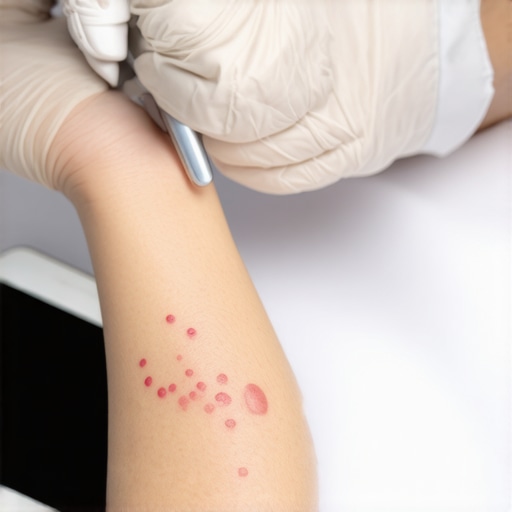
Stop Trusting Your Skin to a Selfie
I believe we have been sold a dangerous lie by the tech-utopians of the world: the idea that your smartphone is a substitute for a medical degree. You might think that sending a quick snap of that red blotch on your leg is the height of efficiency. You are wrong. In fact, you are playing a high-stakes game with your own health just to avoid a ten-minute drive. Why are we so eager to trade the safety of a physical exam for the flickering convenience of a screen? We have reached a point where the ‘convenience’ of digital health is actually a tax on our safety, and I argue that we need to stop paying it before it costs us something permanent.
The Camera Lens Is a Filter Not a Diagnostic Tool
I argue that the obsession with digital convenience has blinded us to the limitations of optics. A photo is flat. It is a two-dimensional lie that hides more than it reveals. When you show a doctor a picture, you are stripping away the context of heat, texture, and depth. Taking a photo of a rash and expecting a perfect diagnosis is like trying to appraise a vintage car through a keyhole. You see the color, sure, but you have no idea if the engine is rusted out or if the leather is rotting from the inside. Even if you follow the 5-minute lighting fix for clearer telehealth rashes, you are still presenting a curated version of reality. You are giving the doctor a thumbnail when they need the full architectural blueprint. The digital sensor on your phone lacks the sensitivity of a human touch, and no amount of megapixels can compensate for the lack of three-dimensional space.
Convenience Is a Shallow Illusion
So, why do we still pretend pixels are enough? A screen cannot feel the heat radiating from a blossoming infection. It cannot palpate the firmness of a lump or the subtle, raised border of a lesion. If you are dealing with something where you should never ignore a sudden change in mole color, a photo simply won’t cut it. Shadows, skin tones, and white balance settings can mask the very details that signal danger. I have seen people delay life-saving treatments because a grainy JPEG made a serious issue look like a simple irritation. We need to stop acting like medicine is an Instagram feed. Real diagnosis happens in the physical space between a doctor and a patient, not in the cold data centers of a tech giant. If you want results that actually matter, skip the upload button. You should seek out urgent care innovations streamlining same-day lab tests to get the truth. Your health deserves more than a ‘like’ and a digital prescription based on a blurry image taken in your bathroom mirror. Relying on the lighting fix for better virtual dermatologist visits is just putting a bandage on a broken system. If it is on your skin, it belongs in an office where it can be touched, tested, and truly seen.
The Systemic Devaluation of Diagnostic Truth
The core of the problem is not a lack of technology, but a fundamental misunderstanding of what a diagnosis actually is. We are being told that medicine is merely the act of processing data points, but this is a lie. The shift toward digital-first dermatology is not a victory for patient care; it is a victory for corporate scalability. Companies want you to believe that an algorithm or a remote reviewer can replace a hands-on exam because it is cheaper to manage a server than a clinic. It is a cost-cutting measure masquerading as a revolution. When we accept a screen as a substitute for a sterile room and a specialized lens, we are agreeing to a lower standard of care. This isn’t progress. It is a retreat from the clinical rigor that has kept us safe for a century.
A Statistical Mirage of Efficiency
We need to look at the numbers, and the numbers are terrifying. Studies have shown that diagnostic accuracy for malignant lesions can drop by as much as 30% when doctors are forced to rely solely on patient-captured photos rather than in-person dermoscopy. That 30% gap is not a mere statistical variance; it is a catastrophe. It represents the thousands of people who walk away with a ‘clear’ notification while a silent killer continues to root itself in their dermis. We have traded accuracy for speed. We have traded certainty for a ‘user-friendly’ interface. In any other field, a thirty-percent failure rate would lead to an immediate recall of the product, yet in the world of telehealth, we call it ‘expanding access.’ Access to a wrong answer is not an improvement; it is a liability. The data is clear: the sensor in your pocket is not a medical device, no matter how many megapixels the marketing department claims it has.
${PostImagePlaceholdersEnum.ImagePlaceholderB}
The Physical Void in Digital Medicine
The problem isn’t the camera. The problem is the loss of the physical exam. A diagnosis is a sensory experience. It involves the subtle resistance of a nodule under a finger, the way a rash blanches when pressed, and the warmth of the skin that signals a systemic inflammatory response. A JPEG cannot communicate temperature. It cannot communicate texture. When you remove the doctor’s hands from the equation, you are practicing a hollowed-out version of medicine. We are told that AI will eventually bridge this gap, but AI only knows what it has been shown in two-dimensional datasets. It has no concept of the human body as a living, breathing, three-dimensional entity. Every time we choose the convenience of an upload over the necessity of a physical visit, we chip away at the foundation of medical safety. We are teaching the next generation of patients that their health is a digital transaction, and in doing so, we are making ourselves more vulnerable to the errors that only a human touch can prevent. The screen is a barrier, not a bridge.
It is easy to see why the tech industry is winning this argument. The most compelling case for the digital-first approach isn’t actually about the technology; it’s about the geography. Advocates for telehealth point to the rural patient, the single parent with no transport, or the elderly person for whom a trip to the clinic is a day-long ordeal. They argue that a digital snapshot is infinitely better than no care at all. They frame the smartphone as a tool of democratization, leveling the playing field so that a person in a remote village has the same ‘access’ to a specialist as someone living next door to a major hospital. It is a seductive narrative because it paints the critics as elitists who would rather have a patient suffer in silence than receive a ‘suboptimal’ digital consultation. This is the steel-man of their position: that accessibility is the primary virtue of modern medicine.
The Accessibility Lie
But this argument rests on a hollow foundation. I used to believe this too, until I saw how the promise of ‘access’ is frequently used to justify a second-tier standard of care for the very people who can least afford a mistake. When we say that a grainy photo is ‘good enough’ for someone in a rural area, we are effectively saying their health is worth less than the precision we demand for ourselves. Access to a wrong answer is not a medical victory. It is a trap. If a patient uses a smartphone to screen a lesion and receives a false sense of security, they won’t seek out the urgent care innovations streamlining same-day lab tests they actually need. They will sit at home, comforted by a digital lie, while their condition worsens. We are not expanding care; we are expanding the margin for error and calling it progress.
${PostImagePlaceholdersEnum.ImagePlaceholderC}
The proponents of ‘good enough’ medicine also ignore the massive technological divide that dictates who actually gets a clear image. A patient with the latest thousand-dollar flagship phone might produce a usable photo, but what about the patient using a four-year-old budget device with a scratched lens and poor low-light performance? By shifting the burden of data collection onto the patient, we have introduced a new form of inequality. In a clinical setting, the equipment is standardized, calibrated, and operated by a professional. In the digital Wild West, the quality of your diagnosis is tethered to the quality of your data plan and your hardware. This isn’t democratization; it’s a lottery where the stakes are your life. If we truly cared about these underserved populations, we would be investing in mobile clinics and local diagnostic hubs rather than telling them to take a selfie and hope for the best.
We must also address the ‘better than nothing’ fallacy directly. In medicine, ‘nothing’ often leads to a patient eventually seeking help when symptoms persist. However, a ‘wrong something’—a false negative delivered via a sleek app interface—stops the diagnostic process in its tracks. It provides a digital seal of approval that overrides the patient’s own intuition. When a screen tells you that your mole is fine, you stop looking at it. You stop worrying. You stop the search for the truth. This is the danger of the digital proxy. It replaces the healthy skepticism of a patient with the unearned authority of an algorithm. We are trading the slow, deliberate certainty of a physical exam for a fast, cheap, and dangerously inaccurate digital shortcut. The goal of medicine should be the truth, not a convenient approximation that fits into a data packet. We are devaluing the very essence of clinical observation in favor of a scalability that benefits providers’ bottom lines far more than it benefits the patients’ survival rates.
If we do not stop this headlong rush toward screen-mediated medicine, we are inviting a future where the doctor’s touch becomes a luxury reserved for the elite. We are currently building a medical infrastructure that prioritizes the algorithm over the anatomy, and the consequences will be measured in years of life lost. This is not just about a few missed rashes; it is about the wholesale de-skilling of a profession. In five years, we may find ourselves in a world where the next generation of physicians has spent more time looking at pixels than they have feeling for the pulse of a living patient. We are trading the biological for the binary, and the trade is a losing one. This shift away from traditional diagnostics toward a digital-first approach threatens to erode the very quality of chronic care that patients rely on for long-term survival.
The Institutionalization of Mediocrity
We are witnessing the slow death of clinical intuition. When we allow insurance companies and tech firms to dictate that a digital image is a valid substitute for a physical exam, we are giving them permission to lower the floor of what we consider ‘care.’ This is the slippery slope: today it is a mole, tomorrow it is a heart murmur, and the day after, it is the entire diagnostic process. If we continue to treat medicine as a data-entry job, we will eventually find that we have no one left who knows how to read the body itself. We are building a bridge out of paper and acting surprised when the first heavy storm washes it away. A pilot cannot learn to land a plane in a storm by playing a mobile app game, yet we expect doctors to master the complexities of the human body through a five-inch screen. We are ignoring the need for real lab tests and hands-on assessment in favor of a cheap digital imitation.
Are We Willing to Accept This Managed Decline?
We must ask ourselves if we are comfortable with a two-tiered system where the wealthy pay for the privilege of a human hand and a sterile room, while the rest of the world is funneled into a digital sorting bin. This is the ultimate warning: the convenience we crave today is the very tool that will be used to deny us quality care tomorrow. If we do not demand that medical standards remain anchored in physical reality, we will wake up to a healthcare landscape that is efficient, scalable, and fundamentally broken. Telehealth has its place, but it should never be the ceiling of our medical expectations. We must resist the urge to automate the human element out of the exam room before it is too late to go back.
${PostImagePlaceholdersEnum.ImagePlaceholderD}
The Point of No Return
The stakes are not theoretical. They are biological. Every false negative and every overlooked symptom caused by a poor-quality upload is a crack in the foundation of public trust. We are at a crossroads where we can either reclaim the sanctity of the physical exam or surrender to the cold, calculated efficiency of the corporate server. If we choose the latter, we aren’t just losing a doctor; we are losing the human connection that makes healing possible in the first place. The digital lens is not a window into health; it is a wall between the patient and the cure. Urgent care should be about immediate, accurate intervention, not just an upload button. If we continue to devalue the physical reality of our own bodies, we shouldn’t be surprised when the system treats us like nothing more than data points in a ledger.
The Human Threshold
We are standing at a threshold where the allure of the interface is overshadowing the necessity of the intervention. If you think that a five-minute upload is a fair trade for the clinical precision of an office visit, you have already accepted a downgrade in your own worth. The reality is that the error of skipping your annual skin cancer screening in favor of a smartphone app is not a time-saving hack; it is a reckless gamble. We must stop pretending that a camera lens, no matter how advanced, can replace the educated touch of a physician who understands the nuances of the human form.
The path forward is not found in an app store but in demanding better from the systems that serve us. Instead of settling for a digital approximation, you should demand urgent care innovations streamlining same-day lab tests that provide actual, verifiable data. While there is a place for chronic care management personalized telehealth strategies for better outcomes, those strategies must be built on a foundation of physical exams, not pixelated guesses. It is time to treat our bodies with the gravity they deserve, rather than as data points to be optimized by a remote server.
The Final Verdict
Your health is a physical reality that cannot be reduced to a binary string of ones and zeros without losing its soul—and its safety.
The Twist
The great irony of the digital health revolution is that in our desperate search for more connection and accessibility, we have built a system that fundamentally disconnects us from the very biology we are trying to save. We are talking more and seeing less. We are trading the stethoscope for the selfie, and in the process, we are losing the very intuition that makes medicine an art rather than just an industry. If you value your life more than your schedule, you will contact us and book the appointment you have been trying to bypass with a JPEG.
Step out from behind the screen and into the light of clinical truth.