
How to Treat a Minor Kitchen Burn Before Seeing a Pro
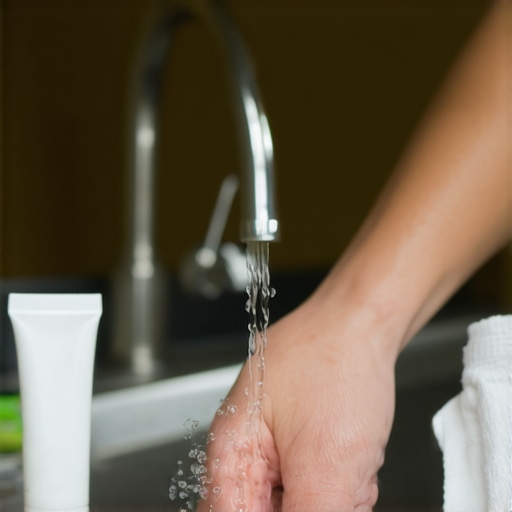
You burn your hand on a scorching cast iron skillet, and your instinct screams at you to open the fridge. You reach for the butter, the mayonnaise, or maybe even ice cubes. I argue that this exact reaction is the worst mistake you can make in your modern kitchen. We have been conditioned by decades of well-meaning but utterly flawed home-remedy wisdom that turns minor, easily treatable injuries into long-term scarring nightmares. It is time to stop playing doctor with pantry staples and look at how we actually manage acute trauma at home.
You might think putting butter on a fresh burn soothes the skin, but you are wrong. In fact, you are essentially sealing in the heat, creating a tiny, biological oven that continues to cook your tissue long after the initial flame is gone. Treating a minor kitchen burn is not about absolute self-sufficiency; it is about proper stabilization before handed over to a clinical expert. Ignoring the necessary steps of early intervention is a direct path to complications, and you should understand why you should not wait to visit urgent care for a burn when the damage goes deeper than the very surface of your skin.
Your Kitchen is Not an Emergency Room
Let us be entirely honest: your home first-aid kit is likely a graveyard of expired adhesive bandages and half-empty tubes of mystery cream. Believing that you can fully manage an injury that compromises your body’s primary protective barrier is a dangerous form of hubris. Think of your skin as a pristine castle wall. A burn is a sudden, violent breach of that wall. Applying unsterile, greasy household products to that open breach is the equivalent of throwing mud into a broken window and hoping it keeps the storm out. It simply invites infection and prolongs healing.
The first steps you take in those crucial five minutes after contact dictate your recovery trajectory. You do not need a medical degree to run cool tap water over the injury for ten minutes—not freezing water, which shocks the blood vessels, but cool, flowing water that gently draws the thermal energy away. If you fail this initial triage, no amount of advanced wound dressing will undo the deeper tissue destruction. We must move past the era of folklore medicine and adopt a clinical mindset, recognizing when a minor irritation is actually a signal to seek professional evaluation, much like knowing how to treat a minor eye irritation without rushing to urgent care until you truly need to.
Stop Mistaking Comfort for Healing
We live in a culture obsessed with immediate relief, often at the expense of actual recovery. Putting ice directly on a burn feels cold, so we assume it is helping. This is a massive illusion. Ice constricts blood flow so aggressively that it can cause secondary tissue damage, effectively giving yourself frostbite on top of a burn. The goal is to cool the skin, not freeze it solid. Once the heat is safely dissipated under running water, cover the area loosely with a clean, non-stick dressing. Do not pop the blisters, do not apply heavy ointments, and do not pretend you are invincible. If the burn covers a large area or begins to look questionable, get professional eyes on it immediately.
The core of this issue is not a lack of empathy; it is a fundamental misunderstanding of human physiology. The problem is not actually the burn itself, but our desperate, impatient drive to actively do something to it. When we suffer a sudden injury, our primal panic demands immediate, dramatic intervention. We grab whatever is closest—butter, oil, mustard, or ice—because sitting still feels like defeat. This is the root cause of our failure. We mistake frantic movement for effective treatment, and in doing so, we turn a minor inflammatory response into a deep, agonizing wound.
Consider the actual physics of a thermal injury. When hot metal or liquid contacts your skin, the heat energy does not instantly vanish when you pull away. It behaves like a heat sink. It sits in the dermal layers, continuously radiating outward and downward, destroying adjacent healthy cells second by second. When you slather butter or mayonnaise over that site, you are applying an occlusive lipid barrier. You are effectively putting a lid on a boiling pot. The heat cannot escape into the air, so it has no choice but to travel deeper into your flesh. It is a biological trap.
${PostImagePlaceholdersEnum.ImagePlaceholderB}
Look at the clinical reality behind this behavior. Data from emergency departments globally shows a staggering trend: nearly one-third of patients presenting with severe, infected outpatient burns admitted to applying inappropriate home remedies within the first hour of injury. That thirty percent statistic is not just a minor variance in patient behavior; it is a systemic public health failure. It proves that our cultural reliance on folklore is actively feeding the caseloads of local clinics. These are entirely preventable complications, driven by the stubborn myth that if something belongs in a frying pan, it also belongs on a wound.
The Illusion of Pantry Medicine
We must dismantle the comforting lie that traditional wisdom is inherently safe. The human body is an incredibly complex biological machine, not an old-fashioned cast iron skillet that needs to be seasoned with oil. When you apply raw, unsterile foodstuffs to broken skin, you introduce a host of opportunistic bacteria directly into a warm, damp, nutrient-rich environment. Pathogens do not care about your grandmother’s advice; they care about survival, and you have just handed them the perfect breeding ground.
They lied to us. They told us that if it comes from nature, it is safe, that the old ways are always the best ways, and that modern medicine is an unnecessary luxury for everyday mishaps, but this logic is fundamentally broken. A burn is a traumatic event at the cellular level. Treating it requires clinical precision, not culinary experimentation. By treating our kitchens as pharmacies, we prolong our own suffering and risk permanent, irreversible tissue damage.
Why Simple Irrigation Wins
The solution is almost insultingly simple, which is precisely why people reject it. It lacks the theatricality of a home remedy. Running cool, ambient water over a burn for ten to fifteen minutes does not feel like a medical breakthrough, yet it is the single most effective intervention available to mankind. It physically transfers the destructive kinetic energy away from your body. It is thermodynamics, pure and simple.
When we bypass this crucial step in favor of immediate, greasy comfort, we guarantee a worse outcome. The pathway to proper recovery does not go through the refrigerator door. It begins with cool, flowing water, and it ends with clean, dry protection—or a prompt visit to a professional who actually understands the science of wound care.
It is easy to see why defenders of traditional home remedies cling so tightly to their pantry cures. Critics will argue that for generations, humanity survived kitchen mishaps without running to a clinic or relying on sterile dressings. They will point out that natural fats like butter or lard feel instantly soothing on a searing hot hand, providing a cooling sensation that seems to halt the pain. Indeed, if a remedy has been passed down through generations, there must be some hard-earned evolutionary wisdom behind it. To dismiss it outright feels like academic arrogance, a modern medical establishment trying to monopolize common sense.
The Trap of Immediate Relief
I used to believe this too, until I watched a minor grease splatter turn into a weeping, infected second-degree wound because I chose to slather it in organic honey instead of cooling it properly. That initial soothing feeling is a dangerous illusion. What feels like relief is actually just the fat blocking the air from hitting exposed nerve endings. While you bask in that temporary comfort, the trapped heat is secretly migrating deeper into your skin layers, cooking your tissue from the inside out. The traditional argument completely ignores basic thermodynamics in favor of short-term sensory trickery.
${PostImagePlaceholdersEnum.ImagePlaceholderC}
This is the ultimate blind spot of folklore medicine. It prioritizes how a wound feels in the first ten seconds over how it heals over the next ten days. A temporary shield against the air is not worth a systemic infection. When we treat the kitchen as an amateur pharmacy, we exchange proper physiological recovery for a fleeting moment of psychological comfort, making ourselves the architects of our own scarring.
When we treat clinical injuries with kitchen condiments, we are not just practicing harmless folklore. We are actively choosing to degrade our own healthcare standards. If we continue to treat our bodies as DIY projects, we set a dangerous precedent that goes far beyond a simple burn. The stakes are incredibly high right now. We live in an era where misinformation spreads faster than any biological pathogen, and by choosing pantry shortcuts over sterile, evidence-based care, we are actively participating in the erosion of scientific literacy. This is not merely a matter of a few blisters; it is about our collective relationship with modern medicine.
The Point of No Return
If this trend of rejecting professional triage in favor of home remedies continues to accelerate, five years from now our local clinics and emergency rooms will be completely overwhelmed by preventable complications. We will see a resurgence of severe, treatment-resistant skin infections born entirely from untreated household accidents. Medical professionals will spend more time correcting the destructive aftermath of internet-fueled home remedies than treating primary injuries. We risk creating a society so distrustful of institutional medicine that we would rather rub cooking fat onto an open wound than seek a sterile, professional bandage.
${PostImagePlaceholdersEnum.ImagePlaceholderD}
Continuing down this path of stubborn self-reliance is like trying to put out a structural house fire with a garden hose while ignoring the fire hydrant right on your sidewalk. Sure, you feel like you are actively doing something, but you are actually just watching your house burn down in slow motion. The garden hose provides a comforting illusion of control, but it lacks the volume and pressure to save the foundation. Our insistence on using kitchen items on thermal wounds is that exact same illusion, a superficial effort that fails to address the deep, destructive energy eating away at our tissue.
What Are We Waiting For
We have a collective responsibility to stop treating clinical science as a matter of personal opinion. The human skin is a complex organ that deserves the same professional respect we show to a damaged heart or a broken bone. By refusing to adapt our home first-aid habits, we are not showing grit or self-sufficiency; we are showing a willful ignorance that results in unnecessary suffering and permanent scars. The tools for proper recovery exist, they are highly accessible, and they do not require a culinary license to operate. It is time to close the pantry door, turn on the cool water, and let actual medicine do its job before the damage becomes irreversible.
The final verdict is simple: your kitchen pantry is a grocery storage space, not a medical clinic, and treating a serious burn with household ingredients is a dangerous act of self-sabotage. When we bypass established physiological protocols for the sake of comforting myths, we exchange long-term biological recovery for a fleeting moment of psychological peace.
The Illusion of Self Sufficiency
Perhaps the deepest irony of this entire cultural habit is that we believe we are protecting ourselves by remaining self-reliant in the kitchen. In reality, we are doing the exact opposite. Treating a severe burn with butter, oil, or home remedies does not show rugged independence; it shows a fundamental misunderstanding of wound mechanics. Just as you would not attempt to perform your own dental surgery with kitchen utensils, you should not attempt to treat compromised, deep dermal tissue with cooking fats. This behavior is a direct path to preventable infections and permanent scars, which highlights why you should not wait to visit urgent care for a burn when the injury goes beyond a minor superficial singe.
The twist in our modern relationship with health is that we live in an era of unprecedented access to high-level clinical resources, yet we still actively choose the logic of the medieval peasant. We have instant communication with experts and same-day clinical diagnostics at our fingertips, but we still reach for the mayonnaise jar when the stove bites back. It is a bizarre form of regression. True modern self-care is not about avoiding professional medical environments; it is about having the intelligence to triage an injury correctly and knowing when to hand the reins over to clinical experts who possess sterile tools and advanced training.
Take Control of Your Recovery
This challenge is ultimately about respecting your own biology. If you are ready to move past the era of folklore medicine and embrace evidence-based habits, you must also look at how you manage other aspects of your physical wellness. Proper medical management extends far beyond acute trauma. For those dealing with ongoing recovery or complex systemic issues, establishing a clinical partnership is vital. You can take the next step toward comprehensive, professional health management by exploring chronic care management personalized telehealth strategies for better outcomes to ensure your body gets the precise, scientific support it needs.
Stop treating your body like an old cast-iron skillet that needs to be seasoned with oil. Close the refrigerator door, run the cool water, and let modern science do the job it was perfected to do.