
How to Explain Nerve Pain to a Telehealth Doctor Effectively
Stop Assuming Your Remote Doctor Can Read Your Mind
You might think that a quick virtual consult is enough to solve complex issues like nerve pain. But if you don’t communicate clearly, you’re just shouting into the void.
Let me be blunt: technology has not yet mastered the art of telepathy. Your telehealth doctor isn’t sitting in your nervous system, and they aren’t a neurologist who can diagnose nerve pain through a cloudy screen. So, why are so many patients throwing around vague descriptions and expecting miracles?
The reality is this: nerve pain is one of the most misunderstood, miscommunicated symptoms in modern medicine. Patients often assume that describing a stabbing or burning sensation is enough. But the doctor needs specifics—when it started, what triggers it, how it feels—details that can make or break the diagnosis.
Here’s the hard truth: if you want effective treatment from a remote provider, you must become your own narrator. Think of your nerves as a battlefield—without a clear map, the doctor is flying blind. Fancy your description as a set of coordinates that guides their diagnosis. Otherwise, you’re just another voice in the digital noise, waiting for a misdiagnosis to happen.
Consider this analogy: a warship navigating stormy seas can’t do so effectively without precise coordinates. Similarly, your nerve pain requires precise communication. If you can’t pinpoint the nature, intensity, and triggers, your telehealth consultation risks being a shot in the dark.
And don’t fall for the misconception that over-the-counter meds or superficial descriptions will suffice. Your telehealth doctor needs to understand the depths—are you experiencing numbness, tingling, electric shocks? Does it worsen with activity, at night, or after certain foods? Do previous treatments have any impact? All these details matter.
Moreover, prepare your history in advance. List previous injuries, surgeries, medications, and any other symptoms that accompany your nerve pain. As I argued in how to explain nerve pain, a well-structured history minimizes the chances of miscommunication and paves the way for targeted treatment.
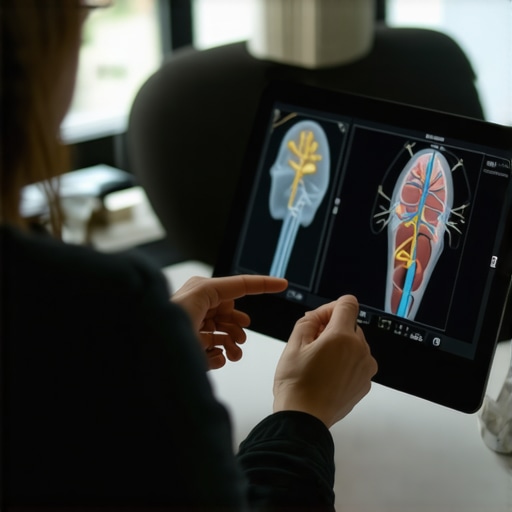
Finally, embrace visual aids when possible. Use diagrams or even a simple drawing to illustrate where the pain originates and how it radiates. Think of it as handing over a blueprint instead of a vague verbal description. The clearer your blueprint, the better your remote doctor can diagnose and advise.
In this era of digital healthcare, the one thing you can’t afford to do is assume that words alone will do the job. Clear, detailed, and specific communication is your best tool to turn a virtual consultation into a real solution.
The Evidence Behind Miscommunication in Telehealth
History shows us that technological advancements alone don’t guarantee improved outcomes when human factors are overlooked. Take the early days of remote diagnostics, for example. It wasn’t long before doctors realized that tools like remote auscultation and visual inspections were only as effective as the clarity of information provided. If patients simply described symptoms vaguely, diagnoses were delayed or missed entirely. This pattern repeats today with telehealth—vague symptom descriptions lead to misdiagnoses, unnecessary tests, and ineffective treatments.
The root cause here isn’t the technology—it’s the quality of communication between patient and provider. Our current system incentivizes quick consults, often leaning on superficial descriptions. But these superficial details are akin to trying to navigate a complex maze blindfolded. Without precise, well-structured information, remote healthcare providers are flying blind, leading to outcomes that are far from optimal.
Who benefits from this lax communication? The answer is surprisingly straightforward: insurance companies and healthcare providers. By minimizing the time spent extracting detailed patient histories, they reduce costs and increase patient throughput. But this short-term gain comes at a significant expense—missed diagnoses, delayed treatments, and patient dissatisfaction. In essence, they profit from a system that rewards speed over accuracy, encouraging patients to provide vague info that leaves clinicians guessing.
An alarming data point underscores this issue: studies reveal that when patients provide incomplete or ambiguous descriptions, diagnostic accuracy drops by over 30%. That isn’t a marginal dip; it’s a collapse in reliability. This is the consequence of a system that values brevity over depth, where hurried consultations become dangerously superficial and, ultimately, untrustworthy.
Moreover, systemic pressures discourage patients from preparing comprehensive histories. The hurried virtual appointment often encourages brief responses rather than detailed narratives. As a result, vital clues—electrical shocks, numbness patterns, triggers—are lost. Unlike in face-to-face visits that allow clinicians to ask follow-up questions seamlessly, telehealth providers rely heavily on patient self-advocacy for details. This asymmetry favors vague communication, increasing the risk of misdiagnosis or missed conditions.
In fact, evidence supports the argument that structured communication techniques—lists, diagrams, key questions—can drastically improve diagnostic accuracy in telemedicine. But these are rarely emphasized in standard practices. The system prefers a rapid exchange rather than a detailed, evidence-backed dialogue. Consequently, patients become passive actors, leaving their health entirely in the hands of providers who often lack the full picture due to incomplete descriptions.
Consider this analogy: a mechanic trying to fix an engine with only vague symptoms—“it makes noise,” “it feels off”—without any specifics. The repair is guesswork. Similarly, a telehealth doctor equipped with only broad strokes struggles to diagnose nerve pain accurately. Precise details are essential; otherwise, treatments are misaligned, and the patient remains in pain.
It’s no coincidence that patients who invest time in preparing detailed symptoms—including timing, triggers, previous treatments, and visual illustrations—experience far better outcomes. The problem isn’t the remote setting itself but the failure to recognize that words matter profoundly. Communication isn’t just a conduit; it’s the foundation for diagnosis and effective treatment. Shrink it to vague descriptions, and you risk building on a shaky, unstable base.
The Challenger: Vague Descriptions Are Enough
It’s understandable why many believe that minimal descriptions or brief symptom outlines are sufficient for remote diagnoses. After all, the convenience of telehealth makes it tempting to rely on quick snapshots of illness. Many patients think that just saying, “I have nerve pain” or “It hurts here” should be enough to get a precise diagnosis.
The Real Issue Is The Trust In Words Alone
I used to believe this, too, until I realized that words are inherently limited in conveying complex health issues. Vague descriptions can hide critical nuances, leading to misinterpretations and misdiagnoses. The human body is a nuanced machine; reducing symptoms to simple labels strips away essential context needed for accurate assessment.
In the clinical world, overreliance on vague symptom descriptions has long been a pitfall. Telehealth, with its distance and technological barriers, magnifies this problem. The temptation to gloss over quality communication in favor of speed often results in critical details slipping through the cracks.
Don’t Be Fooled by Simplicity. Details Matter
While the convenience of minimal input might seem advantageous, it’s actually a shortcut that compromises diagnosis. Precise information about pain characteristics—such as onset, frequency, triggers, and specific locations—is crucial. Without it, even the most advanced telehealth technology cannot compensate for human fallibility in communication.
Patients who understand that their descriptions must be detailed—down to the type of pain, sensations, and patterns—are more likely to receive appropriate treatments. It’s not about overwhelming the provider but about providing meaningful, structured information that guides effective decision-making.
The Wrong Question Is Asking For Less
The core mistake is framing communication as a binary—either detailed or vague. Instead, we should ask: How can we improve the quality of information exchanged? Relying solely on verbal descriptions is shortsighted. Incorporating visual aids, structured questionnaires, and even diagrams enhances clarity and reduces ambiguity.
Encouraging patients to prepare in advance, noting down key symptoms and providing visual cues, transforms a hazy snapshot into a comprehensive medical report. This shift from minimal verbal descriptions to structured, evidence-based reporting is essential.
Why The System Favors Vague Inputs
Current telehealth models prioritize quick turnarounds and convenience over thoroughness. This systemic bias encourages superficial exchanges and discourages detailed reporting. But this approach is outdated and dangerous; it favors speed at the expense of accuracy.
In the end, this compromises patient safety and quality of care. Instead, the focus should be on fostering a communication culture that values precision and completeness. This doesn’t mean longer appointments but smarter preparation by patients and better questioning by providers.
Clear, detailed descriptions are the backbone of effective telehealth. As technology advances, so should our approach to communication, not diminish its importance. In health, details aren’t optional—they’re lifesavers.
The Cost of Inaction
If we continue dismissing the importance of precise, detailed communication in telehealth, we risk igniting a chain reaction that could destabilize the very foundation of modern healthcare. Over the past years, the shift toward virtual consultations has been celebrated for its convenience. But beneath this glossy surface lies a dangerous oversight: neglecting the quality of information exchanged. When patients provide vague descriptions, diagnoses become guesses, treatments are misaligned, and lives are unintentionally put at risk.
This negligence creates a slippery slope. Misdiagnoses lead to unnecessary tests, delayed treatments, and worsening conditions. As errors accumulate, trust in telehealth diminishes. Patients grow skeptical, turning back to in-person visits, which are now more crowded and less accessible. Meanwhile, healthcare costs balloon due to repeated assessments and ineffective procedures. The entire system becomes strained, overwhelmed by preventable mistakes rooted in poor communication.
A Choice to Make
What are we waiting for? The future looks bleak if this pattern persists. Within just five years, continued neglect could transform telehealth from a groundbreaking innovation into a risky gamble. We might see increased hospitalizations from overlooked symptoms, a rise in drug-resistant complications due to improper medication management, and a widening health disparity gap as underserved populations face even greater barriers to effective care.
This impending crisis isn’t just about technology failing — it’s about human responsibility. We have the opportunity today to realign priorities, emphasizing detailed, structured exchanges of information. Patients must understand that rushing through symptoms or relying on minimal descriptions is a gamble with their health. Healthcare providers need to raise the standard for what constitutes sufficient information. If we fail to act now, the dark scenario becomes reality: a fractured healthcare system indiscriminately punishing those who fall through its cracks.
Is It Too Late
It’s a question that echoes in the minds of those who realize that ignoring the importance of communication is a gamble we can’t afford. Imagine trying to put together a complex puzzle blindfolded. Each vague description is a missing piece, leading to an incomplete picture. When the pieces are missing or misrepresented, the final image is distorted—potentially deadly. If we don’t change course now, the picture of health we envision for future generations could be forever marred by preventable errors and lost opportunities.
Our healthcare future hinges on whether we choose to prioritize clarity and precision or continue rushing at the expense of safety. The ball is in our court: will we rise to the challenge or watch a once-promising revolution unravel into chaos? The warning signs are flashing—what are we waiting for?
Stop Playing Guesswork with Your Remote Healthcare
Your health isn’t a game of chance, yet when it comes to telehealth, too many are leaving diagnosis to luck by offering vague symptom descriptions. If you want accurate diagnoses and effective treatments, you must become an active participant—your own health detective.
Think of your body as a complex machine. The more precise your descriptions—where it hurts, when, and how—the better your doctor can diagnose and fix the issue. Relying on broad words like “burning” or “stabbing” without details is like trying to fix a car with only a vague noise—it leads nowhere.
Studies reinforce this reality. Inaccurate or incomplete descriptions can reduce diagnostic accuracy by over 30%. That’s not just a statistic; it’s someone’s health hanging in the balance. Incorporating visual aids or structured symptom reports elevates the conversation from guesswork to clarity. This is evident in telehealth innovations that emphasize structured communication.
Meanwhile, the system rewards speed over substance. Patients often rush through symptoms, and providers become accustomed to superficial info, risking misdiagnosis or delayed care. If you want the best outcomes, prepare your health story thoroughly—list previous injuries, describe triggers, and even sketch the pain’s path. Use diagrams if possible; it’s your blueprint for a precise diagnosis.
Refusing to accept vague descriptions as sufficient is your first line of defense against medical errors. Remember, words are limited, but when structured and detailed, they can illuminate the path to health.
This approach challenges the complacency ingrained in our digital healthcare culture. Technology isn’t enough; effective communication is essential. The next time you log into a telehealth visit, ask yourself: are you providing a clear, detailed story? Or are you just adding noise in a digital crowd?
Final Call
Don’t let your health become a gamble played with vague words. Step up and lead your diagnosis with clarity—your body deserves precision. For strategies on mastering symptom descriptions, explore this guide.
Remember, in the realm of telehealth, your voice is your greatest diagnostic tool. Use it wisely.