
How to Manage a Child’s Barking Cough Without Any Panic
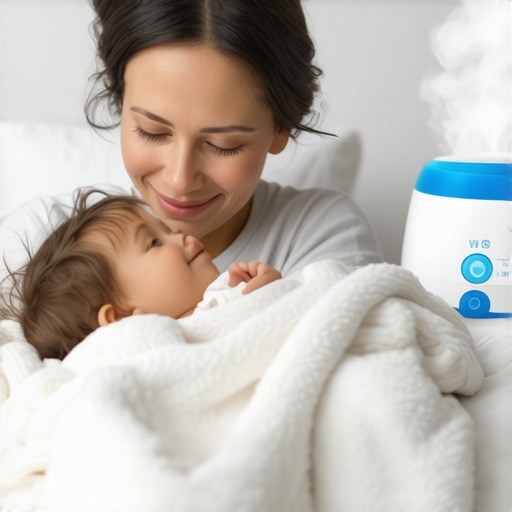
Your Child’s Barking Cough is Not an Emergency—Stop Panicking
You hear it at 2 a.m. That sharp, hollow, seal-like bark echoing through the baby monitor. Your heart rate spikes, your palms sweat, and you reach for your car keys. But I am here to tell you that your frantic dash to the emergency room is probably the least helpful thing you can do for your child right now. We have become a culture of over-medicalized parents, convinced that every loud symptom requires a siren and a specialist. I argue that managing a barking cough—often just croup—is eighty percent about your own emotional stability and twenty percent about some cold night air.
You think you are being a “good parent” by rushing to the hospital, but you are actually subjecting your child to a high-stress environment that can tighten their already sensitive airways. Why are we still treating a common childhood rite of passage like a cardiac event? When you panic, your child panics. When your child panics, their breathing becomes more labored. It is a self-fulfilling prophecy of medical escalation that could easily be avoided by sitting on the porch for ten minutes. I’ve seen how the triage error that keeps you in the waiting room longer only adds to a toddler’s distress, turning a manageable night into a traumatic one.
Stop Treating the Waiting Room Like a Safety Net
The hospital is a place for the broken and the dying, not for a kid who just needs some humidity. A barking cough is like a smoke alarm that goes off because you burned a piece of toast. It is loud, it is jarring, and it demands immediate attention, but the house is not actually burning down. If the child is not turning blue or struggling for every single gasp, the emergency room is just an expensive way to catch the flu while waiting for a doctor to tell you to go home. You might think you need a prescription, but you’re wrong. Most of the time, you need a calmer nervous system.
I believe we need to reclaim our intuition. Just as there are 3 signs your childs earache can wait until morning, there are clear markers that a cough is just noise. If you are terrified, try a screen. I have argued that knowing how to calm a toddler before a virtual doctor visit is a far more valuable skill than knowing the fastest route to the ER. Your calm is the most potent medicine in the house. Use it.
Cold Air and Steam Are the Only Real Heroes
Forget the cough syrups that do nothing but drain your wallet. The hard truth is that the best treatments are free and located in your bathroom or on your front step. Steam up the shower or stand in the crisp night air. These simple physical shifts do more to shrink swollen airways than a four-hour wait in a germ-infested lobby ever will. We have been sold a lie that medical intervention is always superior to common sense. It is time to stop buying into the panic and start trusting the cool air.
The real crisis is not the cough; it is the institutional theft of parental confidence. We have been conditioned to believe that a medical degree is the only thing standing between our children and disaster. This is a lie. By outsourcing our intuition to the nearest urgent care, we have traded our role as protectors for the role of panicked transport drivers. The root cause of this midnight ER frenzy is not a virus—it is the erosion of our ability to sit in the dark and wait. We have become a culture that demands immediate relief through a prescription pad rather than the slow, steady application of cold air. This shift is not just annoying for doctors; it is actively damaging to the family unit. We have traded the front porch for the triage desk, and in doing so, we have forgotten what it means to actually care for a sick child.
A System Overloaded by Minor Symptoms
Estimates suggest that nearly 40 percent of pediatric emergency department visits are for non-urgent conditions that could have been managed at home. That 40 percent is not just a statistical drift; it is a *total collapse* of the home-care culture. This massive influx of the worried well does not just clog the system—it dilutes the care available for those actually in extremis. When you take a barking cough to the trauma bay, you are participating in a collective hysteria that prioritizes your own anxiety over the actual medical priority of the community. You are not playing it safe. You are overwhelming a fragile infrastructure because you forgot how to use a humidifier. It is a systemic failure where the loudest voice in the waiting room—the parent with the insurance card—drowns out the actual needs of the truly ill.
The Biological Cost of Your Anxiety
${PostImagePlaceholdersEnum.ImagePlaceholderB} The irony is thick: your frantic search for safety is actually making your child sicker in the moment. Croup is an upper airway obstruction exacerbated by stress. When you are white-knuckling the steering wheel and sobbing in the front seat, your child mirrors that physiological state. Their heart rate climbs. Their cortisol spikes. Their airway muscles tighten. You are literally manufacturing a more severe respiratory episode through your own inability to regulate your emotions. It is a biological feedback loop where your fear serves as the primary irritant. The hospital, with its beeping monitors and cold metal tables, is the worst possible environment for a child who needs to relax to breathe. They are terrified because *you* are terrified.
The False Security of the White Coat
We must confront the fact that our reliance on professional intervention is a crutch that has atrophied our parental muscles. True care is not a referral; it is the presence of a calm adult who knows the difference between a loud noise and a lethal one. We have been sold the idea that medicalization equals safety, but in the case of a common cough, it often equals unnecessary trauma for the child and a massive bill for the parent. The medical system is designed for crisis, not for hand-holding. When we treat the emergency room like a 24-hour parenting coach, we strip the system of its power and ourselves of our authority. You are the expert on your child. Act like it. The cold air of the night is a better doctor for a barking cough than a resident who has been awake for thirty-six hours and just wants you to sign the discharge papers. Stop looking for a savior in a white coat and look in the mirror.
I know the pushback. I hear the chorus of voices arguing that it is better to be safe than sorry. The critics will say that a parent is not a trained medical professional and that distinguishing between a noisy cough and a closing airway is a gamble no one should take. They will argue that the peace of mind found in a doctor’s office is worth any price, and that the risk of a single missed case of severe respiratory distress outweighs the inconvenience of a thousand unnecessary ER visits. It is a compelling argument because it plays on our deepest biological fear: the loss of a child. This perspective suggests that caution is a moral virtue and that skepticism of medical intervention is a form of negligence.
The Better Safe Than Sorry Illusion
I used to believe this too, until I watched a three-year-old spiral into a full-blown respiratory crisis not because of a virus, but because of the sheer terror of being strapped to a hospital gurney under harsh fluorescent lights. We have been conditioned to see the hospital as a sanctuary of absolute safety, but this ignores the reality of iatrogenic harm—the injury caused by the medical process itself. When you rush a child with a barking cough to the emergency room, you are not just buying peace of mind; you are buying exposure to a host of aggressive pathogens, the physical trauma of unnecessary procedures, and the psychological scarring of a high-stress environment. The ‘safe’ choice is often the one that introduces the most variables and the most risk.
The argument for professional intervention at the first sign of a cough assumes that the medical system is a neutral observer. It is not. The moment you enter the triage system, you are on a conveyor belt of escalation. A resident, wary of liability and exhausted by a double shift, is far more likely to order a chest X-ray or prescribe a steroid that your child does not need, simply to check a box. This is not ‘better safe than sorry.’ It is the systematic replacement of parental observation with clinical overreach. We have traded the nuanced, constant monitoring of a parent for the snapshot, defensive medicine of a stranger. By outsourcing our judgment, we are actually making the situation more volatile, not less.
${PostImagePlaceholdersEnum.ImagePlaceholderC}
What the ‘better safe than sorry’ crowd forgets is that the home is the original recovery room. In the comfort of their own bed, with a cool mist humidifier and a calm parent, a child’s heart rate stays low. Their breathing remains rhythmic. The physiological conditions for healing are present. In the ER waiting room, every one of those factors is stripped away. You are trading a controlled environment for a chaotic one because you have been taught to fear your own house. This is a profound failure of confidence. The medical system has successfully rebranded our anxiety as ‘responsibility,’ and we have bought it wholesale. We need to stop pretending that every midnight drive to the clinic is a heroic act of parenting; often, it is just an expensive way to avoid the hard work of staying calm.
The Wrong Question for Scared Parents
The question should not be ‘what if I am wrong?’ but rather ‘what is the cost of being right in the wrong place?’ If your child is truly in distress—if they are lethargic, sucking in their chest, or turning pale—the hospital is where they belong. But for the vast majority of croup cases, the hospital is a source of secondary trauma. We have lost the ability to distinguish between a loud symptom and a lethal one because we have been told that we aren’t qualified to look. This is the ultimate theft. It strips the parent of their role as the primary healer and replaces it with a role as a frightened observer. The truth is that your presence, your porch, and your patience are more effective than a triage nurse with a clipboard. We must reclaim the authority to wait, to breathe, and to trust the cold air before we hand our children over to a system that is already buckled under the weight of our collective panic.
Are we raising a generation of patients?
We are standing at a threshold where the cost of our collective anxiety is no longer just financial—it is developmental. If we continue to treat every nocturnal bark as a catastrophic failure of biology, we are fundamentally altering the psychological blueprint of the next generation. We are training our children to believe that their bodies are inherently fragile and that health is something that can only be granted by an external authority. This is the ultimate slippery slope. If we do not halt this cycle, within five years, the concept of home care will be entirely extinct, replaced by a digital diagnostic algorithm that bypasses the human connection altogether. We are effectively raising a generation that does not know how to heal because they were never allowed to simply be sick.
${PostImagePlaceholdersEnum.ImagePlaceholderD}
The Point of No Return
Consider the analogy of a pilot who flies exclusively on autopilot. For years, the flight is fluid and the path is clear. But the moment a sensor glitches—a “barking cough” in the cockpit—the pilot, having never felt the tension of the wings or the resistance of the wind, freezes. They have outsourced their instinct to the machine for so long that they no longer know how to fly the plane manually. We are that pilot, and our children are the passengers. By refusing to sit in the dark and trust the cold air, we are letting our parental muscles atrophy. The danger is not the cough; the danger is the day when the system is too overwhelmed to answer, and we have forgotten how to save our own children. We are trading long-term resilience for a temporary shot of pharmaceutical reassurance, and the bill for that trade is coming due. We must reclaim the front porch before the hospital becomes the only home we know how to inhabit.
Reclaim Your Authority
The next time that hollow bark echoes through your home at 2 a.m., do not reach for your keys. Reach for a blanket. Reach for your child. Step onto the porch and let the night air do the work it was designed to do. We must stop viewing medical facilities as the only legitimate site of healing. While telehealth breakthroughs how virtual visits elevate chronic care in 2025 offer a bridge for the truly uncertain, they should be our second resort, not our first impulse. Our current obsession with professional validation for every minor ailment is not a sign of better care; it is a symptom of a deep, cultural insecurity. If you feel your own heart rate rising, remember the simple tactic to lower your white coat hypertension instantly: breathe, wait, and observe. Your child’s airway is waiting for your calm to give it permission to open.
${PostImagePlaceholdersEnum.ImagePlaceholderE}
The Bottom Line
True parental responsibility is not found in a waiting room; it is found in the courage to stay home. We have been conditioned to fear the silence, but the silence of a peaceful home is where recovery begins. When we stop treating every cough like a catastrophe, we give our children the gift of resilience. We teach them that their bodies are strong and that their parents are capable. By choosing the porch over the triage desk, you are not just managing a virus—you are preserving the integrity of your family’s autonomy. If you find yourself wondering if it’s more than a cough, consider the specific signs your childs cough is actually asthma before assuming the worst.
Parenting is the art of being the anchor in your child’s storm, not the driver to the nearest distraction. The ER isn’t just a physical place; it’s a mental state we enter when we stop trusting our own eyes. Put down the keys. Open the window. Breathe.