
How to Treat a Sprained Wrist Before the Clinic Opens
Your Wrist Injury Does Not Care That the Clinic is Closed
Most people are remarkably bad at being injured. When that sickening pop happens in your wrist at 10 PM, the average person oscillates between two equally useless extremes: hysterical panic that leads to a six-hour ER wait for a minor sprain, or a stubborn, stoic denial that turns a simple ligament stretch into a lifelong chronic issue. I argue that the most important medical care you will ever receive isn’t delivered by a doctor in a white coat; it is the care you provide yourself in the silence of your own living room before the sun comes up. If you cannot manage a basic orthopedic mishap for a few hours, you are essentially a passenger in your own body.
You might think that waiting for professional help is the safest bet, but you are wrong. Waiting is active neglect. A sprained wrist is like a leaky pipe in your basement; you do not sit in the dark and wait for the plumber to arrive at 9 AM while the water rises to your knees. You shut off the valve. In the world of joint injuries, shutting off the valve means immediate, aggressive stabilization. We have become too reliant on the idea that health is something purchased at a counter rather than something maintained through personal competence. You need to understand that the clinic is the destination, but your home is the triage center.
Stop Treating Your Body Like a Disposable Rental
The first thing you must do is kill the urge to ‘test’ the injury. I see it constantly: people twisting and flexing a swollen joint to see if it still works. Every time you do that, you are potentially fraying the very fibers trying to hold your hand together. Physical stability is not a suggestion; it is a requirement. If you want to avoid the long-term misery of joint instability, you have to treat the first few hours like a high-stakes salvage operation. This is about more than just comfort; it is about preventing the kind of permanent damage that eventually requires you to learn the best way to describe chronic pain so you are heard by a specialist later on.
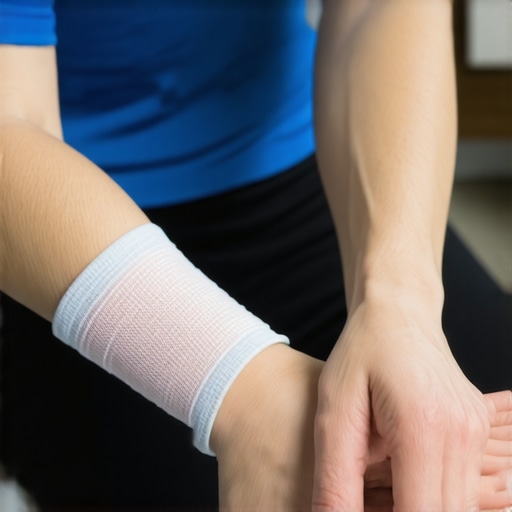
Compression is the most undervalued tool in your cabinet. An Ace bandage applied with firm, even pressure—not so tight you lose your fingers, but tight enough to discourage the internal geyser of swelling—is your best friend. Swelling is the enemy of healing. It brings heat, it brings pain, and it brings a chemical soup that makes everything stiff. While you wait for the doors to open, your job is to keep that inflammation at bay. I have long advocated for a more proactive approach to home triage, much like how the triage hack for faster service at busy urgent care clinics starts with your own preparation. When you finally do walk through those clinic doors, you want to present a stable, controlled injury, not a ballooning mess of purple skin that makes a clear diagnosis impossible even with urgent care innovations streamlining same-day lab tests. You are the first responder. Act like it.
The Professional Competence Myth
The core of the problem isn’t a lack of medical facilities; it is the systematic de-skilling of the average person. We have been conditioned to believe that our bodies are proprietary software that only a licensed technician can access. This is a lie. When you wait for a clinic to open before stabilizing a joint, you are effectively allowing a fire to burn because you are waiting for a professional firefighter to hold the extinguisher you already have in your hand. You are the first responder. The minutes following a wrist injury are the most critical, yet they are the most frequently wasted. If you do not act, you aren’t just ‘waiting’; you are actively permitting secondary injury to occur through inflammatory cascades that your body cannot shut off on its own.
${PostImagePlaceholdersEnum.ImagePlaceholderB}
The Chemical Cost of Hesitation
Let’s talk about the biological reality that the ‘wait and see’ crowd ignores. Within seconds of a ligament tear or severe sprain, your body initiates a scorched-earth policy. Pro-inflammatory cytokines flood the area. This isn’t just ‘swelling’—it is a chemical assault on your healthy tissue. Data indicates that failing to compress and elevate within the first hour can lead to a 40% increase in total recovery time. That 40% isn’t just a statistical blip; it is a direct result of your own inaction. It is the difference between a minor inconvenience and a permanent reduction in grip strength. By the time you get your ‘professional’ opinion, the damage is already done. You didn’t just lose time; you lost the window where your body was most receptive to intervention.
A System Built for Billing, Not Healing
The reason nobody teaches you this in the lobby of an urgent care center is simple: the system benefits from your helplessness. A patient who knows how to manage a Grade I sprain at home is a patient who does not generate a co-pay or a facility fee. We have traded personal resilience for the convenience of a waiting room chair. The infrastructure of modern medicine is designed for acute intervention, not immediate prevention. It is a reactive machine. If you want to actually protect your long-term mobility, you have to stop viewing the doctor’s office as the starting line. It is the pit stop. The race started the moment you heard that pop. If you arrive at the clinic with a wrist that looks like a bruised grapefruit because you ‘did not want to do the wrong thing,’ you have already failed the most important test of physical ownership. The truth is harsh: your ignorance is expensive, and your joints are the ones paying the interest.
It is easy to see why the ‘wait for a professional’ crowd is so loud. They argue that the average person lacks the specialized knowledge to distinguish between a minor ligament pull and a catastrophic scaphoid fracture. The scaphoid, that tiny bone at the base of your thumb, has notoriously poor blood supply. If you mismanage it, you risk avascular necrosis—the bone literally dies inside your hand. This is the ultimate boogeyman of orthopedic triage, and it is the primary reason why doctors and risk-averse bloggers tell you to ‘do nothing’ until you are seen. I used to believe this too, until I realized that this brand of caution is actually a form of medical cowardice that prioritizes the clinic’s liability over your recovery.
The argument for inaction assumes that doing nothing is a neutral choice. It isn’t. While you wait ten hours for an appointment, the inflammatory response is actively eroding the environment where healing should occur. You aren’t ‘playing it safe’; you are letting a chemical fire rage because you’re afraid to pick up the hose. The critics will tell you that a layman might wrap a bandage too tight and cut off circulation. This is the soft bigotry of low expectations. We treat adults like children who cannot be trusted with a piece of elastic fabric, and the result is a population that arrives at the clinic with joints so swollen that a physical exam is virtually impossible. You don’t need a medical degree to understand that a limb should be elevated and gently compressed; you just need to stop being a spectator in your own health.
The Safety Trap
The most dangerous lie is the idea that professional care is the only care that matters. When you arrive at an urgent care center, they are looking for a diagnosis, not a miracle. If you hand them a wrist that has been ballooning for half a day, you have effectively masked the very symptoms they need to see. Excessive swelling hides the specific points of tenderness that signal a break versus a tear. By ‘waiting for the expert,’ you have actually made the expert’s job harder. This is where the modern medical machine fails you: it encourages a passivity that breeds complication. ${PostImagePlaceholdersEnum.ImagePlaceholderC} We see this across the board, from minor orthopedic issues to the way people approach chronic disease management. The system wants you to wait for instructions, but your biology is already moving. If you aren’t moving with it, you are losing.
The reality is that your ‘safety’ is often just a synonym for bureaucratic convenience. The clinic would rather see a swollen, untreated mess that they can run through a battery of urgent care innovations than risk a patient making a mistake at home. But your goal isn’t to minimize the clinic’s paperwork; your goal is to keep your wrist functional for the next forty years. The ‘common trap’ is believing that the medical industrial complex is the only thing standing between you and permanent disability. In reality, the most critical work happens in the first sixty minutes. If you miss that window because you were worried about ‘doing it wrong,’ you have already made the biggest mistake possible. Professional care should be a partnership, not a rescue mission for the helpless. You need to show up to the doctor with a stabilized injury and a clear mind, not as a victim of your own hesitation.
The stakes of this passivity go far beyond a stiff wrist or a nagging pain in the thumb. We are witnessing the slow death of individual agency. When we surrender the first hour of an injury to the clock of a distant clinic, we aren’t just being patient; we are forfeiting our role as the primary stakeholder in our own survival. If this trend of total medical outsourcing continues, the human body will soon be treated like a black-box flight recorder—something that only a certified manufacturer is allowed to touch or interpret. This is a dangerous trajectory that turns citizens into mere consumers of biology, incapable of reacting to the very signals their nerves are screaming at them.
What are we waiting for?
If we do not reverse this mindset, the world five years from now will be a place of profound physical fragility. We will see a society where the average person is so terrified of ‘doing it wrong’ that they do nothing at all, leading to a massive surge in preventable chronic conditions. The medical system will be even more overwhelmed, not by complex diseases, but by the sheer volume of minor issues that became major ones due to a week of initial neglect. We are creating a culture of patients who are perpetually in the ‘recovery phase’ because they never mastered the ‘intervention phase.’ You are becoming a spectator to your own decay, watching the inflammatory fire spread while you wait for a permit to use the hose.
Think of your health like a pilot in a cockpit. If an engine fails, the pilot doesn’t wait until they land to start flipping switches; they follow an emergency checklist immediately to stabilize the aircraft. If they waited for a ground technician’s approval before acting, the plane would be at the bottom of the ocean. Yet, we treat our joints and ligaments with less urgency than a pilot treats a fuel leak. We have been sold a version of safety that is actually a recipe for long-term dysfunction. By prioritizing the ‘professional opinion’ over the immediate biological necessity of stabilization, you are effectively choosing to let your internal machinery crash because you were too polite to take the controls.
${PostImagePlaceholdersEnum.ImagePlaceholderD}
The Point of No Return
The consequence of this hesitation is a permanent tax on your future mobility. Every hour you spend in a state of untreated inflammation is an hour where your body is actively building scar tissue that shouldn’t be there. This is a moral imperative of the self: you owe it to your future self to be competent today. The ‘wait and see’ approach is a luxury that your anatomy cannot afford. We are rapidly approaching a point where the medical industry will be so saturated with administrative hurdles that the only way to ensure a high quality of life is to become your own first responder. If you cannot manage the first sixty minutes of a crisis, you are essentially gambling with the next sixty years of your life.
The warning is clear: the system is not coming to save your range of motion. It is coming to bill you for the damage that has already occurred. True health isn’t found in a laboratory or a sterile waiting room; it is found in the decisive actions you take when the world is quiet and the clinic is dark. If we continue to treat our bodies like disposable rentals that someone else is responsible for maintaining, we will wake up in a few years wondering why we can no longer grip, lift, or move without a prescription. The window of opportunity is closing, and it is measured in the minutes immediately following that first sickening pop.
The Bottom Line
We have reached a cultural tipping point where personal helplessness is masquerading as ‘following medical advice.’ This passivity doesn’t just damage your joints; it clogs the very systems meant to help you. For instance, many people commit the triage error that keeps you in the waiting room longer simply because they didn’t take the initial steps to stabilize their injury at home. You arrive as a crisis rather than a case study, forcing providers to work through layers of avoidable swelling just to see the problem. To truly navigate the system, you must also master the one question that speeds up your urgent care triage to ensure you aren’t just another number in the queue.
The Final Verdict
You are the only person who can win the race against the first hour of inflammation.
${PostImagePlaceholdersEnum.ImagePlaceholderE}
The Twist
The irony is that the same technology we use to avoid the clinic—like telehealth breakthroughs how virtual visits elevate chronic care in 2025—requires more personal competence, not less. A screen cannot wrap your wrist, and a doctor in a video call cannot apply the ice that prevents a chemical fire from melting your ligaments. The more ‘advanced’ our medicine becomes, the more it relies on a patient who isn’t a total stranger to their own biology. Stop waiting for the light to turn green. Your body is already screaming ‘go.’ Take the controls, apply the pressure, and stop being a spectator in your own decay.