
How to Triage a Kitchen Knife Slip Without the ER Hassle
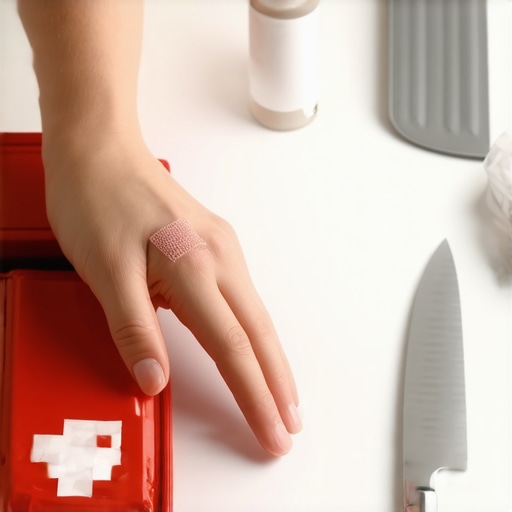
Your Kitchen Knife Slip Does Not Belong in the ER
You are standing over your granite countertop, clutching a blood-soaked paper towel against your hand. Your heart is racing, and your first instinct is to grab your car keys and race toward the nearest hospital. Stop. You are about to make a mistake that will cost you six hours of your life and a four-figure bill for a service you could have managed from your couch. The American obsession with the Emergency Room for minor injuries is a systemic delusion. We have been conditioned to believe that every drop of blood requires a hospital wristband, but the truth is much colder: you are likely wasting everyone’s time and your own money.
I argue that the reflex to flee to the ER for a kitchen mishap is a failure of logic. Why do we treat a finger nick like a gunshot wound? It is a performance of panic, not a medical necessity. The modern hospital is a high-stakes environment designed for strokes, heart attacks, and catastrophic trauma. When you walk in with a laceration that merely needs a few stitches or some medical adhesive, you are an intruder in a space meant for the dying. You will sit in a plastic chair. You will wait while others are wheeled past you. You will be low on the priority list, as you should be. This is not just a personal inconvenience; it is a drain on a healthcare system already stretched to its breaking point.
The ER is a Sinking Ship for Minor Wounds
Think of the hospital as a sinking ship where the lifeboats are strictly reserved for those who cannot swim. When you show up with a cut from a paring knife, you are essentially asking the captain to adjust your deck chair while the hull is breaching. It is selfish and inefficient. I have seen too many people lose an entire Saturday to a fluorescent-lit waiting room because they didn’t know how to assess their own skin. As I previously discussed regarding the urgent care fix for a deep cut that does not need stitches, there are far better ways to spend your afternoon than staring at a hospital vending machine.
Why are we so afraid of our own anatomy? We see a bit of red and we lose our collective minds. I argue that this fear is exactly what the industrial medical complex feeds on. They want you to feel helpless so you will pay the emergency premium for a procedure that takes ten minutes. You might think you are getting the best care by going to the most expensive building in town, but you are wrong. You are getting the most distracted care. You are getting a resident who has not slept in thirty hours trying to remember where the supplies are kept. In contrast, seeking out why your local ER is the wrong place for these issues can save you from the chaos.
We must embrace the reality of modern triage. Most of what you think requires a doctor’s physical presence can actually be sorted out through a smartphone screen. I believe the future of sanity in healthcare lies in virtual triage. It is the filter that keeps the system from clogging. If you can stop the bleeding with five minutes of firm, direct pressure, you do not need a trauma team. You need a bandage and a dose of pragmatism. If you are still unsure, use the triage hack to skip the waiting room altogether. Stop the bleeding, calm your nerves, and look at your options before you start the car. Your wallet, and the person in the next bay with a genuine emergency, will thank you.
The Infrastructure of Overcharging
The primary reason your kitchen mishap costs as much as a used car has nothing to do with the doctor’s skill. It is about the facility fee. When you step through those sliding glass doors, you are paying for the lights, the security guards, the trauma bays you aren’t using, and the MRI machines that will stay silent during your visit. The hospital does not care if you need a surgeon or a sticker; the moment you are triaged, the meter starts running at a rate that would make a corporate lawyer blush. It is a predatory pricing model that relies entirely on your inability to differentiate between a scary amount of blood and a dangerous amount of blood.
We must follow the money to see the rot. Hospitals are massive, expensive organisms that require constant feeding. They do not make their margins on the uninsured trauma victim; they make them on the middle-class family with decent insurance who panics over a minor laceration. You are the high-margin customer. They charge five hundred dollars for a single dose of ibuprofen and two thousand dollars for the privilege of sitting in a room with a sink. This is not healthcare. It is a financial extraction masquerading as a safety net.
${PostImagePlaceholdersEnum.ImagePlaceholderB}
The Statistics of Waste
Let’s look at the numbers, because the math is damning. Estimates suggest that nearly 40% of emergency room visits involve conditions that could have been treated in a primary care or urgent care setting. That 40% is not a minor overlap; it is a structural collapse. This influx of non-emergencies is the reason you sit in a plastic chair for six hours. You are not waiting for a doctor. You are waiting for the system to process the sheer volume of people who do not belong there. Every time someone with a minor laceration takes up a bed, they contribute to a bottleneck that actually kills. It is a cycle of waste fueled by a lack of basic medical literacy and an abundance of corporate greed.
Why is this allowed to continue? Because it is profitable. If hospitals actually encouraged you to stay home and use a butterfly bandage, their revenue would crater. They have no incentive to tell you that your injury is trivial until after you have signed the paperwork. They want you in the door. They need the volume. Your fear is their business model, and as long as you remain terrified of a little bit of blood, they will continue to profit from your ignorance.
The Myth of Superior Resources
We are told that the ER is where the best equipment lives. This is a lie of omission. Yes, the ER has the best equipment for a multi-vehicle collision or a massive pulmonary embolism. But for a cut on your thumb? The best equipment is a clean pair of gloves, some irrigation solution, and a few sutures. You can find those in any clinic or, in many cases, in a well-stocked first aid kit. By going to the ER, you aren’t getting better care. You are getting distracted care.
The physician assistant assigned to your case is likely juggling your emergency with a dozen other patients who are actually in mortal peril. They want you out. They want the bed back. They are incentivized to patch you up and push you out the door as fast as humanly possible. You aren’t a patient in their eyes; you are a data point in a productivity report. The quality of your stitch-work will always be better at a clinic where the staff isn’t currently trying to restart a heart in the next room. Stop believing the marketing. The hospital is for the dying; the rest of us are just being fleeced.
Critics will say that you aren’t a medical professional, and therefore, you cannot possibly know the depth of your own injury. They argue that a kitchen knife isn’t just a piece of stainless steel; it is a potential harbinger of permanent nerve damage or a gateway for a staph infection that could turn systemic in hours. It is easy to see why people think this way. We have been raised in a culture of extreme risk aversion where we are told that any uncertainty must be met with the highest possible level of institutional intervention. If there is a 1% chance that a tendon is nicked, the logic goes, you must seek out the 100% solution. But this line of reasoning is a trap that ignores the efficiency of modern outpatient care and the reality of how medical risk is actually managed.
I used to believe this too, until I realized that the ‘superior’ resources of a hospital are often locked behind a wall of administrative friction and triage priority. When you go to the ER to ‘be safe,’ you are actually putting yourself in a more dangerous environment. Hospitals are breeding grounds for antibiotic-resistant bacteria. By sitting in a waiting room for six hours with an open wound, you are exposing yourself to far more risk than you would in a clean, quiet urgent care center or even your own living room. The argument for ‘maximum safety’ falls apart when you realize that the ER is a high-traffic zone for the genuinely sick.
The Illusion of the Specialized Catch All
The elephant in the room is our collective inability to distinguish between a complication and a crisis. People believe that by going to the ER, they are buying an insurance policy against the unknown. They think that if something goes wrong during the cleaning, the surgeon is right there. This is a fantasy. If you have a minor cut, you aren’t getting the surgeon. You are getting a triage nurse and perhaps a junior resident who is five minutes away from a breakdown. The specialized equipment you think you are paying for is reserved for people who aren’t conscious. For everyone else, the ER is just an incredibly expensive way to get a lukewarm saline wash and a bandage.
${PostImagePlaceholdersEnum.ImagePlaceholderC}
This obsession with the ‘just in case’ scenario is what cripples the system. It assumes that there is no middle ground between a Band-Aid and a trauma bay. We have ignored the vast infrastructure of specialized clinics and virtual platforms that can assess your range of motion and sensation in minutes. If you can move your finger and the bleeding stops with pressure, the ‘what if’ has already been answered. Staying in your kitchen and calling a telehealth provider isn’t being reckless; it is being a rational actor in a system that is currently on fire. The critics who claim you are taking a gamble by staying away from the hospital are usually the same people who benefit from the inflated bills that follow your arrival.
The argument for the ER often rests on the idea of completeness. Proponents claim that only a hospital can offer the full spectrum of imaging and labs. This ignores the fact that 95% of kitchen injuries require nothing more than a physical exam and a steady hand. If you truly needed an X-ray or a lab panel, your local clinic is more than capable of ordering them without the four-figure facility fee. We must stop treating the hospital like a security blanket. It is a specialized tool, and like any specialized tool, using it for the wrong job only leads to damage. The fear of ‘missing something’ is a powerful marketing tool, but it is rarely a medical reality for a person who can still type on their phone while they bleed.
The individual cost of your kitchen mishap is a tragedy, but the collective impact is a catastrophe. When we treat the hospital like a convenience store, we aren’t just overpaying; we are dismantling the very foundation of emergency medicine. This behavior is a slow-motion wrecking ball swinging at the one part of the healthcare system that is supposed to be there when life truly hangs in the balance. We are living on borrowed time, and the interest rate is paid in human lives and systemic insolvency.
Is the System Already Beyond Repair?
Imagine a city where every resident opens a fire hydrant to water their front lawn because they find the garden hose too slow. For a few weeks, the grass is vibrant. But the moment a real fire breaks out three blocks away, the firefighters find the pressure is gone. The hoses are limp, the ladders are useless, and the building burns to the ground while the neighbors stand by with their well-watered petunias. This is the state of the American ER. By flooding these high-intensity zones with low-intensity nicks and scrapes, we have drained the metaphorical water pressure of our medical infrastructure. We have traded the ability to save a heart attack victim for the ‘certainty’ of a professional cleaning a finger cut.
The Total Collapse of the Safety Net
If this trend of reflexive ER usage continues for another five years, the system will not just be slow; it will be inaccessible. We are heading toward a future where hospitals will be forced to implement aggressive, perhaps even draconian, gatekeeping. We will see the rise of the ‘Membership ER,’ where only those paying a premium subscription can skip the 24-hour wait times. The public safety net, once designed to catch everyone, will be so frayed by the weight of minor lacerations and sprained ankles that it will simply snap. The middle class will be priced out entirely, caught between the crushing weight of facility fees and the impossibility of finding timely care in an overcrowded ward.
${PostImagePlaceholdersEnum.ImagePlaceholderD}
The Financial Parasite Consuming the Middle Class
The broader implication is a permanent shift in how we view health. We are becoming a society that is medically illiterate and financially exploited. By refusing to learn basic triage, we have handed the keys of our financial future to the billing departments of massive hospital conglomerates. They are more than happy to let you sit in that plastic chair for half a day if it means they can bill your insurance three thousand dollars for a task a school nurse could perform. This is not a sustainable model; it is a parasitic relationship. Every time you start the car for a minor wound, you are voting for a future where healthcare is a luxury item rather than a fundamental right. We are at the point of no return, and the only way out is a radical return to personal responsibility and the adoption of smarter, digital-first triage. If we don’t change now, the ’emergency’ won’t be your cut finger—it will be the fact that there is no one left to help when the real fire starts.
The Final Verdict
The emergency room is a sanctuary for the dying, not a boutique for the inconvenienced.
The Bottom Line
We are at a crossroads where our reflex to panic is directly funding the collapse of the medical safety net. If you want a healthcare system that actually works when you have a stroke or a car accident, you must stop sabotaging it with your paper towels and kitchen nicks. This transition to sanity is already beginning with the future of telehealth, which provides a digital barrier against the chaos of the ER. By opting for a screen instead of a waiting room, you aren’t just saving money; you are performing an act of civic duty. This is especially true for parents, as the logic for your child needs a virtual triage is the only thing standing between a calm evening and a traumatizing, six-hour wait for a thermometer check.
The twist is that the very thing you think is keeping you safe—the heavy, expensive walls of the hospital—is actually the greatest threat to your long-term health and financial stability. Every unnecessary visit strengthens a predatory billing model and weakens the frontline response for real catastrophes. We need to look toward urgent care innovations that handle the small stuff with precision, leaving the ER to do what it was built for: saving lives. Stop being a high-margin data point for a hospital board of directors. Reclaim your logic, understand your anatomy, and realize that a bandage and a telehealth call are the most sophisticated tools in your arsenal. Put down the keys, pick up the phone, and let the trauma bays stay open for the people who actually need them.