
How to Verify Your Telehealth Prescription is Sent Immediately
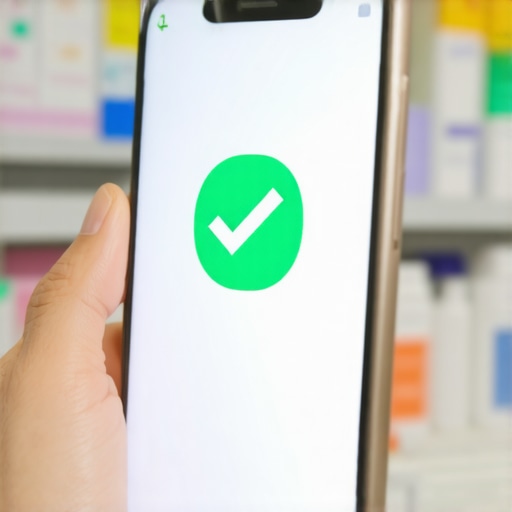
The digital health lobby wants you to believe that virtual care is a frictionless miracle. It is not. In reality, the gap between your laptop screen and the pharmacy counter is a sprawling graveyard of forgotten faxes and ‘pending’ statuses. I have seen it happen too often: a patient finishes a call, waits two hours, drives to the pharmacy, and finds nothing. The pharmacist shrugs. The doctor’s office is closed. You are left holding a dead battery and a headache. Stop treating your doctor like a wizard and start treating them like a vendor. If you do not verify your telehealth prescription while the provider is still on the screen, you are begging for a weekend of frustration. This isn’t about being ‘difficult.’ It is about basic survival in a fragmented system that prioritizes throughput over actual care.
The Digital Handshake is a Performance Not a Reality
Why do we accept this? We have been conditioned to think that ‘high-tech’ means ‘automatic.’ It doesn’t. In many ways, sending a digital script is essentially like throwing a message in a bottle into a digital ocean and hoping the tide brings it to the right shore. Without a verbal confirmation of the transaction ID, you are just a person with a screen and a hope. I argue that the primary failure of modern telehealth isn’t the technology itself, but the blind faith we place in it. We assume the system is a cohesive unit when it is actually a collection of warring softwares that rarely speak the same language. I’ve noted before why your virtual doctor visit feels rushed, and this frantic pace is exactly where the prescription error happens. The doctor is clicking boxes to clear their queue, not necessarily to ensure your local pharmacy’s outdated server actually received the packet.
The Screen Confirmation is a False Idol
The little ‘Success!’ notification on your app means nothing. It confirms the software worked, not the human. You must demand the NPI number and the specific pharmacy address they have on file. Do not assume the system updated your move from two years ago. I have witnessed patients send life-critical medications to a pharmacy they haven’t used in years because of a legacy data glitch. If you want results, you need a checklist for a productive 15-minute virtual check-in that includes a hard confirmation before you disconnect. Ask the doctor to wait while you refresh your pharmacy portal. It sounds aggressive because it is. But in a world where the medical machine views you as a data point, aggression is the only way to remain a human being.
Passive Patients Get Empty Hands
I do not care if you feel awkward. I do not care if the doctor seems busy. Their job is not finished until the medicine is accessible. The healthcare machine doesn’t care about your convenience; it cares about billing cycles and liability. If you want the pills in your hand tonight, you have to be the squeaky wheel that refuses to stop spinning until the script is confirmed. We need to stop romanticizing the ‘convenience’ of the couch-doctor and start acknowledging the logistical nightmare it creates. If you are not verifying, you are not being treated; you are just being processed through a system that is perfectly happy to leave you empty-handed at 5:01 PM on a Friday.
The Profitability of Incompatibility
The core issue isn’t that the technology *cannot* talk to each other. It is that it *will not*. In the tech world, we call this a walled garden. In healthcare, we should call it a ransom note. When your telehealth provider uses a proprietary platform that doesn’t natively sync with your local pharmacy’s inventory or legacy software, they aren’t providing a service. They are creating a dependency. The problem isn’t the internet speed or the quality of your webcam; the problem is the deliberate fragmentation of medical data. These companies treat your health records like proprietary secrets. They hoard data to keep you locked into their specific ecosystem, even if it means your actual medicine gets lost in the digital void. We have been sold a lie that connectivity is the goal, but for the corporations running these platforms, the goal is ownership.
Faxes: The Undying Ghost of Medical Data
It is 2024. We are launching rockets into space and training AI to write poetry, yet your life-saving medication is still likely being transmitted via a technology that peaked in the 1980s. When the ‘e-script’ fails—and it fails often—the backup is a digital fax. These systems are held together by digital duct tape. I have seen providers click ‘send’ and assume the task is done, oblivious to the fact that the receiver’s server is currently rejecting incoming packets. This isn’t a glitch. It is a fundamental architectural failure. We have built a shiny, digital front door on top of a crumbling, analog foundation. When you are sitting on your couch talking to a doctor, you are interacting with the shiny door. The pharmacy, meanwhile, is stuck in the basement trying to fix the pipes. This disconnect is where your care dies.
${PostImagePlaceholdersEnum.ImagePlaceholderB}
A System Designed for Throughput, Not Health
The industry brags about a 90% e-prescription adoption rate. That sounds impressive until you look closer. That 10% failure rate isn’t just a minor statistical outlier; it represents millions of people standing at a pharmacy counter like fools while a pharmacist tells them the system is down. A 10% failure rate in any other industry—say, aviation or banking—would be cause for a national emergency. In medicine, it is just ‘the cost of doing business.’ That 10% drop isn’t a dip; it is a total collapse of the promised efficiency. We are told the system is efficient, yet we spend more time than ever chasing down lost orders. It is because the system wasn’t designed to ensure you get your pills; it was designed to ensure the provider can bill for the visit as quickly as possible. The ‘Success’ button on the doctor’s screen is a metric for *their* productivity, not *your* recovery. It marks the end of their liability, not the fulfillment of your needs.
The Data Doesn’t Lie, Even If the Marketing Does
Look at the numbers. Patients who use telehealth without a proactive verification process are significantly more likely to experience delays in treatment compared to those who visit in person. This isn’t because the medicine is different. It is because the physical presence of a patient in an office creates a sense of accountability that a digital avatar simply cannot replicate. The screen acts as a shield. It allows the provider to disconnect before the messy work of coordination begins. They are incentivized to move to the next ‘ticket’ in their queue. You are not a patient; you are a ticket. And in the race to clear the board, details like the correct dosage or the specific branch of the pharmacy are the first things to be sacrificed. If the system worked as advertised, you wouldn’t need to double-check anything. But it doesn’t. It is a fragmented, profit-driven mess that relies on your silence to keep the gears turning.
Critics will argue that I am being unnecessarily harsh on a system that is still in its awkward teenage years. They will tell you that the friction I describe—the ‘pending’ statuses and the pharmacy faxes—is a small price to pay for the ‘unprecedented access’ we now enjoy. After all, isn’t a delayed prescription better than no appointment at all? Isn’t a 48-hour wait for a lab order better than a three-week wait for an in-person specialist? This is the most seductive argument the digital health industry has: that some care is always better than no care. It paints a picture of a world where telehealth is a bridge across a healthcare desert, and I am the one complaining about the toll. But this argument is built on a foundation of sand because it ignores the compounding costs of failure. I used to believe this too, until I started tracking the actual hours patients spend cleaning up the mess of a ‘convenient’ visit. When a telehealth provider fails to confirm a prescription or a lab test, they aren’t just delaying care; they are creating a secondary labor task for the patient. You end up spending your lunch break on hold with a call center, your afternoon arguing with a pharmacist, and your evening trying to find an urgent care center that is actually open. By the time you get the medicine, you have expended more effort and stress than if you had simply waited for an in-person opening. The ‘access’ promised by these platforms is often just a front-end illusion that masks a back-end collapse. We are trading quality for velocity, and in chronic care, that trade is almost always a losing bet.
${PostImagePlaceholdersEnum.ImagePlaceholderC}
The Scalability Trap
The defenders of the status quo will point to the sheer volume of patients served as proof of success. They love to cite statistics about how many ‘episodes of care’ they have facilitated. But an ‘episode of care’ is not the same thing as a successful health outcome. If a patient with a chronic condition has a 10-minute video chat but can’t get their blood pressure medication for three days because the e-script vanished, that ‘episode’ was a failure, not a success. The industry’s obsession with throughput over fulfillment is a direct threat to patient safety. They are building a highway with no exits and calling it progress. They argue that technology will eventually bridge the gap, but they ignore the fact that the gap is being widened by the very companies that claim to be closing it. The core fallacy here is the idea that medical care is a commodity that can be scaled like a streaming service. You can scale a movie library; you cannot scale the nuanced, physical reality of pharmacy logistics and lab test processing. When you try to treat healthcare like a software-as-a-service product, the human elements become ‘bugs’ to be eliminated. This is why your virtual doctor feels like they are reading from a script. They are following a workflow designed to minimize their time spent on you so they can maximize the platform’s revenue. They aren’t doctors in the traditional sense; they are data entry clerks with MDs. To argue that this is ‘better than nothing’ is to accept a standard of care that would be laughed out of any other professional field. Beyond that, the idea that these failures are just ‘growing pains’ is a lie. These are structural choices. Companies choose not to invest in interoperability because it is more profitable to keep you trapped in their walled garden. They choose to prioritize the ‘Book Now’ button over the ‘Confirmed Delivery’ notification because the former is where the billing happens. If we continue to excuse these failures as the necessary cost of innovation, we aren’t being patient—we are being accomplices in our own neglect. We need to stop asking if telehealth is ‘accessible’ and start asking if it is ‘effective.’ Until the answer to the second question is a resounding yes, the ‘access’ they are selling us is nothing more than a high-tech mirage.
We are currently standing at a precipice, watching the slow-motion erosion of medical accountability in favor of technical convenience. This is not a minor glitch in the matrix of modern medicine; it is a fundamental shift in the social contract between healer and patient. If we continue to treat these systemic failures as mere ‘growing pains,’ we are effectively volunteering to be the test subjects in a grand, failed experiment of detached care. The stakes go far beyond a missed dose of antibiotics or a delayed lab test. What is at risk is the very idea that a doctor is responsible for the outcome of their advice. If the digital health lobby succeeds in decoupling the ‘visit’ from the ‘result,’ we will find ourselves in a world where medical advice is as cheap and disposable as a social media comment, and just as reliable.
The Point of No Return
If we do not demand a course correction today, the landscape of healthcare in five years will be unrecognizable and deeply inhospitable. Picture a system entirely managed by algorithms where a human doctor only appears for thirty seconds to rubber-stamp a decision they didn’t make. In this future, the ‘digital void’ where prescriptions currently vanish will have expanded to swallow entire treatment plans. We are moving toward a state of ‘Ghost Care,’ where the appearance of a medical system exists—complete with apps, portals, and billing statements—but the actual delivery of health is nowhere to be found. The infrastructure of our well-being is being replaced by a house of cards built on unverified data and unconfirmed transmissions. We are trading the steady hand of clinical oversight for the frantic clicking of a distracted gig-worker with a medical degree.
Is it too late to turn back?
The danger of our current trajectory is that we are becoming comfortable with failure. We have started to build our lives around the assumption that the system will break. We plan for the ‘pharmacy fight’ and the ‘portal glitch’ as if they are inevitable parts of the healing process. This acceptance is toxic. It signals to the corporations running these platforms that they don’t need to fix their software because the patients will simply do the manual labor for them. It is like a passenger on a plane being told they have to help the pilot land because the landing gear is ‘proprietary’ and doesn’t always work. We are paying full price for a flight that only takes us halfway to our destination, then being told to jump and hope for the best. This isn’t innovation; it is a sophisticated form of neglect that hides behind a high-resolution screen.
${PostImagePlaceholdersEnum.ImagePlaceholderD}
A Future of Total Disconnection
If we allow this trend to solidify, the gap between chronic care management and urgent care will vanish into a singular, mediocre experience of ‘automated triage.’ The nuance required to manage complex illness cannot survive in a system that views every interaction as a ticket to be closed. We are witnessing the birth of a medical underclass—those who cannot afford the time or do not have the technical literacy to fight the system every time a script goes missing. This is a moral imperative we cannot ignore. The healthcare system should be a safety net, not a labyrinth designed to exhaust the people it claims to serve. To continue down this path is to accept a world where your survival depends on your ability to outmaneuver your own doctor’s software. We must stop being passive observers of our own care and start being the friction that demands a better, more human standard before the silence of the machine becomes permanent.
The Reckoning for Virtual Care
The honeymoon phase of digital health is over. We can no longer afford to be enamored by the novelty of seeing a doctor on a screen while ignoring the systemic failures that occur once the call ends. If you are managing chronic disease monitoring today, you must realize that the ‘convenience’ of the app is often a debt you will pay later in administrative frustration. The burden of proof has shifted. It is no longer on the system to prove it works; it is on you to prove that your care actually happened.
Your New Role in the Machine
We are entering an era where the patient must act as their own project manager. This isn’t just about prescriptions. Whether it is ensuring same-day lab tests for faster results or tracking down a missing referral, the friction is the point. The digital divide isn’t about who has high-speed internet; it is about who has the stamina to fight the software. This connects to my previous point about why your virtual doctor visit feels rushed; the system is designed to move you along, not to see you through.
${PostImagePlaceholdersEnum.ImagePlaceholderE}
The Final Verdict
Modern telehealth is a high-speed engine attached to a broken transmission.
The twist is that the very technology promised to democratize healthcare has instead created a new bureaucracy where silence is interpreted as success. If you do not speak up, the system assumes the ‘Success’ notification was the truth. We must stop being grateful for ‘access’ and start demanding ‘resolution.’ Stop being the data point the machine wants you to be. Start being the human being the system is trying to forget. The digital doctor is only as good as the confirmation in your hand. If you have not verified it, it does not exist. Demand the data, ignore the marketing, and never, ever log off until the work is done.