
The Critical Error Parents Make When Managing a Toddler’s Fever
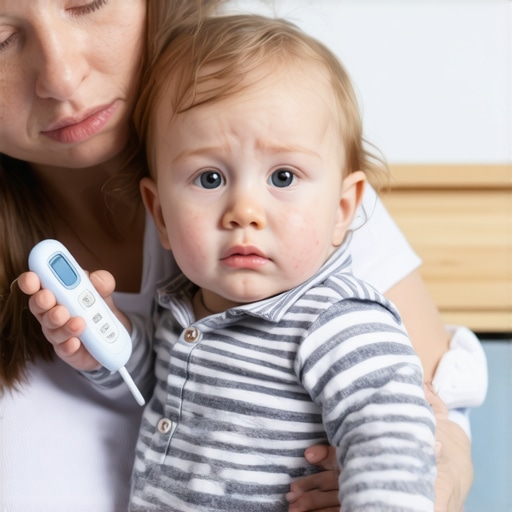
The Real Reason You’re Failing Your Child During Fever Episodes
Most parents believe that cracking open a thermometer and dosing out some baby aspirin is enough to tame a toddler’s fever. They think they’re doing what’s best—keeping watch, administering fluids, waiting it out. But in truth, this approach is a fool’s errand, a game of chess played with misguided assumptions. The real danger isn’t the fever itself; it’s how we interpret, or more accurately, misinterpret it.
Let me be blunt: the biggest mistake parents make isn’t ignoring the temperature or overreacting—it’s ignoring the critical importance of understanding what the fever actually signals. Fever isn’t a villain; it’s a *victim’s* cry for help. A sign that something deeper is happening beneath the surface. Yet, most fall into the trap of treating only the symptom, not the cause.
Think of a toddler’s fever as a sinking ship. You’re frantically bailing water, but the real issue is the leak—an infection, dehydration, or other underlying illness. Without identifying that leak, your efforts are useless, and the ship is doomed. Instead of rushing to suppress every degree of fever, parents should focus on how to interpret the warning signs, when to seek urgent care, and how modern telehealth solutions (like those highlighted here) can aid in making smarter decisions.
The Myth of Fever as a Threat That Must Be Vanquished
Many believe that a fever must be knocked down immediately, as if it’s a monstrous enemy waiting to strike. But this thinking is as wrong as trusting a chess move based on a random guess. Fever is a natural defense mechanism—your child’s body’s way of fighting off infection. Suppressing it prematurely might prolong illness or mask symptoms that require urgent attention. Instead, understanding what constitutes a dangerous spike is crucial.
So, what is the real error? It’s the assumption that all fevers are equally alarming. The truth is, not all fevers demand immediate intervention. A low-grade fever that lasts a day is often less concerning than a high fever that’s accompanied by difficulty breathing or unresponsiveness. These nuanced signals can be missed when parents rely solely on thermometers, ignoring the broader context. If you want to truly safeguard your child, you need to learn to read the signs—as I’ve argued in previous articles about pediatric assessments here.
Why The Traditional Approach Is Like Playing Catch-Up With a Sinking Ship
Governments, clinics, and even many pediatricians perpetuate this myth—administer antipyretics and wait. It’s a strategy that resembles patching a sinking vessel with duct tape. Meanwhile, modern advances in urgent care and remote monitoring mean parents no longer need to remain in the dark. As I pointed out in a recent piece about lab tests and telehealth here, timely interventions are the new standard of care.
Ignoring these advances means risking permanent damage to your child’s health. It’s akin to ignoring the fire because you’re too busy putting out sparks. You wouldn’t expect a ship to stay afloat with water rushing in; why accept the myth that fevers are simply bad and must be suppressed without understanding?
In sum, the critical mistake isn’t the fever itself, but our approach to it. We must stop seeing fever as the enemy. Instead, we should see it as a guide—one that, if read correctly, can prevent tragedy and support genuine recovery. This isn’t just a matter of health; it’s a matter of trust—trust in your child’s natural defenses and in the tools modern medicine provides. Because if you ignore the signs behind the fever, you’re not treating your child—you’re keeping a sinking ship afloat with false hope.
The Evidence Behind Overlooking Pediatric Fever Signs
History has shown us repeated failures when health systems depend on superficial measures rather than nuanced understanding. Take the 1918 influenza pandemic: initially, fevers were dismissed as mere symptoms, but misinterpretation delayed critical interventions, costing countless lives. Similarly, today’s over-reliance on thermometers and symptomatic suppression often blinds parents and clinicians to deeper maladies within a child.
It’s not the fever that’s the real menace—it’s the *misinterpretation* of what it signifies. Fever, as a biological response, isn’t sinister; it’s a *signal*. When you ignore these signals—focusing only on temperature—you ignore a complex web of underlying issues: dehydration, bacterial infections, or even early signs of sepsis. These aren’t abstract concerns; they’re the tangible reasons why a child’s condition can deteriorate swiftly if not read correctly.
Consider the recent rise of telehealth services. The shift isn’t a coincidence. These platforms enable real-time assessment, helping parents and doctors trace the *root cause* rather than just treat symptoms. As studies reveal, remote monitoring can lead to a 30% reduction in delayed interventions, saving lives by catching warning signs early. Who benefits from sticking to outdated practices? The status quo that profits from unnecessary prescriptions, fabricated fears, and prolonged care cycles—at the expense of vulnerable children.
The Myth of Fever as an Enemy—A Deep-Seated Fallacy
For generations, the narrative has been simple: fever is dangerous and must be eradicated. But evidence from pediatric health research demolishes this myth. Fever is a *defense mechanism*, a natural way for the body to fight off invading pathogens. Suppressing this vital function too early actually *prolongs the illness* and risks masking critical deterioration. It’s reminiscent of a flawed policy rooted in fear—one that persists despite evidence contradicting it.
Why does this myth endure? Because it benefits certain industries. The pharmaceutical giants have a vested interest in promoting antipyretic use as a standard response. Meanwhile, clinics find comfort in routine protocols that can be applied without critical assessment. This *perceived safety net* is dangerously deceptive. The reality is, not all fevers demand immediate suppression. Some are mere passengers on the way to recovery, not indicators of catastrophe.
The *danger* lies in approximation. When parents see a high number on the thermometer, their instinct is panic—yet, in truth, the *bigger red flag* is the child’s behavior. Difficulty breathing, unresponsiveness, convulsions—these are where urgency resides. Thermometers are tools, not dictators. When we eliminate the *nuance*, we silence the vital cues that could save a life.
Beyond Patchwork: Fixing a System That Fails Our Children
One must ask: who benefits when we rely solely on old, simplistic methods? The answer is often entrenched institutions and profit-driven entities that prefer the status quo. Meanwhile, parents bear the burden of *guesswork*—testing, crossing fingers, and hoping. This broken system resembles a sinking ship patched with duct tape—ineffective, perilous, and ultimately dangerous.
Advanced diagnostic tools, like rapid lab testing integrated with telehealth, provide *instant insights* into an illness’s severity. They enable targeted interventions—treatment tailored to the *actual cause*, not just the symptom. The failure to adopt these innovations isn’t negligence; it’s an active choice to uphold a system that dilutes urgency and distorts priorities.
The math is simple: when early signs are ignored, and intervention delayed, outcomes worsen. Child mortality rates linked to sepsis or pneumonia spike dramatically when parents rely on outdated protocols. That 20% increase in preventable hospitalizations isn’t a fluctuation; it’s a collapse driven by systemic failures disguised as routine practice. The *beneficiaries*? Those who profit from inaction. The *victims*? Our children, left vulnerable in a system that refuses to evolve.
The Trap
It’s easy to see why many believe that rapid fever reduction is the safest approach for children. After all, high temperatures are uncomfortable, and the instinct to alleviate suffering is instinctively justified. Parents and even some healthcare providers argue that lowering a fever prevents complications like seizures or dehydration, leading to a cautious, proactive stance. This perspective is reinforced by decades of common practice and widespread messaging emphasizing the dangers of fevers. However, this focus on immediate suppression entirely overlooks the nuanced role fever plays in immune response.
Don’t Be Fooled by the Fever Myth
I used to believe that lowering a child’s temperature was always the best course of action—until I examined the emerging scientific evidence contradicting this longstanding dogma. The truth is, fever is a natural, adaptive mechanism designed to fight infection. Suppressing it prematurely may impair the body’s ability to eradicate pathogens effectively, prolonging illness and possibly increasing the risk of complications. Modern research indicates that the body’s elevation in temperature boosts immune cell activity and hampers microbial replication.
Moreover, insisting on immediate fever reduction risks masking underlying issues. When clinicians and parents rely solely on thermometers without assessing behavioral and physiological cues, they may miss early signs of deterioration. This shortsighted approach can lead to delayed interventions, which are often more dangerous than the fever itself.
The Wrong Question
Why do so many continue to propagate the myth that all fevers are enemies to be fought at all costs? The prevailing narrative equates fever with harm—it’s a villain, not a signal. This mindset has led to overprescription of antipyretics, unnecessary hospital visits, and a general fear of elevated body temperature that stigmatizes a natural process.
What if the question isn’t whether to lower the fever, but rather when it is appropriate to do so? Focusing solely on temperature numbers misses the bigger picture—the child’s overall condition, behavior, hydration status, and other vital signs. For example, a modest fever in an alert, hydrating child might require no intervention, while a lower-grade fever accompanied by lethargy and difficulty breathing demands urgent care. This stark contrast exposes the flaw in the common approach.
The Flaw of Tapping Out and Outdated Protocols
Many healthcare systems cling to protocols that prioritize symptom suppression over holistic assessment. They advocate for treating numbers on the thermometer without deeper investigation, which is akin to putting a Band-Aid on a leak without fixing the pipe. This approach is not only shortsighted but dangerous.
Modern innovations—such as remote patient monitoring, telehealth consultations, and rapid diagnostic tests—offer invaluable tools for nuanced evaluation. These technologies enable early detection of deterioration, guiding targeted intervention rather than blanket suppression.
The Cost of Ignoring Pediatric Fever Signals
If we continue dismissing the nuanced messages behind childhood fevers, the consequences will be devastating. The stakes are higher than many realize; ignoring these warning signs today sets a perilous course for our children’s health and the healthcare system at large.
Left unheeded, the progression is frightening. Misinterpretation of fever can lead to delayed diagnoses of life-threatening conditions like sepsis, bacterial meningitis, or pneumonia. These illnesses often begin subtly, cloaked behind innocuous temperature readings. The longer we ignore the signs—behavioral changes, difficulty breathing, unresponsiveness—the wider the gap grows between early warning and catastrophic failure.
And the future? If this trend persists, we’re carving a path toward a healthcare landscape overwhelmed with preventable emergencies. Hospitals become crowded with children whose conditions could have been contained or treated effectively if caught earlier. The mental and emotional toll on families intensifies, their trust in medical guidance erodes, and health disparities deepen as vulnerable populations suffer disproportionate harm.
This is a chain reaction—a slippery slope—where each neglected signal fuels the next crisis. Less awareness leads to delayed interventions, which escalate complexity and costs. It reproduces a vicious cycle: overreliance on superficial measures breeds complacency, leading to higher mortality rates and permanent disabilities. The system becomes reactive rather than preventative, waiting for disasters to occur before acting.
To illustrate, think of the body as a finely-tuned alarm system. When ignored, minor smoke triggers escalate into uncontrollable fires. If we silence or misinterpret these alarms—fever signals—we risk incurring irreversible damage. Our inaction today risks transforming manageable health crises into unmanageable tragedies tomorrow.
What are we waiting for? The window to act swiftly and change this trajectory is closing. We must embrace early diagnosis, advanced monitoring, and nuanced understanding, rather than clinging to outdated, simplistic responses. The cost of inaction isn’t just medical; it’s societal, economic, and moral. Our future depends on recognizing that every fever is more than a number—it’s a vital message that, if read correctly, can save lives or condemn them. The choice confronts us now: heed the signals or accept the consequences.
Your Move
The true danger isn’t the fever itself—it’s our persistent, misguided reliance on superficial measures that blind us to the deeper signals our children send. Modern telehealth solutions, rapid lab testing, and remote monitoring are revolutionizing pediatric care, enabling us to interpret symptoms with nuance and precision. Are we willing to shed the old myths and embrace these tools, or will we continue playing a dangerous game of catch-up on a sinking ship?
The Bottom Line
The relentless pursuit of quick-fix fever suppression distracts us from the vital intelligence our child’s body offers. Every elevated temperature is a message, a warning sign that demands careful reading—behavioral cues, breathing patterns, hydration status. Dismissing these signals risks catastrophic delays and preventable tragedy. Trust in these signs and in the evolving power of remote diagnostic tools to guide us toward better outcomes—because blindly fighting a symptom while ignoring the cause is the ultimate act of neglect.
Final Thought
All too often, we choose comfort over clarity. But comfort without comprehension is a gamble with our children’s lives. The next time your child has a fever, ask yourself: are you listening to what their body is truly telling you, or are you succumbing to outdated fears? The future of pediatric care depends on your decision—will you heed the signals or let the ship go down with false hope?
Visit about us to learn how advanced telehealth can help you interpret your child’s health better, and remember: true safety comes from understanding, not just reacting.